
Empowering women-led small businesses amid volatility

These businesses sustain household incomes, anchor local markets, and contribute quietly but consistently to national value chains. Strengthening their resilience is therefore not only a matter of social equity, but an economic imperative as Vietnam moves into its next phase of growth.
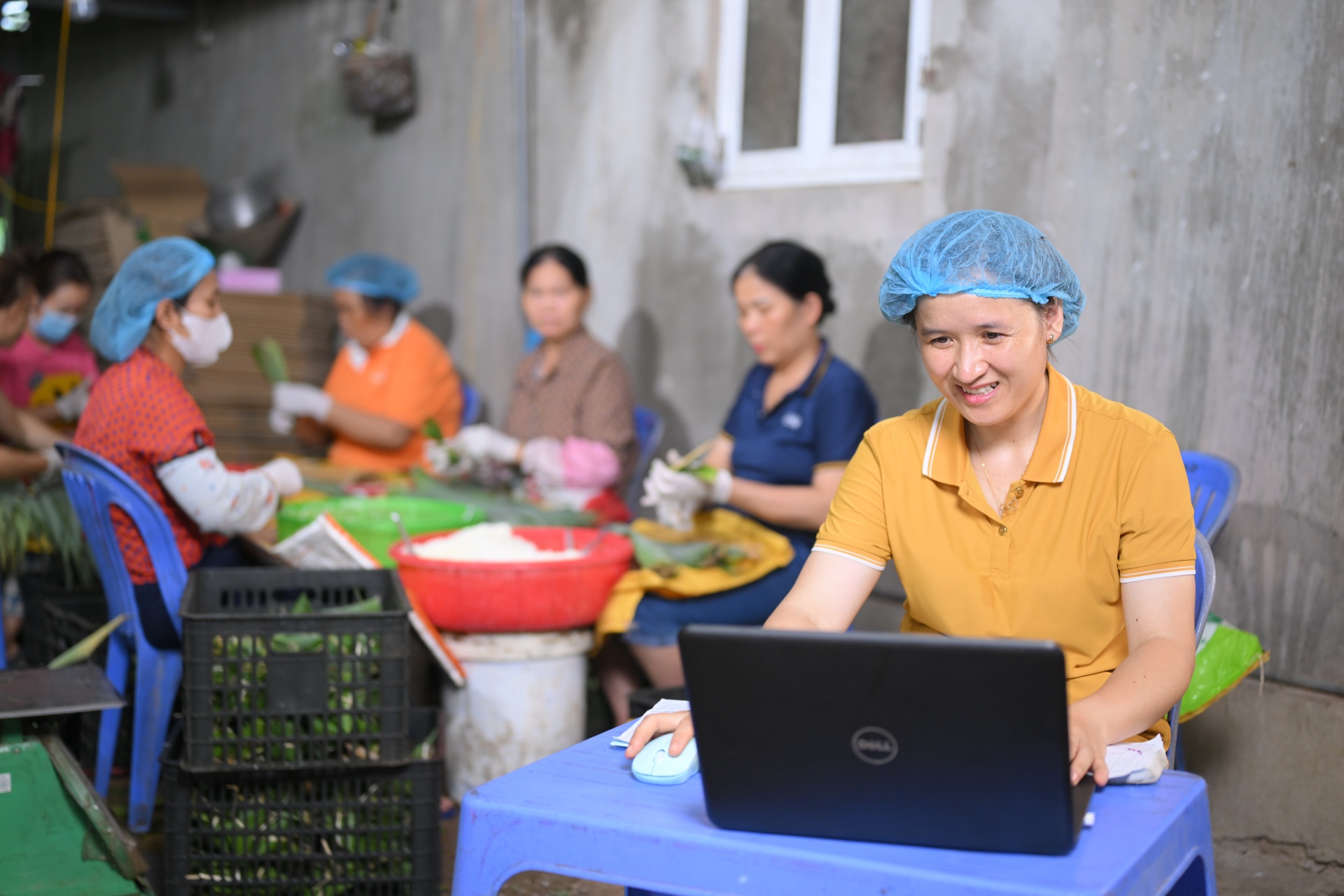 |
| In Vietnam, many women entrepreneurs are familiar with digital platforms for basic marketing, but still lack advanced skills in inventory management, customer data analysis, and social commerce optimisation on platforms such as Zalo and Facebook. Photo: CARE Vietnam |
Recent baseline findings from the Strive Women programme, implemented by CARE and partners with support from the Mastercard Center for Inclusive Growth, provide one of the most comprehensive assessments to date of women entrepreneurs’ financial health in Vietnam.
The study draws on a robust sample of women-led micro and small enterprises across multiple regions, offering detailed insights into business performance, financial practices, digital readiness, and household dynamics.
The findings reveal strong entrepreneurial capacity. Around 75 per cent of surveyed women reported holding final decision-making authority in their businesses, reflecting confidence, clarity of role, and a willingness to take calculated risks. Many have operated their enterprises for several years, often starting informally or from home before gradually building customer networks based on trust and consistency.
However, the research also highlights structural constraints that limit women’s ability to convert effort into sustained growth. These barriers, rooted primarily in time, technology, and finance, continue to restrict business resilience and responsiveness in an increasingly competitive and digitalised economy.
Time poverty remains one of the most persistent challenges. Women entrepreneurs spend significantly more hours on unpaid care and household work than men, leaving limited time for training, strategic planning, or business expansion. Many report having to shorten operating hours or decline growth opportunities due to the lack of affordable childcare or support in redistributing domestic responsibilities.
The data shows a clear correlation: women facing fewer caregiving burdens tend to report higher revenues, stronger confidence in future growth, and improved financial health indicators. These findings reinforce the need to treat caregiving support as an economic enabler rather than a social add-on.
Digital capability represents a second major constraint. While more than 90 per cent of surveyed women own smartphones and use them actively for communication or basic social media marketing, far fewer deploy digital tools for core business management such as recordkeeping, inventory control, or e-commerce. Cash transactions still dominate, and regular use of digital financial services remains limited.
This gap is not driven by lack of interest. Many women expressed strong motivation to adopt digital tools but cited limited skills, lack of confidence, and concerns about errors or fraud. As markets increasingly rely on online sales, delivery platforms, and digital supply chains, these limitations reduce competitiveness and restrict access to higher-value market segments.
 |
| Women-centred learning and peer networks help build confidence, strengthen connections, and expand business opportunities for women business owners. Photo: : CARE Vietnam |
Access to appropriate finance continues to pose challenges, even as women demonstrate strong repayment discipline. Many rely on small, short-term loans primarily to manage cashflow rather than invest in productivity-enhancing assets.
High collateral requirements, complex application processes, and interest structures misaligned with business cycles constrain women’s ability to scale. Needs vary by segment: growth-oriented entrepreneurs in urban areas often require larger unsecured loans, while rural micro-entrepreneurs benefit from smaller, flexible credit combined with financial literacy support.
In response, Strive Women in Vietnam applies a women-centred design approach, ensuring solutions are grounded in women’s lived realities and tested for feasibility before scaling. The programme aims to support more than 90,000 women entrepreneurs across diverse market segments.
A core focus is deepening financial inclusion through partnerships with both commercial banks and microfinance institutions. With VPBankSME, Strive Women is co-designing and scaling the WE Leverage initiative, offering higher unsecured loan limits, preferential credit features, and bundled digital tools to reduce operating costs. The bank has also collaborated with CARE to deliver practical digital and AI-focused training, helping to strengthen business decision-making and digital readiness.
At the same time, CARE works with Thanh Hoa MFI to reach women in rural and low-income settings through microloans, savings products, and community-based training. These services are designed to stabilise businesses and reduce financial vulnerability. Across partners, the programme is also piloting inclusive insurance products to help women manage business and household shocks, a critical component of long-term financial health.
Household engagement forms another important pillar. Facilitated discussions with spouses and family members explore shared responsibilities and the economic value of supporting women’s enterprises. Early results suggest improvements in women’s confidence, decision-making autonomy, and ability to pursue business growth without conflict or guilt.
Digital capacity-building follows a phased approach. Initial training focuses on improving the effectiveness of social media for customer engagement and sales, building on tools women already use. Later stages introduce digital recordkeeping, inventory management, and online sales platforms. Peer learning groups and local mentors reinforce these skills, supporting practical application within daily business operations.
Taken together, the evidence sends a clear message: improving women entrepreneurs’ financial health is both achievable and economically meaningful.
Financial institutions can refine products to better match women’s cashflow patterns and growth trajectories. Government agencies can strengthen digital infrastructure and support practical caregiving solutions. Businesses can expand inclusive supply chains and invest in digital upskilling that brings women into emerging markets.
Vietnam’s women-led enterprises already make substantial contributions to the economy. With support grounded in data, delivered through coordinated partnerships, and designed around real-world constraints, they can play an even greater role in driving resilient, inclusive, and sustainable growth.



What the stars mean:
★ Poor ★ ★ Promising ★★★ Good ★★★★ Very good ★★★★★ Exceptional
 Tag:
Tag:Related Contents



Latest News





More News
- IKI launches multisensory experience and symphony series (August 15, 2026 | 20:00)
- Sedona SkyRun concludes latest race above Ho Chi Minh City (August 11, 2026 | 08:00)
- What propelled East West Barbershop into world's Top 10 grooming brands? (August 06, 2026 | 09:22)
- Livelihood Transition Training Conference contributes to rabies prevention and food safety development (July 24, 2026 | 17:14)
- Muong Thanh group launches 2026 mooncake collection (July 24, 2026 | 10:52)
- Pan Pacific launches 2026 mooncake collection (July 24, 2026 | 10:51)
- Vietnamese women step up as drivers of national development (July 15, 2026 | 11:54)
- Italy marks anniversary by celebrating women's eight decades of progress (June 23, 2026 | 17:19)
- Innovation expands reach of cultural identity in Hue (June 17, 2026 | 15:57)
- Fusion marks Global Wellness Day with spa promotions across Vietnam (June 06, 2026 | 14:11)








 Mobile Version