
Vietnam wood industry shifts to quality and certification as exports grow

According to Vietnam Customs, exports of wood and wood products exceeded $17 billion in 2025 for the first time, up 6 per cent on-year despite global uncertainties. The milestone consolidates Vietnam's position as one of the world's leading exporters, with success increasingly determined by operational efficiency, material strategy, and the ability to develop higher-value products.
Wooden furniture remains the core export group, accounting for roughly 61 per cent of total export value. The United States continues to be the largest market, followed by Japan, China, and the European Union – markets where regulatory compliance and sustainability standards are becoming stricter.
However, growth momentum is accompanied by mounting pressure. The Handicraft & Wood Industry Association of Ho Chi Minh City (HAWA) has warned of risks stemming from retaliatory tax measures, anti-dumping and anti-subsidy investigations in the United States, as well as the European Union’s Anti-Deforestation Regulation (EUDR). Domestically, climate-related disruptions, fluctuations in raw material supply and rising input costs are adding complexity to production planning.
Against this backdrop, reinforcing internal capacity has become a decisive factor. Manufacturing excellence is increasingly viewed as the foundation of competitiveness. For export-oriented enterprises, improving productivity, controlling costs, and maintaining consistent quality are essential to sustaining long-term buyer relationships.
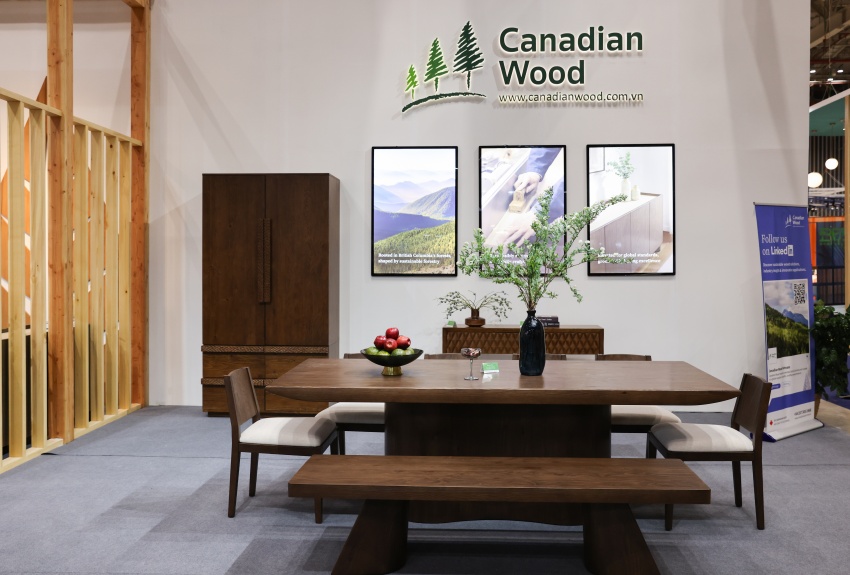 |
| Photo: Canadian Wood |
This requires more than expanding factory scale. It involves optimising production workflows, strengthening cost management, adopting international quality standards, and accelerating the application of automation and digital tools. Investment in advanced machinery, lean manufacturing models, and workforce upskilling is gradually becoming necessary rather than optional. Enterprises that can integrate digital tracking systems, improve inventory control, and enhance production transparency are better positioned to respond to shorter order cycles and increasingly customised demand.
At the same time, global supply chain restructuring is creating both pressure and opportunity. As buyers diversify sourcing locations to mitigate geopolitical and compliance risks, suppliers are evaluated on price but also on resilience, traceability, and responsiveness. Manufacturers capable of maintaining stable lead times, transparent documentation, and consistent output are more likely to secure long-term contracts in this evolving landscape.
Alongside operational capability, material strategy is playing a more strategic role. As export markets tighten requirements on legality and environmental responsibility, traceability is becoming a prerequisite for market access rather than a competitive advantage.
Regulatory frameworks such as the EUDR require companies to demonstrate that timber products originate from legally harvested and non-deforested sources. Certification systems including the Forest Stewardship Council and Programme for the Endorsement of Forest Certification (PEFC) provide internationally recognised standards for responsible forest management and supply chain transparency. Compliance facilitates entry into demanding markets while strengthening credibility with buyers placing greater emphasis on sustainable sourcing and environmental accountability.
Vu Tan Phuong, director of the Vietnam Forest Certification Office, emphasised that securing legal and sustainably certified raw materials is becoming central to maintaining Vietnam's export competitiveness.
"It is necessary to expand the implementation of VFCS/PEFC standards and strengthen chain-of-custody systems to align with evolving global requirements," he said. "Enhancing certification coverage and international cooperation will help Vietnamese enterprises sustain market access in an increasingly regulated trade environment."
Beyond regulatory considerations, material selection directly affects product positioning. The physical properties of each wood species influence structural durability, surface finishing quality, load-bearing capacity, and long-term stability. Choosing stable and workable materials enables manufacturers to diversify collections, enhance aesthetic value, and improve production efficiency, particularly when targeting mid- to high-end segments.
In this context, Canadian softwood species are being introduced to a growing number of Vietnamese manufacturers. Known for dimensional stability, consistent grading, and ease of machining, these species are suitable for a wide range of indoor interior applications. With clear origin from sustainably managed forests and alignment with recognised certification systems, they offer both technical advantages and support for compliance requirements in key export markets.
Product development: differentiation through design and innovation
At the same time, the industry is confronting structural limitations in its development model. While original equipment manufacturer (OEM) production has enabled rapid expansion in export volume, value capture remains relatively constrained. Profit margins are often sensitive to fluctuations in raw material costs and exchange rates, while bargaining power largely rests with international buyers.
As competition intensifies, particularly from other cost-competitive manufacturing countries in the region, reliance on pure OEM models exposes enterprises to increasing pressure. Rising labour costs and stricter compliance requirements further narrow margin buffers. The transition towards original design manufacturer (ODM) is therefore gaining strategic importance. Strengthening capabilities in design development, material integration, and technical application allows enterprises to participate earlier in the product lifecycle, differentiate offerings, and retain higher margins.
However, moving towards ODM requires more than creative ideas. It demands more profound understanding of material behaviour, close coordination between design and production teams, and reliable access to stable material sources. Building these capabilities often involves partnerships across the supply chain, where knowledge transfer and technical consultation play a critical role.
Supporting this shift, Canadian Wood Vietnam has implemented initiatives aimed at enhancing technical understanding and material application among local manufacturers. Through the Canadian Wood Trial Program, enterprises are provided with Canadian softwood for testing directly in their own production facilities, accompanied by technical consultation. This enables manufacturers to evaluate performance under real manufacturing conditions, refine design solutions, and assess cost-efficiency before committing to large-scale production.
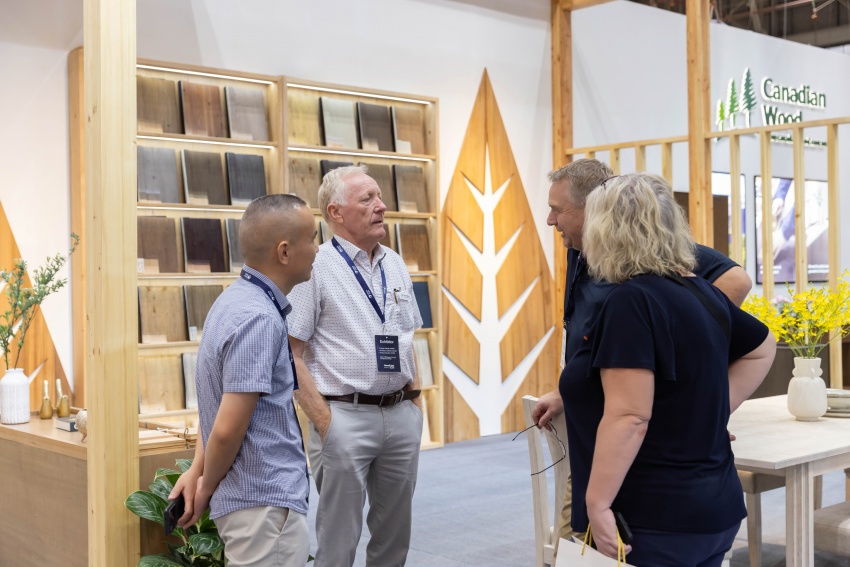 |
According to Vince Tran, country director of Canadian Wood Vietnam, strengthening material knowledge is becoming increasingly important as sustainability requirements tighten across global markets. “Beyond compliance, manufacturers need to understand how material choice affects design flexibility, production efficiency, and long-term product value. Our role is to support Vietnamese companies, not just in accessing certified wood supply, but also in optimising its application in real manufacturing conditions,” he said.
In parallel, initiatives focusing on product diversification and market expansion have supported participating companies in developing new collections and introducing them at industry platforms such as HAWA EXPO and VIFA EXPO 2026. Rather than serving purely promotional purposes, these activities reflect how enterprises are gradually integrating material innovation and design thinking into their development strategies.
Several companies have begun to apply these approaches in practice. Khang My Furniture Co., Ltd. has leveraged its flexible production structure to develop customised designs incorporating Canadian softwood species, particularly for export-oriented collections. According to a company representative, technical consultation contributed to a clearer understanding of material characteristics, more efficient production planning, and improved product consistency.
According to experts, in a global environment where buyers increasingly evaluate suppliers based on reliability, transparency, and innovation capability, enterprises that can combine efficient production, certified material sourcing, and design-driven strategies will be better positioned to maintain market share and move further up the global furniture value chain in the years ahead.
"Over the longer term, the ability to align manufacturing performance with sustainable sourcing and product innovation will determine whether Vietnam remains primarily a production base or evolves into a more influential player in shaping global furniture standards," they noted.
What the stars mean:
★ Poor ★ ★ Promising ★★★ Good ★★★★ Very good ★★★★★ Exceptional
 Tag:
Tag:
Themes: Towards Sustainability
- Hanoi launches low emission zones
- Skellefteå: epicentre of an extraordinary societal transformation
- Decree 112 sets legal framework for Vietnam's carbon market participation
- BII launches British Climate Partners to accelerate energy transition in Asian developing economies
- Ministry of Construction drafts criteria to assess urban climate resilience
Related Contents



Latest News



More News
- IEAE Hanoi 2026 to spotlight smart electronics trends (October 19, 2026 | 17:44)
- Vietnam and EFTA member states sign free trade agreement (October 19, 2026 | 13:10)
- TC-HICT handles over 8.2 million TEUs since 2018 launch (October 17, 2026 | 16:56)
- Vietnam transforming AI ambitions into business impact (October 16, 2026 | 18:01)
- A broader platform for France-Vietnam cooperation (October 16, 2026 | 17:51)
- AEON to open 13th general merchandise store in Vietnam (October 14, 2026 | 17:56)
- Three international exhibitions open to boost industrial supply chain links (October 14, 2026 | 17:37)
- Garment and textile industry transitions towards high-value production (October 14, 2026 | 17:30)
- French business delegation meets MoF to discuss investment cooperation (October 14, 2026 | 11:37)
- Friso promotes global scientific collaboration on children’s gut health in Vietnam (October 13, 2026 | 16:18)








 Mobile Version