
Vietnam’s wood exports surpass $17 billion

At the Towards HawaExpo 2026 seminar held on January 21, Phung Quoc Man, chairman of the Handicraft and Wood Industry Association of Ho Chi Minh City (Hawa) said Vietnam’s wood and wood product exports reached more than $17.2 billion in 2025, up almost 5.7 per cent compared to 2024.
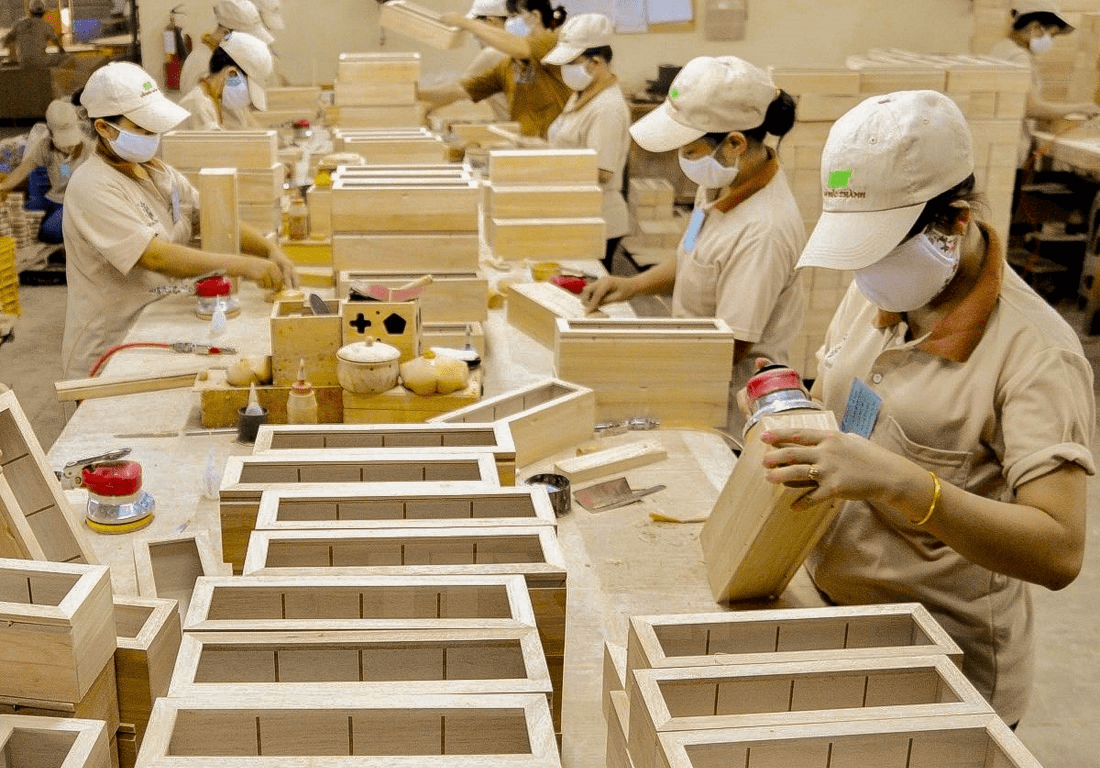 |
| Photo: Ministry of Agriculture and Environment |
Although the figure did not meet the industry’s $18 billion target, Man noted that the outcome reflected considerable efforts by the sector, particularly amid the volatility of 2025, which was marked by changes in US tariff policies.
Notably, despite tariff measures, the US continued to be Vietnam’s largest importer of wood products over the past year.
“The US market accounted for 54.65 per cent of the industry’s total export value, equivalent to nearly $9.5 billion,” Man said. “Following the US, Japan, China, and South Korea were the next largest importers of Vietnam’s wood and wood products.”
Data from the Department of Forestry and Forest Protection under the Ministry of Agriculture and Environment show that Vietnam’s wood and wood product exports have continued to consolidate the country’s position among the world’s top five exporters.
In the segment of deeply processed wood products alone, with export turnover of $11.7 billion, Vietnam ranked second globally, behind only China.
Looking ahead to 2026, the Department of Forestry and Forest Protection warned that the wood industry may face challenges on multiple fronts. These include rising trade barriers and an increase in trade defence and anti-dumping investigations from the US, volatile logistics costs due to global geopolitical uncertainties, and mounting pressure to secure certified plantation timber to meet stricter import regulations in key markets.
For 2026, Hawa expects the industry’s export turnover to reach as much as $19 billion.
“To achieve this goal, the sector needs to deepen its presence in markets that have already been opened, such as the Middle East and India. At the same time, wood enterprises must step up investment in technology to enhance competitiveness and reduce costs compared with regional and global peers,” chairman of Hawa noted.
What the stars mean:
★ Poor ★ ★ Promising ★★★ Good ★★★★ Very good ★★★★★ Exceptional
 Tag:
Tag:Related Contents



Latest News





More News
- EuroCham confidence index holds at 78.3 despite operational hurdles (October 16, 2026 | 17:27)
- Shrimp and rice firms face rising standards in export markets (October 16, 2026 | 09:00)
- SCG and Prime Group add value to the ecosystem (October 15, 2026 | 15:55)
- Project readiness key to unlocking green finance (October 15, 2026 | 12:35)
- Sovereign AI and human oversight key to secure digital government (October 15, 2026 | 12:32)
- MEXC Ventures partners with Corelia Academy: Bringing digital asset education closer to Vietnamese students (October 15, 2026 | 09:00)
- Global design expertise meets a more sophisticated Vietnam market (October 15, 2026 | 09:00)
- Vietnam growth nears double digits, UOB raises forecast (October 14, 2026 | 17:39)
- Smart factories need skills, finance and trust to scale (October 14, 2026 | 17:33)
- Sanofi-Aventis Vietnam appoints new head of Vaccines and country lead (October 12, 2026 | 17:21)




Latest News






 Mobile Version