
Vietnam seeks global investment to build OSW industry and supply chain

 |
| Photo: VGP |
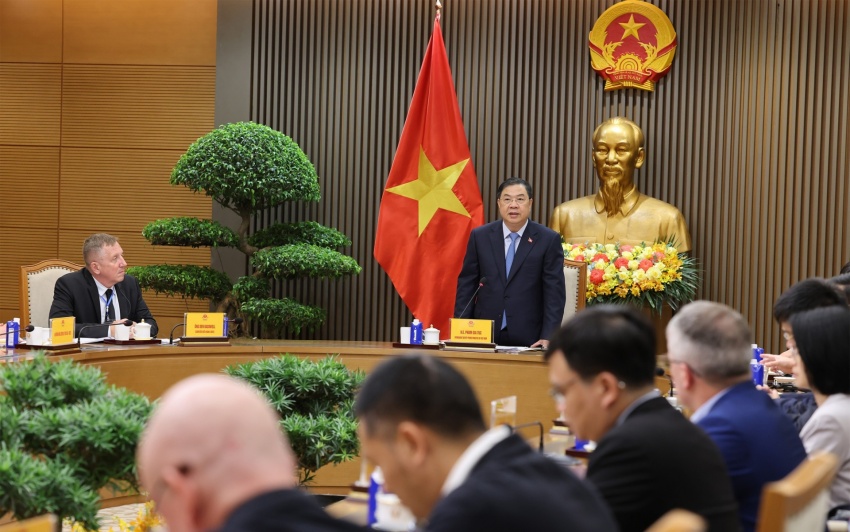
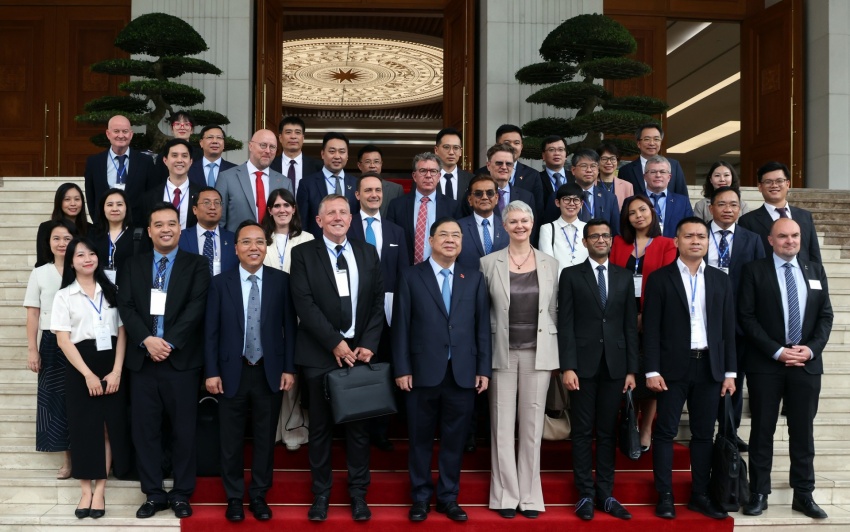
Standing Deputy Prime Minister Pham Gia Tuc affirmed the government will continue improving regulations, cutting administrative procedures, and building a more favourable investment environment to attract leading global energy groups. He made the remarks during a working session in Hanoi on June 9 with a delegation from the Global Wind Energy Council (GWEC), led by CEO Ben Backwell.
GWEC represents project developers, investors, equipment manufacturers, and businesses across the wind power supply chain, accounting for around 70 per cent of the world’s installed wind power capacity.
Deputy Prime Minister Tuc said Vietnam is accelerating its energy transition process, with priority given to maximising the development of renewable and new energy sources to ensure national energy security.
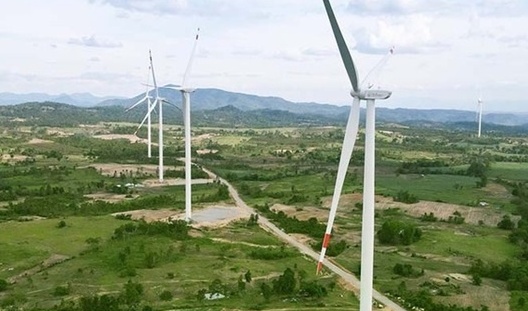
Vietnam has already developed more than 10,000 MW of wind and solar power, accounting for over 10 per cent of the country’s total electricity output. OSW power, in particular, has been identified as a sector with significant potential and will be strongly promoted in the coming years.
To facilitate the sector’s development, the government is continuing to refine the policy and legal framework for the 2026-2030 period, focusing on removing obstructions related to marine site surveys, investment procedures, and implementation mechanisms for OSW projects.
Government leaders highly appreciated GWEC’s contributions in sharing international experience, providing policy recommendations, and connecting major investors and manufacturers with the Vietnamese market. Vietnam also expressed its desire for businesses to continue supporting the country in supply chain development, technology transfer, workforce training, and infrastructure investment for the OSW sector.
During the meeting, representatives of several international corporations expressed readiness to invest in Vietnam and proposed the establishment of a stable and transparent legal framework covering the entire project lifecycle, from surveys and feasibility studies to construction and operation.
Businesses also recommended the early completion of mechanisms for investor selection based on financial capability, technical expertise, and the ability to generate added value for the economy. In addition, they called for internationally aligned power purchase agreements and upgrades to the power grid, seaports, and transport infrastructure in line with development timelines.
The companies also noted Vietnam’s strong potential for developing supporting industries and said they are prepared to establish manufacturing facilities, transfer technology, and train local workers to help build a domestic supply chain for the OSW industry.
In discussions with investors, leaders from the Ministries of Industry and Trade, Finance, Construction, and Agriculture and Environment clarified issues related to electricity pricing mechanisms, marine area allocation procedures, financial policies, and the orientation of developing OSW power as a strategic national industry.
 |
| Photo: VGP |
Concluding the meeting, the DPM stressed that Vietnam’s electricity demand will rise sharply in the coming years to support economic growth targets. In the future power mix, Vietnam will prioritise renewable energy, gas-fired power, and nuclear energy.
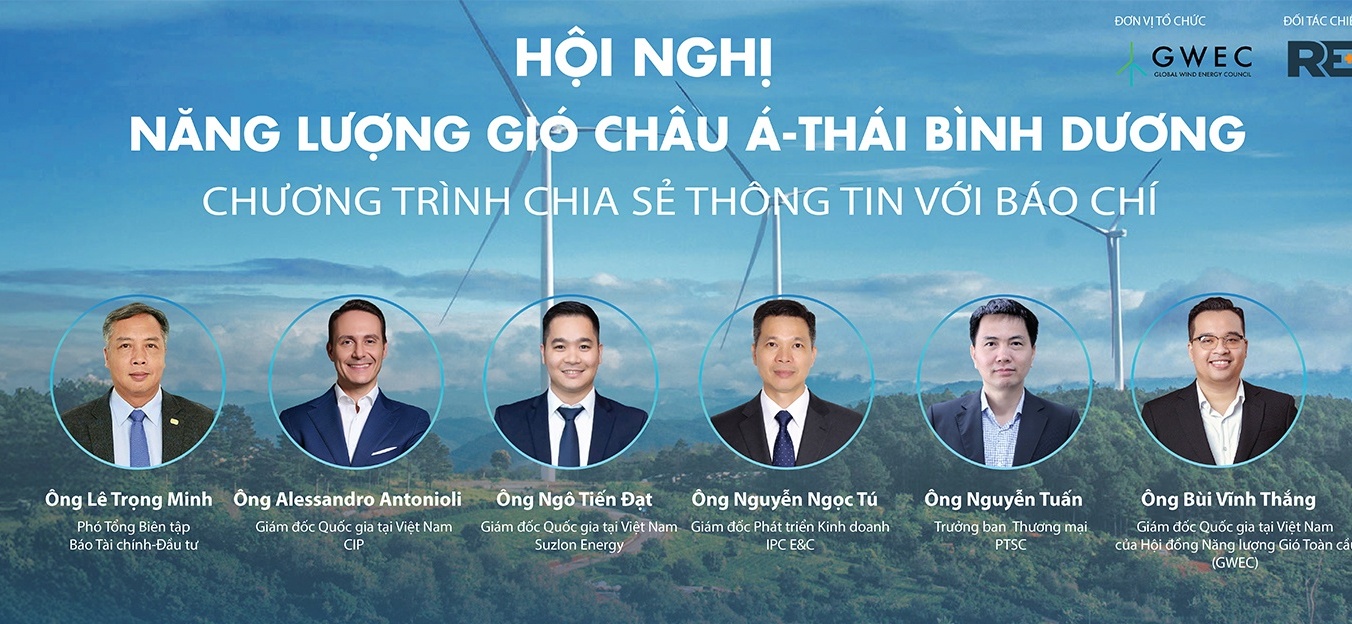
Under current planning, Vietnam aims to put between 6,000 MW and 17,000 MW of OSW capacity into operation by 2030, with the possibility of accelerating progress if financially strong and technologically capable international investors participate. By 2050, OSW is expected to account for around 14.7-16.6 per cent of the country’s total power capacity structure.
On the regulatory front, the government is refining legal provisions to create more favourable mechanisms for investors. Resolution No. 253/2025 passed by the National Assembly allows investment policy approval and investor approval to be granted simultaneously for OSW projects, thereby shortening project preparation timelines and accelerating the selection of qualified investors.
DPM Tuc explained that the government will continue reforming administrative procedures, reducing compliance costs, and upgrading infrastructure, including deep-water seaports, transmission grids, and transport connectivity systems, to support OSW projects.
“The government remains committed to listening to and engaging in open dialogue with the international business community, viewing the success of enterprises as Vietnam’s success,” the DPM said, expressing hope that GWEC member companies would soon make investments in the Vietnamese market.
 | Hanoi to host APAC’s premier wind energy event Media briefing on APAC Wind Energy Summit 2026 will take place at VIR's headquarters on May 26, highlighting the growing role of wind energy in powering economic growth and industrial transformation. |
 | Wind industry leaders to convene in Vietnam for APAC Summit The Asia-Pacific Wind Energy Summit 2026 will take place on June 9-11 in Hanoi. |
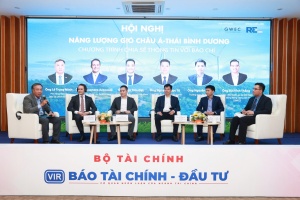 | Vietnam positioned to lead Southeast Asia’s wind power race Vietnam’s offshore wind ambitions are creating opportunities not only for clean power generation, but also for the emergence of an entirely new industrial ecosystem spanning manufacturing, logistics and energy services, according to experts from both domestic and international companies. |
What the stars mean:
★ Poor ★ ★ Promising ★★★ Good ★★★★ Very good ★★★★★ Exceptional
 Tag:
Tag:Related Contents








Latest News
More News
- Vietnam’s registered FDI surpasses $50 billion in nine months (October 07, 2026 | 10:30)
- Samsung Electro-Mechanics to add $1.85 billion semiconductor investment in Thai Nguyen (October 06, 2026 | 18:23)
- Electronics funding will be won via a capable ecosystem: SGS (October 06, 2026 | 09:00)
- LNG power plant projects risk falling behind schedule (October 03, 2026 | 09:00)
- Pandora opens world’s largest fine jewellery crafting facility (October 02, 2026 | 22:21)
- An Phat 5 Industrial Park positions for new wave of investment in northern Vietnam (October 02, 2026 | 09:00)
- Hanoi to launch portal to ease hurdles for tech businesses (October 01, 2026 | 09:00)
- Foreign investors to be widened for market access (September 30, 2026 | 17:54)
- Phu Quoc Airport planning adjusted to serve APEC 2027 (September 30, 2026 | 17:35)
- Nearly 200 foreign-invested enterprises in Vietnam to pay global minimum tax (September 30, 2026 | 17:26)


Latest News




 Mobile Version