
Vietnam charts path towards smart, green, and inclusive cities

On November 5 in Hanoi, the Ministry of Construction, in partnership with the Central Commission for Policy and Strategy, hosted the Vietnam Urban Sustainability Summit 2025, bringing together government leaders, international organisations, and leading experts in urban planning, construction, and sustainable development.
The event was held to celebrate Vietnam Urban Day on November 8 and Vietnam Law Day on November 9.
Deputy minister of Construction Nguyen Tuong Van emphasised that 2025 marks a particularly significant milestone for Vietnam, highlighting major national events.
“Urban development entered a comprehensive reform phase with the implementation of the two-tier local government model, which is a major policy shift that represents a turning point in Vietnam’s urban governance and development,” said Van. “2025 also marks the tenth anniversary of Vietnam’s commitment to the United Nations’ Sustainable Development Goal 11 on sustainable cities and communities.”
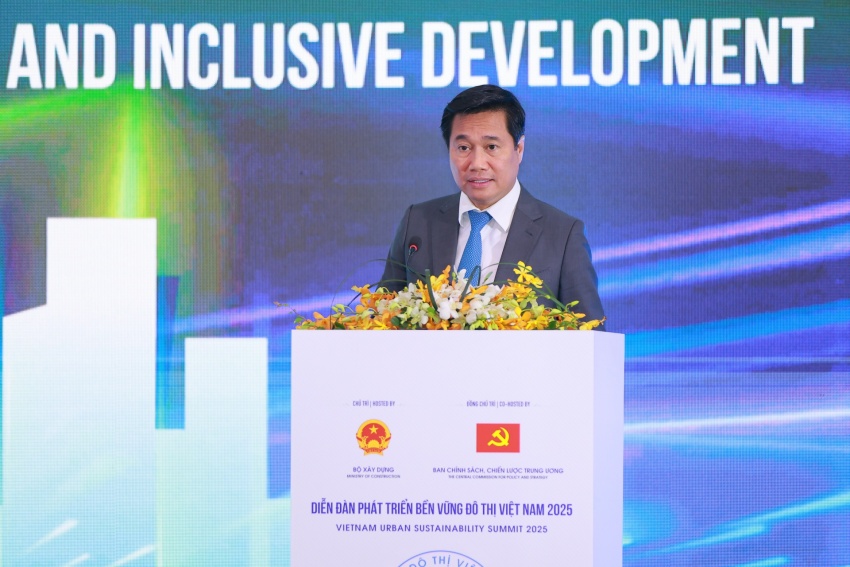 |
| Deputy Minister of Construction Nguyen Tuong Van speech at the summit |
According to Van, Vietnam’s urban system has increasingly cemented its role as a key driver of national development, contributing to economic growth and carrying profound political, social, and environmental significance.
“This year’s forum serves as an opportunity to assess the implementation of key tasks and solutions while creating a national policy dialogue platform connecting policymakers, businesses, experts, and development partners,” he said.
“The summit’s outcomes will serve as crucial input for the Ministry’s policymaking and management work, particularly in shaping and refining strategies for sustainable urban development in Vietnam, contributing to the vision of a smart, green, and inclusive urban system for the country’s future,” stated Van.
Deputy Head of the Central Commission for Policy and Strategy Nguyen Duy Hung stated that the forum's themes comprehensively reflect the new phase of Vietnam’s urban development, one that brings both opportunities and challenges.
“Urban sustainable development is not simply an economic matter but a long-term political, social, and welfare responsibility. Urbanisation should go beyond expanding living spaces to improving quality of life, protecting the environment, and ensuring harmony between people and nature,” said Hung.
He also called for stronger discipline in urban planning, a healthier real estate market, housing solutions for citizens, particularly social housing and worker accommodations and the prioritisation of environmental protection, flood prevention, and climate resilience.
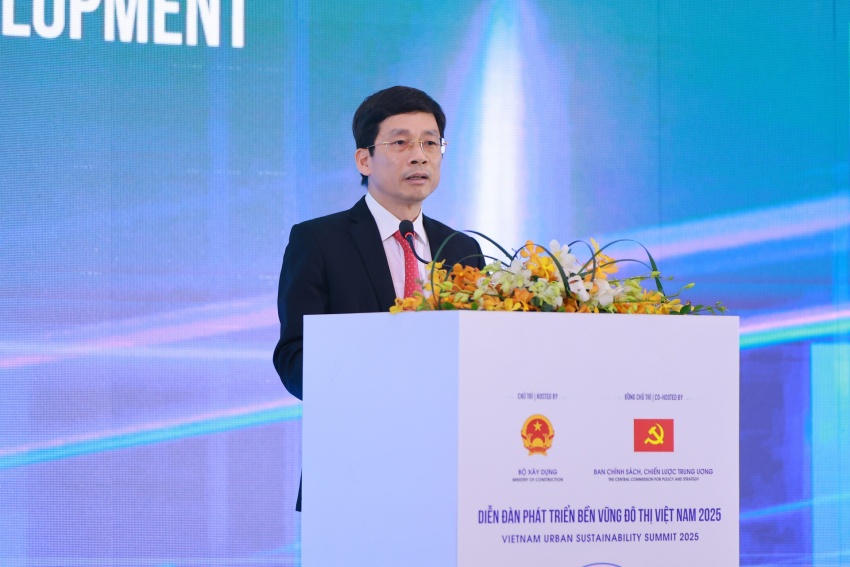 |
| Deputy Head of the Central Commission for Policy and Strategy Nguyen Duy Hung |
According to Hung, Vietnam’s urban system reflects both universal characteristics of global modern cities and distinctive Vietnamese traits.
“Therefore, it is essential to continue improving institutions, especially laws on planning and land, to build appropriate smart city standards for the two-tier governance model, and to accelerate science, technology, and digital transformation in urban management and operation,” he added.
At the summit, Thomas Gass, Ambassador of Switzerland to Vietnam, highlighted governance as the cornerstone of sustainable urban development.
“Good governance creates jobs, opportunities, and equity, while poor management leads to inequality and social risk,” he added. “Vietnam’s urban management and planning processes are becoming faster, smarter, and more efficient. Switzerland will continue to accompany and support Vietnam in its green growth and sustainable urban initiatives.”
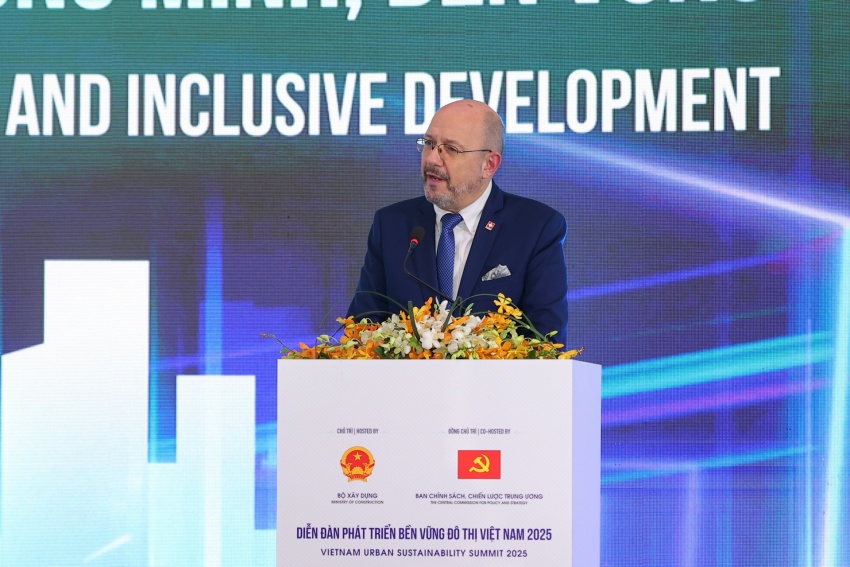 |
| Thomas Gass, Ambassador of Switzerland to Vietnam |
Mariam J. Sherman, country director of the World Bank for Vietnam, Cambodia, and Laos, noted that Vietnam stands at a critical juncture to transform into a dynamic, smart, and environmentally friendly urban nation.
“The World Bank is committed to continuing close cooperation with the Vietnamese government in key areas such as integrated planning, urban finance, sustainable infrastructure development, and green transition,” said Sherman. “Sustainable urbanisation is not just a destination but a long-term journey that requires vision, leadership, and cross-sectoral commitment. Vietnam already has a strong foundation, and the World Bank stands ready to support that journey,” she added.
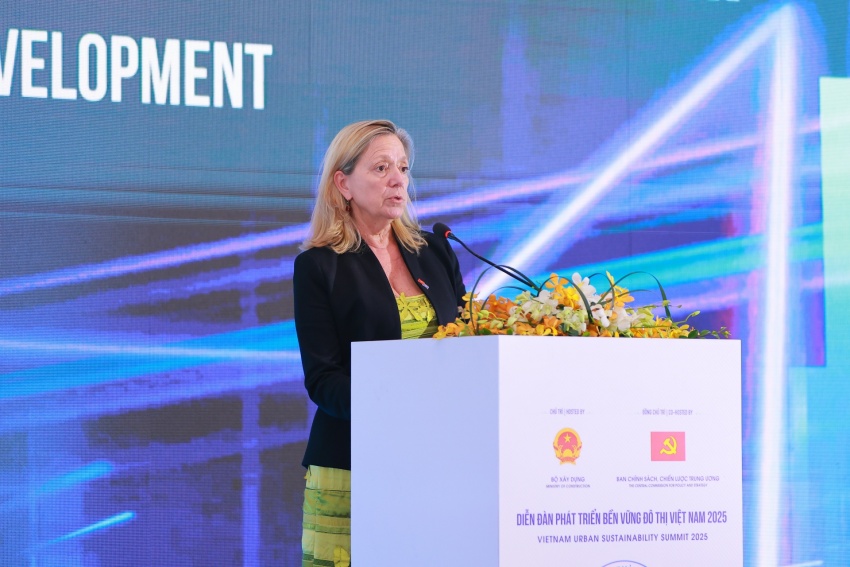 |
| Mariam J. Sherman, country director of the World Bank for Vietnam, Cambodia, and Laos |
The summit successfully concluded with 37 papers and 22 live presentations, attracting over 500 delegates. Three thematic workshops and one plenary session were held, focusing on key pillars of urban development in the new era.
At the innovation workshop, participants emphasised that the Internet of Things, AI, big data, and digital twins are revolutionising urban planning and management. Locations such as Danang, Hue, and Binh Duong have demonstrated that digital transformation is not merely about adopting technology, but fundamentally rethinking governance.
Delegates unanimously proposed developing a national smart city criteria framework, an integrated urban data platform, and an innovation ecosystem that engages governments, businesses, research institutes, and citizens.
In the workshop on green growth and climate adaptation, experts analysed severe issues of flooding, subsidence, and salinity intrusion in coastal cities and regions such as the Mekong Delta and Central Vietnam.
The forum agreed on the need to integrate climate considerations into urban planning and finance, develop green infrastructure, smart drainage systems, and enhance international cooperation in climate finance.
Meanwhile, the workshop on modern planning and governance underscored the importance of transparency, data, and community participation in urban development. Experts asserted that without good planning, there can be no liveable city, and without modern governance, there can be no sustainable development.
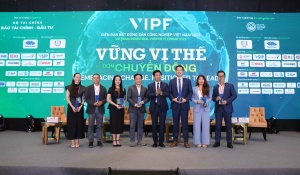
 | Building Vietnam’s green industrial future: materials, mindset, and resource efficiency Industrial real estate is becoming a testing ground for sustainability. From low-carbon building materials and energy-efficient designs to smart water management, a comprehensive green ecosystem will define the country's next phase of industrial development, one built to last, attract foreign direct investment (FDI), and minimise environmental impacts. |
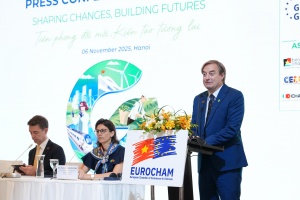
 | Vietnam’s growth formula evolves as high-tech and green industries take lead Vietnam is entering a new phase of economic transformation where foreign direct investment (FDI), high-tech industries, environmental, social, and governance (ESG) commitments, and human resources quality will define its growth path. Industry leaders highlight that the next generation of industrial parks must evolve to be green, smart, and integrated to meet investors' rising standards and Vietnam's net zero ambitions. |
 | EuroCham to host green economy forum The European Chamber of Commerce in Vietnam (EuroCham) will host the Green Economy Forum (GEF) 2025 in Hanoi on November 27. |
What the stars mean:
★ Poor ★ ★ Promising ★★★ Good ★★★★ Very good ★★★★★ Exceptional
 Tag:
Tag:Related Contents

Latest News


More News
- GreenYellow and Vina Paper partner on rooftop solar project (October 05, 2026 | 09:00)
- Consultation workshop refines Vietnam's clean hydrogen strategy (October 04, 2026 | 08:00)
- JBIC considers new financing options for Vietnam’s energy projects (October 03, 2026 | 08:00)
- Vestas to supply 16 turbines for two new Vietnam wind farms (October 01, 2026 | 07:00)
- Inter-sectoral cooperation on Montreal protocol (September 30, 2026 | 17:20)
- EV battery recycling rate proposed at 8 per cent from 2029 (September 29, 2026 | 16:00)
- Bankability remains hurdle for Vietnam's JETP projects (September 29, 2026 | 12:08)
- Binh Minh Plastics extends clean water project to border communities (September 29, 2026 | 10:57)
- Coca-Cola Vietnam expands packaging collection programme (September 25, 2026 | 08:15)
- Pacifico Energy secures sea survey licence for offshore wind project in Lam Dong (September 24, 2026 | 18:02)









 Mobile Version