
The green hydrogen and ammonia future for Vietnam

According to the International Energy Agency Global Energy Review 2025, global energy-related carbon dioxide emissions increased by 0.8 per cent in 2024, reaching a record 37.8 gigatonnes. As the world emerges from the COP30 climate summit in Brazil, the question of how to reduce emissions rapidly without undermining economic growth has again come to the forefront of discussion.
 |
| Pham Hoang Vu, associate and deputy head of Projects and Infrastructure Indochine Counsel |
This challenge is particularly relevant for emerging economies such as Vietnam, where sustained growth continues to drive rising energy demand.
In recent years, Vietnam has made notable efforts to build an economy that is both cleaner and more resilient. The nation’s energy development strategy provides the framework for this transition. It sets out the overarching objective of ensuring a sufficient, stable, and high-quality energy supply at reasonable prices to support rapid and sustainable socioeconomic development.
It also outlines indicative targets to reduce greenhouse gas emissions from energy activities by 15 per cent by 2030 and 20 per cent by 2045, and to raise the share of renewable energy in total primary supply to 25-30 per cent by 2045.
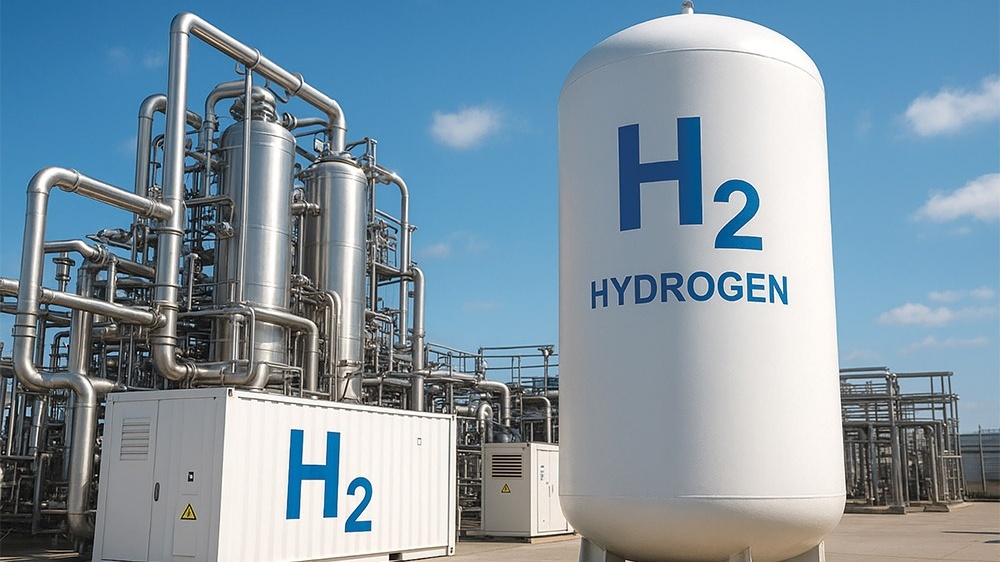
Against this background, green hydrogen and ammonia have gradually emerged as potential components of Vietnam’s long-term energy vision. These energy carriers are increasingly regarded as promising complements to existing renewable sources due to their ability to store energy, generate clean power, and serve as industrial feedstocks.
Vietnam is widely recognised for its substantial renewable-energy potential, particularly in wind, solar, and biomass, which can provide a foundation for producing green hydrogen (Hoang et al., 2023). This renewable base offers Vietnam a strong starting point for developing green hydrogen and ammonia, linking its renewable capacity with future clean-fuel production.
From a technical perspective, hydrogen and ammonia are closely connected. Green hydrogen is produced through electrolysis, a process that uses renewable electricity to split water into hydrogen and oxygen. Hydrogen can then be combined with nitrogen to form green ammonia, which is comparatively easier to store, transport, and, in some cases, use directly for power generation (The Royal Society, 2020).
Hydrogen has been identified in Vietnam’s 2022 updated Nationally Determined Contribution as a potential measure to support emission reduction and energy security. It also appears in the mobilisation plan of the Just Energy Transition Partnership as a priority area for international cooperation.
Meanwhile, ammonia is increasingly discussed as a complementary technology, particularly for storage and co-firing. In practice, applications are expected to develop progressively.
In the power sector, ammonia co-firing in existing coal-fired units is being researched internationally and may, if proven technically and economically feasible, help reduce emissions while maintaining grid stability. Hydrogen-based systems could also play a role in remote or island areas, replacing diesel generation where renewable options remain limited.
Beyond electricity, both hydrogen and ammonia could support cleaner transport by serving as alternative fuels in sectors that are difficult to decarbonise through electrification alone, such as rail, inland waterways, and maritime shipping.
After all, a genuine energy transition would not be complete if vessels or trains continued to rely on electricity generated from fossil fuels; using renewable energy, green hydrogen, or green ammonia would bring Vietnam closer to its goal of a sustainable and integrated energy ecosystem.
 |
Setting the tone
The hydrogen energy development strategy to 2030, issued early in 2024, marked Vietnam’s first dedicated roadmap for this emerging sector. The strategy sets indicative production targets of 100,000-500,000 tonnes of hydrogen per year by 2030, increasing to 10-20 million tonnes by 2050, and calls for pilot projects to co-fire hydrogen with gas and ammonia with coal before 2030, paving the way for wider application by mid-century.
These plans are now integrated into the revised Power Development Plan VIII, officially adopted in April, which identifies hydrogen and ammonia as integral parts of Vietnam’s future energy mix. The plan promotes the expansion of offshore wind, solar, and onshore wind to supply renewable electricity for hydrogen and ammonia production serving both domestic use and potential export markets.
Under the plan, green ammonia is expected to partly replace coal in thermal power generation, contributing approximately 25,800MW of capacity by 2050, while hydrogen-fired generation could substitute part of the liquefied natural gas capacity, accounting for around 37,000MW of the gas sector’s projected 49,000MW total.
Although these figures remain subject to future policy and market developments, they demonstrate Vietnam’s growing recognition of hydrogen and ammonia as elements of a balanced, long-term energy strategy.
Other legislation on national energy security issued in August consolidates this policy direction. It calls for pilot projects linking renewables with hydrogen and ammonia production, and seeks to harness Vietnam’s long coastline and renewable potential to build a clean-fuel value chain. It also introduces the concept of a managed fossil-fuel transition as a gradual shift of coal and gas facilities towards cleaner alternatives such as biomass, hydrogen, and ammonia, while maintaining energy security and macroeconomic stability.
The realisation of Vietnam’s hydrogen and ammonia potential will depend largely on how the legal, institutional, and regulatory framework evolves in the coming years. While recent policy instruments have demonstrated strong political commitment, a comprehensive framework governing the entire value chain from production and storage to transport, certification, and trade has not yet been established. The absence of detailed guidance and technical standards may create legal uncertainty for investors, project developers, and regulatory agencies.
Moving from pilot projects to commercial-scale deployment will also require a supportive ecosystem of infrastructure, finance, and governance. For Vietnam, this may involve the gradual development of port capacity, coastal industrial zones, and export facilities in areas with strong renewable potential, supported by effective institutional coordination among relevant authorities.
With the key policy frameworks now in place, the next stage will be implementation. From a legal perspective, Vietnam may wish to consider clearer and more detailed provisions on commercial terms shaping early projects, such as tax treatment, pricing principles, standardised power-purchase agreements, and land and port-use conditions, together with guidance on offtake arrangements.
Greater specificity in these areas could reduce contractual uncertainty, improve bankability, and help align expectations among government bodies, investors, and lenders.
At the same time, establishing technical and safety standards for hydrogen and ammonia will be essential. Where appropriate, alignment with international practice may facilitate financing, insurance, and cross-border trade. Continuous monitoring of regional and global technological developments will also help ensure that Vietnam’s standards remain compatible with emerging best practice and support the country’s long-term goal of a credible, safe, and sustainable clean-fuel industry.
In the long run, the success of Vietnam’s hydrogen and ammonia transition will depend less on ambition itself than on the country’s ability to build a clear, credible, and coordinated framework that turns policy vision into practical results.
What the stars mean:
★ Poor ★ ★ Promising ★★★ Good ★★★★ Very good ★★★★★ Exceptional
 Tag:
Tag:Related Contents




Latest News





More News
- Vietnam opens arms wide to talent with high-tech nous (December 23, 2025 | 09:00)
- Safeguards essential for e-commerce data (September 08, 2025 | 10:32)
- Financial hubs are bold reimagining (July 25, 2025 | 11:28)
- From idea to market: fintech sandbox takes shape (May 16, 2025 | 09:46)
- Legal protections for local companies (May 08, 2025 | 10:39)
- Drawing insights from data law draft (March 27, 2025 | 15:00)
- Sandbox for crypto assets in Vietnam: if not now, when? (March 11, 2025 | 11:34)
- Securities law reflects alignment efforts (February 25, 2025 | 10:42)
- New law marks shift for electricity market (February 12, 2025 | 14:30)
- Indochine Counsel launches new corporate identity (September 23, 2024 | 06:52)








 Mobile Version