
Heavy industries set for pilot greenhouse gas quotas

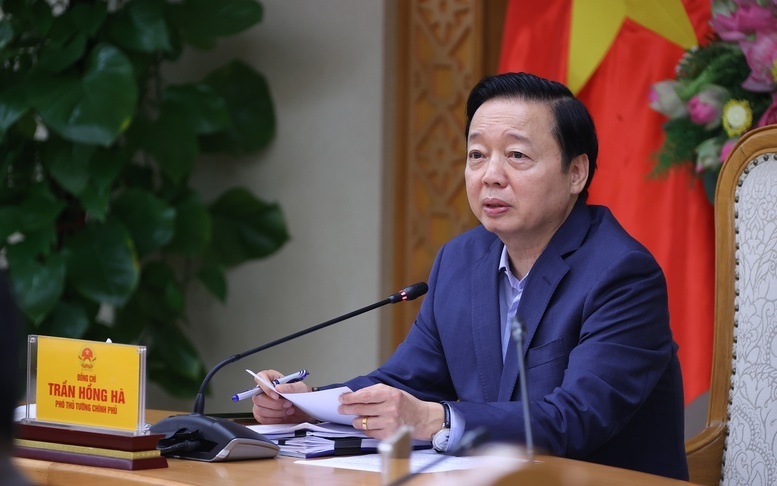 |
| Deputy Prime Minister Tran Hong Ha. Photo:VGP |
On December 24, Deputy Prime Minister Tran Hong Ha chaired a meeting to review plans for approving total greenhouse gas (GHG) emission quotas for 2026, with 110 firms set to be reported to the prime minister for consideration under a pilot allocation scheme. The list includes 34 thermal power plants, 25 iron and steel producers, and 51 cement manufacturers that meet eligibility criteria based on national GHG inventory requirements.
“Quota allocation will push businesses to cut emissions, invest in cleaner technologies, and improve production efficiency,” Ha said. “The framework must allow firms that reduce emissions beyond their targets to trade surplus quotas, turning mitigation into a market-based resource. As this is Vietnam’s first time assigning emission quotas, implementation must be backed by clear and detailed legal regulations.”
Deputy Minister of Industry and Trade Nguyen Sinh Nhat Tan said, “It is necessary to review and evaluate the method of determining and allocating emission quotas, which are based on actual production, differences in technology, equipment, and raw materials between facilities, and the extent of these differences.”
“At the same time, it needs to have an independent measurement and verification policy to ensure the accuracy of emission data, as state management agencies can only assess the process and cannot accurately confirm the figures reported by businesses themselves,” Tan added.
At the meeting, representatives from the energy, coal, minerals, cement, and construction materials sectors urged that emission quota allocation strike a balance between emissions reduction and maintaining growth momentum.
Businesses proposed shifting from absolute quotas to per-unit emission standards to avoid constraining production expansion and to encourage investment in cleaner technologies. They also called for a flexible internal quota allocation mechanism and the early establishment of a transparent carbon credit market.
Dinh Quoc Thai, general secretary of the Vietnam Steel Association, said, “The most important priority is to complete a transparent measurement and verification system in line with international standards before rolling out the scheme more widely.”
 | Vietnam to impose emission quotas on 150 largest enterprises The government is preparing to allocate greenhouse gas (GHG) emission quotas to 150 facilities across the thermal power, steel, and cement sectors, which together account for 40 per cent of Vietnam's total emissions. |
 | Developing a green, circular, and low-emission IP model in Haiphong Sao Do Group has pioneered the development of an eco-industrial park strategic framework for Nam Dinh Vu Industrial Park (IP) to implement environmental protection activities and promote resource sharing and sustainable development among businesses in the park. |
 | Carlsberg Vietnam accelerates drive towards net-zero emissions As Vietnam advances towards its 2050 net-zero vision, businesses are expected to play a decision role in enabling the country's green transition. At the Green Economy Forum 2025, Carlsberg Vietnam shared how a long-standing foreign-invested enterprise is reshaping its operations and energy strategy to align with Vietnam's sustainability goals. |
 | Roadmap unveiled to tighten vehicle emission standards Local authorities have outlined a roadmap to tighten vehicle emission standards, targeting older and high-polluting automobiles to improve air quality and environmental safety. |
 | Vietnam key to Nestlé's vision and strategy Geopolitical concerns and market volatility are reshaping global business strategies, yet for long-established multinational companies, short-term fluctuations rarely dictate long-term direction. |
What the stars mean:
★ Poor ★ ★ Promising ★★★ Good ★★★★ Very good ★★★★★ Exceptional
 Tag:
Tag:Related Contents




Latest News



More News
- Tien Phong Plastics wins two awards at Green Future Awards 2026 (October 06, 2026 | 11:51)
- Energy transition task force meets to advance Vietnam's grid and storage (October 05, 2026 | 18:59)
- GreenYellow and Vina Paper partner on rooftop solar project (October 05, 2026 | 09:00)
- Consultation workshop refines Vietnam's clean hydrogen strategy (October 04, 2026 | 08:00)
- JBIC considers new financing options for Vietnam’s energy projects (October 03, 2026 | 08:00)
- Vestas to supply 16 turbines for two new Vietnam wind farms (October 01, 2026 | 07:00)
- Inter-sectoral cooperation on Montreal protocol (September 30, 2026 | 17:20)
- EV battery recycling rate proposed at 8 per cent from 2029 (September 29, 2026 | 16:00)
- Bankability remains hurdle for Vietnam's JETP projects (September 29, 2026 | 12:08)
- Binh Minh Plastics extends clean water project to border communities (September 29, 2026 | 10:57)








 Mobile Version