
Driving double-digit growth through green and circular transformation in Vietnam

On December 16, the Central Policy and Strategy Commission, in coordination with the government, held the Vietnam's Economy in 2025 and Prospects in 2026 Forum (VEPF) under the theme “Vietnam's economy: rapid and sustainable development, green transition in the digital era”. A thematic session on promoting green transition and developing the circular economy to realise the goal of high growth and sustainable development was held.
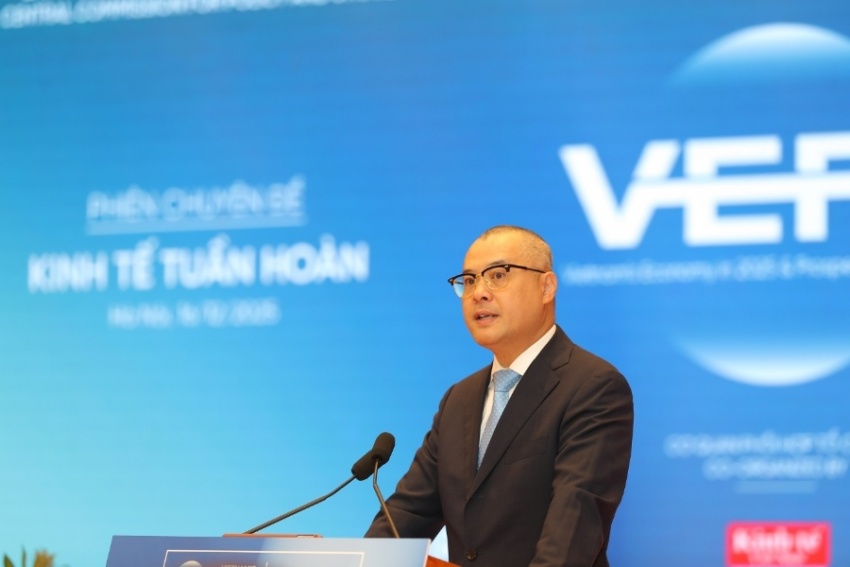 |
| Pham Dai Duong, a member of the Party Central Committee and deputy head of the Central Policy and Strategy Commission |
A breakthrough in renewing growth model
In his opening remarks, Pham Dai Duong, Member of the Party Central Committee and Deputy Head of the Central Policy and Strategy Commission, stated that to realise the Party's centenary strategic goals, becoming a modern industrialised developing country with upper-middle-income status by 2030, and a developed high-income country by 2045, Vietnam must achieve a breakthrough in renewing its growth model. This requires attaining double-digit growth during the 2026-2030 period and in subsequent years.
"This new growth model must ensure the core principles of sustainability, inclusiveness, and comprehensiveness. It should not focus solely on speed, but also emphasise quality, efficiency, and the competitiveness of the economy. The model is shaped by the integrated implementation of four transformational shifts," he said.
These four transformations include: digital transformation to build a digital economy, digital society and digital citizens; green transformation to achieve sustainable, high-quality development in harmony with nature and adapt to climate change; energy transition to ensure energy security and fulfilling strong international commitments to achieve net-zero emissions by 2050; and structural transformation alongside improvements in workforce quality to meet the requirements of the knowledge economy, enhance productivity and strengthen competitiveness.
Duong said, “Digital transformation and green transformation are two fundamental components of an inevitable and irreversible trend. They are no longer optional, but mandatory requirements of current development realities.”
Digital delivers speed and intelligence, helping to overcome physical constraints, boost transformation labour productivity and create high value-added digital industries with rapid growth potential. Green transformation, meanwhile, brings sustainability and human-centred development, preserving environmental protection, social welfare and long-term prosperity, without trading future environmental and social values for short-term growth.
“Importantly, digital and green transformations are not separate or independent processes. They are closely interconnected and mutually reinforcing, commonly referred to as the dual transition,” he said.
“The circular economy, as a driver of green transition in the digital era and closely linked with science, technology, innovation and digital transformation, is identified as a strategic pillar of the new growth model and a key enabler for Vietnam's breakthrough development,” he added.
The circular economy turns secondary waste into resources, opening up high value-added industries such as recycling, eco-industrial production, and renewable energy. “This not only helps reduce input costs, but also attracts high-quality capital flows and creates new development space for Vietnam, enabling double-digit growth while ensuring sustainability,” Duong emphasised.
“The long term goal is to build a fast-growing economy based on low emissions, circularity and efficient resource use, laying the foundation for sustainable growth, enhanced national competitiveness, and deeper integration into global value chains,” he said.
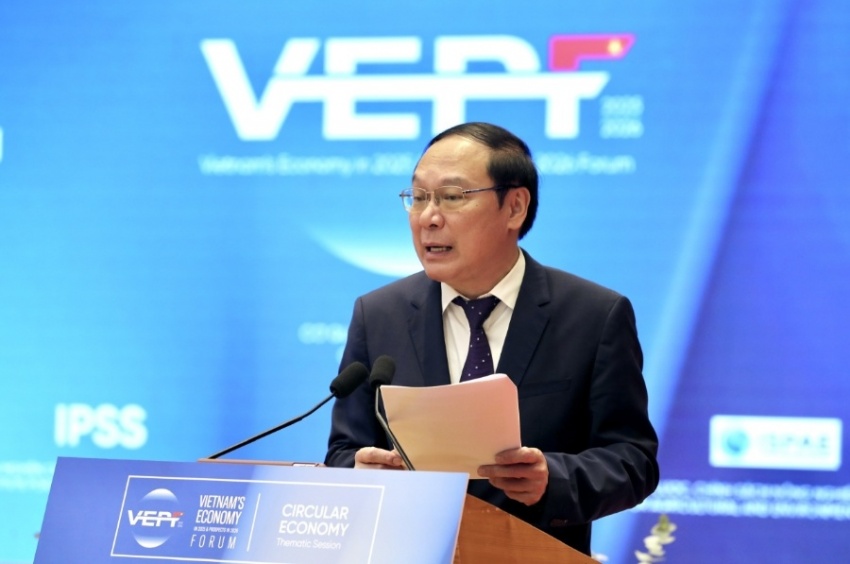 |
| Deputy Minister of Agriculture and Environment Le Cong Thanh |
Strategic breakthroughs for future growth
From the perspective of the Ministry of Agriculture and Environment, Deputy Minister Le Cong Thanh noted that despite encouraging progress, Vietnam's green transition continues to face significant challenges.
To overcome these constraints and accelerate green transition and circular economy development, the ministry has identified several strategic breakthroughs for the coming period. These include reinforcing the principle that sociological development and environmental protection are inseparable and central to sustainable development thinking, treating spending on the environment and green transition as investment opportunities.
The exercise will promote the economic valuation of environmental resources through pricing mechanisms, ecosystem service payments, and more effective use of environmental taxes, fees, and emissions quotas.
It will also further advance the circular economy by managing waste as a resource within digital systems, promoting green technologies, environmental industries, green procurement and renewable energy, while improving institutional frameworks to support green and circular development.
Additional priorities include restructuring towards agriculture efficiency, green and multi-value development aligned with environmental protection and climate adaptation; investing in infrastructure for ecological agriculture and the green economy; and prioritising multipurpose irrigation systems, climate adaptation projects, eco-agricultural zones, low-carbon industrial parks, and sustainable logistics.
“All investment activities will be oriented towards closed-loop circular systems, minimising waste and maximising the use of renewable resources,” Thanh said.
Finally, institutional and policy reforms will be accelerated, including completing subordinate legal frameworks, providing guidance on incentives for green investment and green technologies, removing administrative barriers, and establishing legal foundations for emerging markets such as carbon markets and biodiversity credits.
“Green transition and the circular economy are not only inevitable trends, but the only pathway for sustainable development that ensures harmony between economic interests and ecological values,” he said.
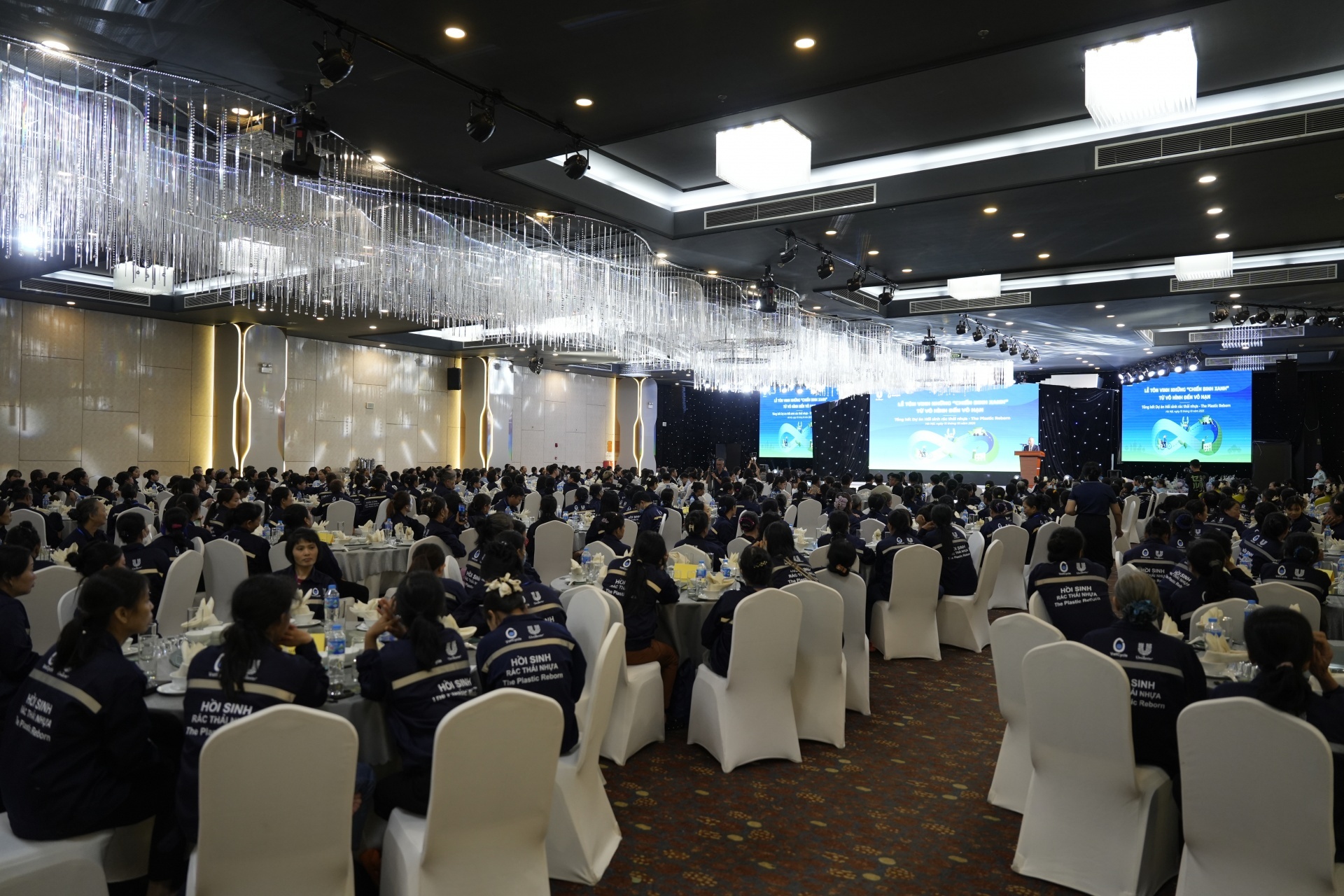
 | Turning waste into worth: a journey of empowering the 'green warriors' The Plastic Reborn initiative has collected 40,000 tonnes of plastic waste and empowered thousands of informal workers over the past five years through a growing circular economy model in Vietnam. |
 | Forum spotlights circular economy for green growth and net-zero targets Experts, remaining, and business leaders convened to explore ways to accelerate Vietnam's shift to a circular economy, a key step towards green growth and achieving net-zero emissions by 2050. |
 | Circular economy becoming architectural foundation The circular economy is increasingly becoming a driving force and playing a central role in Vietnam's dual transition towards digitalization and green transformation, serving as an essential pathway to achieving sustainability. |
What the stars mean:
★ Poor ★ ★ Promising ★★★ Good ★★★★ Very good ★★★★★ Exceptional
 Tag:
Tag:Related Contents




Latest News



More News
- Tien Phong Plastics wins two awards at Green Future Awards 2026 (October 06, 2026 | 11:51)
- Energy transition task force meets to advance Vietnam's grid and storage (October 05, 2026 | 18:59)
- GreenYellow and Vina Paper partner on rooftop solar project (October 05, 2026 | 09:00)
- Consultation workshop refines Vietnam's clean hydrogen strategy (October 04, 2026 | 08:00)
- JBIC considers new financing options for Vietnam’s energy projects (October 03, 2026 | 08:00)
- Vestas to supply 16 turbines for two new Vietnam wind farms (October 01, 2026 | 07:00)
- Inter-sectoral cooperation on Montreal protocol (September 30, 2026 | 17:20)
- EV battery recycling rate proposed at 8 per cent from 2029 (September 29, 2026 | 16:00)
- Bankability remains hurdle for Vietnam's JETP projects (September 29, 2026 | 12:08)
- Binh Minh Plastics extends clean water project to border communities (September 29, 2026 | 10:57)






 Mobile Version