
To long-lasting global friendships

 |
Sandeep Arya, Indian Ambassador to Vietnam
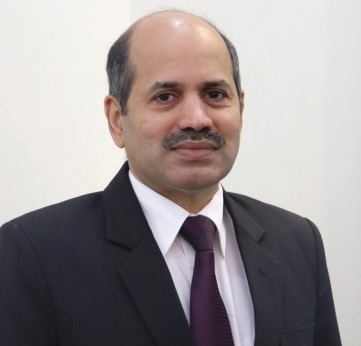 |
The healthy trajectory of India and Vietnam resonates with the long-term aims of both nations. We strive that more than seven decades of solid and steady partnership between India and Vietnam continue to prosper and contribute to our aims.
Our people-to-people connections extend to over 200 educational and training scholarships in India, ongoing phase II of restoration at the My Son world heritage site, records in two-way tourism, seven Indian cities connected by direct flights to three Vietnamese cities, two-way cultural troupe visits, and so on.
Trade, investment, and business relations are moving up with annual trade volume exceeding $15 billion, Indian companies expanding their investments in Vietnam and new businesses exploring projects continuously. Ongoing review of the 2009 ASEAN-India Trade in Goods Agreement aims at a user-friendly, trade facilitative regime shortly.
Defence and security cooperation is another significant facet of our bilateral partnership. Training, annual defence exercises, military staff talks, ship visits, and policy dialogue nurture close defence cooperation. The annual security dialogue eight months ago identified further areas for collaboration between our security establishments.
An action plan to implement the comprehensive strategic partnership by the two foreign ministers last year guides our cooperation. Last September, Indian Prime Minister Narendra Modi and
Vietnamese Party General Secretary To Lam agreed to expand bilateral cooperation.
Bilateral exchanges at the level of the governments, parliaments, party, provinces, businesses, friendship societies, youth, universities, and scholars enrich the ties between us. We constantly pursue new ways to enhance our relations, with technology and digital applications a new thrust.
Coordination in international organisations and on global and regional issues represent another dimension of the India-Vietnam partnership. Recently, India presented the amendment and steered it towards the inscription of the Yen Tu Complex as a UNESCO World Heritage Site. We exchange our perspectives on international developments and stand together on various issues, including Global South priorities.
Olivier Brochet, French Ambassador to Vietnam
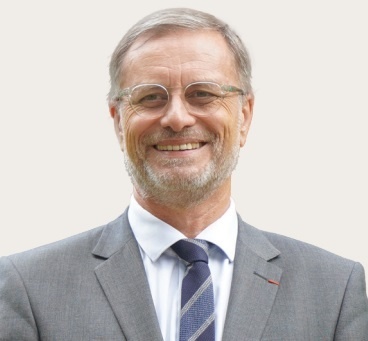 |
Vietnam’s remarkable economic progress since the 1980s stands as a testament to the resilience and determination of Vietnamese people, which led the country to become one of the world’s manufacturing powerhouse.
France recognised this potential early on, notably following President François Mitterrand’s historic visit in 1993 – the first by a Western head of state to Vietnam at the time. Since then, France has remained a steadfast development partner, committing over €3.5 billion (nearly $4.1 billion) in official development assistance since the 1990s.
These investments have helped modernise infrastructure, improve public services, and, more recently, support Vietnam’s efforts to address the challenges of climate change.
Today, France is Vietnam’s second-largest European investor, with some 250 French companies operating nationwide in sectors ranging from infrastructure and manufacturing to retail and services.
This enduring presence reflects the confidence of French businesses in Vietnam’s long-term prospects, the dynamism of its domestic market, and the rise of its middle class. The comprehensive strategic partnership between our two countries builds on these successes, with economic cooperation as a key pillar of our relationship.
Priority is given to innovative sectors such as energy, transport infrastructure, logistics, healthcare, and aerospace – a focus underscored by the numerous agreements and MoU signed during President Emmanuel Macron’s historic visit in May.
Through these partnerships, France aims to deepen mutual trust and lay the foundations for ever more ambitious joint projects with Vietnam in the years ahead.
Denny Abdi, Indonesian Ambassador to Vietnam
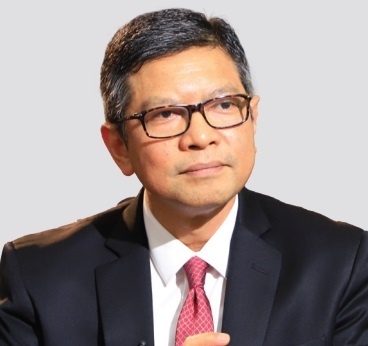 |
Vietnamese people can take pride in the nation’s remarkable journey over the past few decades.
The impressive economic growth in 2024 tells only part of the whole story, as Vietnam progressed in all aspects. Today, its manufacturing capabilities extend to high-tech industries, its human resources development fosters innovation, and its leadership within the regional landscape remains steadfast – all of which will only show even more remarkable results in the long run.
This year is a monumental year for Indonesia and Vietnam. Not only do our nations celebrate the 80th anniversary of our respective national days, we also mark 70 years of diplomatic relations and the recent elevation to a comprehensive strategic partnership.
These milestones are reflected in tangible achievements: collaboration between both countries is at its highest point, with bilateral trade already reaching $16.7 billion in 2024 – on track to surpass the $18 billion target ahead of schedule, two-way investments have grown to unprecedented levels, and relations between our governments and peoples have never been stronger.
Looking ahead, as two of the largest economies in the region with dynamic populations, Indonesia and Vietnam stand as key drivers of regional growth. Closer collaboration between our countries will not only accelerate our own national development, but also generate positive contribution towards peace, stability, and prosperity in the region.
Penny Wong, Australian Foreign Minister
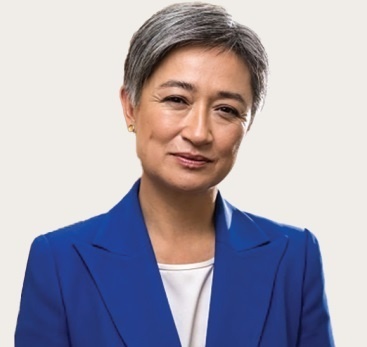 |
I was delighted to be back in Hanoi, on my third visit to Vietnam as Australia’s Foreign Minister, to deepen the partnership between our two countries.
Australia has made it a priority to engage more deeply with the countries of Southeast Asia, and Vietnam is such an important partner for Australia and such an important regional leader. We hope to be a steadfast and reliable, consistent partner to Vietnam.
We are increasing our trade, doubling it since 2006, and are working with Vietnam on trade and investment and educational opportunities. Australia is your third-largest destination for international students, which is fantastic. So, we are wanting to be a consistent partner with Vietnam as you head towards high-income status in 2045.
Australia’s relationship with Vietnam is built on mutual strategic trust and understanding, and we cooperate as close friends and partners to further peace, stability, and prosperity in our region.
I was really pleased to work on the comprehensive strategic partnership, and we were very pleased to have Prime Minister Albanese and Prime Minister Pham Minh Chinh sign it in March last year. We’ve completed over 90 per cent of the goals or the objectives in that already, so that is an example of the importance in the relationship, and we’ll continue to work on your key priorities.
One good example is that we’ve closed the first transaction on a key commercial transaction with VPBank, with partners from the UK, Japan, Canada, and Australia. It’s a $350 million loan facility, and an example of the investment work we’re doing together.
I extend our heartfelt congratulations to the people of Vietnam for National Day. Vietnam’s journey has been a story of resilience, dynamism, and determination. As comprehensive strategic partners, we continue to work together to advance our economic, development, and security cooperation.
Kees van Baar, Dutch Ambassador to Vietnam
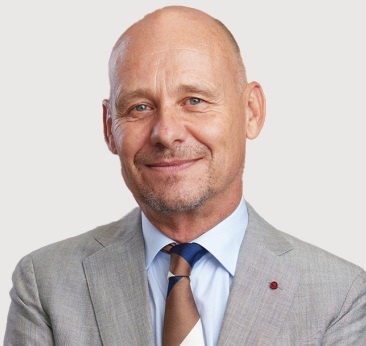 |
I enjoy exploring Hanoi on my bicycle - from the historic Old Quarter to the bustling modern districts and even the industrial suburbs with their thriving factories. Each ride reveals the remarkable landscapes, welcoming people and positive dynamism that define Vietnam today.
This energy is powerfully reflected in the vibrant economy and the impressive socioeconomic achievements Vietnam has accomplished over the past 80 years.
Throughout this remarkable journey, the Netherlands has remained a trusted friend in its cooperation with Vietnam, as well as an important trading partner for more than half a century.
Indeed, the Netherlands is Vietnam’s largest European trading partner as well as the top European investor in Vietnam. Our collaboration spans critical sectors including high-tech, smart agriculture, water management, climate change adaptation, logistics, maritime and aviation. A sustainable green economic growth stands at the heart of our bilateral cooperation.
Currently, the global economy stands at the threshold of the Fourth Industrial Revolution – with the rise of AI, automation and, at the same time, climate challenges. Vietnam is embracing this era with a robust economic restructuring and institutional reform, which I have been fortunate to witness during my ambassadorial tenure.
The Netherlands remains ready to continue partnering with Vietnam in realising a future-proof, inclusive and sustainable green economy, with the private sector as the engine of change, creating prosperity and ensuring benefits for all.
Iain Frew, British Ambassador to Vietnam
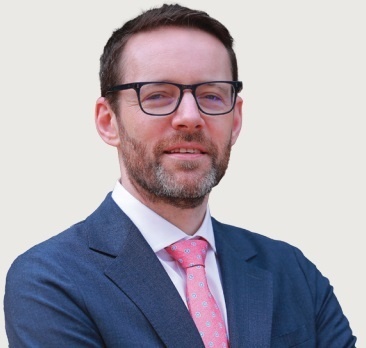 |
Over the past decade, Vietnam’s economic growth has been nothing short of remarkable. It has been driven by the dynamism, creativity and determination of the Vietnamese people, and strengthened by international partnerships that bring mutual benefits. I am proud that the UK has been one of those key partners, working alongside Vietnam to create new opportunities, drive innovation, and support sustainable growth.
To support that, the UK and Vietnam remain open to free and fair trade. The UK–Vietnam Free Trade Agreement, which came into force in 2021, has been a cornerstone of our economic relationship. It has reduced barriers to trade, opened new markets, and given both Vietnamese and British businesses the confidence to invest and expand. Our recent accession to the Comprehensive and Progressive Agreement for Trans-Pacific Partnership builds on this momentum, placing the UK and Vietnam in an even stronger position to benefit from deeper regional integration and faster-growing supply chains.
The results speak for themselves. In the last decade, our bilateral trade has doubled – from £3.9 billion ($5.26 billion) to £9.1 billion ($12.3 billion). This is not just a number; this is part of our efforts to deepen partnership on key sectors such as education, technology, green transition and renewable energy.
It reflects the goods on our shelves, the investment in our industries, the jobs created in both countries, and the exchange of ideas and expertise that is driving progress. As we look ahead, I am confident that the UK–Vietnam economic partnership will continue to flourish, delivering shared prosperity and supporting our joint ambitions for a greener, more resilient and inclusive global economy.
Kobayashi Yosuke, chief representative Vietnam Office, Japan International Cooperation Agency
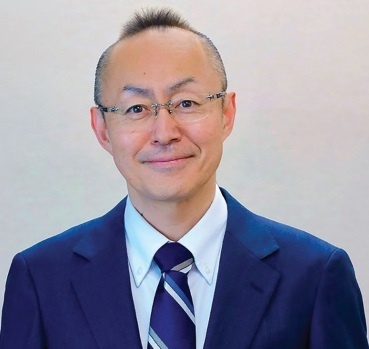 |
The Japan International Cooperation Agency (JICA) is proud to have been a reliable partner in Vietnam’s remarkable social and economic development, especially since Japan resumed its official development assistance in 1992.
JICA’s specific activities over the past decades include providing policy advice to support economic reforms, improving strategic infrastructure, and transferring specific knowledge and experience through experts and volunteers, covering both traditional and non-traditional sectors.
As Vietnam continues to develop rapidly with its four-pillar reforms, we stand ready to fully mobilise its wide-ranging tools to support these efforts. For example, in terms of policy advice, JICA is prepared to continue sharing Japan’s experience relevant to Vietnam’s reforms, such as the introduction of the two-tier local government system, which Japan has successfully managed for many years.
Regarding strategic infrastructure, JICA will explore ways to support the extension of metro railways in Hanoi and Ho Chi Minh City using Japanese technologies. In terms of knowledge transfer, our entrepreneurship training programme Keieijuku, in collaboration with the Vietnam-Japan Institute for Human Resources Development, will continue to offer valuable opportunities for Vietnam’s smaller businesses to acquire the managerial skills needed to thrive in the global market. JICA is also preparing a new loan to support green transformation.
I hope these examples demonstrate our strong commitment to deepening the partnership further.
Adam Sitkoff, executive director, American Chamber of Commerce in Hanoi
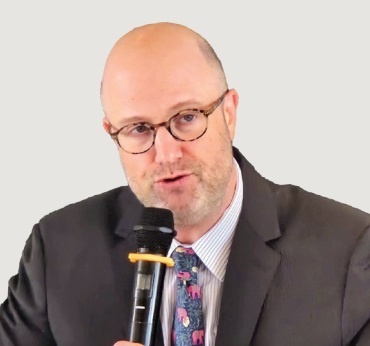 |
Over the past few decades, Vietnam and the United States have worked to build their friendship, and our two countries are now comprehensive strategic partners. One of the relationship’s strengths is its multifaceted nature, and our countries now have a strong friendship anchored in mutual respect and work closely in many areas including regional security, education, global health, food and energy security, disaster response, and more.
The United States business community is an active partner, helping to improve business conditions to contribute to Vietnam’s continued sustainable growth. American Chamber of Commerce (AmCham) members in Vietnam account for billions of US dollars in foreign investment, tens of thousands of direct employees, hundreds of thousands of indirect employees, and a significant share of Vietnam’s exports and tax revenues.
Our members have played a transformative role in the development of Vietnam, and the United States is one of the top foreign investors here. This investment has integrated the country into the global supply chain, created quality jobs, and helped the country become more productive, efficient, safe and cleaner. Importantly, the US is Vietnam’s biggest export market, driving investment and growth throughout Vietnam.
Apple and Nike and hundreds of other US companies are investing and doing business here, and the reason they have done so is for the opportunities in the Vietnamese marketplace, and because it is the right decision for those companies. I expect that is going to continue.
Along with that, we partner with Vietnam to develop high-tech, innovative industries, and we also commit to upholding Vietnam’s labour and environment laws, and to being good corporate citizens.
Our companies are leaders in promoting sustainability and innovation in Vietnam through global business practices that ensure responsible supply chains and combat climate change. We want to partner to develop infrastructure that ensures energy security and facilitates sustainable growth.
Also, we share an interest in developing a globally competitive workforce, creating quality jobs, and investing in the professional development of our Vietnamese team members.
As we celebrate the national holiday, it is important to remember how quickly things have changed for business in Vietnam and the continued effort required to create an enabling environment for investors here. AmCham will continue to work hard on improving business conditions that strengthen the private sector, ensure sustainable economic and social development, and encourage prosperity here.
Riikka Seppälä, chargé d’affaires Deputy Head of Mission Embassy of Finland to Vietnam
 |
This week’s milestone is a powerful testament to the resilience, determination, and spirit of the Vietnamese people. In these turbulent geopolitical times, the value of independence and sovereignty is more visible and tangible than ever. The ability of a nation to determine its own path and safeguard its freedom remains a cornerstone of peace and prosperity.
Since its independence until the recent years, Vietnam has demonstrated impressive progress, with rapid economic growth, increasing integration into global markets, and significant advancements in technology and infrastructure. The nation’s strategic geopolitical position, combined with its strong focus on digitalisation and green transition, along with a dynamic and youthful population driving innovation and entrepreneurship, is propelling it forward as a key player in the regional and global economies.
Vietnam and Finland share a long history of close cooperation, beginning with development projects and aid programmes that supported Vietnam’s social and economic progress in earlier decades.
Over time, our partnership has evolved and deepened, transitioning from development assistance towards dynamic trade and investment relations. Today, Finland and Vietnam collaborate across a wide spectrum of sectors including energy, smart cities, sustainable food production, clean tech, innovation, digitalisation, vocational education, and labour mobility, to name just a few. These fields represent vital building blocks supporting Vietnam’s ongoing transition towards a green and sustainable future.
As Vietnam celebrates 80 years of independence, Finland is honoured to stand alongside a sovereign and thriving nation committed to shaping its own future through active collaboration with international partners. We look forward to many more years of collaboration, mutual growth, and shared success.
Juhern Kim, country representative to Vietnam Global Green Growth Institute (GGGI)
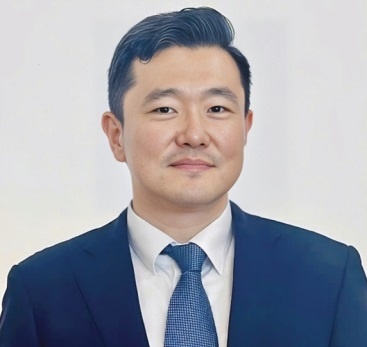 |
On Vietnam’s 80th National Day, I extend my congratulations to the government and people of Vietnam. The country is today not only a global manufacturing hub but also an emerging centre for investment, innovation, AI, and international finance.
Personally, I first established the GGGI’s presence in Vietnam more than a decade ago, and returning in 2023 to serve again feels like destiny. Over the past two years in Hanoi, I have witnessed a decisive shift toward technology, innovation, institutional reform, private sector development, and deeper global engagement.
As Vietnam advances toward high-income status by 2045 and pursues its net-zero commitment by 2050, embedding green growth at the core will be strategic to becoming a benchmark for emerging economies.
This transition, however, will demand strong international cooperation, in terms of accelerating technology transfer, aligning with global standards, and connecting Vietnam’s innovation potential with global talent and finance.
Over the past decade, the GGGI has partnered with the government to set green growth investment guidelines, implement strategies and action plans, and facilitate five pioneering green bond issuances and green infrastructure investments exceeding $300 million, while also supporting capacity development through knowledge sharing and training.
As Vietnam rises, the GGGI stands ready to continue providing robust technical support in line with fast-changing global dynamics, linking AI with climate action, advancing climate tech startups, scaling clean hydrogen, enabling carbon transactions, and embedding green finance into the emerging international finance centres.
These efforts will help shape Vietnam’s next 80 years of vision, and the GGGI is honoured to walk this journey together.
Federico Vasoli, managing partner dMTV Global
 |
Vietnam has transformed from war-torn challenges into one of Asia’s most dynamic economies. This week’s milestone, from the perspective of the Italian business community in Vietnam and at home, represents the recognition of an extraordinary development story.
The economic reforms launched in the mid-1980s fundamentally reshaped Vietnam’s trajectory. Poverty rates plummeted from 38.4 per cent in 1994 to just 3.4 per cent in 2023, demonstrating the power of market-oriented reforms.
The country’s manufacturing sector continues to attract the majority of foreign investment. While Italian businesses in Vietnam are iconic, Italian companies should indeed invest more in Vietnam to take advantage of its growth, size, and integration within ASEAN. The good news is that bilateral trade surged to $6.9 billion in 2024.
Vietnam’s commitment to modernisation extends beyond traditional manufacturing. The government’s $135 billion energy strategy aims to make Vietnam a power exporter within eight years.
Several priorities will ensure sustained growth. These include enhanced higher and technical education and skills training, deeper integration within ASEAN, the liberalisation of financial and digital markets, and the simplification of laws and procedures. Environmental concerns must also be addressed.
Binu Jacob, chairman and CEO Nestlé Vietnam
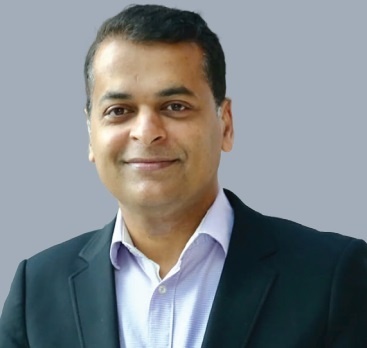 |
Vietnam has made remarkable strides in economic transformation. Over the past decades, the country has evolved from being one of the poorest in the world into a dynamic emerging economy with consistent GDP growth, rapid poverty reduction, and rising integration into global trade. Vietnam today is a trusted member of major free trade agreements and is increasingly seen as a key link in global supply chains.
There are a few areas where Vietnam has exceeded expectations. The first is in human development. Vietnam today has some of the best talent in the region, with a young and highly motivated workforce. Companies like ours have been leveraging this talent to strengthen Vietnam’s position as an export hub.
The main challenge now lies in moving beyond low value-added exports. We are very conscious of this and have been working to ensure that the exports we deliver from Vietnam create value that stays in Vietnam. From the farm to the finished product, we work closely with farmers to guarantee fair benefits, with local suppliers of raw materials, and with packaging partners to ensure that as much of the value chain as possible is created locally.
After 80 years of progress, and looking ahead to vision 2045, we remain fully committed to supporting the government’s ambition of building a modern, sustainable, and innovation-driven economy.
Wietse Mutters, managing director HEINEKEN Vietnam
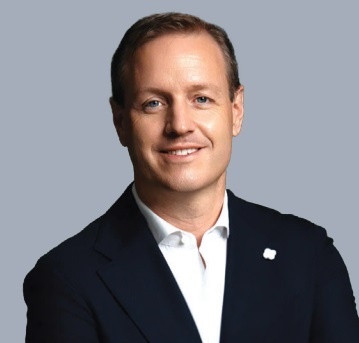 |
Amid global economic volatility, Vietnam has made remarkable progress, transforming into one of Asia’s most dynamic growth engines. By putting digitalisation and innovation the core its development, actively participating in global trade agreements, and advancing bold institutional reforms at home, the country is building a strong foundation for sustainable growth. We are optimistic that these will create a conducive environment for international businesses to continue growing with Vietnam.
Our ambition is aligned with Vietnam’s vision for the future. We support this vision not only as a major tax contributor, but by driving the growth of local small and medium-size enterprise business partners through procurement and trade. By leveraging our global expertise and local insights, we also help accelerate the transformation and modernisation of business in Vietnam.
We are also proud that our brands are at the centre of Vietnamese culture, aligned with HEINEKEN’s values of passion for customers and consumers, the courage to dream and pioneer, care for people and the planet, and enjoyment of life. With adherence to HEINEKEN’s strict international standards, we brew products that meet high quality and food safety standards. Through our authorised, formal distribution channels, we enable the adoption of professional market practices.
Ashish Doshi, general manager TBC-Ball Beverage Can Vietnam
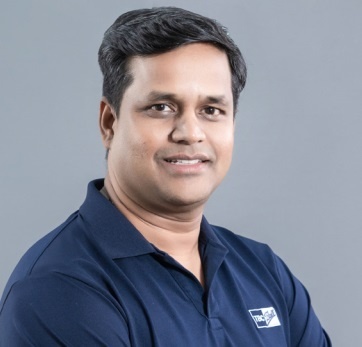 |
We are at a meaningful milestone that reflects the strength, resilience, and unity of the Vietnamese people throughout their journey of nation-building.
Over the years, we have been fortunate to witness Vietnam’s remarkable progress – from its economic reforms to its growing role on the global stage. The spirit of openness, innovation, and determination that drives this progress continues to inspire us.
As a company operating in Vietnam, we are grateful for the opportunity to be part of this journey. We remain committed to supporting the country’s sustainable development goals by doing our part – investing in responsible manufacturing, reducing environmental impact, and contributing to the circular economy. We are confident in Vietnam’s continued success and are honoured to stand alongside its people and partners in building a sustainable future together.
Kenneth Tse, vice president Intel Products Vietnam
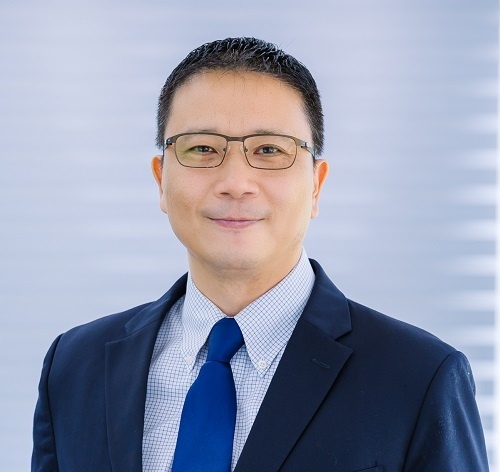 |
Vietnam has developed tremendously since we first set up here nearly 20 years ago. Increasingly, there are more and more foreign investors coming here to seek opportunities.
In the journey, Vietnam has been maintaining its political stability and has offered various incentives and support for potential investors.
Situated in the heart of Southeast Asia, the country has easy access to high-tech supply chains across Asia. It also has a fast-developing transportation network, an ever-expanding electricity supply, and a fast-growing telecommunications sector.
There are key areas which Vietnam should focus on: rapid policy and infrastructure adjustments; workforce development; and high-tech and semiconductor ecosystem.
Vietnam certain has the opportunity to leapfrog its neighbours and close the gap with more mature countries if it is able to advance and move up the value chain with the combination of investments and upskilling its talent through education and training.
Attracting more foreign investment can accelerate the development of the supporting ecosystem, just as how Intel has done for the semiconductor industry.
To draw more funding, Vietnam’s government needs to reconsider the incentive programmes for businesses; invest and modernise infrastructure and personnel; and strengthen the collaboration between the government, the universities, and investors like Intel to grow the local industry.
Hiroyuki Miura, head of Southeast Asia Market Unit, Mobile Networks Asia-Pacific, Nokia
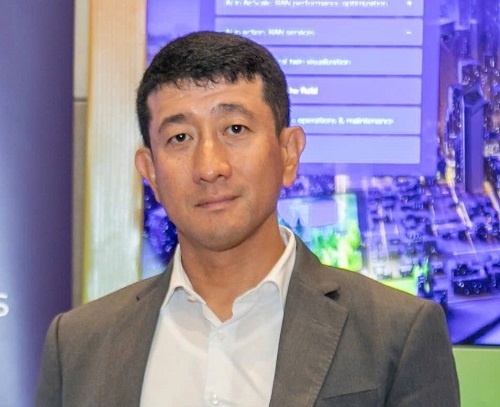 |
Vietnam’s journey of innovation and international integration has been truly remarkable the last few years. From the historic economic reforms in the 1980s to the strong momentum in digital transformation today, Vietnam has transformed itself from a centrally planned economy into one of Asia’s most dynamic digital hubs.
The government’s vision is clear through initiatives such as the National Digital Transformation Programme, which is driving digital payments and fostering a seamless digital economy. The adoption of the National AI Strategy is another strong signal of Vietnam’s ambition to position itself as a regional leader in the current and future digital era.
Vietnam is currently in the midst of a digital transformation journey. As industries and services become more digitalised, the country will require next-generation data centre infrastructure to support cloud, AI, and semiconductor growth. Modern data centre fabrics, combined with event-driven automation, can deliver the agility, efficiency, and resilience needed to handle rising workloads while reducing costs. This foundation will be vital as Vietnam deepens its role in global value chains and builds capacity for high-value digital industries.
To complement this, Vietnam will need to expand high-capacity, sustainable networks to keep pace with surging mobile traffic and digital services.
Automation will be key to making networks more sustainable and future-proof. Autonomous networks powered by AI and machine learning can anticipate demand, self-optimise, and reduce operational complexity. This improves performance while also ensuring that networks remain resilient in the face of changing digital ecosystems and climate challenges.
What the stars mean:
★ Poor ★ ★ Promising ★★★ Good ★★★★ Very good ★★★★★ Exceptional
 Tag:
Tag:Related Contents



Latest News



More News
- Foreign executives assess Vietnam business outlook for 2026 (February 16, 2026 | 09:00)
- FV Hospital CFO honoured by UK magazine (February 12, 2026 | 13:04)
- From Vietnam to the world: Pizza 4P’s global journey (January 28, 2026 | 10:58)
- Carlsberg Vietnam makes progress in diversity, equity and inclusion (January 24, 2026 | 10:17)
- New generation of CEOs and 'Think Big' mindset: thinking ahead to go the distance (January 08, 2026 | 11:03)
- Digital shift reshaping Vietnam’s real estate brokerages (December 31, 2025 | 18:54)
- Allen & Gledhill recognised as Outstanding M&A Advisory Firm (December 18, 2025 | 14:19)
- Inside Lego Manufacturing Vietnam (December 18, 2025 | 11:45)
- The next leap in Cloud AI (December 11, 2025 | 18:19)
- Vietnam’s telecom industry: the next stage of growth (December 11, 2025 | 18:18)






 Mobile Version