
Roadmap unveiled to tighten vehicle emission standards

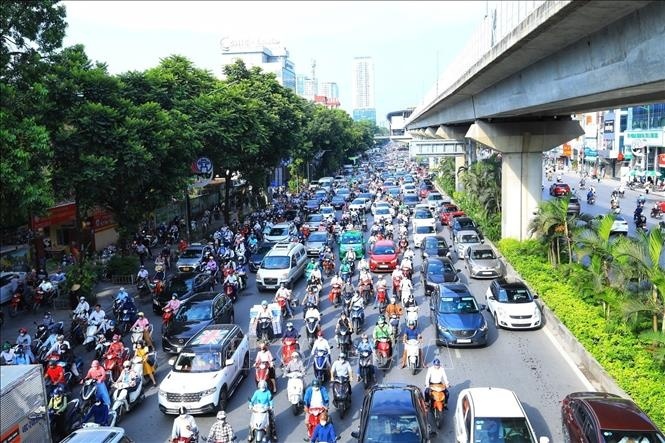 |
On November 28, Deputy Prime Minister Tran Hong Ha signed Decision No.43/2025/QD-TTg, providing a clear roadmap for implementing national technical regulations on vehicle emissions. The move aims to strengthen emission rules, particularly for older vehicles, as part of Vietnam’s efforts to improve air quality and environmental sustainability.
Under the new decision, vehicles manufactured before 1999 will be required to meet Level 1 emissions standards, equivalent to the European Euro 1 standard, from March next year. Introduced in 1992, Euro 1 was the first set of European vehicle emission regulations, limiting pollutants such as carbon monoxide, hydrocarbons, and nitrogen oxides. Applying this standard to older vehicles aims to reduce harmful emissions and improve air quality across the country.
The European Euro standards are progressive regulations that limit pollutants such as carbon monoxide, hydrocarbons, nitrogen oxides, and particulate matter. Higher Euro levels correspond to stricter limits, meaning newer vehicles produce progressively lower emissions to protect air quality.
Vehicles manufactured from 1999 through 2016 must comply with Level 2 emissions standards (Euro 2) from next March. Those produced from 2017 through 2021 will satisfy Level 3 emissions standards (Euro 3) from the same date. For cars manufactured between 2017 and 2021 and operating in Hanoi or Ho Chi Minh City, Level 4 emissions standards (Euro 4) will apply starting January 2027. Vehicles manufactured from 2022 onward must comply with Level 4 emissions standards (Euro 4) from the effective date of the decision, and Level 5 standards (Euro 5) from January 2032.
The decision applies to organisations and individuals involved in the management, inspection, and use of automobiles, equipped with either spark-ignition or compression-ignition engines, engaging in road traffic in Vietnam.
It does not apply to vehicles registered abroad that are permitted by competent authorities to transit, temporarily import, and re-export for participation in conferences, fairs, exhibitions, sports events, or tourism. Those under the management of the Ministry of National Defence or the Ministry of Public Security are used for defence and security purposes.
The Ministry of Agriculture and Environment is assigned to guide the implementation of this roadmap and, based on actual conditions, continue to research and propose higher emission standards for submission to the prime minister.
The Ministry of Science and Technology is responsible for reviewing and revising national fuel standards to align with the new emission requirements.
 | Building a circular economy criteria framework for low-emission zones in Vietnam A surge in transport demand is straining the environment, so the circular economy framework offers a path to lower fossil fuel use, enhance efficiency, and drive collective innovation. |
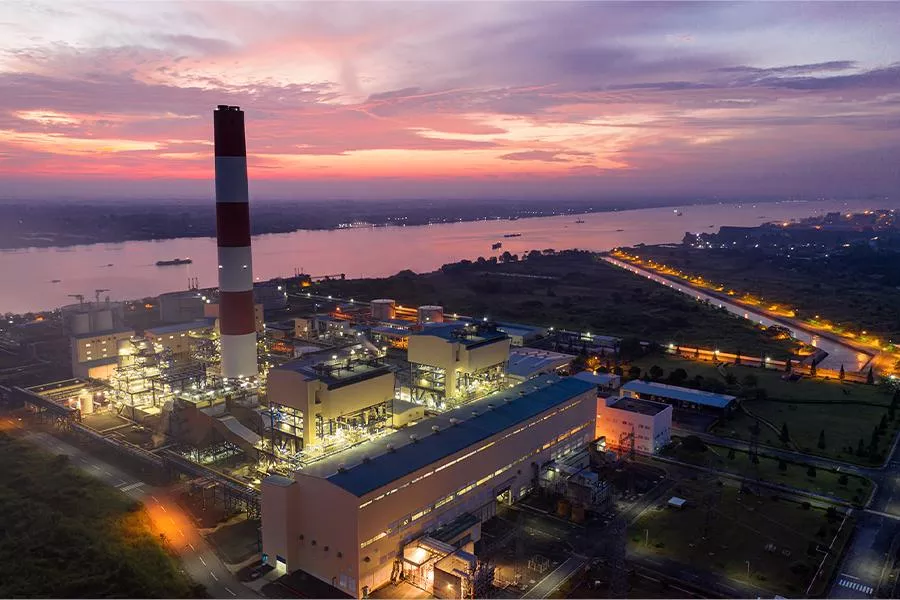 | Mitsubishi Power to upgrade boiler equipment at O Mon 1 Thermal Power Plant Mitsubishi Power has received a contract to support an oil-to-natural gas fuel conversion project at O Mon 1 Thermal Power Plant in the Mekong Delta city of Can Tho. |
 | How Vietnam can ensure greener steel Vietnam’s pledge to achieve net-zero carbon emissions by 2050 will require key reforms in many sectors, including in steel. Patrick Lenain, senior associate from the Council on Economic Policies, and Deepak Sharma, independent consultant working with the International Institute for Sustainable Development, look at how Vietnam can foster a green steel industry in this context. |
 | Developing a green, circular, and low-emission IP model in Haiphong Sao Do Group has pioneered the development of an eco-industrial park strategic framework for Nam Dinh Vu Industrial Park (IP) to implement environmental protection activities and promote resource sharing and sustainable development among businesses in the park. |
 | Carlsberg Vietnam accelerates drive towards net-zero emissions As Vietnam advances towards its 2050 net-zero vision, businesses are expected to play a decisive role in enabling the country's green transition. At the Green Economy Forum 2025, Carlsberg Vietnam shared how a long-standing foreign-invested enterprise is reshaping its operations and energy strategy to align with Vietnam's sustainability goals. |
What the stars mean:
★ Poor ★ ★ Promising ★★★ Good ★★★★ Very good ★★★★★ Exceptional
 Tag:
Tag:Related Contents



Latest News


More News
- GreenYellow and Vina Paper partner on rooftop solar project (October 05, 2026 | 09:00)
- Consultation workshop refines Vietnam's clean hydrogen strategy (October 04, 2026 | 08:00)
- JBIC considers new financing options for Vietnam’s energy projects (October 03, 2026 | 08:00)
- Vestas to supply 16 turbines for two new Vietnam wind farms (October 01, 2026 | 07:00)
- Inter-sectoral cooperation on Montreal protocol (September 30, 2026 | 17:20)
- EV battery recycling rate proposed at 8 per cent from 2029 (September 29, 2026 | 16:00)
- Bankability remains hurdle for Vietnam's JETP projects (September 29, 2026 | 12:08)
- Binh Minh Plastics extends clean water project to border communities (September 29, 2026 | 10:57)
- Coca-Cola Vietnam expands packaging collection programme (September 25, 2026 | 08:15)
- Pacifico Energy secures sea survey licence for offshore wind project in Lam Dong (September 24, 2026 | 18:02)








 Mobile Version