
Monsoon Wind: Powering Vietnam-Laos energy cooperation, transforming local lives

The wind turbines rising across the mountains of southern Laos are sending electricity across the border into Vietnam. Behind this journey lies not only the story of a large-scale renewable energy project, but also changes in the lives of local communities, efforts to connect cross-border power infrastructure, and a complex financial structure that has made this regional cooperation project a reality.
Beneath the giant turbine blades, however, another transformation is taking place. Residents are gaining access to new jobs, expanding their coffee plantations, and seeking additional sources of income. But do changing living conditions necessarily translate into a better quality of life?
Journey to the Land of Wind
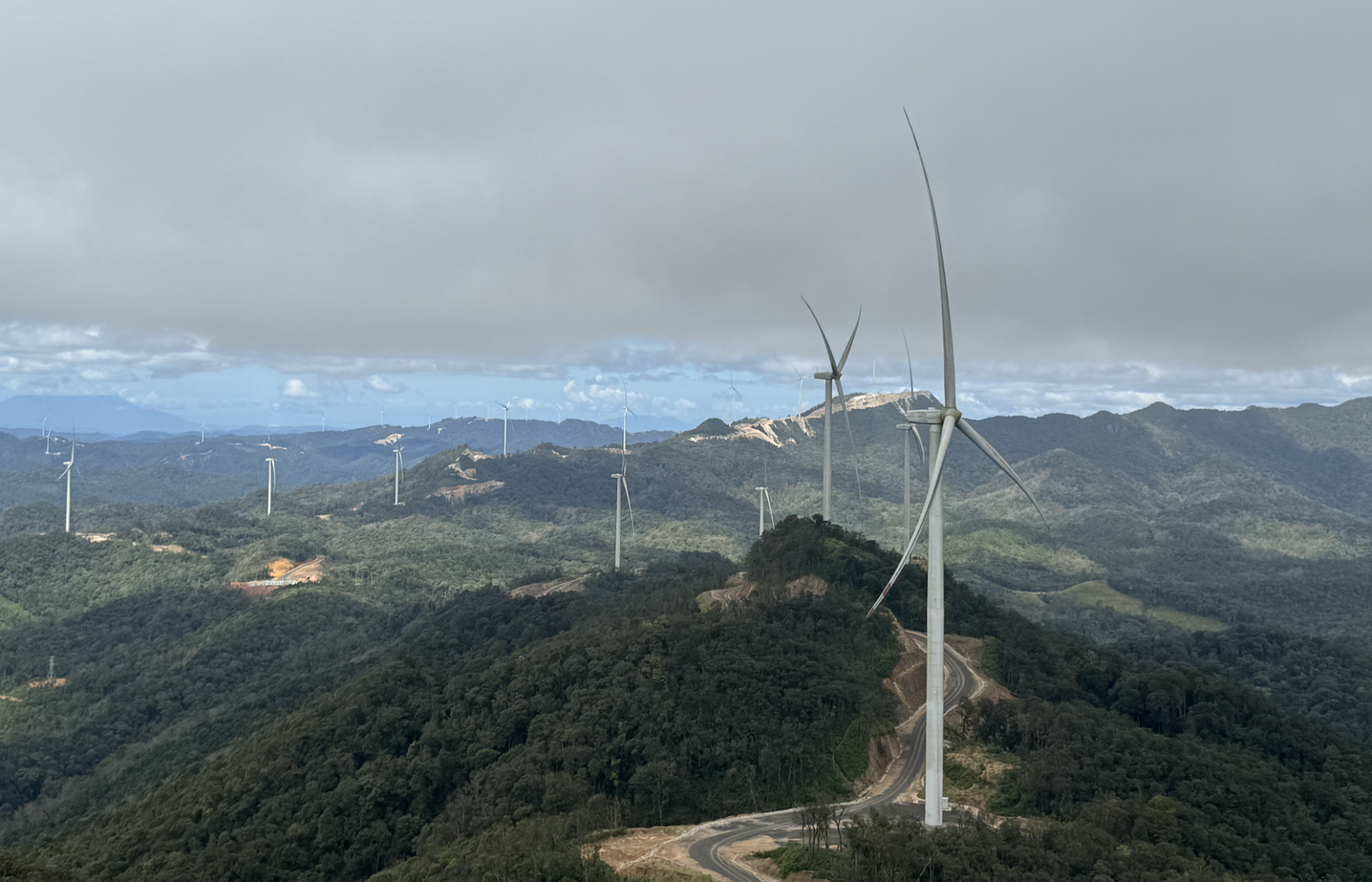 |
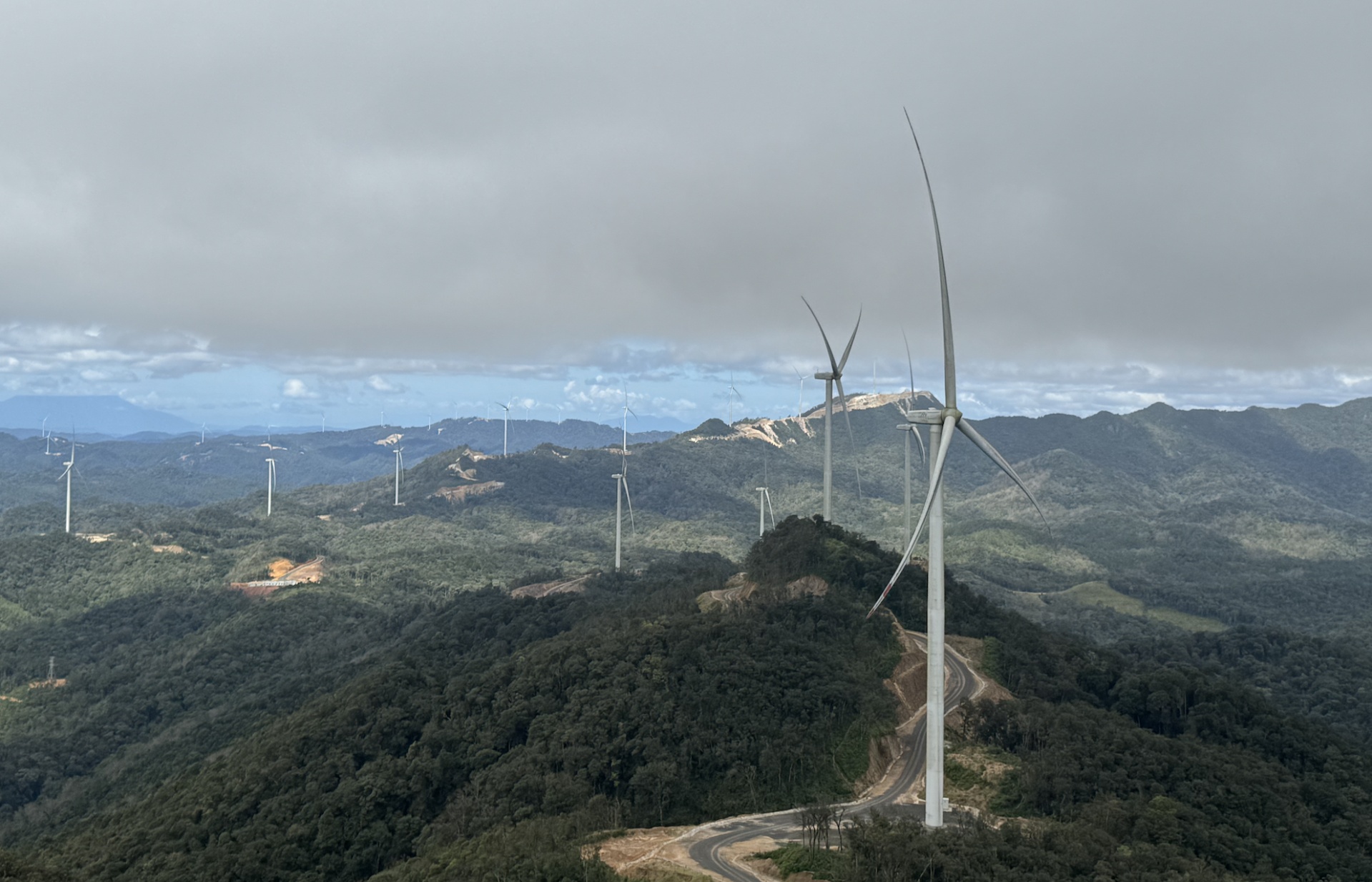
| Monsoon Wind turbines stretch across the mountainous terrain of Sekong, Laos. This is the first wind power project bringing clean energy from Laos to Vietnam. Photos: Chakrit Duangjai, the project's social manager |
At 1 pm, after landing at Pakse Airport in Laos, the delegation from Vietnam quickly split into groups of three, boarded seven-seat cars, and began the approximately five-hour journey to Dak Cheung district, Sekong province, where the Monsoon Wind project is located.
As we travelled deeper into the mountainous region, the road to Dak Cheung became increasingly winding, with one hairpin bend following another. On one side were steep mountain faces, while on the other, gentle slopes fell away into the valleys below. The vehicles continued to navigate the winding route, taking us ever further from the pace of urban life.
Further along the journey, wind turbines gradually came into view. It was only when we approached them that their immense scale became truly apparent. Towering above the forested mountains, the giant blades have given this once-remote region a new appearance.
The Monsoon Wind project has an installed capacity of 600MW, comprising 133 wind turbines spread across Dak Cheung district in Sekong province and Sanxay district in Attapeu province. It is Laos’ first wind power project, officially commencing commercial operations on August 22, 2025, and exporting electricity to Vietnam under a 25-year power purchase agreement with state-owned power authority Vietnam Electricity.
However, the scale of the project cannot be measured solely in terms of generating capacity or the number of turbines. As the blades begin to turn, another story is unfolding in the lives of communities living beneath the mountains.
For residents of Dak Cheung, livelihoods have traditionally depended largely on farming, gardening, and seasonal work. Difficult road access, limited markets, and scarce employment opportunities have meant that many households continue to rely on what they can produce on their own land.
The arrival of a large-scale energy project has brought new economic activities to the area, although the benefits have not been evenly distributed among households.
Coffee seasons beneath the wind turbines
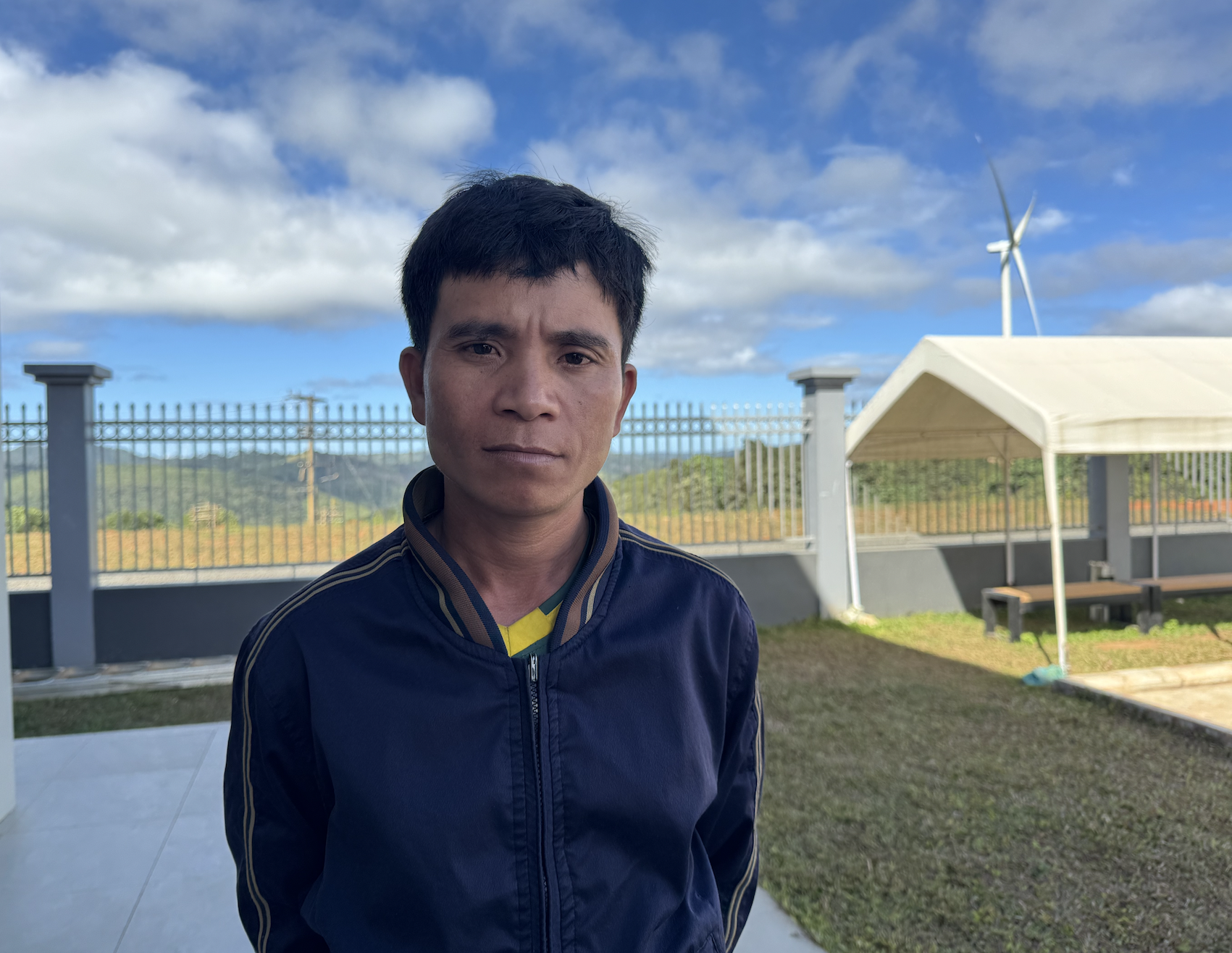 |
| Forty-two-year-old Sansamone Saypanya, from Dak Ran village, Dak Cheung district, Sekong province |
In Dak Ran village, Dak Cheung district, 42-year-old Sansamone Saypanya is among the residents who have found new livelihood opportunities since the Monsoon Wind project arrived.
Previously, his family relied mainly on gardening and had a small coffee plantation. With the project's arrival, he expanded the plantation after receiving guidance on cultivation techniques and support in marketing his produce.
According to Sansamone, his family's average monthly income used to be only around $17 but has now stabilised at approximately $34. In some months, total income reaches as much as $134, as he earns additional money from supplying land for the project's construction.
While this level of income may not amount to a dramatic transformation in living standards, it represents a significant improvement for a household that has traditionally depended mainly on agriculture.
“Without the project, my family would not have been able to make the changes we have today,” he told VIR.
Not every household has seen immediate results. For many, these new livelihood opportunities are still at an early stage, and their effectiveness will take time to become clear.
Twenty-three-year-old Souphan Soulivan, who lives in a nine-member household, is one such case. Her family has received 6,000 coffee seedlings from the project to grow under the shade of existing trees. The seedlings offer hope of a new income stream, although their actual economic benefits remain to be seen.
“I hope to earn more income for my family and stop slash-and-burn practices,” Souphan said.
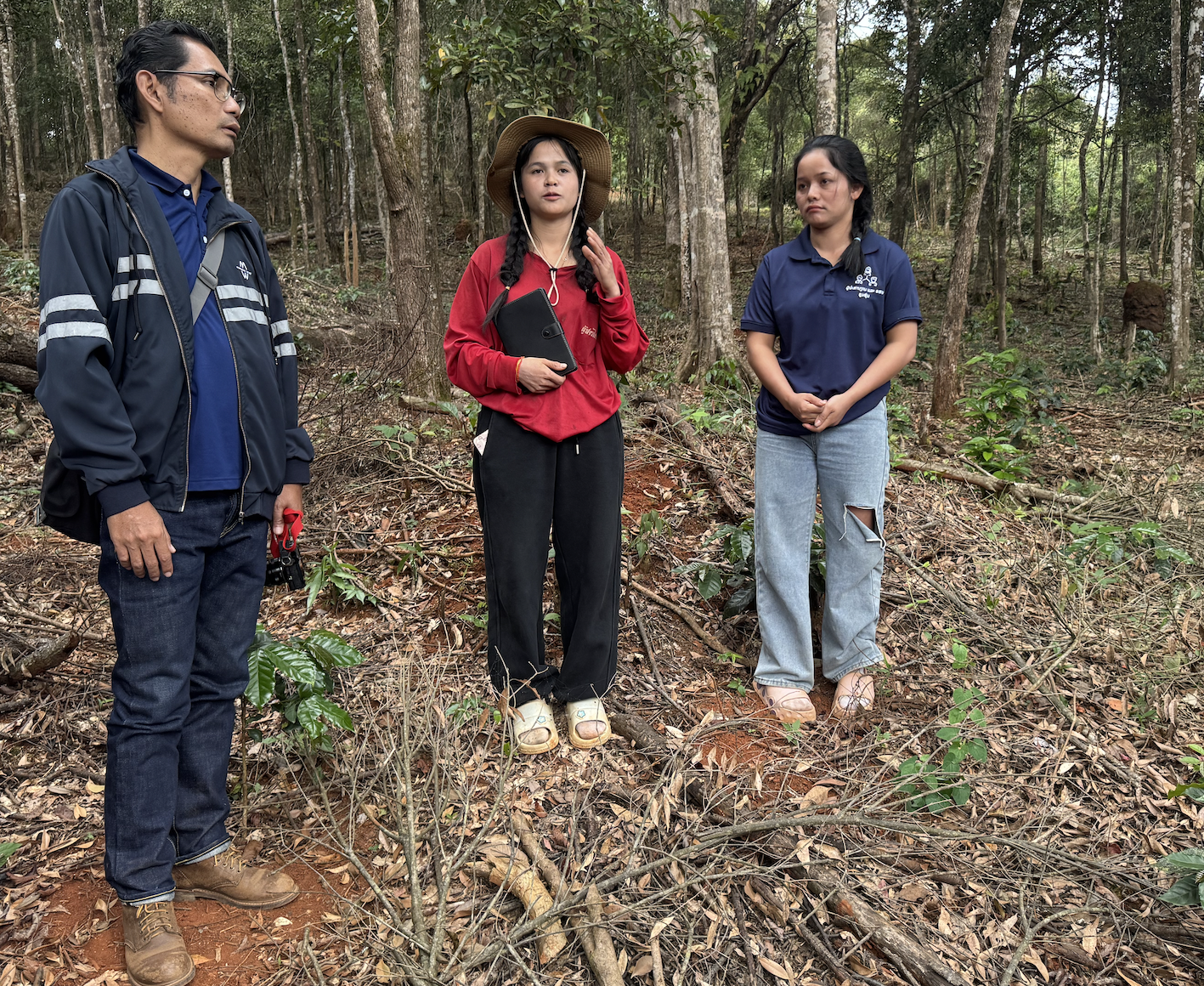 |
| Souphan Soulivan, 23 (in red), and Chakrit Duangjai, the wind power project's social manager (left) |
Coffee is one of the livelihood activities that Monsoon Wind is encouraging local communities to develop. According to Chakrit Duangjai, the project's social manager, more than one million coffee seedlings have been distributed, covering approximately 460 hectares across 404 plots. Residents have received guidance on every stage of production, from tending the plants and harvesting to selecting ripe coffee cherries, and processing them to improve product quality.
“Some households have invested in coffee milling machines so they can process their harvest themselves rather than immediately selling fresh coffee cherries to traders. This gives farmers more options for processing and marketing their agricultural produce,” Chakrit said.
In addition to coffee cultivation, access to water is another practical concern for local communities. Chakrit said that 37 households in one community had joined forces to install a water supply pipeline approximately five km long, using materials provided by the project.
Improved water access has enabled households to expand vegetable cultivation and process coffee, while also reducing the time women spend collecting water for domestic and productive activities.
A water pipeline, an expanded coffee plantation or a machine for processing agricultural produce may not bring about major changes overnight. But for families with few livelihood options, these developments represent new conditions that can help them gain greater control over their lives and production.
Behind the changes
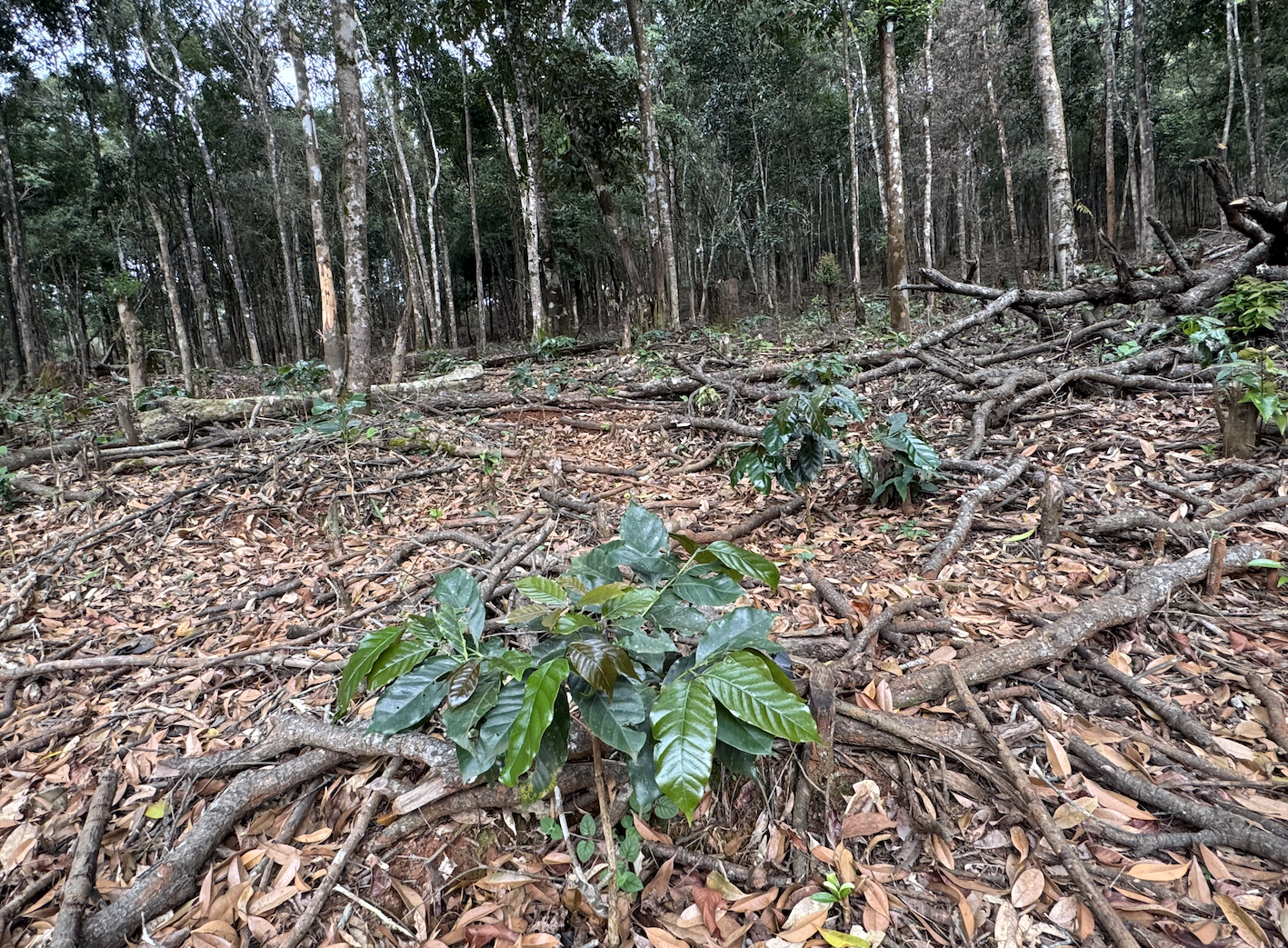 |
| Beneath the forest canopy in Dak Cheung, coffee plants are raising hopes of a more stable source of income for Souphan Soulivan's family |
Upon whether the presence of Monsoon Wind had made life better for residents, Chakrit Duangjai said, “I would not say that people's lives are better than before. My answer is that their living conditions have changed considerably compared with the past.”
It is a cautious answer, but one that highlights an important consideration when assessing the impact of an energy project on host communities.
According to Chakrit, during the construction phase, the project generated at least 1,600 jobs, more than 1,000 of which were filled by Lao workers.
The project also identified 769 households affected by its activities and requiring compensation or livelihood restoration support. These figures illustrate that the project's impact extends far beyond the handful of households featured in individual stories.
The project has also committed to allocating $1.1 million annually to community development activities throughout its operational life, with a focus on education, healthcare, agriculture, and infrastructure.
 | TCP empowers young people to spread positive energy in the community Marking the seventh consecutive year of partnership with the “Noble Youth” Awards, Arjaree Suwangool, corporate affairs and communications director at TCP Group, shared her thoughts with VIR's Thanh Van on the group’s commitment to supporting Vietnam’s younger generation. |
 | $2.28 billion Ca Na power project clears feasibility hurdle The feasibility study for the Ca Na gas-fired thermal power plant project is eligible to be submitted for approval, according to the notice of Khanh Hoa Department of Industry and Trade on November 2. |
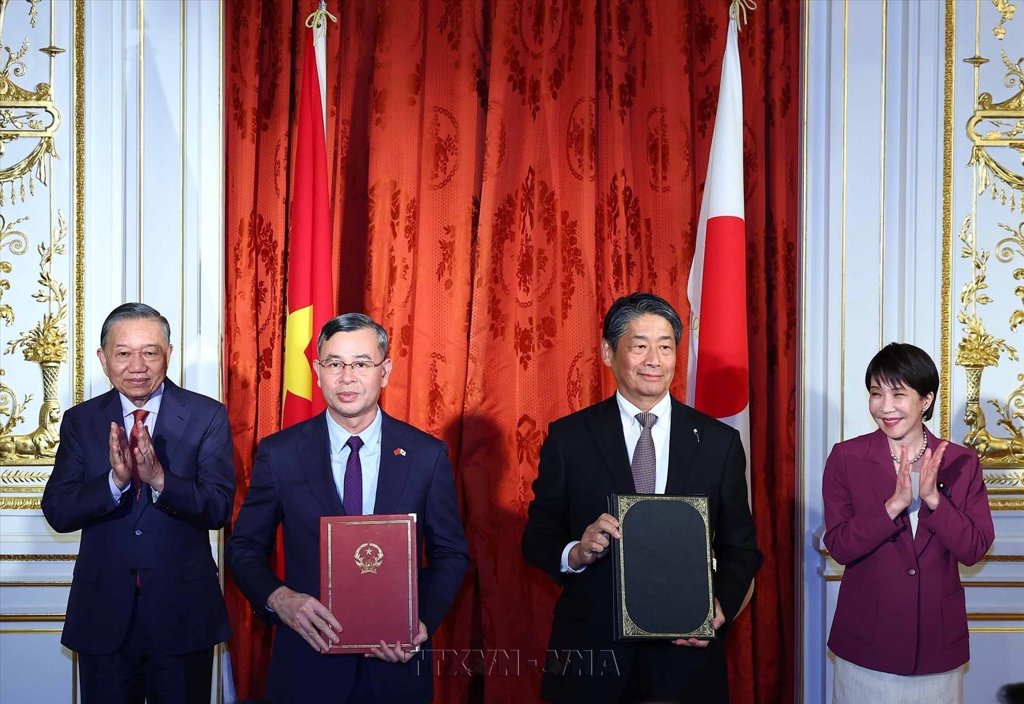 | Vietnam and Japan exchange key cooperation documents worth over $272 million Alongside General Secretary and State President To Lam and Japanese Prime Minister Takaichi Sanae, Vietnamese Minister of Finance Ngo Van Tuan, Japanese Ambassador to Vietnam Ito Naoki, and Japan International Cooperation Agency President Tanaka Akihiko exchanged cooperation documents in Tokyo on November 9. |
 | BOT contract for Nam Dinh I Thermal Power Plant Project signed On November 12, the Ministry of Industry and Trade organised the signing ceremony for the Build-Operate-Transfer contract for the Nam Dinh I Thermal Power Plant project. |
What the stars mean:
★ Poor ★ ★ Promising ★★★ Good ★★★★ Very good ★★★★★ Exceptional
 Tag:
Related Contents


Latest News
More News
- Powering across borders: The 500kV link connecting Laos and Vietnam (November 16, 2026 | 18:00)
- Nearly two-thirds of Viettel’s IBA awards from overseas markets (October 30, 2026 | 13:56)
- Kim Long Motor eyes Central American expansion through Costa Rica partnership (October 27, 2026 | 17:34)
- Businesses accelerate overseas expansion (August 28, 2026 | 15:00)
- Outbound investment surge signals stronger push into global markets (August 13, 2026 | 18:06)
- Vietnamese groups expand their footprint across Southeast Asia (July 08, 2026 | 13:30)
- Vietnam records huge increase in outbound investment in first five months (June 10, 2026 | 13:06)
- Vingroup invests $12.75m in US-based humanoid robot research company (June 02, 2026 | 19:19)
- Vietnam channels $714 million into overseas projects (May 20, 2026 | 17:35)
- HalalViet centre launched to help Vietnamese firms tap global market (May 15, 2026 | 17:39)





 Mobile Version