
Powering across borders: The 500kV link connecting Laos and Vietnam

Amid the mountainous highlands of southern Laos, giant turbine blades turn day and night, harnessing the wind to generate electricity that travels across mountains and borders into Vietnam. Behind this journey are a 500kV transmission line, substations, and a team of engineers working around the clock to ensure that electricity is transmitted safely and continuously.
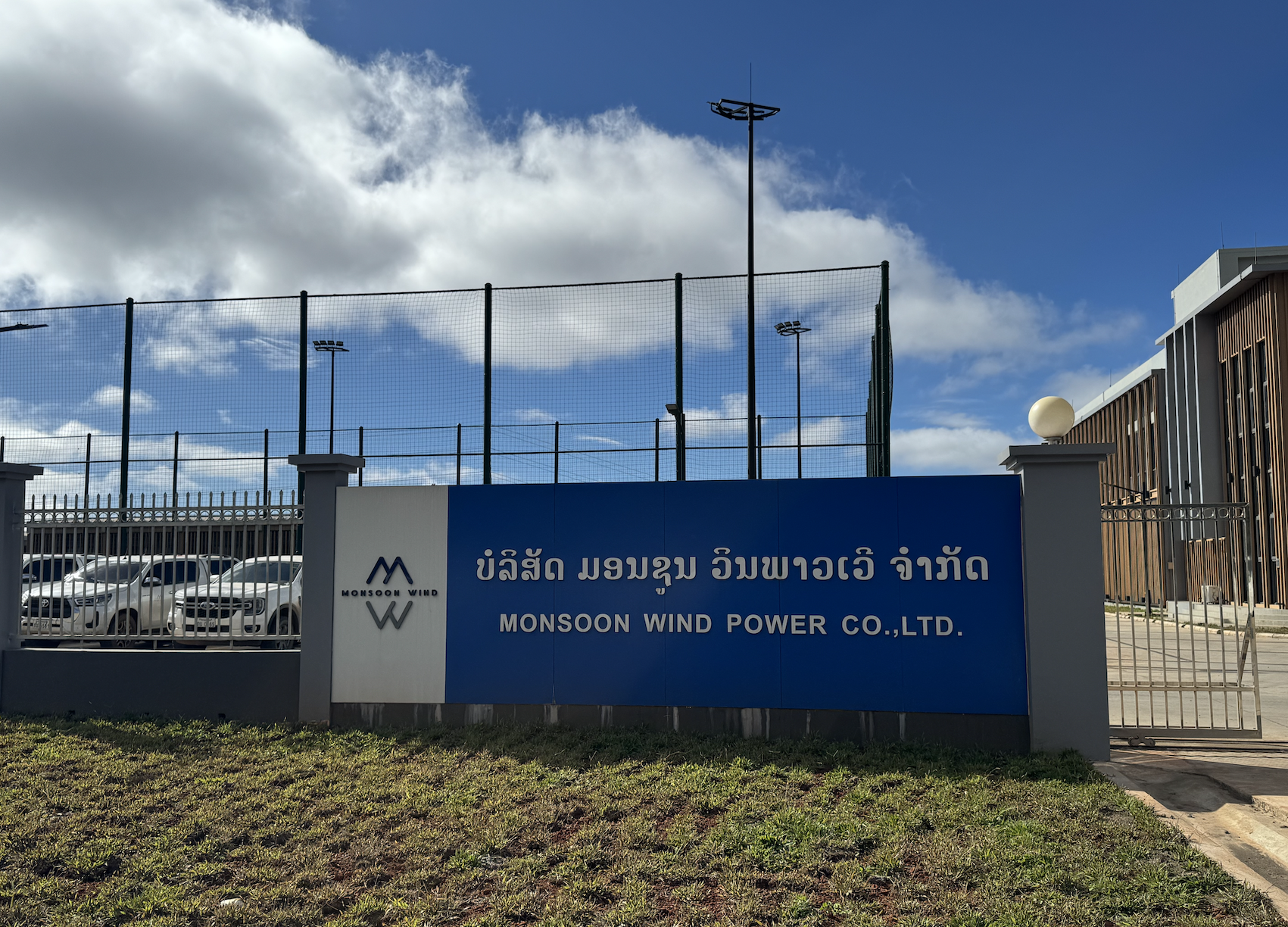 |
| The Monsoon Wind control room, where the operation of the 600MW wind power plant in Laos is monitored and coordinated. Photos: EVNNPT |
Screens in the Control Room
Inside the Monsoon Wind project's Control Room, large screens cover almost an entire wall, displaying numerous information panels, charts, and operating parameters. The operating status of each wind turbine is updated through a monitoring system, enabling the technical team to oversee the entire wind farm from the control room.
Engineer Tran Huu Phuoc, originally from Hoi An, moved to Laos to work at the Monsoon project in 2024. He is currently responsible for activities related to operations, testing, commissioning and coordination with Vietnam Electricity (EVN).
From the control room, the turbines scattered across the mountainous terrain of Dak Cheung appear to have been condensed into small information panels. Yet behind every operating parameter is a piece of equipment working in the field, exposed to wind, weather conditions, and operational challenges across a vast mountainous area.
Phuoc's work focuses primarily on the substation and power transmission systems. As a representative of the project owner, he monitors, reviews, and supervises technical activities carried out by contractors, ensuring compliance with project requirements, technical standards, and safety regulations.
“A typical working day begins with updating the overall operating status of the wind farm, including its substations, transmission lines, and turbines. I also review work plans, outstanding technical issues and activities scheduled for implementation during the day,” he said.
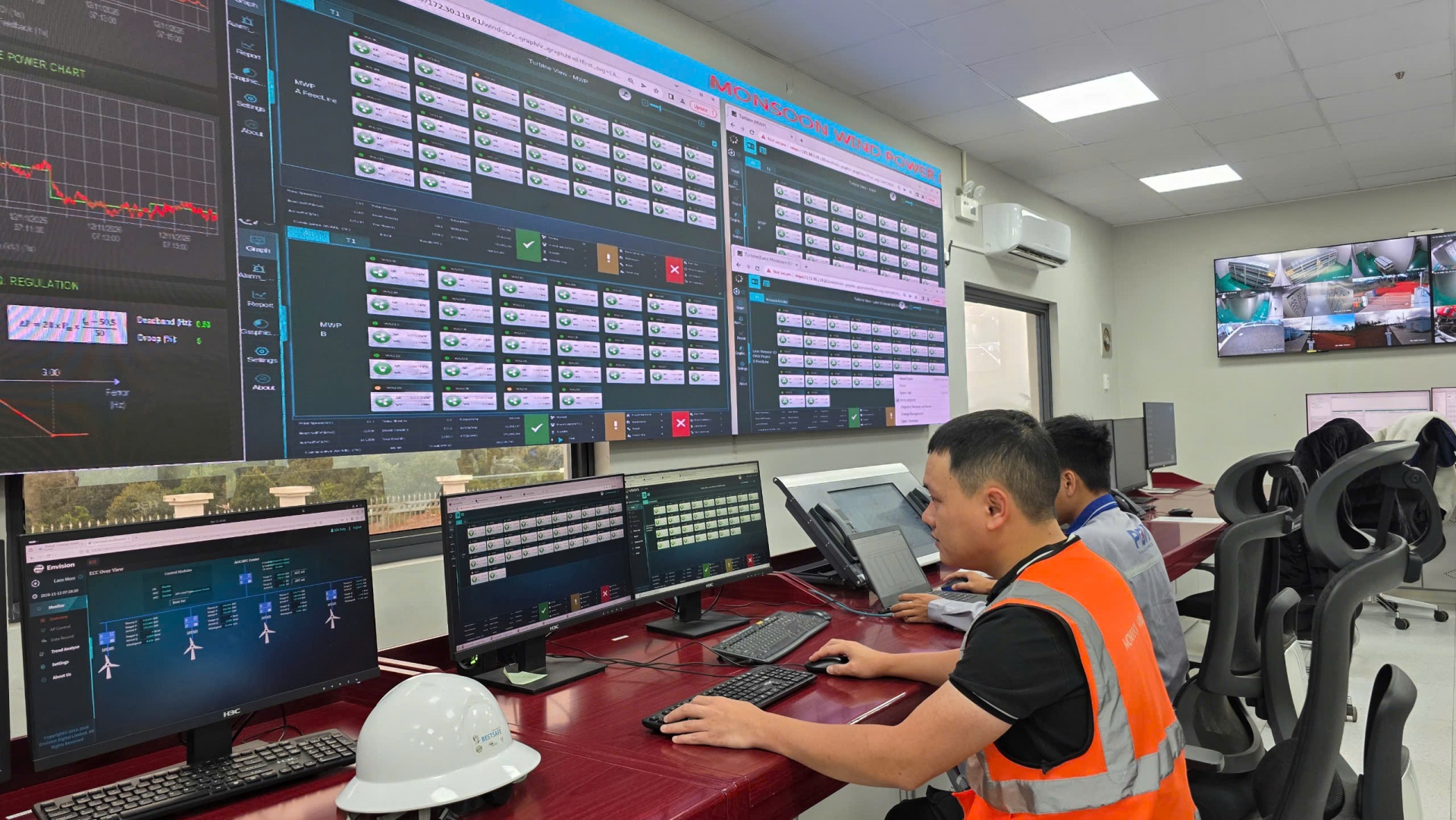 |
| Engineer Tran Huu Phuoc monitors operating parameters of the Monsoon Wind Power Plant from the Control Room at the project's operations building in Sekong, Laos |
His responsibilities involve regular inspections and maintenance carried out according to a closely monitored schedule. Contractors conduct weekly visual inspections of equipment at substations and perform thermographic scans of electrical connection points.
Every month, transmission line equipment is inspected using drones combined with thermal imaging. During annual maintenance, power may need to be shut down section by section, at individual substations, or across the entire wind farm to allow detailed inspections of equipment, protection relay systems, and metering systems.
Before each repair or maintenance operation, contractors must submit work plans and construction method statements to the project owner for review and approval. Phuoc coordinates the monitoring of progress and quality, as well as any issues arising during implementation.
For a wind farm located in a mountainous region, weather conditions cannot be overlooked. When wind speeds exceed the design operating limits, turbines automatically shut down to protect the equipment.
The operations team monitors conditions through the supervisory system, assesses the weather, and follows the necessary procedures before bringing the equipment back online.
For Phuoc, what matters is not simply how much electricity the wind farm generates, but also whether the substations and transmission lines downstream operate safely and reliably at all times. The equipment is fitted with multi-level protection relay systems.
When a fault occurs, the affected equipment can be automatically isolated from the grid. Re-energisation is only carried out after inspections and analysis have been completed and the cause of the fault clearly identified.
The transmission line bringing power across borders
Looking at the turbine blades turning tirelessly amid the mountainous highlands, few people might imagine the journey electricity takes after leaving the turbines: passing through substations, travelling along 500kV transmission lines, crossing mountains and national borders before being fed into Vietnam's power system.
This journey cannot be completed by wind power alone; it also requires an entire network of infrastructure and the people who operate it.
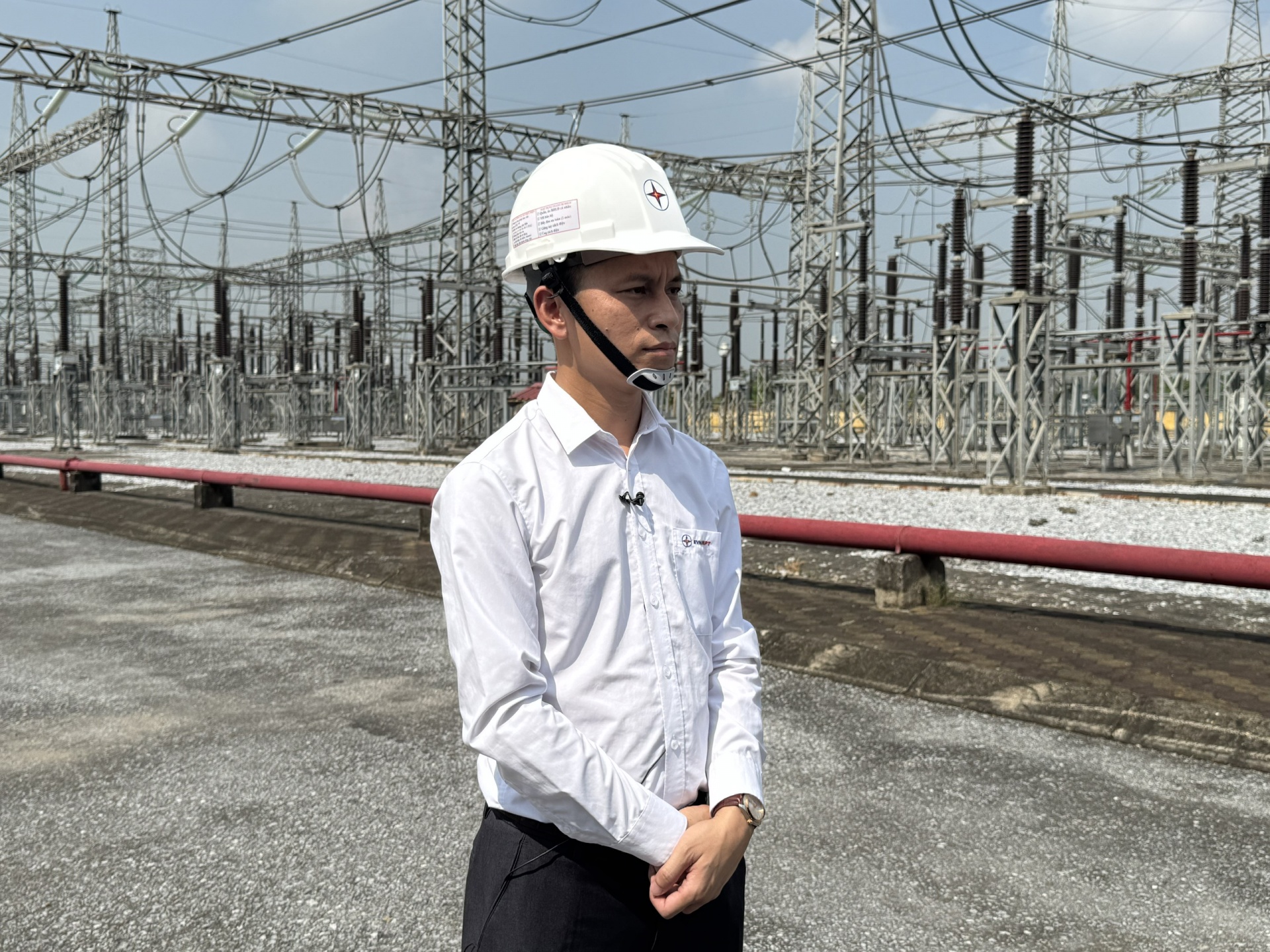 |
| Ninh Xuan Hiep, deputy head of Technical and Safety Department at National Power Transmission Corporation (EVNNPT), at Thuong Tin 500kV Substation |
A crucial link in this journey is the Monsoon-Thanh My 500kV transmission line. The project comprises approximately 27km of transmission line in Lao territory, financed and built by the project, and around 44km in Vietnam, developed by EVN.
The line was successfully energised and put into operation in January 2025, connecting the 600MW Monsoon Wind Power Plant in Laos with Vietnam's power system.
Behind the transmission line is close coordination among multiple entities, from the power plant's project owner and construction contractors to operating teams, and the transmission system operator in Vietnam.
For Phuoc, coordination with EVN is a regular part of his work. This includes keeping track of changes to regulations and operational coordination procedures, checking and reporting daily output, and finalising monthly electricity meter readings.
On the Vietnamese side, the effectiveness of the transmission line is clearly reflected in the volume of electricity delivered.
According to Ninh Xuan Hiep, deputy head of Technical and Safety Department at the National Power Transmission Corporation (EVNNPT), the Monsoon-Thanh My 500kV transmission line delivers an average of approximately 1.7 billion kWh to Vietnam annually.
In the first nine months of 2026 alone, electricity transmitted through the line reached nearly 1.3 billion kWh, accounting for almost 18 per cent of Vietnam's total electricity imports from Laos.
“The Monsoon-Thanh My 500kV transmission line has provided an additional source of electricity for Vietnam's power system, helping ensure national energy security,” Hiep said.
As a renewable energy source, Monsoon also supports efforts to reduce greenhouse gas emissions and Vietnam's commitment to achieving net-zero emissions by 2050.
The transmission line has a potential transmission capacity of 2,000-2,500 MW. This means it is not intended solely to serve the Monsoon Wind Power Plant, but could also provide headroom for additional electricity imports from other projects in Laos in the coming years, subject to the necessary conditions.
From Monsoon to a regional grid
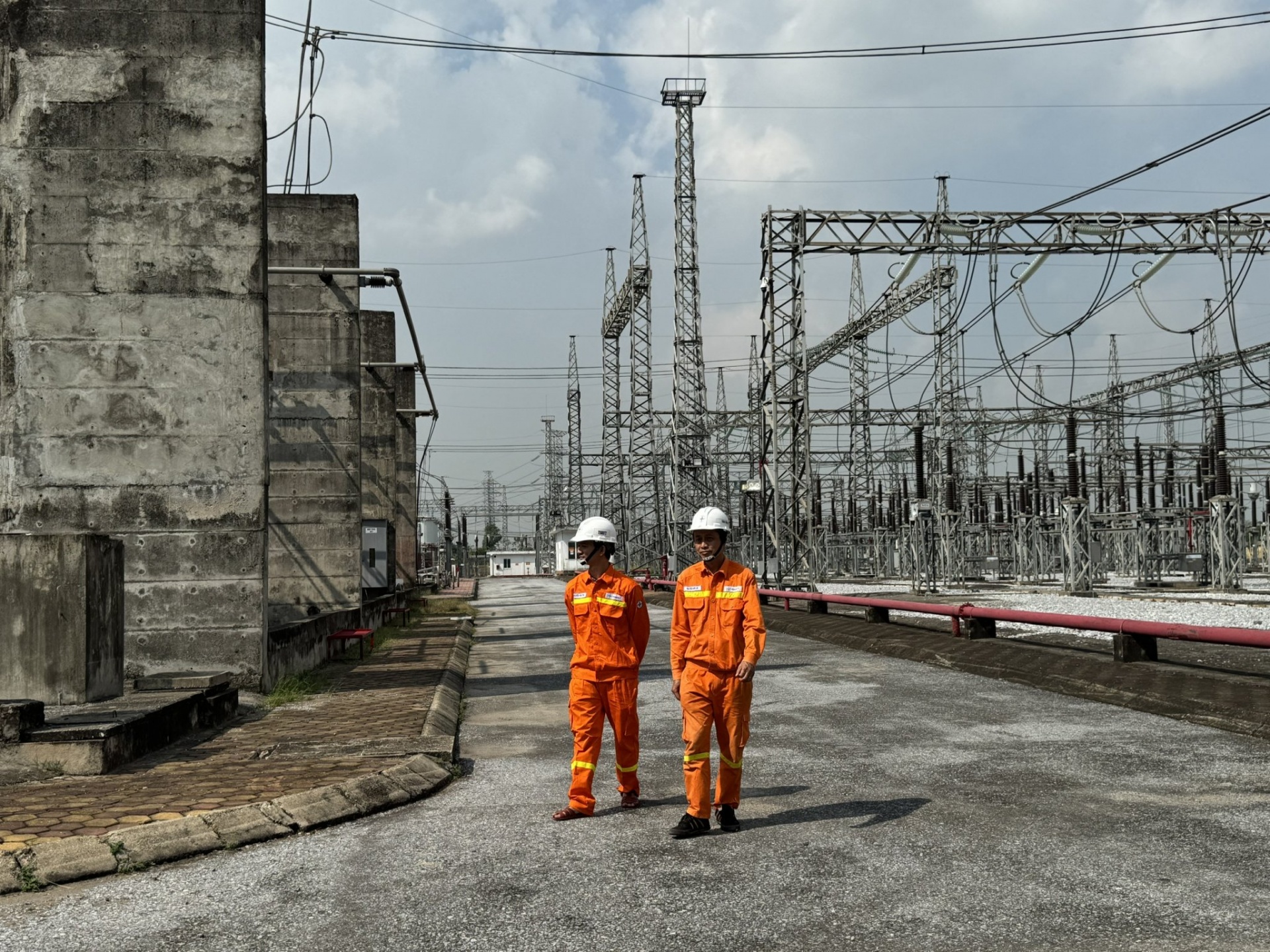 |
| Equipment at Thuong Tin 500kV Substation, an important link in Vietnam's national power transmission network |
What began as a transmission line dedicated to delivering electricity from the Monsoon project is now part of a much broader challenge: developing transmission infrastructure to accommodate multiple power sources from Laos and gradually establish interconnections between regional power grids.
Under the revised National Power Development Plan VIII, approved under Decision No.768/QD-TTg dated April 15, 2025, the total capacity of power sources in Laos for which the competent authorities have approved in-principle importation into Vietnam by 2030 exceeds 8,200MW.
At the 500kV level, in addition to the operational Monsoon-Thanh My line, five other interconnections are under construction: Sam Neua-Hoa Binh 2, Phila-Nam Cam, Cha Lo-Ha Tinh, Xebanghieng-Lao Bao, and Hatsan-Kon Tum. At the 220kV level, Vietnam currently has six operational interconnection lines transmitting imported electricity from power plants in Laos.
However, according to Hiep, these cross-border transmission lines currently serve primarily to facilitate electricity imports under the power purchase agreements of individual projects.
They do not yet constitute direct interconnections between the Vietnamese and Lao power grids. This distinction is important in the process of establishing the ASEAN Power Grid.
As part of the ASEAN energy cooperation, EVNNPT has assigned members to participate in working groups on regulatory and technical matters, coordinating with other countries on technical standards, power system dispatch, and operations.
The cross-border transmission lines currently being developed will lay the groundwork for deeper interconnections between the power grids of Vietnam and Laos, and eventually the wider ASEAN region.
 | EVNNPT accelerates 500kV transmission line from Quang Trach to Pho Noi EVNNPT has mobilised more than 800 engineers and skilled workers to participate in erecting poles and pulling wires for the 500kV transmission line circuit 3 from Quang Trach to Pho Noi project to ensure the key national project is on time. |
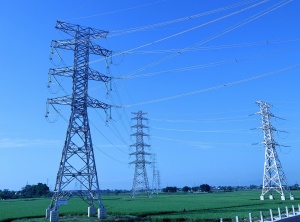 | 500kV circuit 3 transmission line inaugurated on August 29 Following collaborative efforts by the entire political system, the 500kV circuit 3 transmission line stretching from Quang Trach in Quang Binh province to Pho Noi in Hung Yen province was inaugurated on August 29. |
 | Insulators replaced on 500kV Son La - Hoa Binh power line Hoa Binh Power Transmission in collaboration with Power Transmission Company 1 completed a project to replace the insulators on the 500kV Son La - Hoa Binh line on November 7. |
 | Ca Mau approves investment in 500kV Bac Lieu–Thot Not power line Ca Mau People's Committee approves investment in the 500kV liquefied natural gas Bac Lieu–Thot Not power line, which is invested by National Power Transmission Corporation. |
What the stars mean:
★ Poor ★ ★ Promising ★★★ Good ★★★★ Very good ★★★★★ Exceptional
 Tag:


Latest News
More News
- Nearly two-thirds of Viettel’s IBA awards from overseas markets (October 30, 2026 | 13:56)
- Kim Long Motor eyes Central American expansion through Costa Rica partnership (October 27, 2026 | 17:34)
- Businesses accelerate overseas expansion (August 28, 2026 | 15:00)
- Outbound investment surge signals stronger push into global markets (August 13, 2026 | 18:06)
- Vietnamese groups expand their footprint across Southeast Asia (July 08, 2026 | 13:30)
- Vietnam records huge increase in outbound investment in first five months (June 10, 2026 | 13:06)
- Vingroup invests $12.75m in US-based humanoid robot research company (June 02, 2026 | 19:19)
- Vietnam channels $714 million into overseas projects (May 20, 2026 | 17:35)
- HalalViet centre launched to help Vietnamese firms tap global market (May 15, 2026 | 17:39)
- Viettel Global posted 30 per cent revenue growth in Q1 (May 04, 2026 | 18:58)








 Mobile Version