
Hospitality and real estate in fine fettle

At last week’s Meet The Experts event organised by WeHub, co-hosted by Savills Hotels and Kohler, industry leaders painted a picture of a market undergoing dynamic transformation. With investor confidence growing, consumer behaviour evolving, and national infrastructure rapidly expanding, experts believe the next 12-24 months will be pivotal in defining Vietnam’s hospitality landscape.
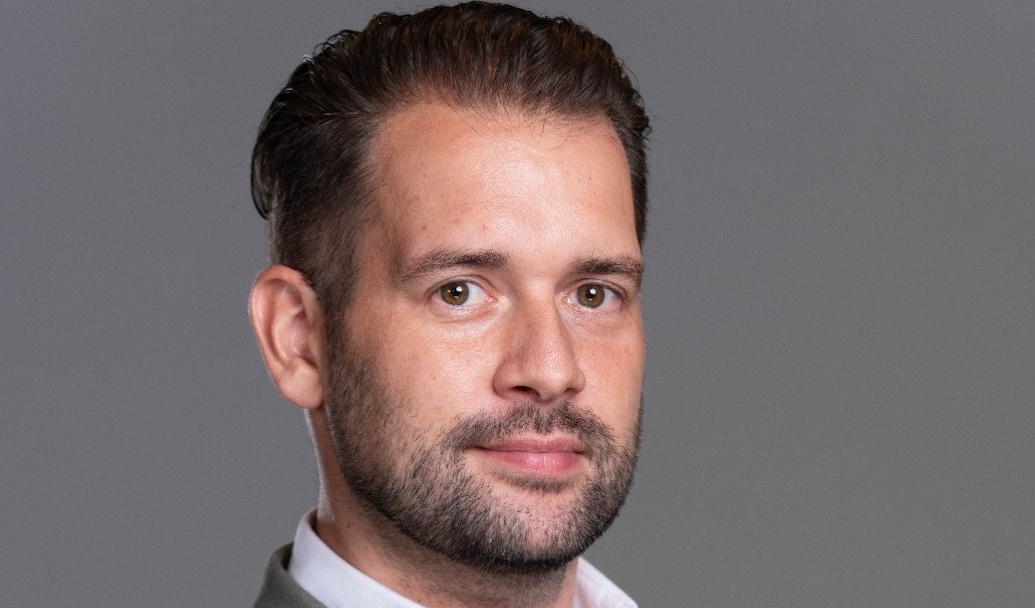
“Vietnam’s hospitality and real estate sectors are entering a mature growth phase,” said Mauro Gasparotti, senior director and head of Southeast Asia at Savills Hotels. “With stable supply, rising branded presence, diversified demand, and infrastructure improvements, this is a strategic moment for investors, developers, and operators to re-engage.”
One of the clearest trends is the dominance of branded hotels. Today, only around one-third of Vietnam’s hotels are managed by international brands, but in the upcoming development pipeline, that figure jumps to 85 per cent. “Developers are increasingly partnering with global hotel operators, moving away from self-managed models,” Gasparotti explained. “Over 90 international brands are currently active in Vietnam, and that number is expected to surpass 130 in the coming years.”
The landscape is also welcoming a wave of new entrants, from lifestyle-driven brands to economy-tier operators, while rebranding efforts are gaining momentum as older properties seek to meet the expectations of a more international, design-conscious traveller base.
Despite this momentum, Vietnam’s luxury and ultra-luxury segments remain underdeveloped. For instance, the Indonesian island hotspot of Bali alone has more luxury resorts than all of Vietnam. However, with several branded luxury developments on the horizon, industry players see this as a major untapped opportunity.
Vietnam’s hospitality market is also evolving in response to changing traveller preferences. Demand is growing for lifestyle hotels, wellness-integrated resorts, and experiences tailored to multi-generational travel. “Wellness is no longer just a spa,” said Gasparotti. “It’s becoming a core element of resort design and the overall guest experience.”
Tech adoption is also reshaping the sector. Developers are leveraging data analytics and AI to personalise offerings and improve operational efficiency, reflecting a shift from traditional hospitality towards experience-driven, smart tourism.
From aviation to real estate, Vietnamese conglomerates are doubling down on vertical integration as a competitive edge. Sun Group, for example, has announced its aviation venture, Sun Phu Quoc Airways and Sun Air, with a total investment of approximately $96 million. Commercial operations are expected to begin as early as next month, marking a major step towards completing its integrated hospitality ecosystem.
“We currently operate 18 hotels and resorts and aim to expand to 65 by 2030,” said Daniel Trinh, chief business development officer at Sun Group. “We’re responding to shifting demographics, especially Gen Z and Gen Alpha, by entering the lifestyle segment, offering everything from luxury to economy lifestyle experiences.”
Sun Group is also entering the branded residences sector, a move that reflects a broader market shift where hospitality is no longer confined to hotel rooms but now includes living, working, and wellness spaces.
Elsewhere, real estate developer Masterise Homes is embracing this evolution with its strategy of branded living experiences: not just residences with a brand name, but integrated, hospitality-driven communities. “We focus on urban resorts and wellness-centric developments that blend leisure, business, and lifestyle,” said Nelly Phuong Ta, head of Hospitality and Entertainment at Masterise Group. The company is currently developing nearly 4,000 branded residential units across Vietnam.
Similarly, T&T Group has strengthened its hospitality ambitions by becoming a strategic investor in Vietravel Airlines, recently increasing the airline’s charter capital to $50 million. The move aligns with T&T’s broader goal of building a comprehensive tourism ecosystem.
After a period of limited development activity, T&T Hospitality is now undergoing a notable resurgence. “In just five months, we’ve signed multiple agreements, engaged new operators, and kicked off around eight new projects in pre-concept and design stages,” shared Thu Le, its acting CEO.
Their strategy focuses on diversified development across both primary and secondary locations, while maintaining a flexible approach to operator selection, guided by project positioning, brand fit, and return on investment potential, rather than long-term loyalty to a single operator. “By the end of 2026, we aim to have 10 operational hotels, supported by our airline and an expanding branded residential portfolio,” Le declared.
From the international operator perspective, the tone is one of cautious optimism mixed with realism. “This year has been about completing projects that were paused during previous years,” said Carolina Fagnani, vice president of Development for Southeast Asia-Pacific at Radisson Hotel Group. “But now, we’re seeing real acceleration.”
She highlighted a number of new lifestyle properties opening under the Radisson Red and Radisson Blu brands, as well as an upshift in tourism into Vietnam, especially from regional markets like China, Laos, and Cambodia. “Selective growth will continue, with some confidential deals already in progress,” Fagnani added.
One unexpected but impactful trend discussed at the event was the reversal of Chinese tourist flows. While Thailand saw a 34 per cent drop in Chinese arrivals due to geopolitical and safety concerns, Vietnam experienced a 44 per cent surge.
“This shift highlights the need for adaptability in hospitality planning,” said Gasparotti of Savills Hotels. “Macro events can change regional travel dynamics overnight, so resilience and agility must be part of every operator’s strategy.”
 |
What the stars mean:
★ Poor ★ ★ Promising ★★★ Good ★★★★ Very good ★★★★★ Exceptional
 Tag:
Tag:Related Contents


Latest News


More News
- The Reverie Saigon unveils a new approach to MICE travel (September 24, 2026 | 18:00)
- Great American BBQ Festival brings US flavours to Hanoi (September 18, 2026 | 17:51)
- Angsana & Dhawa Ho Tram makes the case for 'slow travel' (September 17, 2026 | 16:01)
- National Day comes to the coast at Angsana & Dhawa Ho Tram (August 28, 2026 | 09:43)
- The perfect time to escape the city at Seahorse Resort & Spa (August 28, 2026 | 09:42)
- M Village founder raises $26 million (August 26, 2026 | 15:48)
- Eastin Grand Saigon puts Vietnamese twist on afternoon tea (August 17, 2026 | 11:03)
- Palladium Hotel Group launches Asia-Pacific HQ in Vietnam (August 17, 2026 | 10:33)
- Reverie Saigon unveils 2026 mooncake collection (August 14, 2026 | 15:29)
- Meliá Hotels International expands in Vietnam with first Meliá Collection hotel (July 28, 2026 | 20:03)



Latest News






 Mobile Version