

Green real estate labels mask deeper capital market divides

 |
A growing paradox has emerged: some green projects secure long-term funding at relatively low cost, while others with comparable technical specifications struggle to raise capital or face significantly higher financing costs. The explanation does not lie in how 'green' a project appears, but in the strength and credibility of the enterprise behind it.
Capital markets have quietly shifted their lens. Real estate is no longer assessed on a project-by-project basis. Instead, financial institutions and institutional investors are evaluating the viability of the developer itself, the overall bankability of the corporate platform. This marks a structural change in how capital is allocated in the sector.
For years, particularly during periods of rapid market expansion, many developers operated under a straightforward assumption: a well-positioned project would naturally attract funding. That logic held when liquidity was abundant and risk was underpriced.
In today’s environment, however, the equation has reversed. Capital providers are no longer financing standalone projects; they are underwriting management capability, governance quality, and the enterprise’s ability to generate sustainable cash flows across its entire portfolio. The central question has shifted from “How strong is this project?” to “How investable is this company?”
This shift has elevated environmental, social, and governance (ESG) standards from a communications tool to a financing filter. A green project only carries weight if it is embedded within a corporate system capable of producing reliable data, managing risk, and sustaining performance over time. Without that foundation, sustainability claims offer little reassurance to investors.
Experience across both developed and emerging markets suggests that developers are implicitly ranked by capital markets along a spectrum of bankability. At the most basic level is data readiness. Investors begin not with narratives, but with evidence: emissions inventories, lifecycle carbon measurement, and credible systems for measurement, reporting, and verification.
Many ESG reports remain descriptive rather than quantitative, lacking third-party validation. In such cases, projects labelled as 'green' but unsupported by measurable data are treated as higher risk. In capital markets, the absence of reliable data effectively means the absence of decision-making confidence.
Beyond data lies governance. Two companies may present similar datasets yet be assessed very differently depending on how that information is managed and embedded into decision-making. Firms that treat ESG as a compliance or reporting exercise, often siloed within operational departments and disconnected from board-level oversight, tend to fall short.
By contrast, companies favoured by investors integrate ESG into their governance structures: sustainability is overseen at board level, investment committees evaluate financial returns alongside risk and emissions, and procurement processes incorporate sustainability criteria. At this stage, investors are no longer examining individual projects; they are assessing the developer’s operating system.
The next level of bankability relates to portfolio structure. As the market enters a more differentiated phase, particularly in the period from 2026 to 2035, the composition of assets becomes a defining factor. A single high-quality green project is insufficient if the broader portfolio is misaligned with demand, overly concentrated in volatile segments, or lacking stable income streams.
Developers able to secure long-term, low-cost capital typically demonstrate balanced portfolios that combine affordable housing, satellite urban developments, green industrial real estate, and logistics assets aligned with infrastructure growth. More importantly, they generate stable operating cash flows and maintain a meaningful share of recurring income. Capital markets do not invest in short-term profit peaks; they invest in long-term survivability and scalable growth.
At the highest level of bankability, companies become fully integrated into capital markets. This is where capital transitions from a funding source into a strategic instrument. Developers operating at this level can issue green or sustainability-linked bonds, raise financing at the corporate rather than project level, and actively manage their portfolios through mergers, acquisitions, and divestments. Few Vietnamese developers have reached this stage, but those that do gain a decisive advantage – in accessing capital and in shaping market cycles.
| “Capital markets do not bet on green projects. They bet on companies capable of managing risk and cash flows over the next 10 to 20 years.” |
This perspective explains why seemingly similar green projects yield very different financing outcomes. Developers that approach capital as isolated project sponsors quickly encounter structural limits. Those that approach it as strategic allocators, designing portfolios, managing risk systematically, and delivering long-term cash flow visibility, are rewarded with deeper and cheaper pools of capital.
Against this backdrop, the period from 2026 to 2027 represents a critical transition window for Vietnam’s real estate sector. As the market restructures, developers will need to move decisively on several fronts: standardising ESG and carbon data, integrating sustainability into core investment processes, restructuring portfolios towards resilience, and building the internal capabilities required to access capital markets effectively. This includes strengthening finance, mergers and acquisitions, and investor relations functions, while piloting benchmark projects that can be scaled across portfolios.
The direction of travel is clear. Capital markets are evolving rapidly, and green capital is not allocated based on alignment with popular narratives. It flows towards enterprises that are structured for endurance, those capable of demonstrating transparency, discipline, and long-term performance.
In this new cycle, the defining question is no longer whether a project is green. It is whether the company behind it can earn and sustain the trust of capital markets. Developers that can answer that question convincingly will secure lower-cost, longer-tenor funding and position themselves as leaders in the next phase of Vietnam’s real estate development.
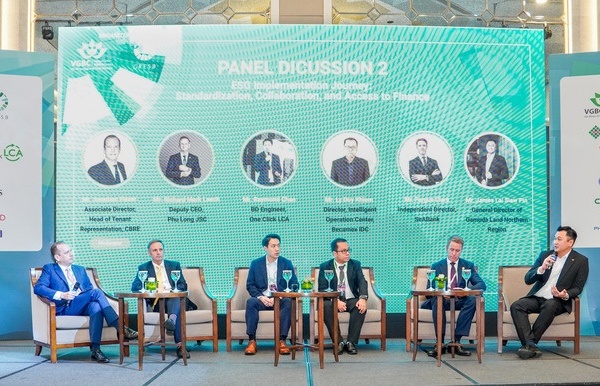
 | Forum focuses on financial solutions for ESG in real estate Over 100 stakeholders from government agencies, international financial institutions, real estate investors, and developers gathered for a forum titled “Implementing ESG in real estate in Vietnam: Opportunities and financial solutions for sustainability” in Hanoi on June 17. |
 | Vietnam to develop national green building standards Vietnam is set to introduce its first national green building standards, marking a pivotal step towards sustainable urban development and aligning the construction sector with the country's net-zero ambitions. |
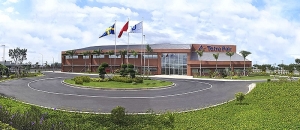 | Vietnam enters global Top 10 markets for LEED-certified buildings Vietnam has entered the top 10 countries and regions outside the United States with the largest total LEED-certified gross floor area, marking a significant rise in green building development. |
What the stars mean:
★ Poor ★ ★ Promising ★★★ Good ★★★★ Very good ★★★★★ Exceptional
 Tag:
Tag:Related Contents






Latest News


More News
- Lotte Properties and Phat Dat develop Thu Thiem Eco Smart City (May 27, 2026 | 22:18)
- Greening construction material market: the time is now (May 22, 2026 | 09:37)
- Last opportunity to own real estate in heart of Thao Dien (May 06, 2026 | 09:35)
- IOM and partners launch new SMEs guidance for construction and materials industry in Vietnam (April 24, 2026 | 17:25)
- Workshop guides construction firms on carbon rules (April 24, 2026 | 12:28)
- Malaysian tycoon SkyWorld brings sustainable homes to Vietnam (April 23, 2026 | 08:00)
- Ministry of Construction drafts criteria to assess urban climate resilience (April 14, 2026 | 17:05)
- Hyundai HT to expand smart home and building in Vietnam (April 01, 2026 | 13:20)
- New urbanisation cycle set to define Vietnam's next decade of growth (March 17, 2026 | 21:00)
- Vietnam enters global Top 10 markets for LEED-certified buildings (March 09, 2026 | 13:45)


Latest News





 Mobile Version