
As global green supply chain reshapes, will Vietnam be left behind?

 |
| Jerry Nguyen (Nguyen Kinh Luan), chair of group restructuring, chair of ESG subcommittee, board member, deputy general director of investment and international market development, Hoa Binh Construction Group |
As green finance emerges as the new “passport” enabling Vietnamese enterprises to access international markets, a broader landscape for the construction sector is coming into view. The world is not only changing the way capital is mobilised; it is restructuring entire supply chains around advanced technologies, green materials and low-emission production.
This transformation places unprecedented pressure on a sector traditionally anchored in conventional materials, labour-intensive construction methods and legacy operating models, as is still largely the case in Vietnam.
The shift is happening with remarkable speed. Pioneer markets such as Singapore, Australia, Japan, South Korea, and the EU have already embedded emissions-reduction thresholds into their building standards. Materials that cannot demonstrate low lifecycle emissions are excluded from major projects. Contractors that fail to adopt BIM (building information modelling) or material-efficient technologies face shrinking access to premium bids. Supply chains without transparent carbon data are downgraded, or removed entirely, from global procurement lists.
Against this backdrop, the most important question for Vietnam is no longer, When must we transform? Can we transform fast enough to secure our place in the next 30 years of global opportunity?
In many developed markets, green materials are rapidly becoming the default standard of the construction industry. Clinker-reduced cement, geopolymer concrete, recycled aggregates, green steel, low-carbon bricks and bio-based materials are all being commercialised at unprecedented scale. Their common denominator is clear: they must be backed by verified emission data, LCA (life cycle assessment) and EPD (environmental product declaration), and independently certified.
In contrast, most Vietnamese building materials still lack carbon disclosures, EPD certifications and energy-efficient production lines. As a result, despite competitive pricing and strong production capacity, Vietnamese materials struggle to penetrate higher-value markets.
The reality is unmistakable: competition in the construction materials sector is shifting from “low cost” to “low carbon.” Those who control emissions across the material lifecycle will hold the strategic advantage in the global construction supply chain.
If materials are the “foundation” of the supply chain, construction technology is the “lever” that drives emission reductions and productivity gains.
Global markets are advancing rapidly towards BIM 4D-5D, AI-driven material consumption forecasting, IoT-based energy monitoring, construction robotics, modular construction, and 3D printing. These dramatic technologies reduce waste, optimise timelines, lower noise pollution, cut construction-site waste and, most importantly, reduce CO₂ emissions across the entire lifecycle of buildings and infrastructure.
Some Vietnamese firms have adopted BIM, but most remain at the basic simulation stage. To meet international benchmarks, BIM must integrate material databases, carbon-cost modelling, operational emissions, and end-of-life reuse strategies.
Only when technology is deeply embedded into project management, from design to handover, can Vietnamese contractors qualify for international tenders that now demand faster delivery, cleaner construction and complete transparency.
In truth, the era of competing through inexpensive labor is over. Technology capability now determines a firm's position in the market.
Sustainable supply chains: new metric of national competitiveness
In construction, the supply chain accounts for 70-80 per cent of a project's total emissions. It is therefore unsurprising that green supply chains have become a central indicator of corporate competitiveness.
Investors in the EU, Australia, and the US now require real-time emissions transparency; material traceability from mine to factory to construction site; low-carbon logistics monitoring; and supplier management aligned with environmental, social, and governance (ESG) standards.
Across Asia, these systems are already taking shape. Singapore mandates carbon data from the design stage for major projects. Australia requires LCA for infrastructure development. Japan and South Korea have commercialised geopolymer materials and green steel. The UAE is developing net-zero urban districts.
Vietnam, by comparison, is rapidly expanding its infrastructure and contractor capabilities. Yet the nation still lacks the critical components needed to integrate into global supply chains: green standards, carbon transparency, traceable digital supply chains and low-carbon material ecosystems.
Without swift action, Vietnam risks sliding to the bottom of the value chain, taking on low-margin, easily replaceable roles while higher-value segments are captured by more advanced markets.
Vietnam needs a true “green pivot” in materials and technology
To match the pace of global transformation, Vietnam cannot continue moving incrementally. A comprehensive, national restructuring strategy is required.
Green materials must be reformed at the source. This includes transitioning to energy-efficient production lines, adopting clinker-reduced cement, scaling up geopolymer concrete, expanding recycled materials, publishing EPDs and ensuring full emissions transparency throughout production.
Construction technology must advance to the next tier. BIM must evolve into a deeply integrated system linking material lifecycle data, carbon modelling, and performance simulations. Construction sites must be digitised with IoT. Prefabrication and modular methods should be elevated to national strategic priorities to reduce emissions and accelerate delivery.
Supply chains must be connected through data. When every link, from extraction and manufacturing to transport and construction, is measured by standardised carbon metrics, Vietnam will be positioned to enter the regional and global green supply chain. This is not just a business issue. It is an economic imperative.
| "We stand before a 30-year golden opportunity. Move slowly, and others will seize it. Move quickly, and Vietnam can reposition its construction capabilities on the world map." |
The next three decades will see trillions of dollars invested globally to rebuild infrastructure for the net zero era. Those who enter the green supply chain early will gain considerable advantage. Those who hesitate will be sidelined.
If acting in time, Vietnam can build a competitive green materials industry with export capacity; elevate Vietnamese contractors into true international general contractors; attract large-scale green capital; and position Vietnam as a regional hub for sustainable construction. If not, Vietnam will remain confined to the least profitable segments of the supply chain, while other countries dominate the high-value tiers.
The future of Vietnam's construction industry depends entirely on the speed of today's transformation. Green materials and construction technologies are no longer optional, they are the only viable pathway for Vietnam to enter the net zero era with greater confidence, higher value creation, and long-term competitiveness.
 | Saint-Gobain's impressive footprint in the Vietnamese green building ecosystem Saint-Gobain is at the forefront of Vietnam's green construction movement, offering a comprehensive system of sustainable building materials that meets international standards and is featured in many of the country's landmark projects. |
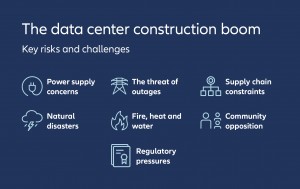 | AI cloud rush fuels data-center building spree The unseen forces of AI and cloud computing are never out of the news, yet behind the headlines lies a story of growth and innovation as tangible as bricks and mortar. |
 | Green finance offers 'passport' for Vietnamese construction, building materials firms Sustainability is no longer a trend but the new operating system of the global economy. With stricter green standards sweeping across markets, Vietnamese construction companies must accelerate their transition or fall behind. |
What the stars mean:
★ Poor ★ ★ Promising ★★★ Good ★★★★ Very good ★★★★★ Exceptional
 Tag:
Tag:Related Contents









Latest News





More News
- Carbon finance hinges on viable ventures (October 19, 2026 | 09:59)
- AI to transform the future of finance (October 19, 2026 | 09:04)
- Government proposes relaxing IPO conditions (October 19, 2026 | 08:00)
- Citi warns of intensifying competition for capital amid higher rates (October 16, 2026 | 16:54)
- Banks poised for Q3 profit growth amid margin pressure (October 16, 2026 | 16:51)
- Eximbank to strengthen corporate governance structure (October 16, 2026 | 11:32)
- Citi honours 13 banks with 2025 STP Awards (October 15, 2026 | 16:01)
- Green transition requires realistic roadmap (October 14, 2026 | 17:31)
- VIR workshop explores credit policy and carbon market development (October 14, 2026 | 11:22)
- Stronger carbon market needed to unlock climate finance (October 14, 2026 | 11:00)



Latest News





 Mobile Version