

Greening construction material market: the time is now

In April, Saint-Gobain made the announcement of achieving the zero carbon manufacturing (scopes 1&2) at its DURAflex fibre cement board plant in Quang Tri, setting a new benchmark for sustainable construction materials manufacturing, and adding a motivation for the market.
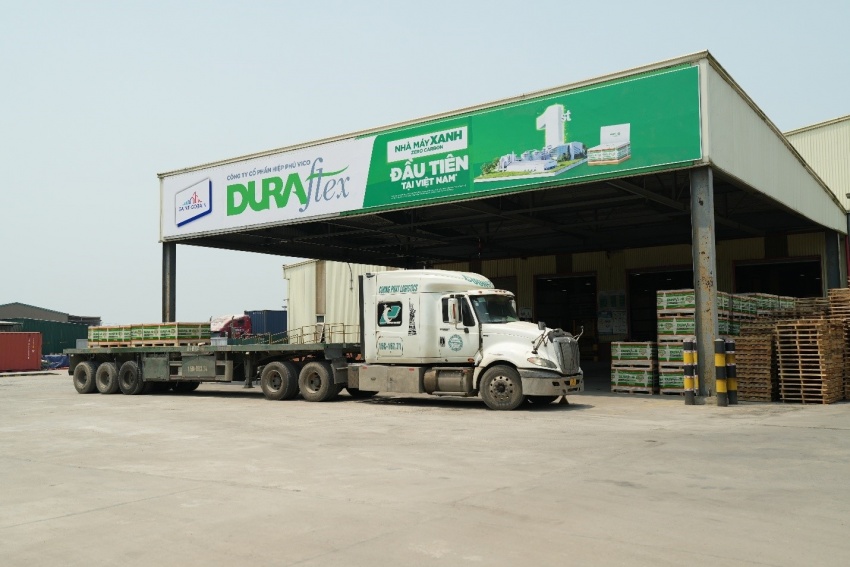 |
| The first zero carbon manufacturing (scopes 1&2) of Saint-Gobain |
The transformation of the plant is the result of a deliberate shift in how energy is sourced and used.
The project, completed in December 2025, included the replacement of the plant’s diesel-fired boiler with a biomass boiler, powered by sustainably sourced agricultural residues from local farms such as wood chips, rice husks and ground bark. It now operates entirely on renewable electricity covered by International Renewable Energy Certificates. As a result, the facility has eliminated its scope 1 and scope 2 CO2 emissions.
Nguyen Truong Hai, CEO of Saint-Gobain Vietnam told VIR, “With 11 Saint-Gobain factories and related brands in Vietnam, this factory is one of the places that also inspires and motivates other factories. You will also see that having a green factory like this is not too difficult if we change our approach, rather than expecting a factory to incur huge costs just to achieve that designation.”
Growing trend
The Saint-Gobain facility is among a growing number of green buildings in Vietnam, reflecting rising interest from the market and stakeholders in green construction.
By the end of 2025, Vietnam had 780 green building certified projects, with a total floor area of over 18.6 million sq.m. In 2025 alone, 196 buildings received green certification, with a total floor area of 4.4 million sq.m, representing a 20 per cent increase in number and a 15 per cent increase in floor area compared to 2024.
Vietnam is facing a rapidly increasing volume of construction solid waste, accounting for approximately 10-12 per cent of total urban waste, or around 60,000 tonnes per day, and even reaching 20-25 per cent in major cities.
At present, construction is among the industries generating the highest carbon emissions, accounting for nearly 40 per cent of the total. Therefore, greening the construction industry is considered one of the key priorities for Vietnam, alongside digital transformation.
Pham Van Hung, director of DURAflex plant in Quang Tri, explained that compared to other factories producing similar products within the system, the first distinguishing feature of the zero carbon factory lies in its use of on-site biomass fuel such as bark, twigs, and agricultural by-products. This reduces waste and generates additional income for local people, while protecting the environment.
The second difference is the use of renewable energy sources, which provides greater value for businesses, including environmental benefits and long-term operational efficiency.
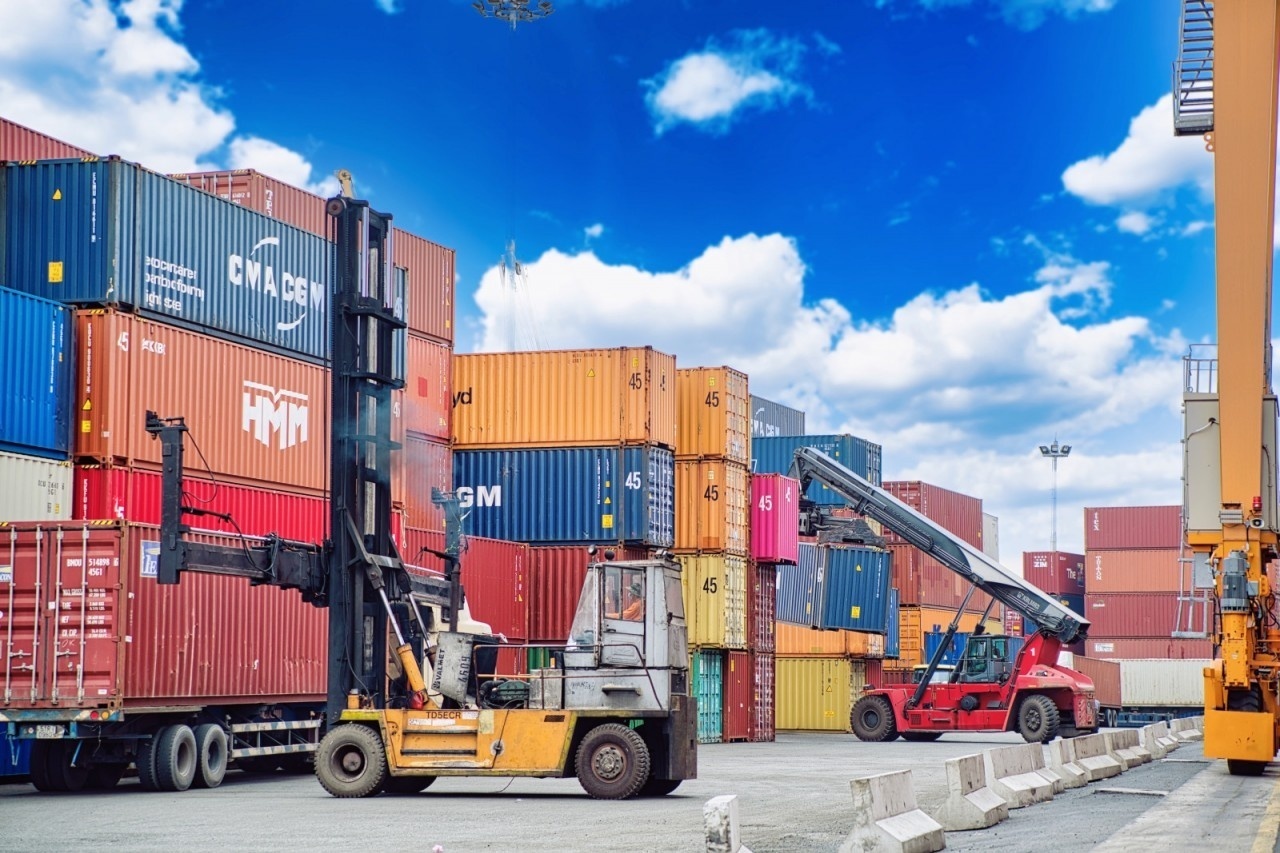
Thirdly, the factory is switching to using electric equipment and vehicles, such as forklifts, cranes, and other internal equipment. This helps reduce energy consumption and simultaneously reduce direct emissions during operation.
“In the face of ongoing fluctuations in energy supply, biomass steam energy solutions provide businesses with a reliable and sustainable alternative to conventional fossil fuels” said Hai.
“This demand is driving building material manufacturers, design firms, and developers to focus on green criteria. And this is no longer just a plus; it will gradually become a mandatory requirement. As we begin to inventory and measure greenhouse gas emissions, new designs and demand will certainly increase.”
Future solutions
According to experts, to green the construction industry, it must start by greening building materials. Green materials will contribute to the advantages of green building certification. Secondly, Vietnamese customers are increasingly concerned not only with construction quality, but also with the greener, more sustainable, and environmentally responsible aspects of a building.
“I believe that the Vietnamese government's commitment to achieve carbon neutrality by 2050 is a serious commitment, implemented consistently across all levels of government and agencies. Vietnam is entering a new era of growth: GDP growth and rapid urbanisation. The current urbanisation rate is just over 30 per cent, and it will increase significantly in the near future. The demand for building new cities, expressways, and metro lines will create a demand for construction materials,” Hai said.
Saint-Gobain Vietnam’s achievement demonstrates the group’s commitment to decarbonising construction and industry, supporting the Vietnamese market’s demand for sustainable, high-performance building solutions. The DURAflex fiber cement board plant in Quang Tri positions it as a model for zero carbon manufacturing in Asia.
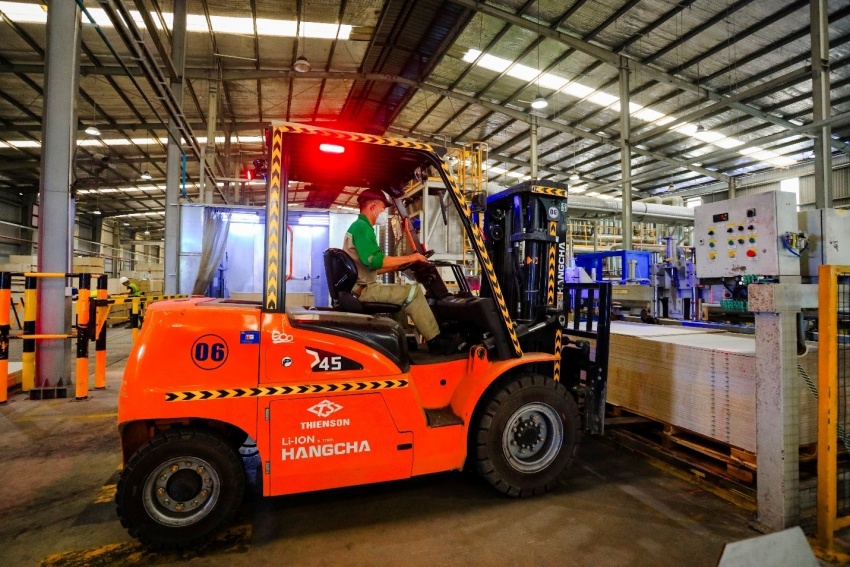 |
| Saint-Gobain DURAflex fibre cement board plant in Quang Tri has switched to using electric equipment and vehicles |
To accelerate the trend, experts said that it requires the concerted efforts of all agencies, businesses, and policymakers.
Dr. Van Viet Thien An, head of Building Materials at Hanoi University of Civil Engineering, said, “Utilising construction and demolition waste is an important solution. However, the process still faces many obstacles, such as inconsistent recycled material quality, lack of waste sorting at source, high processing and transportation costs, and inconsistent standards and regulations.”
He explained that the market still prefers traditional materials, while production technology remains limited and effective economic support mechanisms are lacking. In addition, coordination among stakeholders remains insufficient.
“In the context of climate change, the development of green building materials is an inevitable trend. To encourage green materials usage, it is necessary to improve standards and incentive policies, including taxes and usage requirements, while also applying economic tools such as resource and carbon taxes to limit the use of traditional materials,” he said.
In a move to facilitate market development and contribute to the country’s carbon neutrality target by 2050, the Ministry of Construction (MoC) is continuing to finalise relevant legal documents, including a draft decree and a circular on managing the quality of construction material products and goods.
Ke Van Ke, deputy director of the MoC's Department of Science, Technology, Environment and Building Materials, said, “A notable point in the draft decree is the direction towards building a management and development framework for construction materials linked to green transformation, digital transformation, the circular economy, resource and energy conservation, emission reduction, and improved state management effectiveness.”
Tran Ba Viet, vice president of the Vietnam Concrete Association, told VIR, “The goal of achieving net-zero commitments by 2050 remains a major challenge because Vietnam is still at an early stage and the transition requires huge costs. Meanwhile, international funding commitments remain far from sufficient.”
He recommended that issuing standards should be the top priority. “Only with standards can other regulations be properly implemented. The workload is enormous, so a systematic and substantive approach is needed,” he said.
What the stars mean:
★ Poor ★ ★ Promising ★★★ Good ★★★★ Very good ★★★★★ Exceptional
 Tag:
Tag:Related Contents





Latest News

More News
- Lotte Properties and Phat Dat develop Thu Thiem Eco Smart City (May 27, 2026 | 22:18)
- Last opportunity to own real estate in heart of Thao Dien (May 06, 2026 | 09:35)
- IOM and partners launch new SMEs guidance for construction and materials industry in Vietnam (April 24, 2026 | 17:25)
- Workshop guides construction firms on carbon rules (April 24, 2026 | 12:28)
- Malaysian tycoon SkyWorld brings sustainable homes to Vietnam (April 23, 2026 | 08:00)
- Green real estate labels mask deeper capital market divides (April 20, 2026 | 08:00)
- Ministry of Construction drafts criteria to assess urban climate resilience (April 14, 2026 | 17:05)
- Hyundai HT to expand smart home and building in Vietnam (April 01, 2026 | 13:20)
- New urbanisation cycle set to define Vietnam's next decade of growth (March 17, 2026 | 21:00)
- Vietnam enters global Top 10 markets for LEED-certified buildings (March 09, 2026 | 13:45)


Latest News



 Mobile Version