

GE HealthCare showcases latest imaging innovations in Vietnam

 |
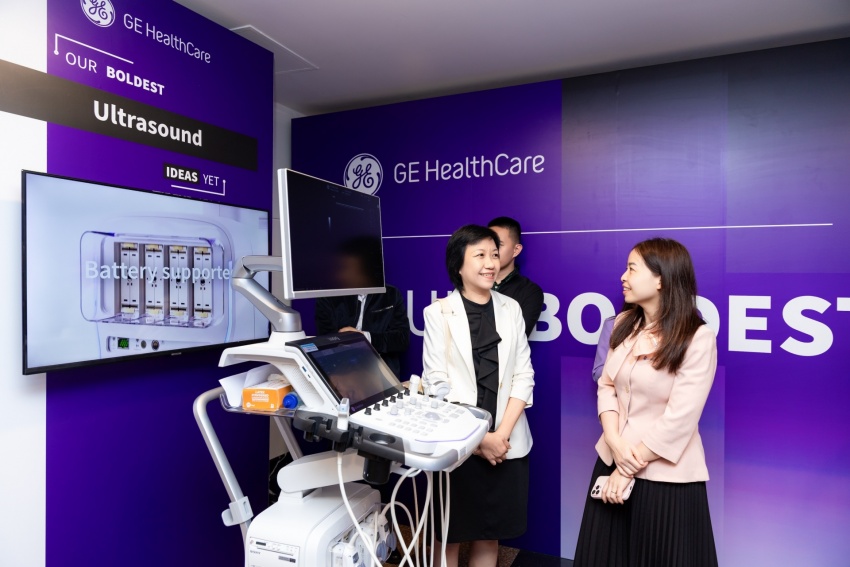
On January 16, GE HealthCare hosted the RSNA Update Technology Talk at Melia Hanoi, presenting more than 40 new diagnostic imaging technologies to Vietnam’s medical community. The event attracted over 100 hospital directors, heads of radiology departments, and leading specialists from major public and private healthcare institutions nationwide, along with representatives of the Vietnam Society of Radiology and Nuclear Medicine.
The company outlined the future direction of diagnostic imaging through technologies recently unveiled at RSNA 2025 in Chicago, spanning six core modalities: computed tomography, magnetic resonance, mammography, molecular imaging, ultrasound, and interventional and surgical imaging. These solutions cover the full continuum of care and are supported by cloud-based and AI applications.
 |
This year’s flagship technologies include the next-generation Photonova™ Spectra CT system, which combines proprietary Deep Silicon detector technology with multiple intelligent algorithms to harness and process vast amounts of data up to 50 times more than conventional CT. This combination achieves exceptional spectral and spatial resolution for ultra-high-definition imaging, supporting clinicians in observing detailed anatomical structures and enhancing material separation for diagnosis.
Alongside the CT breakthroughs are the next-generation magnetic resonance systems, SIGNA™ Bolt and SIGNA™ Sprint, operating on the SIGNA™ One AI platform to optimise workflow. While SIGNA™ Bolt focuses on high-field 3.0T performance with a wide-bore design and low-energy consumption, SIGNA™ Sprint introduces a sustainability breakthrough with Freelium™ technology, reducing helium consumption to less than 1% without compromising clinical performance and operating costs.
In the field of nuclear medicine and interventional solutions, GE HealthCare introduced the Omni Total Body PET/CT system, which features a vertical field of view up to 128cm, allowing for simultaneous whole-body imaging and cellular-level kinetic studies with ultra-high sensitivity. This technology will help optimise workflow, radiation dose, and scan time, while advancing cancer diagnosis at the cellular level with ultra-sharp resolution.
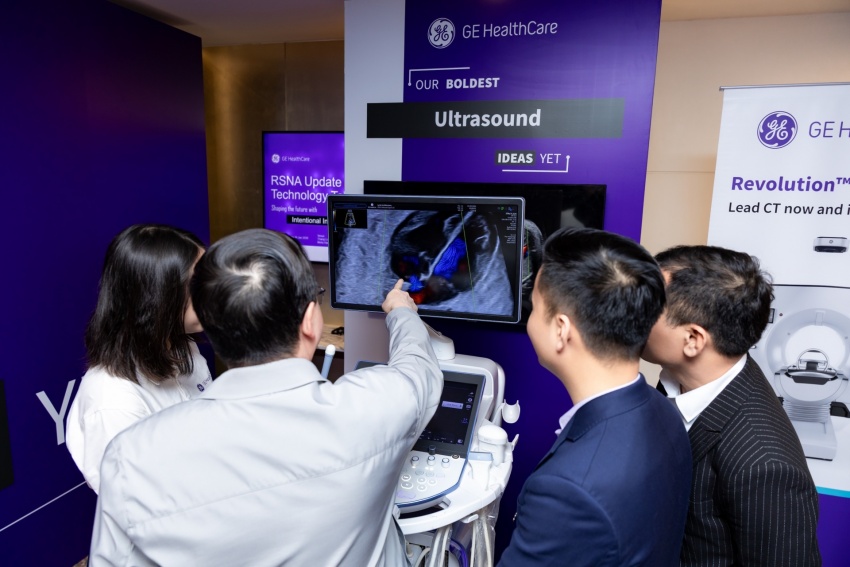 |
This innovative portfolio also includes technologies such as Pristina™ Via mammography system integrated with Pristina™ Recon DL technology, Vivid™ Pioneer cardiovascular ultrasound system, Allia™ Moveo image guidance system, StarGuide™ GX digital 4D SPECT/CT system, and 100 FDA-authorised AI solutions. These innovations not only enhance diagnostic image quality at low radiation doses but also contribute to addressing urgent healthcare challenges such as workforce shortages, hospital overcrowding, and the need for data standardisation.
The event also provided an opportunity to reflect on GE HealthCare’s more than 125-year legacy of innovation, marking major milestones such as 60 years of dedicated research in mammography and 25 years since the launch of the world’s first commercially available positron emission tomography and computed tomography (PET/CT) system.
These achievements reaffirm GE HealthCare’s continued focus on innovation and development, while underscoring its long-term commitment to supporting the modernisation of Vietnam’s healthcare system, advancing precision medicine, and improving the quality of patient care.
 | GE HealthCare brings healthcare solutions to science congress On August 26, GE HealthCare launched cutting-edge technologies designed to enhance diagnostic and treatment efficiency for physicians in diagnostic imaging. |
 | FPT and GE HealthCare expand strategic partnership FPT and GE HealthCare announced a strategic cooperation agreement on April 2, expanding their commercial alliance to advance product strategy and development and establish an FPT Competency Centre in Vietnam. |
 | GE HealthCare backs Vietnam’s drive for digital transformation in hospitals Amit Yadav, president and CEO of GE HealthCare for ASEAN, Korea, Australia, and New Zealand, told VIR’s Bich Ngoc that Vietnam is emerging as a key player in the region’s digital health transformation. |
What the stars mean:
★ Poor ★ ★ Promising ★★★ Good ★★★★ Very good ★★★★★ Exceptional
 Tag:
Tag:





Latest News




More News
- Expanding education partnerships to drive mutual growth (October 06, 2026 | 16:04)
- VTG 2026 to showcase textile and footwear innovation in Ho Chi Minh City (October 06, 2026 | 16:00)
- Infineon boosts Vietnam footprint with Ho Chi Minh City office (October 06, 2026 | 10:02)
- Vietnam Customs expands priority enterprise scheme to 74 firms (October 03, 2026 | 08:00)
- ASL Law opens Danang office (October 02, 2026 | 22:12)
- Project ACTIVE 2.0 launches in Vietnam to boost cervical cancer care (October 02, 2026 | 22:02)
- Vietnam launches first embodied AI conference to advance robotics ecosystem (October 02, 2026 | 17:00)
- DKSH Performance Materials – A trusted partner in Vietnam’s evolving personal care landscape (October 02, 2026 | 14:28)
- Ghanaian delegation reviews PSL Machinery’s cashew factory-management and implementation roadmap (October 02, 2026 | 10:18)
- People living with chronic kidney disease and diabetes should be aware of infectious disease risks (September 30, 2026 | 18:00)


Latest News




 Mobile Version