
Expanding education partnerships to drive mutual growth

With the UK as the largest international training and education partner active in Vietnam, and Vietnamese ambitions to make English a second language in schools by 2035, Jacqui Smith - the Right Honourable Baroness Smith of Malvern, Minister for Skills at the UK Department for Education, is going to pay a visit to Vietnam, underlining the country’s status as an international education strategy (IES) priority for the UK government. She writes about the reasons behind the visit.
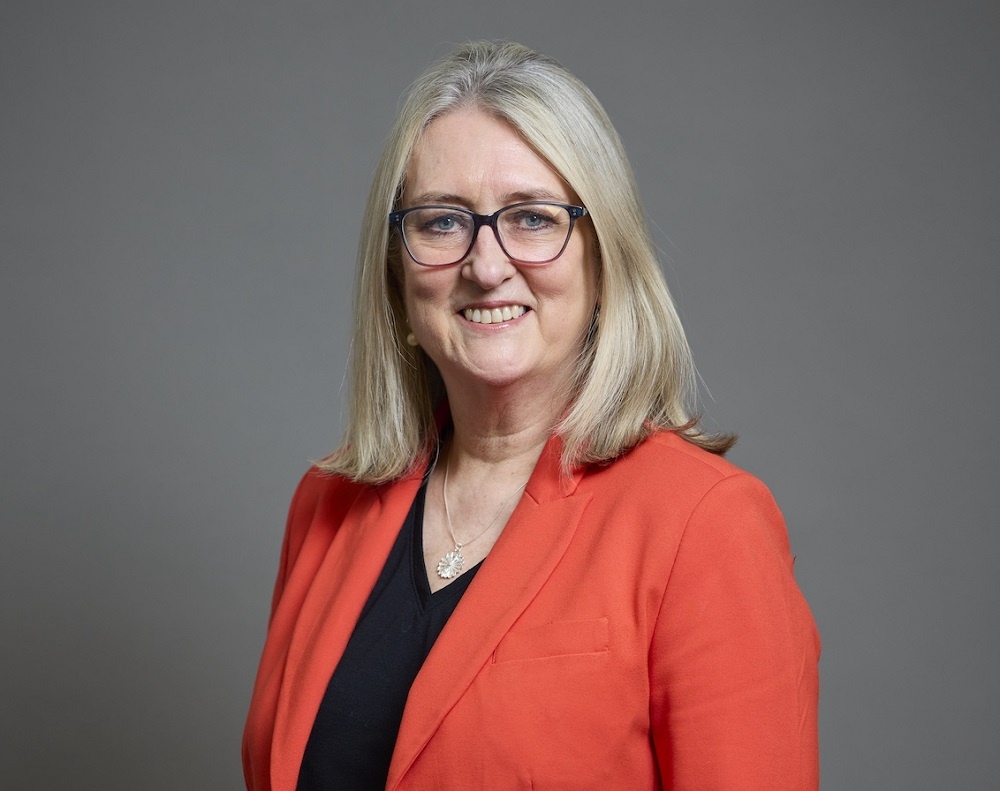 |
| Jacqui Smith - the Right Honourable Baroness Smith of Malvern, Minister for Skills at the UK Department for Education |
Long before I joined the Department for Education, I was a secondary school economics and business teacher in Redditch and Worcester. One lesson that has stayed with me throughout my career: a country’s true economic engine is built not only in its businesses, but in its classrooms, workshops and training centres.
Education is one of the UK’s most important national assets and exports. It leads to stronger trade, greater investment and long-term economic growth for both countries involved.
In the UK, we are placing greater emphasis on high-quality technical and vocational education alongside traditional academic routes. As technological change reshapes economies and transforms the world of work, the importance of equipping young people with the skills they need to succeed is recognised by both our countries.
It is one of the driving forces behind my visit to Vietnam, the first by any Minister from the UK Department for Education.
Vietnam is pursuing an ambitious programme of economic and educational reform, focused on developing the skilled workforce needed to support its next phase of growth. From artificial intelligence and digital technology to advanced manufacturing, green industries and professional services, many of the sectors driving Vietnam’s future prosperity are the same sectors where the UK has world-leading expertise.
That creates a significant opportunity for us to work together.
Education is already one of the UK’s most valuable exports. Through universities, technical training, professional qualifications, English language teaching and education technology, the UK helps equip people around the world with the knowledge and skills they need to thrive. In return, international education supports jobs, investment and growth across every part of the United Kingdom.
Vietnam is one of only five priority countries in the UK’s International Education Strategy, reflecting the importance we place on this partnership. There is already a strong foundation to build on. The UK is Vietnam’s largest international education and training partner, with more than 70 UK transnational education programmes delivered in-country, alongside long-standing partnerships in schools, vocational education, English language teaching and professional qualifications.
During my visit, I will speak at the International Education Conference and Exhibition, hosted by the Vietnamese Ministry of Education and Training. The conference brings together educators, institutions, businesses and policymakers from around the world to explore how innovation and international cooperation can help prepare learners for the opportunities of the future.
I will also meet senior Vietnamese ministers, including the Minister of Education and Training, and the Deputy Prime Minister, to deepen cooperation on education, skills and workforce development. A key milestone will be signing a renewed UK-Vietnam Memorandum of Understanding on education and training, providing a framework for stronger collaboration in the years ahead.
Alongside Professor Sir Steve Smith, the UK’s International Education Champion, I will lead a delegation of more than 20 UK education and technology organisations showcasing the breadth of British expertise. Together, we will explore opportunities to expand partnerships in higher education, technical training, professional qualifications and English language learning.
This is particularly important as both our countries place increasing emphasis on high-quality skills training. Whether it is developing expertise in AI, supporting the green transition, strengthening advanced engineering capability or improving English language proficiency, cooperation between the UK and Vietnam can help create opportunities for learners, employers and communities in both countries.
We are already seeing what this partnership can achieve through initiatives such as the British Council’s Skills for Employability Programme, British University Vietnam and the many Vietnamese students and professionals who have benefited from Chevening Scholarships and UK qualifications. These programmes do more than develop skills. They build lasting relationships, deepen mutual understanding and create connections that endure for decades.
The UK and Vietnam share a belief that education is one of the most powerful investments any nation can make. By working together to equip young people with the skills they need to succeed, we can support economic growth, drive innovation and create greater prosperity for both our countries. I am confident this visit will help take that partnership to the next level.
What the stars mean:
★ Poor ★ ★ Promising ★★★ Good ★★★★ Very good ★★★★★ Exceptional
 Tag:
Tag:Related Contents


Latest News




More News
- Hanoi conference to explore AI, resilience, and integration (October 23, 2026 | 10:19)
- BPC Roundtable Conference 2026 to open in Ho Chi Minh City (October 21, 2026 | 14:46)
- AMATA congratulates Kao Vietnam on 30 years (October 21, 2026 | 14:17)
- Deputy Minister of Finance meets Gujarat delegation in Hanoi (October 21, 2026 | 12:11)
- Vietnam and US discuss financial cooperation and preparations for APEC 2027 (October 21, 2026 | 12:07)
- Vietnam and Denmark sign MoUs to strengthen bilateral ties (October 21, 2026 | 08:00)
- Vietnam and Liechtenstein sign double taxation avoidance agreement (October 19, 2026 | 18:08)
- Creative Young Entrepreneur 2026 showcases five young businesses (October 19, 2026 | 17:59)
- IEAE Hanoi 2026 to spotlight smart electronics trends (October 19, 2026 | 17:44)
- Vietnam and EFTA member states sign free trade agreement (October 19, 2026 | 13:10)








 Mobile Version