

E10 petrol to be rolled out nationwide, cutting 2.5 million tonnes of CO2 annually

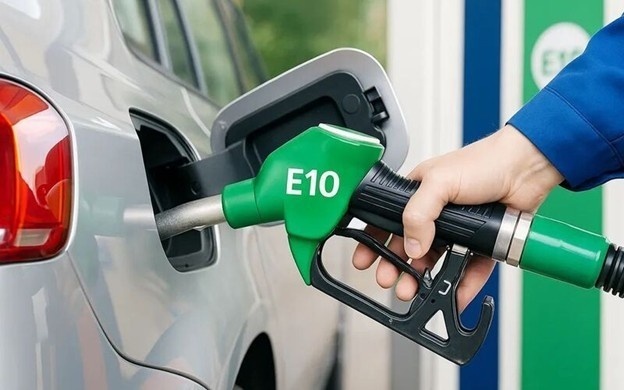 |
The fuel, which consists of 10 per cent ethanol blended with 90 per cent conventional petrol, is expected to play a key role in supporting Vietnam’s commitment to achieve net-zero emissions by 2050. E10 is a fuel blend consisting of 10 per cent ethanol, a renewable biofuel, and 90 per cent conventional petrol.
According to the Ministry of Industry and Trade (MoIT), the widespread adoption of E10 petrol could help reduce approximately 2.5 million tonnes of CO2 emissions each year. The ministry estimates that every litre of conventional petrol consumed generates between 2.3 and 2.5 kg of CO2 emissions.
By replacing 10 per cent of mineral petrol consumption with ethanol, Vietnam could effectively reduce the use of around one billion litres of fossil-based fuel annually.
Dao Duy Anh, deputy director general of the MoIT's Agency for Innovation, Green Transition and Industry Promotion, said that ethanol offers a significant environmental advantage due to its carbon cycle. During cultivation, feedstock crops absorb CO2 from the atmosphere, partially offsetting emissions generated during fuel combustion.
“The carbon-neutral characteristics of ethanol contribute to reducing net greenhouse gas emissions compared to conventional fossil fuels,” Anh noted.
Beyond environmental benefits, the introduction of E10 is also viewed as a strategic measure to diversify fuel supply sources amid growing uncertainties in global energy markets.
Escalating geopolitical tensions in the Middle East have increased concerns over global oil supply stability and price volatility. In this context, biofuels are increasingly being recognised as an important component of energy security strategies worldwide.
Bui Ngoc Bao, chairman of the Vietnam Petroleum Association, said that ethanol imports, which currently account for around 70-80 per cent of Vietnam’s blending demand, help reduce the risks associated with overreliance on crude oil imports from a limited number of regions.
“Diversifying feedstock and fuel supply sources will strengthen the resilience of the domestic energy market against external shocks,” Bao said.
Vietnam’s current biofuel consumption is estimated at one million cubic metres per month, requiring approximately 100,000 cu.m of ethanol for blending. Domestic ethanol production capacity currently stands at about 25,000 cu.m per month, with the remaining demand met through imports.
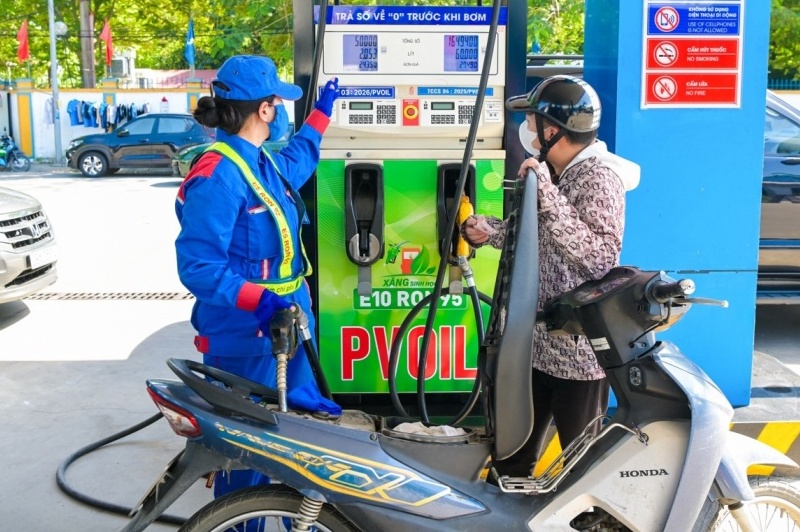
To ensure market stability during the transition period, E5 RON 92 petrol will continue to be sold alongside E10 until the end of 2030.
The nationwide rollout places Vietnam among a growing number of economies accelerating the adoption of biofuels as part of their decarbonisation strategies.
According to the Statistical Review of World Energy 2025, the United States and Brazil remain the world’s largest biofuel producers, accounting for 37 per cent and 22 per cent of global supply, respectively. Other major economies have also recorded strong growth in biofuel production and consumption, including China, India and Canada.
However, experts caution that the environmental performance of biofuels should be assessed across their entire lifecycle, including feedstock cultivation, transportation and ethanol production processes.
To maximise climate benefits, many advanced economies are increasingly investing in next-generation biofuels produced from agricultural residues such as rice straw, crop waste and microbial sources, rather than relying solely on conventional feedstocks.
As Vietnam expands the use of E10 petrol, further investment in domestic ethanol production and advanced biofuel technologies will be critical to ensuring both environmental protection and long-term energy security.
What the stars mean:
★ Poor ★ ★ Promising ★★★ Good ★★★★ Very good ★★★★★ Exceptional
 Tag:
Tag:Related Contents



Latest News


More News
- JBIC considers new financing options for Vietnam’s energy projects (October 03, 2026 | 08:00)
- Vestas to supply 16 turbines for two new Vietnam wind farms (October 01, 2026 | 07:00)
- Inter-sectoral cooperation on Montreal protocol (September 30, 2026 | 17:20)
- EV battery recycling rate proposed at 8 per cent from 2029 (September 29, 2026 | 16:00)
- Bankability remains hurdle for Vietnam's JETP projects (September 29, 2026 | 12:08)
- Binh Minh Plastics extends clean water project to border communities (September 29, 2026 | 10:57)
- Coca-Cola Vietnam expands packaging collection programme (September 25, 2026 | 08:15)
- Pacifico Energy secures sea survey licence for offshore wind project in Lam Dong (September 24, 2026 | 18:02)
- Vietnam secures $221 million in UN development programmes for 2027-2031 (September 23, 2026 | 17:39)
- Carlsberg Vietnam shows how resource efficiency can shape green industrial growth (September 18, 2026 | 09:03)


Latest News





 Mobile Version