
DSV balances resilience and decarbonisation in supply chains

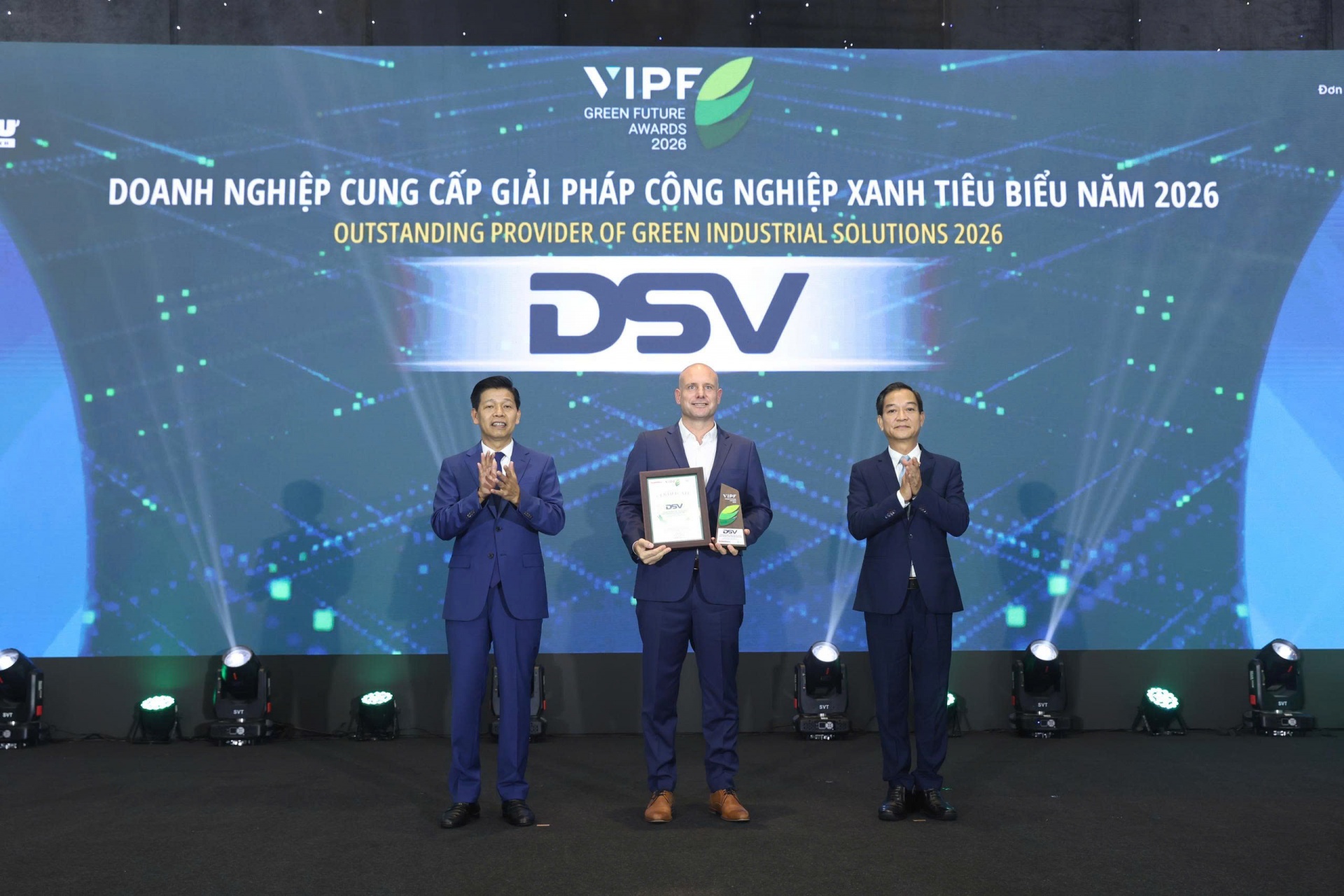 |
| Remco Enders represented DSV to receive the “Outstanding Provider of Green Industrial Solutions” award at VIPF 2026. Photo: Le Toan |
Supply chains are becoming more diversified, more connected and increasingly focused on resilience. While cost remains important, investment decisions today are influenced by a broader set of factors including infrastructure quality, logistics capabilities, energy availability, sustainability readiness and supply chain resilience.
At the same time, global customers are raising expectations around both decarbonisation and circular economy performance. Manufacturers increasingly need access to lower-carbon transportation options, renewable energy pathways, reliable emissions data, and circular supply chain capabilities.
On the sidelines of the Vietnam Industrial Property Forum 2026 (VIPF 2026) on September 29, Prescott Gaylord, head of Sustainability for Contract Logistics in Asia-Pacific for DSV, said, “The future belongs to supply chains that are both resilient and sustainable. Those two objectives are becoming increasingly difficult to separate.”
Today’s supply chains face multiple challenges simultaneously: geopolitical uncertainty, changing trade patterns, decarbonisation requirements, reporting obligations, and growing customer expectations.
“DSV’s solution begins with visibility and operational excellence. We focus on creating strong connections across the supply chain through data, digital visibility, global partnerships and efficient logistics networks,” Gaylord said.
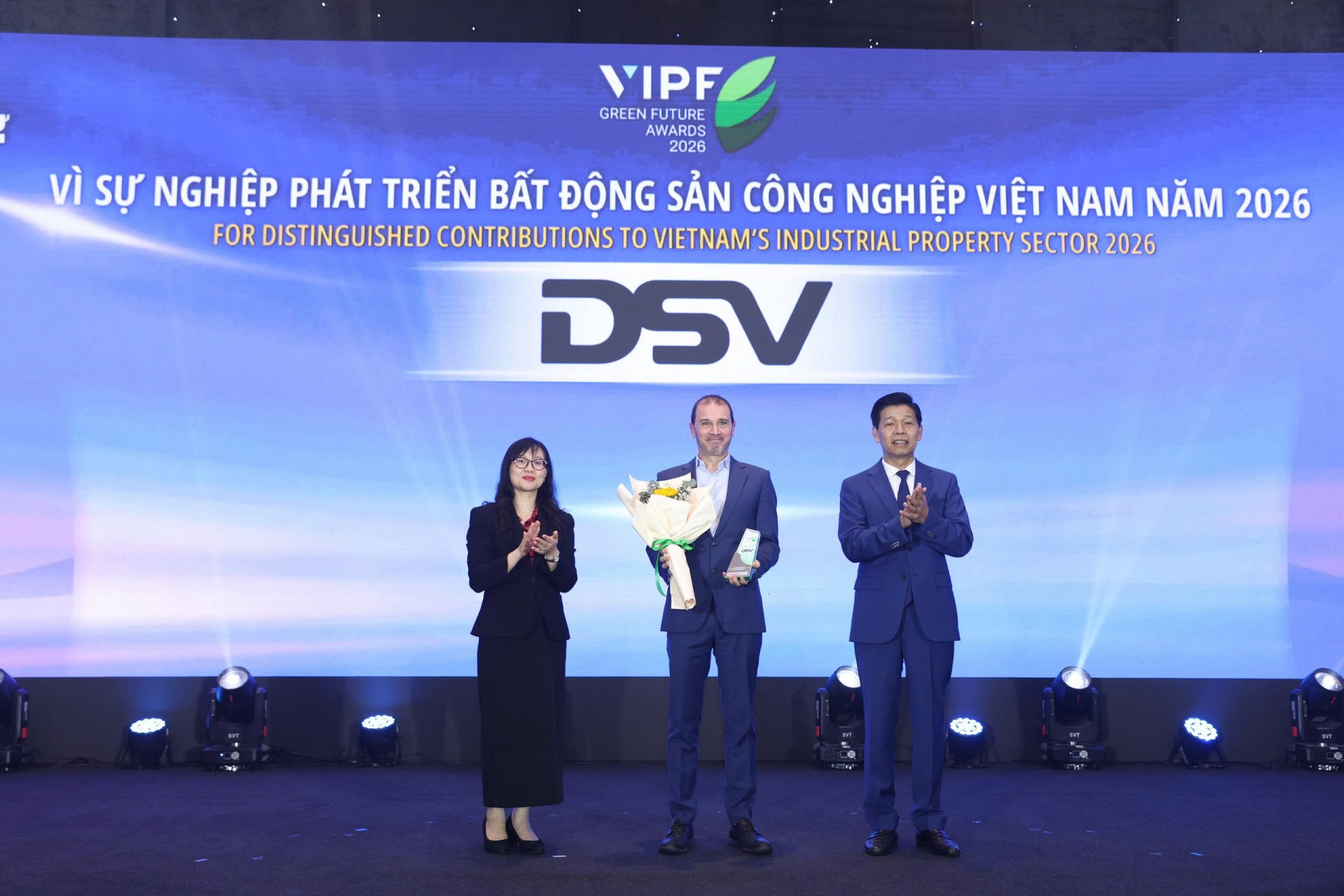 |
| Prescott Gaylord represented DSV to receive the 'For Distinguished Contributions to Vietnam’s Industrial Property Sector' award at VIPF 2026. Photo: Le Toan |
Customers increasingly need accurate information on carbon emissions, transportation activity, extended producer responsibility (EPR) obligations and broader supply chain performance. Good decisions require good data.
DSV also helps customers improve efficiency through network optimisation, transportation planning, warehouse modernisation and advanced facility management.
One area often overlooked is the role of warehouses. The warehouse of the future is not simply a storage location. It is an active contributor to sustainability performance through demand management, building management system optimisation, efficient cooling technologies, high-efficiency motors, renewable energy generation, and intelligent energy use.
“Ultimately, the most resilient supply chains are often the most efficient. Improving operational performance and improving sustainability increasingly go hand in hand,” Gaylord noted.
The strongest pressure to meet sustainability requirements comes from multinational customers that are looking to decarbonise their end-to-end supply chains, not just their own operations.
Customers are asking how they can reduce emissions from transportation and warehousing, how they can access lower-carbon solutions such as battery electric vehicles, hydro-treated vegetable oil, sustainable marine and aviation fuel, and how they can obtain credible emissions data to support reporting requirements and customer commitments.
A second trend emerges quickly around circular economy solutions. While decarbonisation still dominates most conversations today, customers are increasingly asking about reverse logistics, repair and refurbishment services, circular packaging, waste recovery, and support for EPR requirements. Many companies are starting to think beyond simply moving products and are looking at how products, materials and packaging can remain in use for longer.
What is particularly interesting is that many of these requirements are driving better business practices as well. More efficient transportation networks, better warehouse operations, reduced waste, and better visibility often improve both operational performance and sustainability outcomes.
“Our philosophy is to focus on impact first,” Gaylord said. “We start by improving the way supply chains operate – reducing waste, improving efficiency, and strengthening resilience. The benefits follow from those. In our experience, the most sustainable supply chains are often the ones that are run most efficiently.”
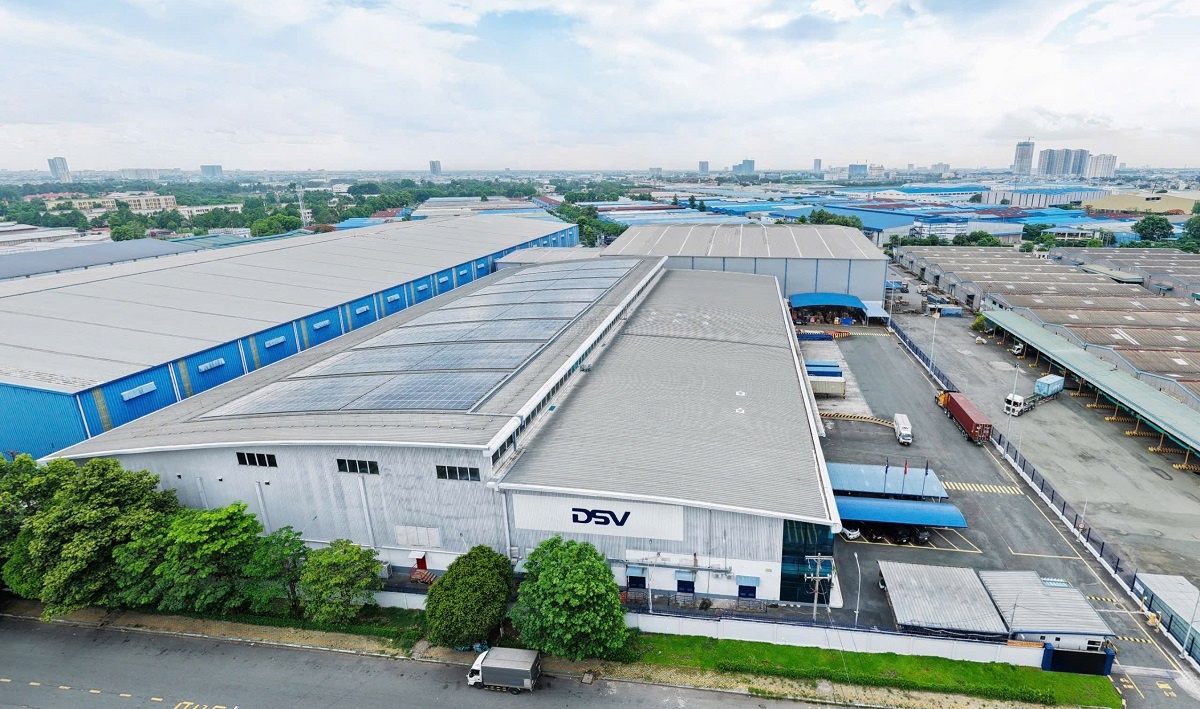 |
| The rooftop solar power system at DSV's warehouse contributes to promoting a sustainable supply chain and carbon emissions reduction, Source: DSV |
Multinational companies are no longer evaluating suppliers solely on cost, quality, and delivery performance. They are also assessing carbon performance, supply chain transparency, circularity capabilities, and long-term resilience.
DSV helps manufacturers operating in Vietnam respond to these expectations through supply chain optimisation, low-carbon logistics solutions, carbon reporting, energy-efficient warehousing, and circular economy services.
In numerous instances, sustainability is becoming a requirement to participate in higher-value global supply chains rather than simply a differentiator.
“As Vietnam continues to attract manufacturing investment, there is an opportunity to build supply chains that are efficient, resilient, and increasingly low carbon from the beginning. By helping customers improve operational performance while reducing environmental impact, we support Vietnam’s continued integration into more sophisticated global manufacturing networks,” added Gaylord.
 | Early planning keeps sustainable industrial park costs down Sustainable development does not increase the cost of industrial park construction if it is integrated from the planning stage, according to Prescott Gaylord, head of sustainability for contract logistics in Asia-Pacific at DSV. |
 | A competitive advantage for next-generation industrial parks At the third session of the sixth Vietnam Industrial Property Forum, co-organised by Vietnam Investment Review and the Vietnam Industrial Real Estate Association in Ho Chi Minh City on September 29, experts and business representatives discussed how to build competitive advantages for next-generation industrial areas. |
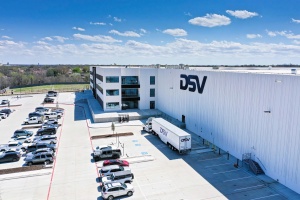 | DSV backs Vietnam's push for more sustainable logistics DSV is poised to help Vietnamese businesses transition to more sustainable logistics and advance their decarbonisation efforts. Prescott Gaylord, head of Sustainability for Contract Logistics, Asia-Pacific at DSV, spoke with VIR's Thanh Van about the company's sustainability strategy. |
What the stars mean:
★ Poor ★ ★ Promising ★★★ Good ★★★★ Very good ★★★★★ Exceptional
 Tag:
Tag:Related Contents




Latest News



More News
- Ho Chi Minh City offers interest rate support to businesses (October 23, 2026 | 10:03)
- Carlsberg underscores long-term Vietnam commitment at Denmark talks (October 22, 2026 | 16:06)
- Brookland Group makes first investment in Vietnam's Miza Corporation (October 21, 2026 | 12:18)
- Petronas, Petrovietnam to expand energy cooperation (October 21, 2026 | 12:13)
- AI in customer experience: Finding the right level of automation (October 21, 2026 | 09:03)
- Fresh graduates fall short on soft skills, employers say (October 19, 2026 | 13:14)
- Ford innovations continue towards sustainable growth (October 19, 2026 | 09:40)
- Preparing professionals for a new business environment (October 19, 2026 | 09:13)
- KN Holdings honoured for ESG efforts in Vietnam (October 18, 2026 | 11:00)
- APEA 2026 Vietnam honours 65 outstanding leaders and enterprises (October 17, 2026 | 10:00)








 Mobile Version