
A competitive advantage for next-generation industrial parks

Dr. Nguyen Tram Anh, national project manager for the Global Eco-Industrial Parks Programme in Vietnam under the United Nations Industrial Development Organisation, said that a next-generation industrial park (IP) can be understood as a production ecosystem focused on circular economy principles, resource efficiency, and cleaner production.
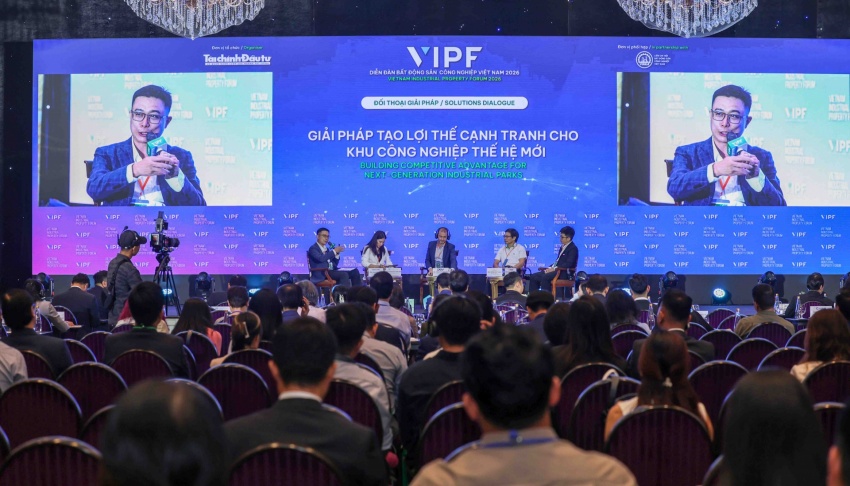 |
| The third panel discussion "Building competitive advantage for next-generation industrial parks" was moderated by Pham Dang An, deputy CEO of Vu Phong Energy Group. Photo: Le Toan |
“It also seeks to strengthen the resilience of the ecosystem to external pressures while integrating innovation, big data, AI, and digital transformation,” said Anh.
To achieve this, Anh said, several elements need to be integrated from the initial planning stage, including energy transition infrastructure, infrastructure supporting industrial symbiosis and the circular economy, carbon emissions monitoring and management systems, and integrated logistics infrastructure.
Prescott Gaylord, sustainability head for Contract Logistics in Asia-Pacific at DSV, said that competitive advantage lies in infrastructure and adaptability.
“When planning an IP, the question is how to design it flexibly, without locking it into a specific industry, while ensuring that it can adapt over the long term,” Gaylord said.
Expanding on the importance of adaptability, Gaylord said IPs should consider how manufacturers are seeking to decarbonise their supply chains.
“For example, they may want to green their transport fleets by switching to electric trucks, which requires charging infrastructure. If you build an IP to meet only today’s standards, you may provide charging infrastructure at a minimum level. But if you want the park to be truly future-ready, you need to design it to the highest standards of an eco-IP, so that even if data centre operators or next-generation battery technology companies move in, the infrastructure will still be fully capable of meeting their needs,” he said.
Dao Nguyen Khanh, head of sustainability and corporate communications at INSEE Vietnam, said that although the company operates in the cement manufacturing sector, a traditional industry, it has been applying circular economy principles for decades.
“We use steel slag from the steel industry and fly ash from thermal power plants as input materials, while co-processing suitable waste streams as alternative fuels,” Khanh said.
To promote meaningful industrial symbiosis, Khanh said planners need to understand the value chains connecting different industries so that complementary factories can be located close to one another.
“Resource recovery facilities should also be developed within or on the boundaries of two or three IPs. If this is not factored into the planning from the outset, factories that have already been located will face significant logistics costs to establish circular connections later,” he said.
Tran Nhat Ninh, deputy general director of Tien Phong Plastic, said that, as a company operating three manufacturing plants in Haiphong, Nghe An province, and Ha Nam province, and directly supplying water infrastructure solutions, he sees industrial symbiosis as the most important capability that remains significantly underdeveloped.
“What we lack today is data, as well as connectivity and information sharing among manufacturers in IPs on their input materials and output scrap and waste streams. What is waste for one company could be an input material for another,” Ninh said.
The panellists agreed that flexible connectivity, adaptability, soft infrastructure management, mechanisms for sharing resource information, and measurable outcomes that can be communicated to the wider business community will be central to building competitive advantages for next-generation IPs.
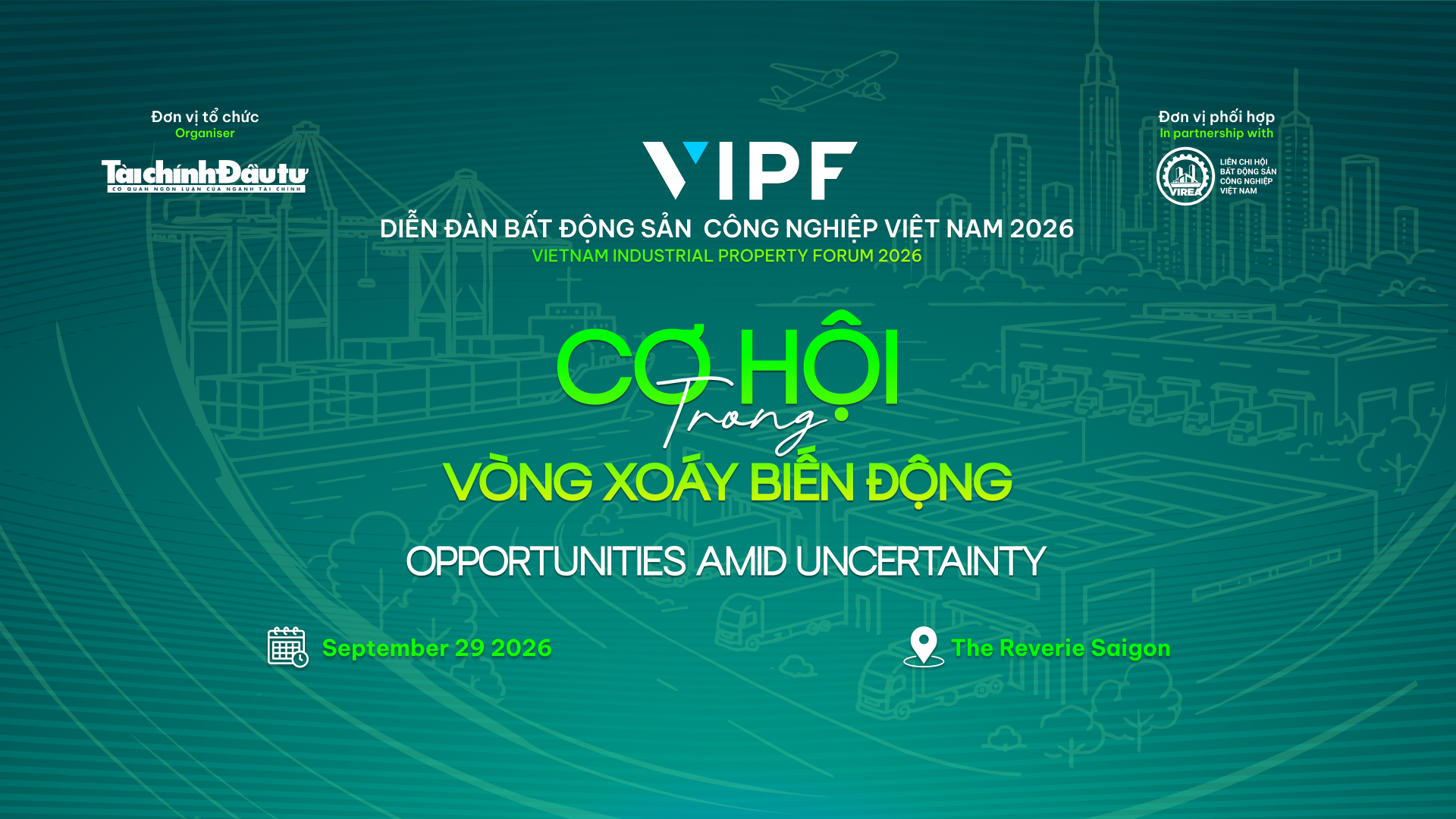 | Vietnam Industrial Property Forum 2026: 'Opportunity Amid Uncertainty' The 6th Vietnam Industrial Property Forum, co-organised by Vietnam Investment Review under the Ministry of Financeand the Vietnam Industrial Real Estate Association, will take place in Ho Chi Minh City at 13pm on September 29 at the Reverie Saigon hotel. |
What the stars mean:
★ Poor ★ ★ Promising ★★★ Good ★★★★ Very good ★★★★★ Exceptional
 Tag:
Tag:Related Contents


Latest News
More News
- Enterprises honoured for sustainability in industrial parks (October 06, 2026 | 11:49)
- Honouring businesses in Vietnam’s industrial property development (October 05, 2026 | 18:31)
- Soilbuild wins three awards at Green Future Awards 2026 (October 05, 2026 | 18:23)
- Vietnam emerging as an industrial location of choice (October 05, 2026 | 16:21)
- Investors interest amid ongoing reshuffling of global manufacturing (October 02, 2026 | 22:10)
- LŌ-GOI Group sets up industrial estate venture with three Asia-based institutional investors (October 02, 2026 | 16:00)
- Stavian IP accelerates its modern expansion (October 02, 2026 | 14:00)
- ESG for future-ready industrial success (October 02, 2026 | 09:00)
- Green Future Awards honour five leading industrial park developers (October 01, 2026 | 22:20)
- Green transition leaders honoured at Green Future Awards 2026 (October 01, 2026 | 22:10)



Latest News





 Mobile Version