

Dassault's Falcon 10X: Penthouse of sky redefining business aviation

 |
At a media briefing in Paris this month, Philippe Reignier, Dassault Aviation’s technical sales manager, underlined the ambition behind the programme.
“The Falcon 10X is a very ambitious initiative. To achieve our goals, we have designed a totally new aircraft. The Falcon 10X is a 100 per cent clean-sheet design aircraft; everything is new: the fuselage, the wing, the engines,” he said.
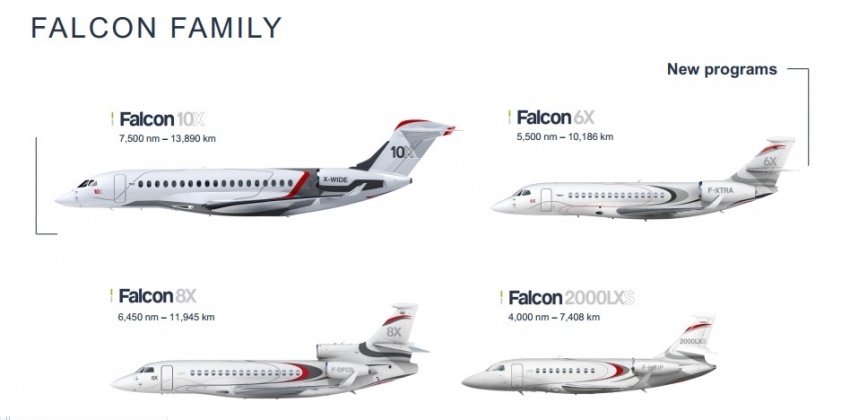
Positioned firmly at the top of the ultra-long-range segment, the Falcon 10X is designed to deliver a rare combination of high speed, intercontinental range and an unprecedented cabin comfort. It is this balance, rather than any single headline feature, that Dassault believes sets the aircraft apart.
 |
Largest, most flexible cabin in business aviation
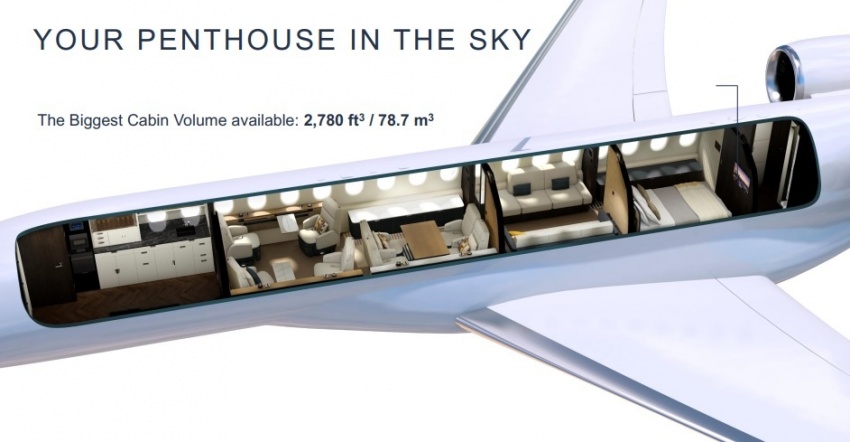
At the heart of the Falcon 10X’s appeal is its cabin, which Dassault considers the defining feature of the aircraft. “It’s the largest, most capable, and most customisable cabin on the market. The goal was to provide the biggest cabin and the best comfort for passengers,” Reignier said.
With a volume of 79 cu.m, the cabin is the largest ever offered in a purpose-built business jet, nearly 20 cm wider than competitors. This additional space is not simply about scale; it fundamentally reshapes how the interior can be designed and used.
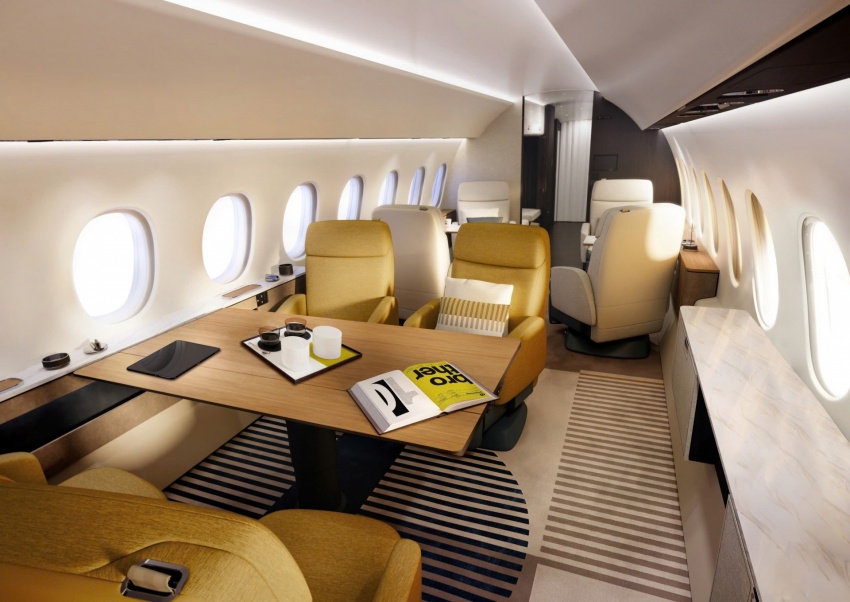 |
A modular architecture allows owners to effectively “move the walls,” configuring the cabin to suit highly individual needs. Dassault has identified hundreds of possible layouts, ranging from dining-focused arrangements to extended lounges and multiple bedroom configurations. The company supports this flexibility with a full-scale cabin mock-up, enabling customers to visualise and adjust layouts in real time.
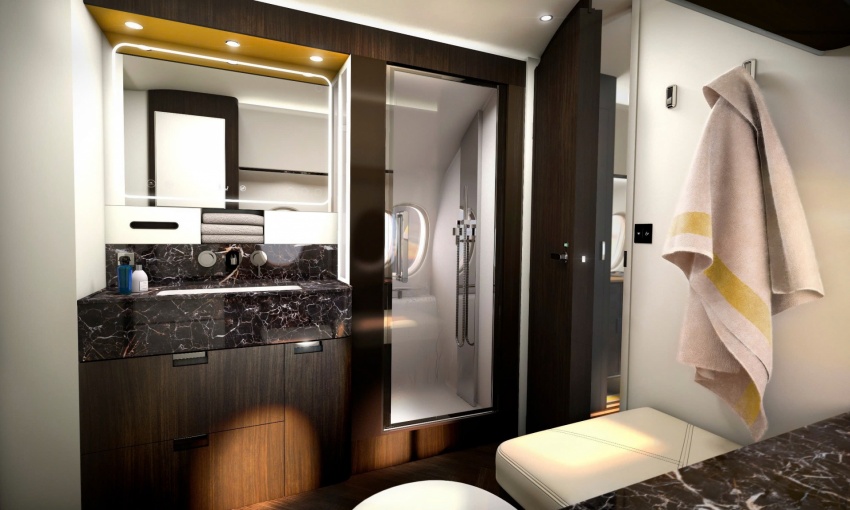
The baseline configuration is built around four zones, each measuring 2.7 metres, but these can be reconfigured with ease. For example, the aft section can be transformed into a 4.7-metre private suite with seven windows, a spacious lavatory with shower, and even a full-size queen bed, an industry first in this category. Smaller compartments can serve as private meeting rooms or media centres, while dining and conference areas are designed to allow natural movement without disrupting other passengers.
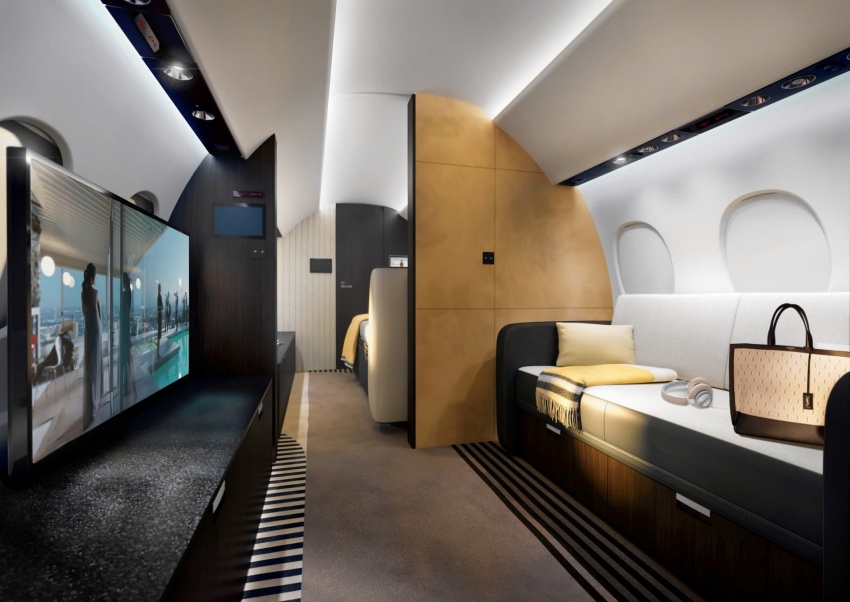 |
Beyond flexibility, the cabin is engineered to deliver a noticeably improved onboard experience. The wider cross-section increases headroom and aisle space, making movement easier and more comfortable. Larger galleys and lavatories further enhance practicality on long-haul missions.
Passenger wellbeing has also been prioritised. A low cabin pressure altitude of 3,000 feet, combined with advanced air filtration and zoned temperature control, creates a healthier and less fatiguing environment. Noise levels are expected to remain among the lowest in the industry, comparable to a quiet living room.
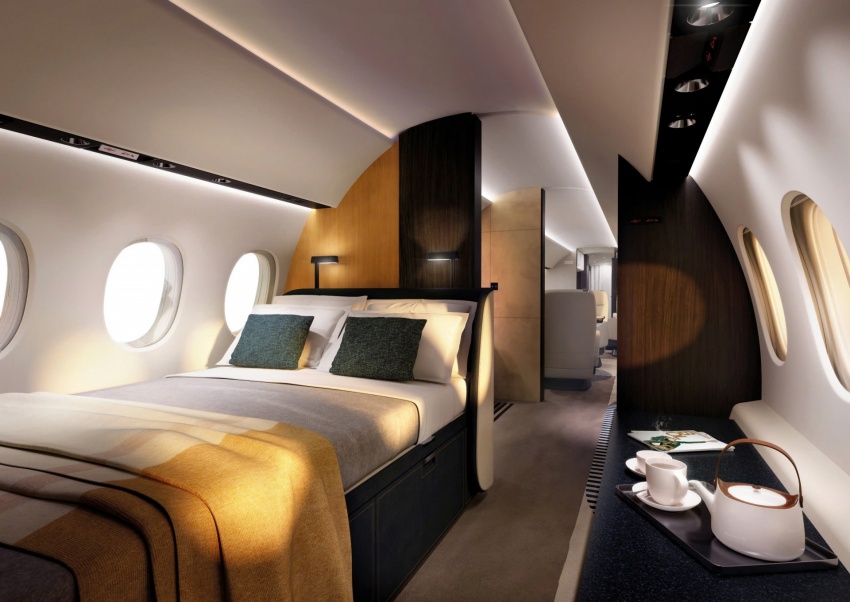 |
Natural light is another key element. The aircraft features 38 windows, around 50 per cent larger than those on the Falcon 8X, creating a brighter, more open interior. Meanwhile, high-speed connectivity solutions, including systems such as Starlink and Honeywell JetWave X, ensure seamless communication and streaming, with full control of cabin functions available via mobile devices or touchscreens.
Complementing the living space is a 5.6 cubic metre baggage compartment, the largest in its class, along with an additional dedicated storage area, reinforcing the aircraft’s focus on practicality as well as comfort.
 |
Superior performance in ultra-long-range segment
While the cabin sets a new benchmark, the Falcon 10X is equally defined by its performance. With a range of 13,890 km at Mach 0.85, it can connect virtually any major city pair nonstop, including routes such as New York-Shanghai, Los Angeles-Sydney and Paris-Santiago. At a higher cruise speed of Mach 0.90, it maintains strong long-haul capability on routes such as New York-Dubai and Hong Kong-San Francisco.
Crucially, this performance does not come at the expense of operational flexibility. The aircraft retains Dassault’s hallmark ability to access challenging airports, including London City, thanks to strong low-speed handling characteristics.
“What is noteworthy here is that it keeps all the traditional core values of the Falcon, mainly the best balance between high-speed performance in cruise and low-speed performance,” Reignier said.
“The Falcon 10X is a game changer. It’s not only the cabin size, not only the performance or the agility; it is the combination of these three items.”
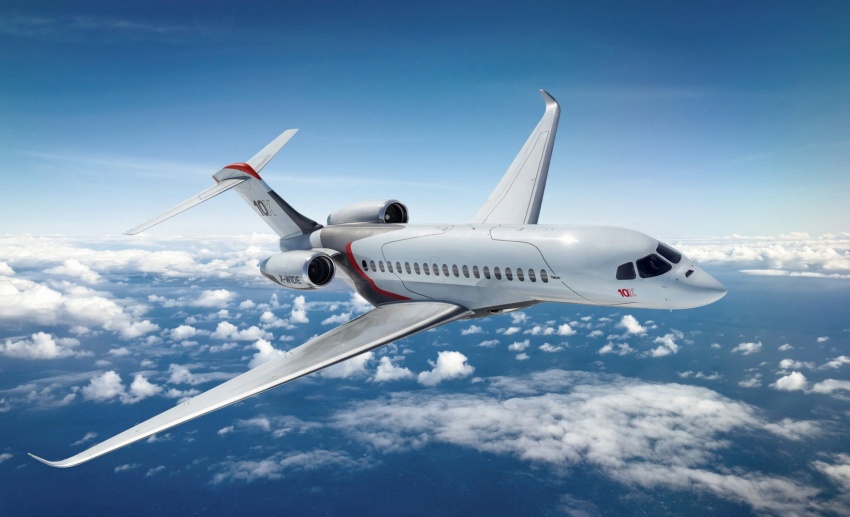 |
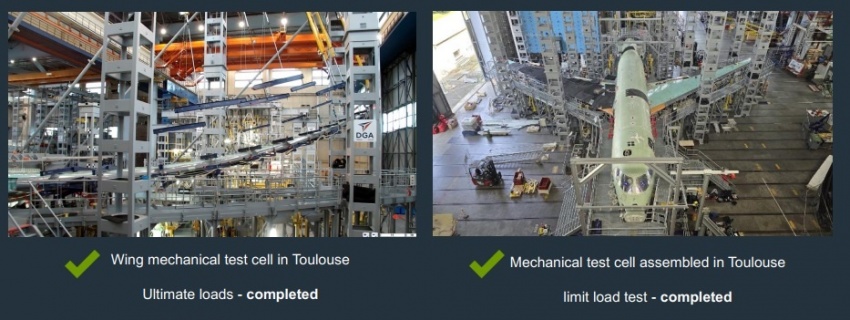
This balance is supported by an entirely new aerodynamic and structural design. The aircraft features an all-new aluminium fuselage with a circular cross-section, optimised for both efficiency and cabin space. Advanced aerodynamic shaping, including a laminar-flow forward fuselage and refined wing-body fairings, reduces drag and improves overall performance.
A key contributor is the new composite wing, which reduces weight by around 900 pounds while delivering a thinner, more efficient profile. With a higher aspect ratio and increased sweep, it enhances fuel efficiency and high-speed performance, while maintaining the flexibility needed to handle turbulence. Integrated high-lift devices ensure strong performance at low speeds, enabling access to shorter runways.
 |
Powering the aircraft is the Rolls-Royce Pearl 10X engine, the most advanced in the Pearl series, delivering over 18,000 pounds of thrust. Designed for efficiency and durability, it incorporates next-generation materials and aerodynamics, along with a high-efficiency fan and advanced combustor to reduce emissions. The engine has been tested on 100 per cent sustainable aviation fuel, aligning with the industry’s long-term environmental goals.
"With the Pearl 10X being the pinnacle of our business aviation portfolio, it is the most powerful engine in business aviation that we've ever created," said Philippe Zeller, Rolls-Royce Germany senior vice president. "The Pearl 10X features the most efficient core available across the business aviation sector."
Inside the cockpit, the Falcon 10X introduces a new generation of flight deck technology. The spacious cockpit benefits from the larger fuselage, while the NeXus flight deck integrates touchscreen controls with an intuitive interface. Automated checklists and simplified systems reduce pilot workload, particularly on long-haul missions.
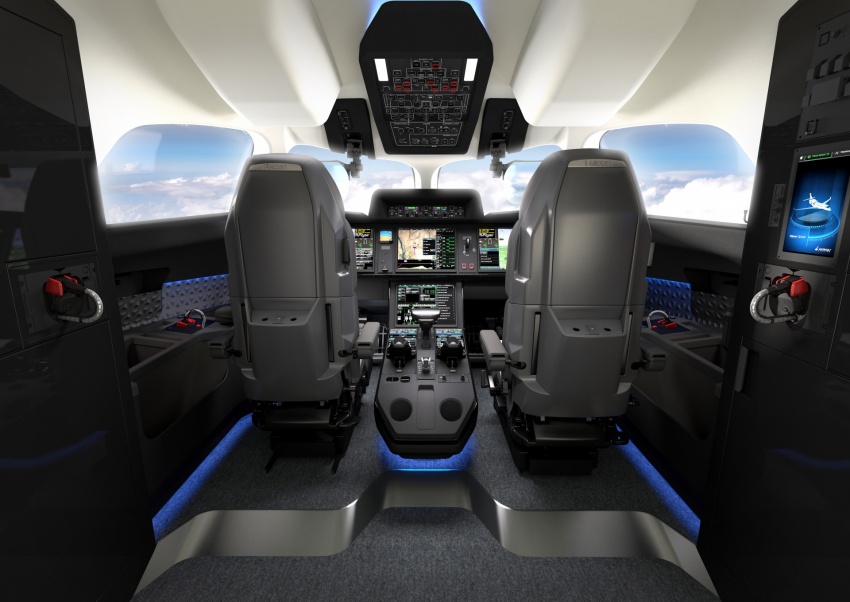 |
A standout feature is the fighter-inspired Hands-On-Throttle-And-Stick system, combined with dual head-up displays, allowing pilots to maintain focus outside the cockpit during critical phases of flight. This is complemented by advanced digital flight controls, a Smart Throttle system for automated power management, and an Automatic Recovery Mode capable of stabilising the aircraft from unusual attitudes at the push of a button.
Safety is further enhanced by Dassault’s FalconEye combined vision system, enabling operations in low-visibility conditions, and by FalconScan, an advanced diagnostic system that monitors more than 100,000 parameters in real time to support predictive maintenance.
Taken together, these elements underline Dassault’s strategy with the Falcon 10X: not to lead in a single category, but to deliver a comprehensive step change across cabin comfort, performance, safety and efficiency. In doing so, the aircraft sets a new benchmark for what a next-generation flagship business jet can achieve.
 | Dassault unveils Falcon 10X in ultra-long-range business jet push Dassault Aviation has unveiled the Falcon 10X, its most ambitious business jet yet, signalling a new direction in ultra-long-range business aviation. |
 | Business aviation market will grow alongside wealth Vietnam’s business aviation sector is expanding alongside the country’s deeper integration into global supply chains. In an interview with VIR’s Nguyen Huong, Paul Desgrosseilliers, general manager of China-based ExecuJet Haite Aviation Services, explained that as more aircraft enter service, regulatory readiness, maintenance capacity, and infrastructure are becoming central to market confidence. |
 | Region boasts major potential for aviation-related businesses Asia-Pacific is widely expected to become one of the fastest-growing regions for business aviation over the coming decade. In an interview during the rollout of the Falcon 10X in France, Didier Raynard, senior vice president of sales for Asia-Pacific at Dassault Aviation, told VIR’s Hara Nguyen why markets such as Vietnam are increasingly important to the company’s regional strategy. |
What the stars mean:
★ Poor ★ ★ Promising ★★★ Good ★★★★ Very good ★★★★★ Exceptional
 Tag:
Tag:Related Contents






Latest News



More News
- Beaches drive Vietnam’s domestic tourism boom (August 20, 2026 | 12:07)
- Spalba makes foray into Vietnamese market (August 20, 2026 | 09:41)
- CAAV signs deal with Turkey to strengthen aviation cooperation (August 10, 2026 | 15:15)
- Major Asian airlines survey Long Thanh International Airport (August 10, 2026 | 08:51)
- Vietnam ranks in top four Asian destinations for European tourists (August 07, 2026 | 08:00)
- Vietnam's commercial aircraft fleet expands to 251 planes (August 03, 2026 | 23:13)
- LOT Polish Airlines is set to launch Warsaw–Hanoi route (July 31, 2026 | 11:22)
- Vietnam tops Saudi tourists' summer holiday searches (July 30, 2026 | 12:41)
- Ninh Binh province steps up mission to acquire UNESCO landscape nomination (July 17, 2026 | 14:02)
- Vietnamese tourists gain easier access to Dubai (July 13, 2026 | 14:59)


Latest News




 Mobile Version