


Dassault unveils Falcon 10X in ultra-long-range business jet push

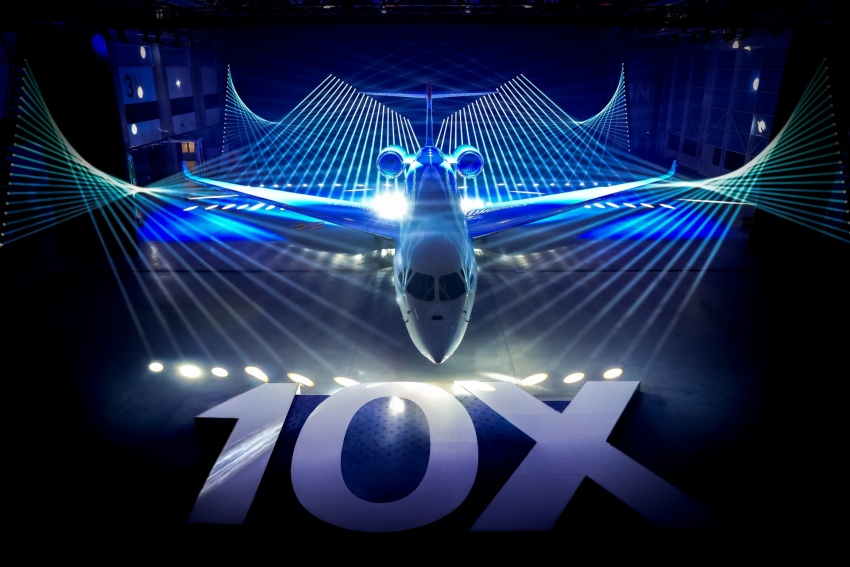
On March 10, the aircraft was revealed in Saint-Cloud, France, before more than 400 customers, partners, and aviation executives gathered in a newly inaugurated production hall in Bordeaux-Mérignac. The Falcon 10X emerged as a bold statement of Dassault's vision for the future of the sector.
 |
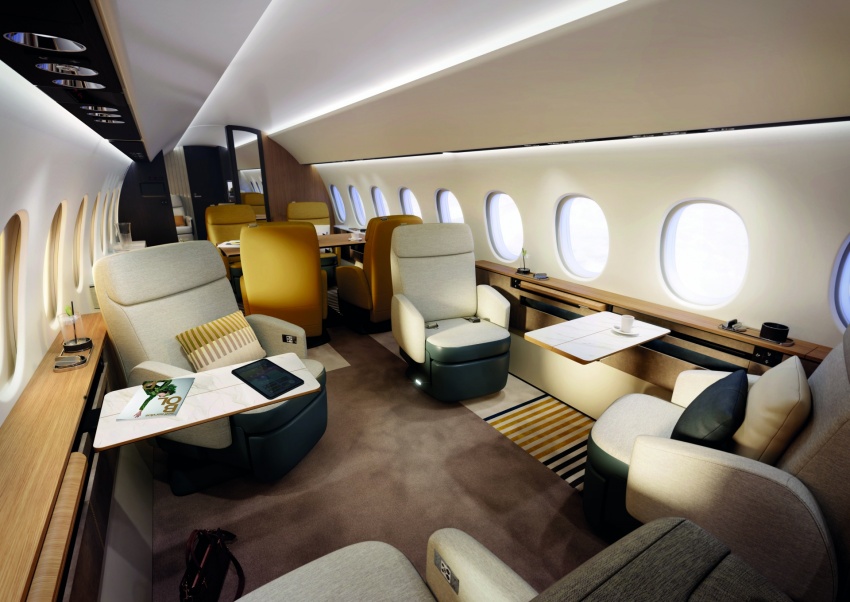
Designed around passenger comfort and operational excellence, the Falcon 10X introduces what Dassault describes as the largest, most versatile and most comfortable cabin ever created for a purpose-built business jet.
“The goal is for passengers to experience life on board much as they would in their everyday environment, rather than treating the flight as a long pause between departure and arrival,” said Dassault Aviation CEO Éric Trappier. “When they land, they arrive rested and ready.”
The aircraft’s remarkably spacious interior is 20 centimetres wider and five centimetres taller than that of its closest competitor, enabling owners to design interiors that resemble a modern living or working space rather than a conventional aircraft cabin.
 |
Delivering this level of comfort while maintaining the efficiency and flexibility that define the Falcon family required innovation across nearly every part of the aircraft.
Engineers drew extensively on technologies developed for Dassault’s military programmes to refine aerodynamics, materials, avionics and flight-control systems. Dassault Aviation remains the only manufacturer in the world to design and build both fighter aircraft and business jets, an expertise reflected throughout the Falcon 10X.
Performance is equally impressive. The aircraft will cruise close to the speed of sound, reaching a maximum speed of Mach 0.925, and will offer a range of 7,500 nautical miles (13,890km). This allows it to connect major global city pairs non-stop, including New York-Shanghai, Los Angeles-Sydney, São Paulo-Dubai and Beijing-Paris.
Passenger comfort has been engineered with equal ambition. At a cruising altitude of 41,000 feet (12,500 metres), cabin pressure will be maintained at just over 3,000 feet (around 900 metres), helping to reduce fatigue on long-haul journeys. Fresh air is continuously renewed throughout the cabin, while individual zones allow passengers to adjust temperature settings.
The aircraft’s fuselage incorporates 38 extra-large windows, almost 50 per cent larger than those on the Falcon 8X, flooding the interior with natural light and making it one of the brightest cabins in business aviation.
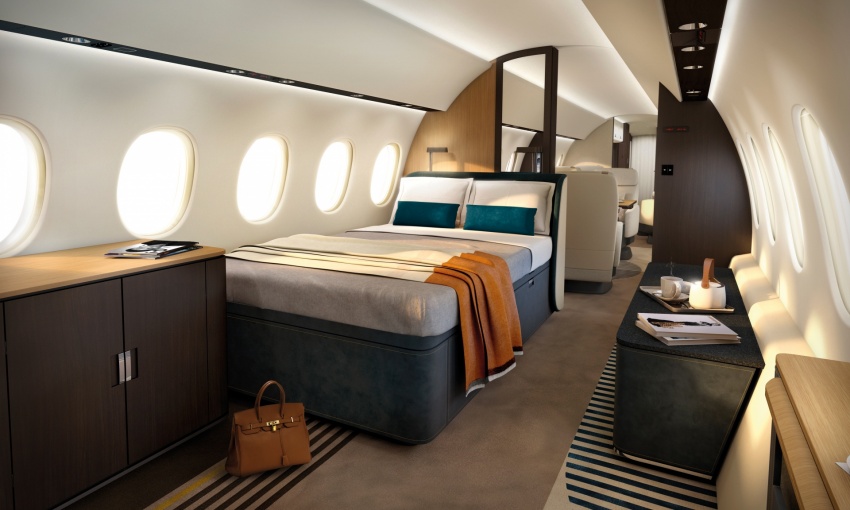
Measuring 2.77 metres in width and 2.03 metres in height, the cabin is larger than those found in some regional jets. Owners can configure three- or four-zone interiors, with options including spacious dining areas, Falcon Privacy Suites, full-size bedrooms and even shower facilities.
A major technological milestone is the Falcon 10X’s fully composite wing, the first ever on a purpose-built business jet. The design combines Dassault’s traditional high-lift devices, including flaps and slats, with a next-generation composite structure that improves aerodynamic efficiency while reducing weight. The result is a wing capable of supporting the aircraft’s large cabin while preserving the agility and short-runway performance for which Falcons are known.
“Falcon aircraft have always been at the forefront of business aviation,” Trappier said. “The 10X continues that tradition by bringing together the most advanced technologies available. For customers, the result is simple: a clearly superior flying experience.”
 |
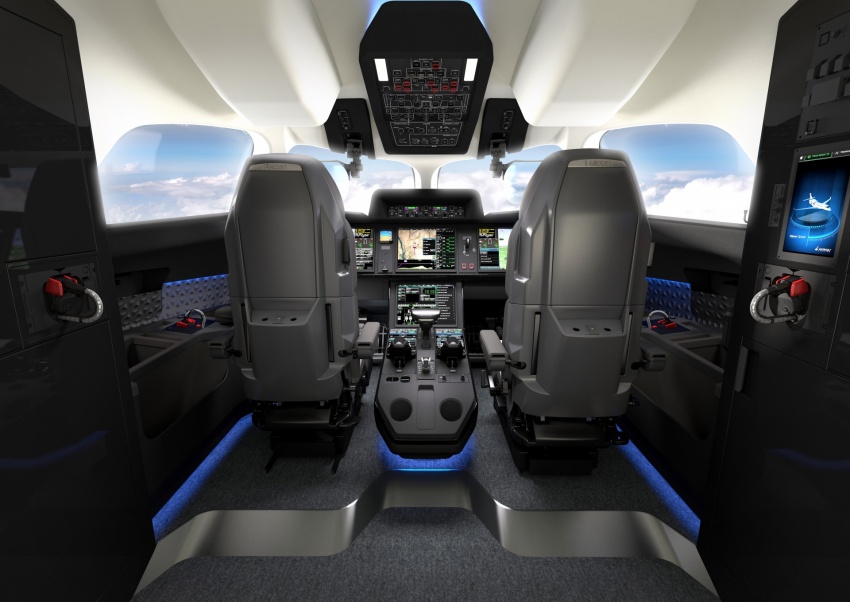
The Falcon 10X is equipped with the new NeXus flight deck, the most sophisticated cockpit ever installed on a Dassault business jet.
Developed to reduce pilot workload and improve situational awareness, particularly during complex phases of flight, the system features large touch-screen displays and advanced automation tools that help crews manage demanding missions more efficiently.
Safety is further enhanced by the dual-standard FalconEye Enhanced Vision System, which provides improved visibility in low-visibility conditions. New features also assist pilots during challenging manoeuvres such as nighttime circular approaches.
The aircraft also introduces the third generation of Dassault’s digital flight-control system for business jets. Central to the system is a Smart Throttle inspired by the controls of the Rafale fighter jet, allowing pilots to manage both engines with a single lever while automatically optimising performance.
This technology assists with functions such as noise-reduced take-offs and climbs, stabilised recovery procedures, and the first automatic recovery mode ever installed in a business jet.
Dassault pioneered fly-by-wire controls in business aviation with the Falcon 7X in 2007. The technology prevents overspeed, excessive structural stress and aerodynamic stalls while delivering the smooth flight characteristics valued by Falcon operators.
 |
Powering the Falcon 10X is the new Rolls-Royce Pearl 10X engine, built around the Advance2 core, currently the most efficient engine core available in the business aviation sector.
Combined with a high-performance low-pressure system, the engine produces more than 18,000 pounds (8,000 decanewtons) of thrust. The result is a major leap in both power and efficiency, while also delivering lower noise levels and reduced emissions.
This performance will give operators access to a wider range of airports while enabling ultra-long-range missions at speeds approaching the speed of sound.
“Today is a special day for Rolls-Royce and our team,” said Dirk Geisinger, director of Business Aviation at Rolls-Royce. “We are delighted and proud to power this extraordinary aircraft, and I congratulate the Dassault family and the Falcon team on this milestone.”
With the rollout now complete, the Falcon 10X programme is entering its next phase: flight testing. After its maiden flight, the aircraft will undergo an extensive evaluation campaign designed to validate its performance and prepare the most advanced Falcon ever built for entry into service.
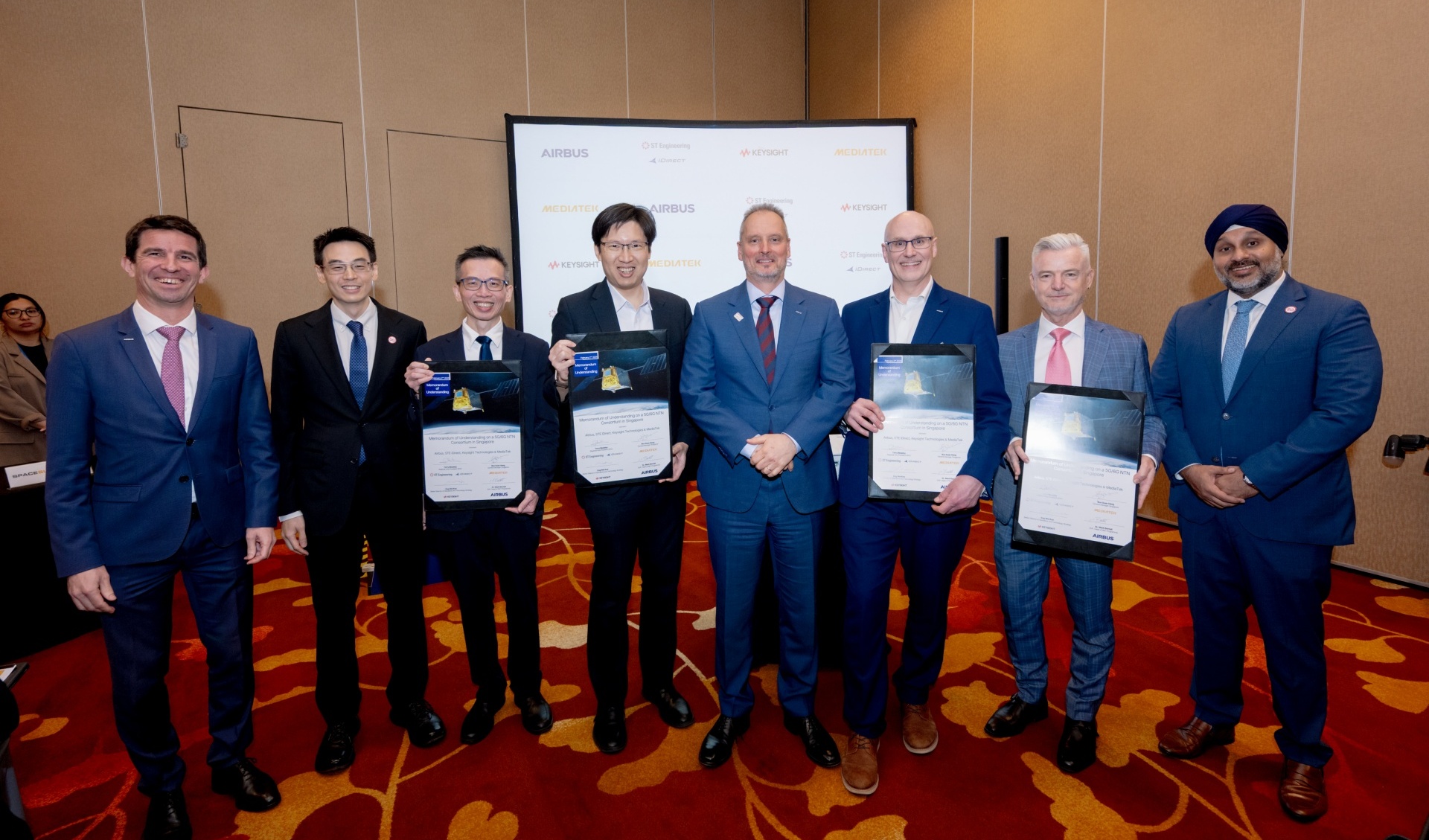
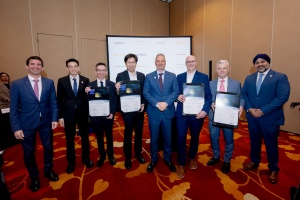 | Space Summit 2026 opens in Singapore amid alignment calls Space Summit 2026 opened in Singapore on February 2, convening government leaders, space agencies, industry executives, researchers, and investors at a time when space systems have become deeply embedded in daily life and increasingly interconnected across borders, sectors, and economies. |
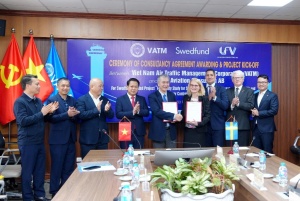 | Accelerating digitalisation of air traffic services in Vietnam Vietnam is stepping up efforts to modernise its air traffic management infrastructure, targeting safer, more efficient, and digitally integrated aviation operations. |
 | Business aviation market will grow alongside wealth Vietnam’s business aviation sector is expanding alongside the country’s deeper integration into global supply chains. In an interview with VIR’s Nguyen Huong, Paul Desgrosseilliers, general manager of China-based ExecuJet Haite Aviation Services, explained that as more aircraft enter service, regulatory readiness, maintenance capacity, and infrastructure are becoming central to market confidence. |
What the stars mean:
★ Poor ★ ★ Promising ★★★ Good ★★★★ Very good ★★★★★ Exceptional
 Tag:
Tag:Related Contents







Latest News





More News
- Sojitz in Vietnam: 40 years from individual projects to a business cluster 'KATAMARI' (October 08, 2026 | 09:00)
- Coteccons targets 'Quality Growth' with 25 per cent dividend plan (October 07, 2026 | 13:00)
- Vietnam Education Forum opens UK Education Mission's Hanoi visit (October 07, 2026 | 12:27)
- Tax authorities deactivate TINs of nearly 180,000 businesses (October 07, 2026 | 12:08)
- World Bank raises Vietnam's 2026 GDP growth forecast to 7.4 per cent (October 07, 2026 | 11:41)
- Vietstock 2026 to spotlight livestock innovation and green transition (October 07, 2026 | 09:00)
- Vietnam’s GDP grows over 9 per cent in first nine months (October 05, 2026 | 18:45)
- Vietnam earns $56.3 billion from agro-forestry-fishery exports (October 05, 2026 | 18:32)
- DSV balances resilience and decarbonisation in supply chains (October 05, 2026 | 18:20)
- Electronics exports reach $175.4 billion in the first nine months (October 05, 2026 | 18:12)


Latest News




 Mobile Version