

Sustainable tourism to shape Vietnam’s growth path

 |
In early April, Travelife, a training, management and certification initiative for tourism companies, announced the partnership with Vietnamese sustainability consulting firm Green Transition as its national representative for tour operators in Vietnam.
The move marks an important step in strengthening tourism practices in the country. Through this partnership, the two sides aim to support Vietnamese tour operators in adopting internationally recognised standards and improving their environmental and social impact.
Travelife provides an international technical standard framework accessible for all. Meanwhile, Green Transition plays the role of internal companion to coach and help in the local language. With Travelife, businesses can access a set of more than 200 criteria to assess their environmental, social, and governance (ESG) performance, benchmark themselves within the industry, and get support from a coach.
Bao Nguyen, country manager of Travelife in Vietnam said, "Vietnam is moving away from chasing raw arrival numbers towards attracting high-value travellers. This focus on quality reduces the strain on Vietnam’s natural assets while ensuring long-term economic viability. In addition, businesses are increasingly adopting rigorous reporting frameworks to track carbon footprints and community impact, meeting the demands of modern travellers and investors.”
He added that sustainability is now systemic across the sector, with more tour operators moving beyond surface-level changes to implement closed-loop waste systems, local sourcing, and climate-resilience planning.
“One of the most obvious examples in Vietnam is the ‘local sourcing’ which brings not only the local social and environmental aspect but also the cultural aspect of it. The ‘farm to table’ logistics has an impact on local economic growth, ethnics and local community integration while reducing carbon footprint to keep within the 20km logistics distance,” he said.
Other examples in terms of circularity include the conversion of organic food waste into compost for gardening. At a larger scale, resorts can adopt nature-based water management infrastructure solutions to collect stormwater or reduce biodiversity loss impacts.
Daniel Patrao, multi-property general manager of Courtyard by Marriott Danang Han River said, “Sustainability investment can take many forms, from integrating environmentally friendly solutions during construction to continuously improving operations in existing hotels.”
At Courtyard by Marriott Danang Han River, sustainability was considered from the development stage, with investment in lower embodied carbon materials, as well as systems designed to save energy and water. This approach helped the hotel achieve EDGE Certification. The certification confirms 34 per cent energy savings, 33 per cent water savings, and 24 per cent less embodied carbon in materials, helping reduce 328.82 tonnes of CO2 in operational emissions each year.
Beyond certification, the hotel continues to strengthen its environmental commitment through daily operations. The hotel has now fully installed water purification systems across all guestrooms and public areas, providing guests with convenient access to safe, high-quality drinking water while eliminating the need for bottled water.
“The initiative reflects a significant step towards reducing plastic and glass waste, reinforcing the hotel’s long-term goals,” Patrao said. “International certifications help increase recognition and build trust among travellers who increasingly choose responsible tourism options. More importantly, this reflects a growing trend in Vietnam, where investors are becoming more focused on sustainability as part of long-term tourism development.”
According to a report by Travel and Tour World in mid-April, Vietnam has joined the ranks of countries like New Zealand, Thailand, South Korea, Denmark, and Costa Rica, which have made sustainability a core part of their tourism strategies.
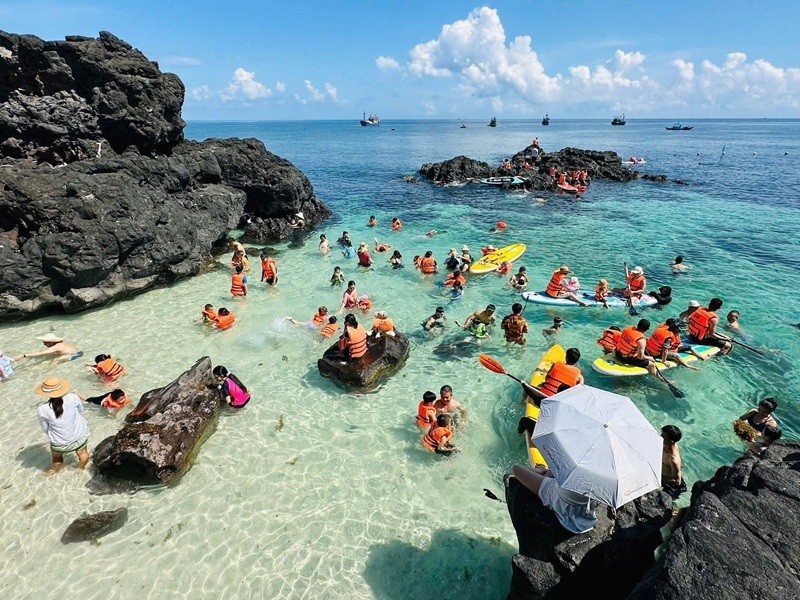
The report highlighted that Vietnam is enhancing its tourism industry through sustainable development, with initiatives ranging from eco-friendly policies to community-driven tourism. The Halong Bay, a UNESCO World Heritage Site, is an example of Vietnam's commitment to preserve its unique ecosystems. In destinations like Sapa and Phong Nha, community-based tourism is on the rise, where locals benefit directly from tourism, providing authentic cultural experiences for visitors.
The government is making a strategic push for high-value, low-impact tourism in Vietnam. Tourism System Master Plan for 2021–2030 is targeting fully plastic-free tourist zones, electric vehicle zones, and protected biodiversity parks.
In addition, the conscious market is also reshaping travel behaviour and demand. Findings from Agoda’s 2026 Sustainable Travel Survey in mid-March revealed that more than 80 per cent of Vietnamese travellers consider the topic important when making travel decisions, with 43 per cent expect it to become more important over the next three years.
 | Courtyard by Marriott Danang Han River achieves 5-star certification Courtyard by Marriott Danang Han River has achieved 5-star hotel certification, affirming its leading position in hospitality and meetings in Danang just over two months after opening its doors. |
 | Vietnamese tourists embracing sustainable tourism Sustainable travel is gaining traction as 96 per cent of Vietnamese travellers confirm that sustainable travel is important to them, according to the Sustainable Travel Report 2024 by Booking.com. |
 | Sustainable tourism fit for the future Travel agencies, localities, and other entities are placing more focus on schemes to ensure tourism goes green. |
What the stars mean:
★ Poor ★ ★ Promising ★★★ Good ★★★★ Very good ★★★★★ Exceptional
 Tag:
Tag:Related Contents

Latest News



More News
- Beaches drive Vietnam’s domestic tourism boom (August 20, 2026 | 12:07)
- Spalba makes foray into Vietnamese market (August 20, 2026 | 09:41)
- CAAV signs deal with Turkey to strengthen aviation cooperation (August 10, 2026 | 15:15)
- Major Asian airlines survey Long Thanh International Airport (August 10, 2026 | 08:51)
- Vietnam ranks in top four Asian destinations for European tourists (August 07, 2026 | 08:00)
- Vietnam's commercial aircraft fleet expands to 251 planes (August 03, 2026 | 23:13)
- LOT Polish Airlines is set to launch Warsaw–Hanoi route (July 31, 2026 | 11:22)
- Vietnam tops Saudi tourists' summer holiday searches (July 30, 2026 | 12:41)
- Ninh Binh province steps up mission to acquire UNESCO landscape nomination (July 17, 2026 | 14:02)
- Vietnamese tourists gain easier access to Dubai (July 13, 2026 | 14:59)








 Mobile Version