


Business aviation market will grow alongside wealth

Vietnam’s business aviation market has grown quickly over the past decade. What are the main drivers behind this growth, and how mature is the market today?
 |
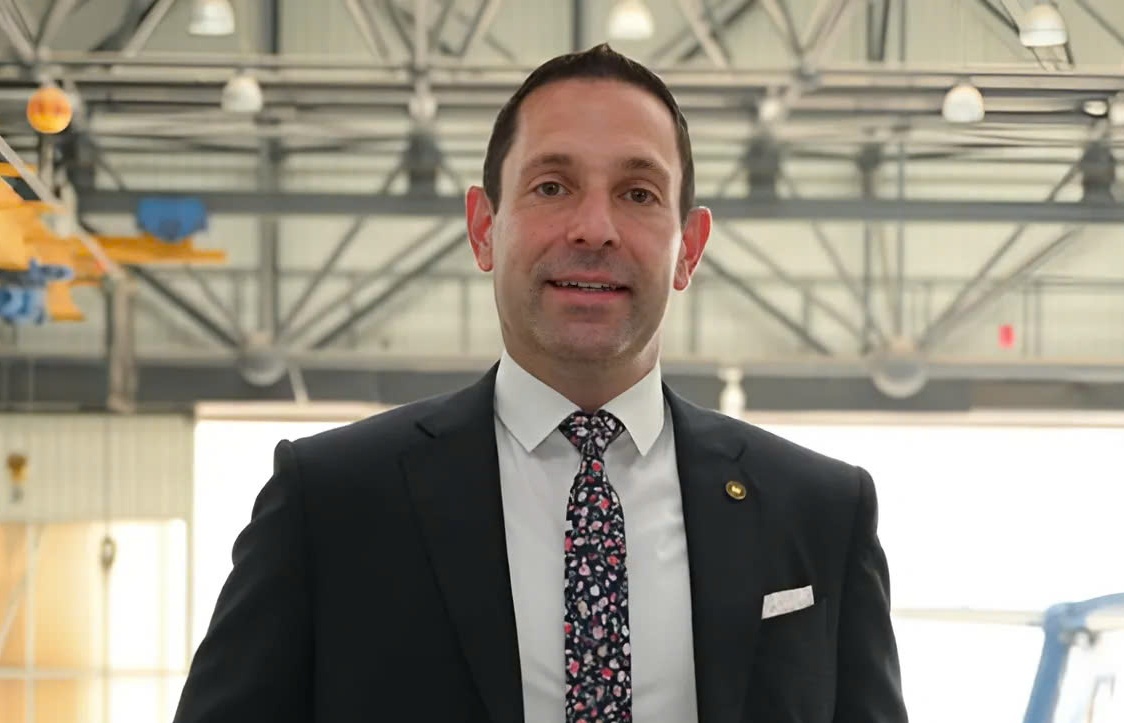
| Paul Desgrosseilliers |
If business aviation is defined strictly, Vietnam’s market is actually very young. Meaningful growth has really only started in the last 3-4 years. Before the pandemic period, there were effectively no business jets based in Vietnam. Coming out of the pandemic, companies and individuals began operating their own aircraft, initially through charter and later through managed ownership.
Today, the market stands at just under a dozen business jets, around 10-12 aircraft, with at least 3-4 more expected to enter service this year. From a numerical standpoint, the base is still small, but the growth rate is very high.
Vietnam’s economy is growing rapidly across manufacturing, real estate, industrial development and services. Frequent visits to both Hanoi and Ho Chi Minh City make this growth very visible, from large-scale construction to expanding industrial zones. As wealth increases among corporations and individuals, international business activity grows as well.
Vietnamese companies are no longer operating within domestic or regional markets. Many are deeply integrated into global supply chains, with frequent travel to China, Southeast Asia, the Middle East, Europe and North America. Business aviation supports this international reach by providing flexibility, efficiency and access to destinations that are not well served by commercial airlines.
In more mature markets such as North America, around 90 per cent of business jet utilisation is business-related rather than leisure-driven. Vietnam is following a similar pattern.
ExecuJet has obtained certification in Vietnam and now provides local maintenance support. What services are currently offered?
Vietnam has a unique regulatory environment compared with many other Southeast Asian markets. All aircraft owned and operated in Vietnam must be registered locally. Foreign-registered aircraft are not permitted to operate domestically. As a result, maintenance providers must hold Vietnamese regulatory approval in order to support these aircraft.
Recognising this requirement, ExecuJet began working with Vietnamese authorities more than a year ago to obtain the necessary approvals. The certification process was completed around six months ago, allowing the company to provide maintenance services for Vietnamese-registered business jets.
Vietnam was among the first Southeast Asian markets ExecuJet entered. Why was Vietnam prioritised?
Several factors influenced the decision. Firstly, the expansion began with an existing customer relationship. Initial interest came directly from Vietnamese operators seeking maintenance support.
Secondly, the aircraft types operating in Vietnam align closely with ExecuJet’s existing capabilities. The company already serves as an authorised service centre for Gulfstream and Dassault aircraft, which dominate the Vietnamese fleet.
Thirdly, geographic proximity played an important role. Hanoi, for example, is only around three hours by air from Beijing. From a customer perspective, flying to China for maintenance does not significantly increase travel time compared with other regional options.
Business aviation growth has been uneven across Southeast Asia. How does Vietnam compare with other regional markets?
Vietnam’s market remains smaller than more mature regional peers, but its growth trajectory is strong. Singapore, for example, had only a handful of business jets 15 years ago. Today, the fleet exceeds 80 aircraft. Indonesia operates around 60 business jets, while Thailand has approximately 45.
Vietnam’s fleet of around 12 aircraft represents a significant jump from zero just a few years ago. Importantly, multiple additional deliveries are already planned, indicating confidence in long-term growth.
Each market has its own characteristics. Aircraft preferences differ based on geography, business needs and infrastructure. Some markets favour smaller aircraft, while others gravitate toward large-cabin jets. Despite these differences, the underlying trend across Southeast Asia is consistent: economic growth is driving increased demand for business aviation.
ExecuJet Haite is based in China. What challenges arise when supporting Vietnam from abroad, and how are they addressed?
In the long term, there is strong interest in developing infrastructure within Vietnam, including business jet maintenance, repair, and overhaul (MRO) and fixed-base operator (FBO) facilities.
However, the current fleet size does not yet justify major investment. Typically, a base of 30-40 aircraft is needed to support standalone infrastructure economically.
Vietnam’s airport development plans may change this equation. Several new airports are under construction or planned, and business aviation zones are expected to be incorporated. FBOs are likely to be established first, with MRO facilities following as the fleet expands. When the infrastructure matures, opportunities for deeper local engagement will emerge. Until then, proximity to China allows efficient cross-border support without compromising service quality.
What the stars mean:
★ Poor ★ ★ Promising ★★★ Good ★★★★ Very good ★★★★★ Exceptional
 Tag:
Tag:Related Contents


Latest News






More News
- Sojitz in Vietnam: 40 years from individual projects to a business cluster 'KATAMARI' (October 08, 2026 | 09:00)
- Coteccons targets 'Quality Growth' with 25 per cent dividend plan (October 07, 2026 | 13:00)
- Vietnam Education Forum opens UK Education Mission's Hanoi visit (October 07, 2026 | 12:27)
- Tax authorities deactivate TINs of nearly 180,000 businesses (October 07, 2026 | 12:08)
- World Bank raises Vietnam's 2026 GDP growth forecast to 7.4 per cent (October 07, 2026 | 11:41)
- Vietstock 2026 to spotlight livestock innovation and green transition (October 07, 2026 | 09:00)
- Vietnam’s GDP grows over 9 per cent in first nine months (October 05, 2026 | 18:45)
- Vietnam earns $56.3 billion from agro-forestry-fishery exports (October 05, 2026 | 18:32)
- DSV balances resilience and decarbonisation in supply chains (October 05, 2026 | 18:20)
- Electronics exports reach $175.4 billion in the first nine months (October 05, 2026 | 18:12)


Latest News





 Mobile Version