
Consultation workshop refines Vietnam's clean hydrogen strategy

 |
| Photo: NIC |
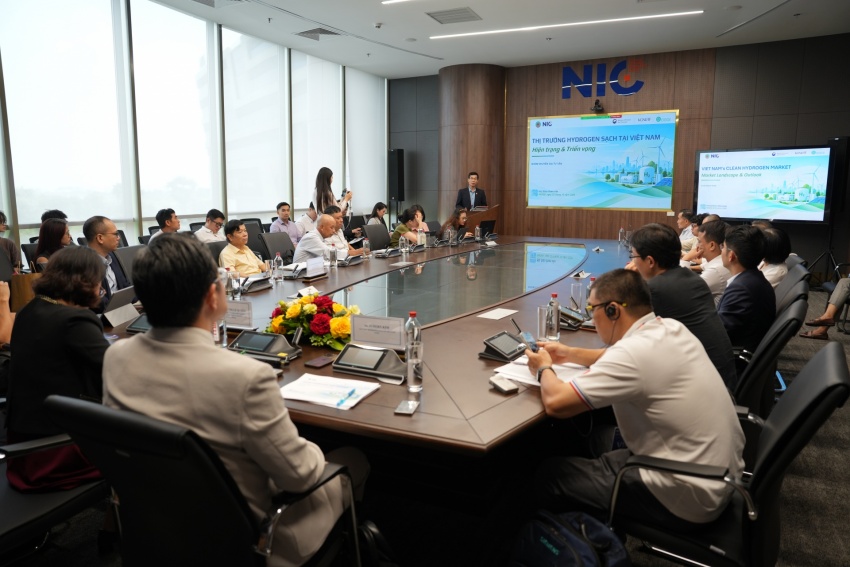
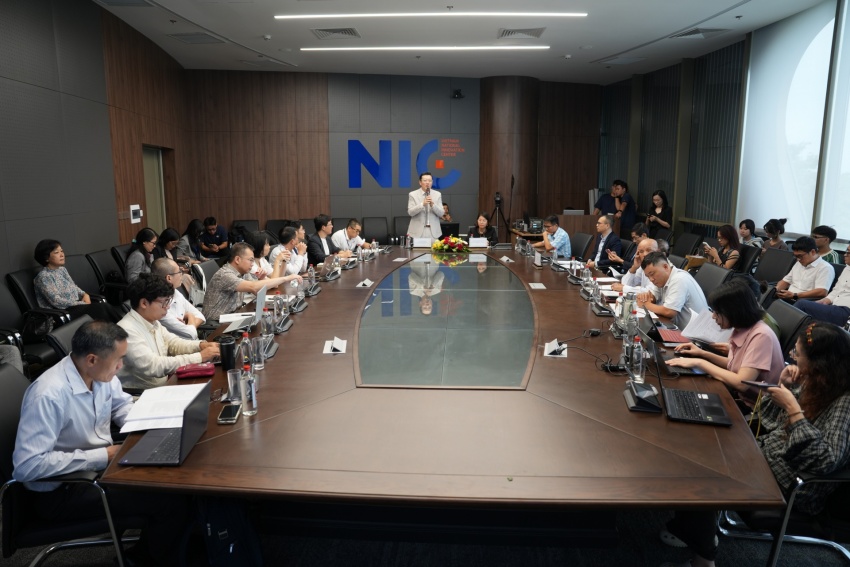
The workshop took place on October 2, bringing together representatives from government agencies, industry associations, businesses, research institutes, and universities to discuss the market landscape, development potential, and emerging opportunities, and to refine the report.
The consultation was organised in line with the government’s direction under Decision No.21/2026/QD-TTg, which prioritises the development of hydrogen technologies, and builds on Vietnam’s Hydrogen Energy Development Strategy to 2030, with a vision to 2050, issued under Decision No.165/QD-TTg. These initiatives aim to strengthen energy security, accelerate the green transition, and support the country’s commitment to achieving net-zero emissions by 2050.
Participants reviewed the draft report’s key findings against their practical experience and discussed ways to strengthen connections across Vietnam’s emerging clean hydrogen ecosystem.
At the workshop, the report’s expert team presented its preliminary findings on the current market landscape and potential, policy and regulatory frameworks, demand, investment prospects, barriers, and priority actions. Representatives of hydrogen producers and project developers, end-users, research organisations, and training institutions then shared perspectives across the clean hydrogen value chain, from production to consumption.
According to the draft report, Vietnam currently produces approximately 500,000 tonnes of hydrogen annually, meeting around 36 per cent of demand from oil refining and petrochemicals and 64 per cent of demand from fertiliser production. However, all current production relies on coal and natural gas, with no commercial-scale green or blue hydrogen projects yet in operation.
Vietnam’s national strategy targets annual hydrogen production of 100,000-500,000 tonnes by 2030 and 10-20 million tonnes by 2050. The gap between these policy ambitions and current implementation remains substantial, while highlighting significant potential to transform industries that already consume hydrogen.
Vietnam has considerable potential to develop clean hydrogen, supported by its wind and solar resources and its strategic position for trade with Northeast Asian markets. The draft report estimates that the technical offshore wind potential across the country’s exclusive economic zone stands at approximately 1,068 GW, the largest in ASEAN.
Across four priority areas: industry, transport, power generation, and exports, Vietnam’s hydrogen market could reach an estimated $100 billion by 2035, according to the draft report.
Within industry, oil refining and fertiliser production are considered potential early adopters because switching to cleaner hydrogen supplies would require changes primarily to their existing hydrogen sources. Steelmaking, meanwhile, represents a sector with substantial long-term hydrogen demand and an urgent need to decarbonise.
Vietnam’s hydrogen ecosystem is gradually taking shape, with participation from state-owned and private enterprises, international partners, and domestic support organisations. The draft report identifies four emerging regional development corridors, each with a potential specialisation: Quang Te–Hue, centred on wind power; Ninh Thuan–Binh Thuan, focusing on solar power and exports; Tra Vinh–Ben Tre, leveraging diverse energy sources, including Mekong Delta biomass; and Ba Ria–Vung Tau, focusing on blue hydrogen linked to existing oil and gas infrastructure.
Globally, the draft report cites estimates valuing the hydrogen market at approximately $229.53 billion in 2025, with the figure projected to reach $406.95 billion by 2034.
The market is also shifting from expectations towards commercial deployment, with greater emphasis on projects backed by firm offtake agreements and viable financing structures. This trend offers a practical lesson for Vietnam as it develops a pipeline of clean hydrogen projects.
Despite its potential, Vietnam faces several challenges in developing a commercially viable clean hydrogen market. Electricity accounts for an estimated 60-70 per cent of the levelised cost of hydrogen production through electrolysis. Other constraints include transmission bottlenecks in areas with strong renewable energy resources, the limited availability of dedicated hydrogen infrastructure, and differing levels of technological maturity. Alkaline electrolysis is already commercially established, while several other technologies still require further testing.
Financing and market demand also remain significant obstacles. According to a Ministry of Industry and Trade survey cited in the draft report, more than 58 per cent of businesses consider hydrogen important, but 68 per cent have yet to undertake substantial activities in the sector. The report attributes this gap to a lack of offtake mechanisms, price-support instruments, and long-term financing.
Institutional arrangements present further challenges, with state management of hydrogen distributed across multiple ministries and agencies. The time required to obtain in-principle investment approval and permits for an industrial hydrogen project currently ranges from 12 to 36 months, according to the draft report.
The report also reviews hydrogen projects and initiatives proposed or under development in Vietnam, assessing their readiness for commercial investment. Its preliminary findings indicate that most projects remain at the formation stage or are still working to meet the conditions required for implementation, while only a limited number appear ready to advance towards implementation in the near term.
This suggests that the key challenge is less about the number of hydrogen initiatives than about improving project readiness. Priorities include establishing technical and financial viability, securing end-markets and offtake arrangements, streamlining licensing procedures, and developing the necessary infrastructure. Progress in these areas would help projects reach final investment decisions and attract commercial financing.
 |
| Photo: NIC |
To address these challenges, the draft report proposes eight groups of priority actions. These include completing the legal framework by defining clean hydrogen based on carbon intensity and introducing a one-stop licensing mechanism; strengthening inter-agency coordination; introducing demand-creation instruments; establishing foundational financial instruments and a system for certifying the origin of hydrogen; implementing regulatory sandboxes; directing support towards priority projects; developing shared infrastructure ahead of demand; and expanding targeted international cooperation.
These recommendations formed the basis for consultation and discussion at the workshop. Participants exchanged views on the report’s findings and recommendations, the development of clean hydrogen markets and applications, financing needs, infrastructure and project development, as well as opportunities for international cooperation and partnerships. The expert team will consolidate the feedback to inform the finalisation of the report.
Speaking at the opening session, Do Tien Thinh, deputy director of the National Innovation Centre (NIC), said that turning strategic ambitions into a functioning market would require coordination among multiple stakeholders.
“Moving from strategic direction to a functioning market requires coordination among many stakeholders. As a central connector within Vietnam’s national innovation ecosystem, NIC aims to provide a platform for regulators, businesses, investors, research institutes, and universities to engage in dialogue and take joint action, contributing to the development of Vietnam’s clean hydrogen market. We hope the candid, practical contributions from participants will help make the report a valuable reference document,” he said.
Juhern Kim, Global Green Growth Institute's (GGGI) country representative in Vietnam, said the country had established a clear strategic direction for clean hydrogen, with the next step being to identify commercially viable opportunities and define its longer-term position in the emerging global hydrogen economy.
“This includes identifying priority sectors, markets where clean hydrogen can generate economic value, and the conditions needed to attract investment into projects today, while building partnerships for the future,” he said.
Kim added that, with support from the Korea Green New Deal Trust Fund, GGGI and NIC were connecting stakeholders across policy, finance, technology, and industry to assess Vietnam’s hydrogen development opportunities from multiple perspectives. The work aims to identify commercially viable opportunities and the challenges that need to be addressed.
The consultation workshop on the “Clean Hydrogen Market in Vietnam” report is part of NIC’s 2026 work plan, reflecting its role in connecting stakeholders and supporting innovation ecosystems in emerging technology sectors, including green energy and clean hydrogen.
What the stars mean:
★ Poor ★ ★ Promising ★★★ Good ★★★★ Very good ★★★★★ Exceptional
 Tag:
Tag:Related Contents






Latest News
More News
- JBIC considers new financing options for Vietnam’s energy projects (October 03, 2026 | 08:00)
- Vestas to supply 16 turbines for two new Vietnam wind farms (October 01, 2026 | 07:00)
- Inter-sectoral cooperation on Montreal protocol (September 30, 2026 | 17:20)
- EV battery recycling rate proposed at 8 per cent from 2029 (September 29, 2026 | 16:00)
- Bankability remains hurdle for Vietnam's JETP projects (September 29, 2026 | 12:08)
- Binh Minh Plastics extends clean water project to border communities (September 29, 2026 | 10:57)
- Coca-Cola Vietnam expands packaging collection programme (September 25, 2026 | 08:15)
- Pacifico Energy secures sea survey licence for offshore wind project in Lam Dong (September 24, 2026 | 18:02)
- Vietnam secures $221 million in UN development programmes for 2027-2031 (September 23, 2026 | 17:39)
- Carlsberg Vietnam shows how resource efficiency can shape green industrial growth (September 18, 2026 | 09:03)







 Mobile Version