
Vietnam launches first embodied AI conference to advance robotics ecosystem

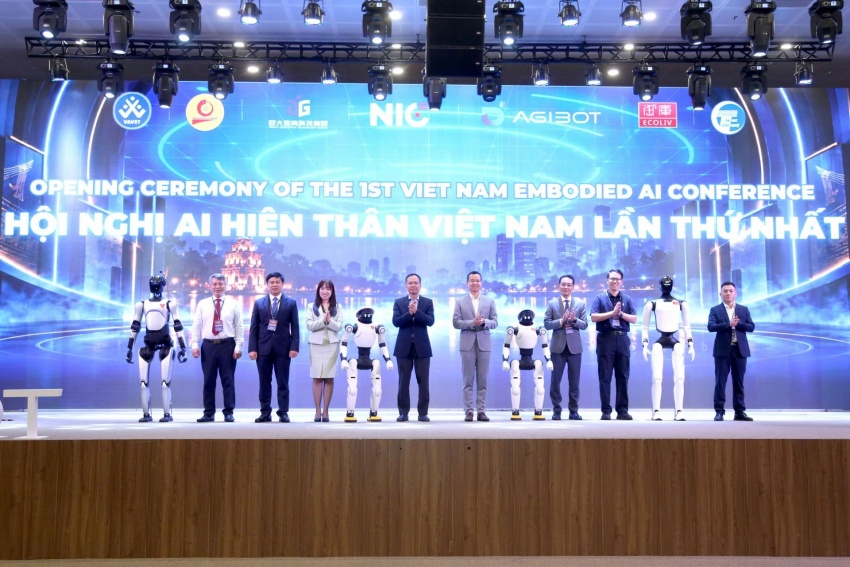 |
| Vietnam launches first embodied AI conference to advance robotics ecosystem. Photo: Duc Minh |
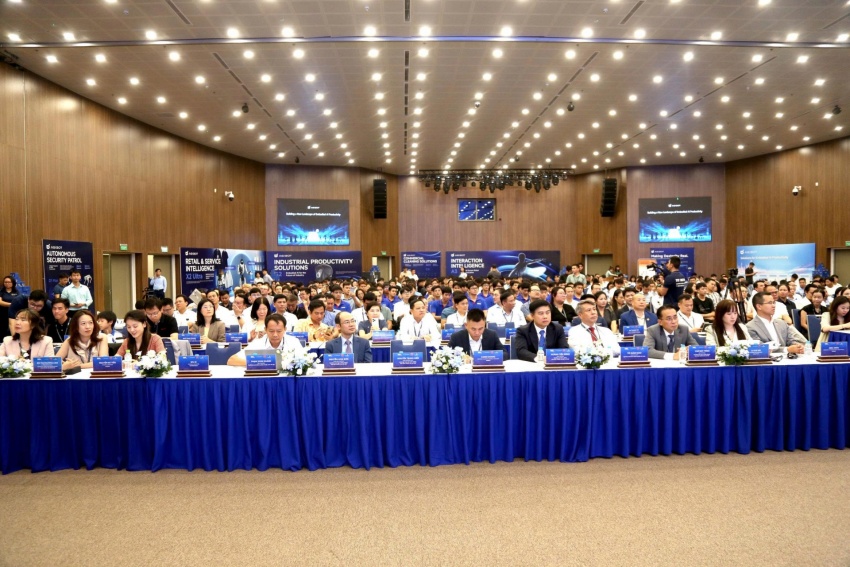
The event, “The New Era of Productivity Powered by Embodied AI: Vietnam – Southeast Asia's Pillar,” was organised by the National Innovation Centre (NIC), AGIBOT, Great Education Technology Group, and ECOLIV Technology at NIC's Hoa Lac campus in Hanoi, as part of Vietnam's National Innovation Day 2026.
Hoang Trung Hieu, deputy director of NIC, said AI was moving beyond digital environments into the physical world, increasingly powering robots, autonomous devices and smart production lines that can sense, make decisions and interact with their surroundings.
“Embodied AI is expected to drive a breakthrough in labour productivity across manufacturing, logistics, agriculture, healthcare and services. It can also help address labour shortages, improve workplace safety and enhance the quality of economic growth,” he said.
Embodied AI combines AI's perception and decision-making capabilities with physical systems that can interact with their surroundings and perform tasks. Applications range from manufacturing and research to retail, tourism, hospitality and other services.
 |
| Photo: Duc Minh |
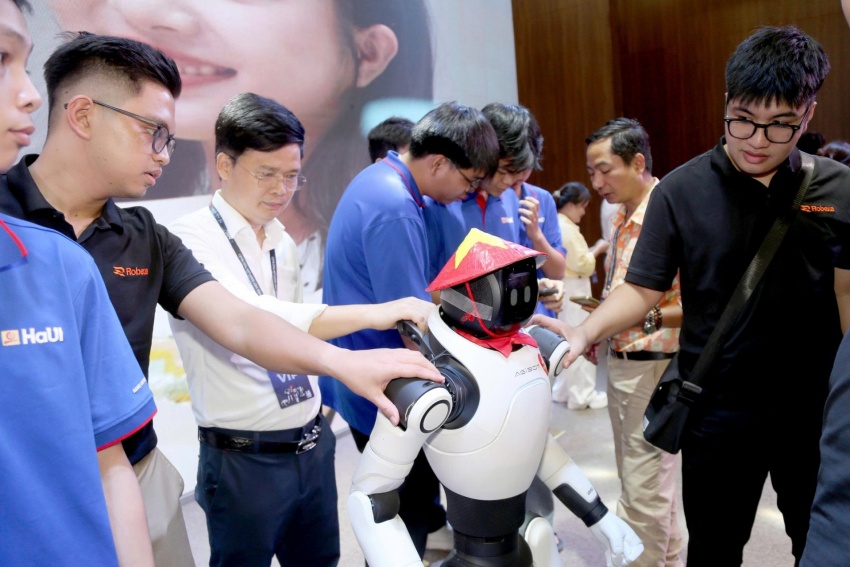
At the conference, AGIBOT presented humanoid robots, quadruped robots, wheeled robots and embodied AI solutions designed for education, research and industrial applications. Demonstrations and interactive activities gave businesses, educators and researchers opportunities to explore the technology's capabilities and potential uses in real-world settings.
NIC, AGIBOT, Great Education Technology Group and ECOLIV Technology also discussed ways to introduce embodied AI into Vietnam's education and research systems, with an emphasis on strengthening links between technology companies, universities and research institutions.
Hieu said AI, particularly embodied AI and robotics, was among the core technologies prioritised in NIC's development strategy.
The centre aims to build a comprehensive national innovation ecosystem by connecting government agencies, businesses, universities and research institutions. Its priorities include mobilising resources for technology development, training a skilled workforce, and supporting the testing and commercialisation of new solutions.
NIC plans to leverage the infrastructure at Hoa Lac Hi-Tech Park to facilitate technology demonstrations, trials and sandbox programmes for embodied AI, mobile robotics and smart manufacturing.
A key part of this effort is developing human resources with the interdisciplinary skills needed to integrate AI with physical systems, while creating opportunities for students, lecturers and researchers to gain practical experience with robotics technologies.
 |
| Photo: Duc Minh |
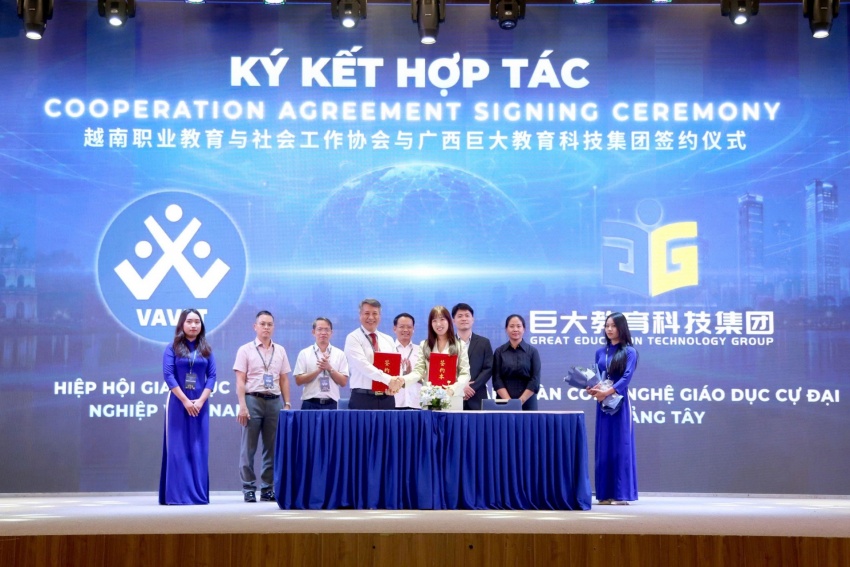
During the event, Great Education Technology Group signed strategic cooperation agreements with three Vietnamese organisations: the University of Engineering and Technology at Vietnam National University, Hanoi; the School of Mechanical and Automotive Engineering at Hanoi University of Industry; and the Vietnam Association of Vocational Education and Training.
The agreements cover the development of training programmes, joint laboratories, lecturer training, practical activities for students and collaborative research projects.
The partnerships aim to expand research and training capacity in embodied AI at Vietnamese educational institutions, while strengthening the domestic workforce's ability to develop and apply the technology.
The conference also examined emerging business models, including Robot as a Service, under which businesses can access robotic capabilities through service-based arrangements instead of purchasing equipment outright.
Supported by local service providers and ecosystem partners, such models could give businesses more flexible ways to introduce robots into specific operations, reducing upfront investment requirements and allowing companies to assess their effectiveness before expanding deployment.
Such arrangements could help address one of the barriers to wider adoption: the cost and complexity of integrating robotics into existing business processes. Their viability will depend on service costs, maintenance arrangements, system reliability and the productivity gains achieved by customers.
Participants highlighted Vietnam's manufacturing base, workforce, innovation policies and regional market connections as potential advantages for developing embodied AI applications.
Further progress, however, will require continued cooperation between technology providers, universities, research institutions and businesses to ensure that robotics solutions meet practical needs and can be deployed at scale.
 |
| Photo: Duc Minh |
NIC, AGIBOT, ECOLIV Technology and Great Education Technology Group, together with participating universities and research institutions, plan to continue cooperation in research, workforce development, industrial applications and the development of a local embodied AI ecosystem.
The conference marked a step towards connecting international robotics technologies with Vietnam's education and industrial sectors, as the country seeks to translate advances in AI into practical applications and productivity gains.


What the stars mean:
★ Poor ★ ★ Promising ★★★ Good ★★★★ Very good ★★★★★ Exceptional
 Tag:
Tag:
Related Contents




Latest News



More News
- IEAE Hanoi 2026 to spotlight smart electronics trends (October 19, 2026 | 17:44)
- Vietnam and EFTA member states sign free trade agreement (October 19, 2026 | 13:10)
- TC-HICT handles over 8.2 million TEUs since 2018 launch (October 17, 2026 | 16:56)
- Vietnam transforming AI ambitions into business impact (October 16, 2026 | 18:01)
- A broader platform for France-Vietnam cooperation (October 16, 2026 | 17:51)
- AEON to open 13th general merchandise store in Vietnam (October 14, 2026 | 17:56)
- Three international exhibitions open to boost industrial supply chain links (October 14, 2026 | 17:37)
- Garment and textile industry transitions towards high-value production (October 14, 2026 | 17:30)
- French business delegation meets MoF to discuss investment cooperation (October 14, 2026 | 11:37)
- Friso promotes global scientific collaboration on children’s gut health in Vietnam (October 13, 2026 | 16:18)










 Mobile Version