
BPC Roundtable Conference 2026 focuses on innovation and green growth

The conference was jointly organised by Ho Chi Minh City People’s Committee and the Osaka Business Partner City Council.
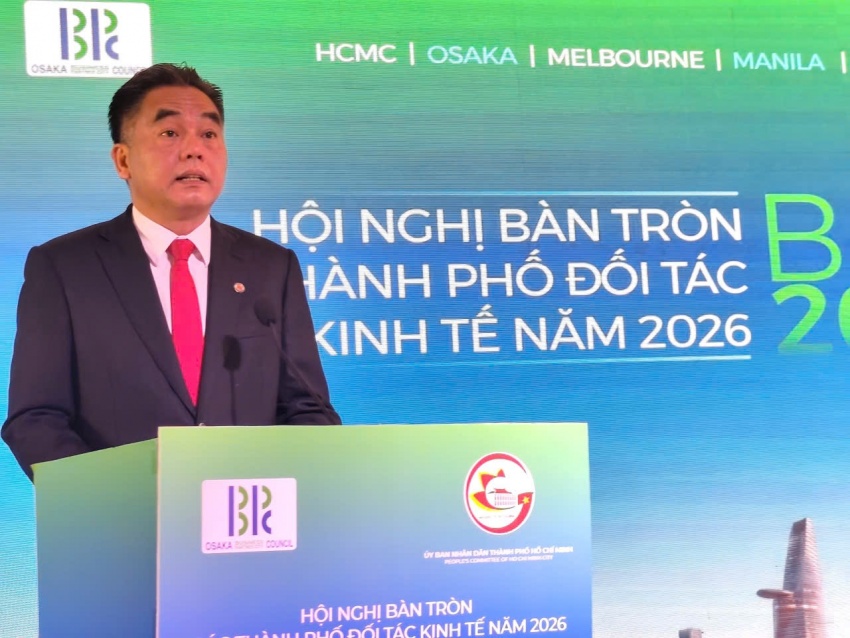 |
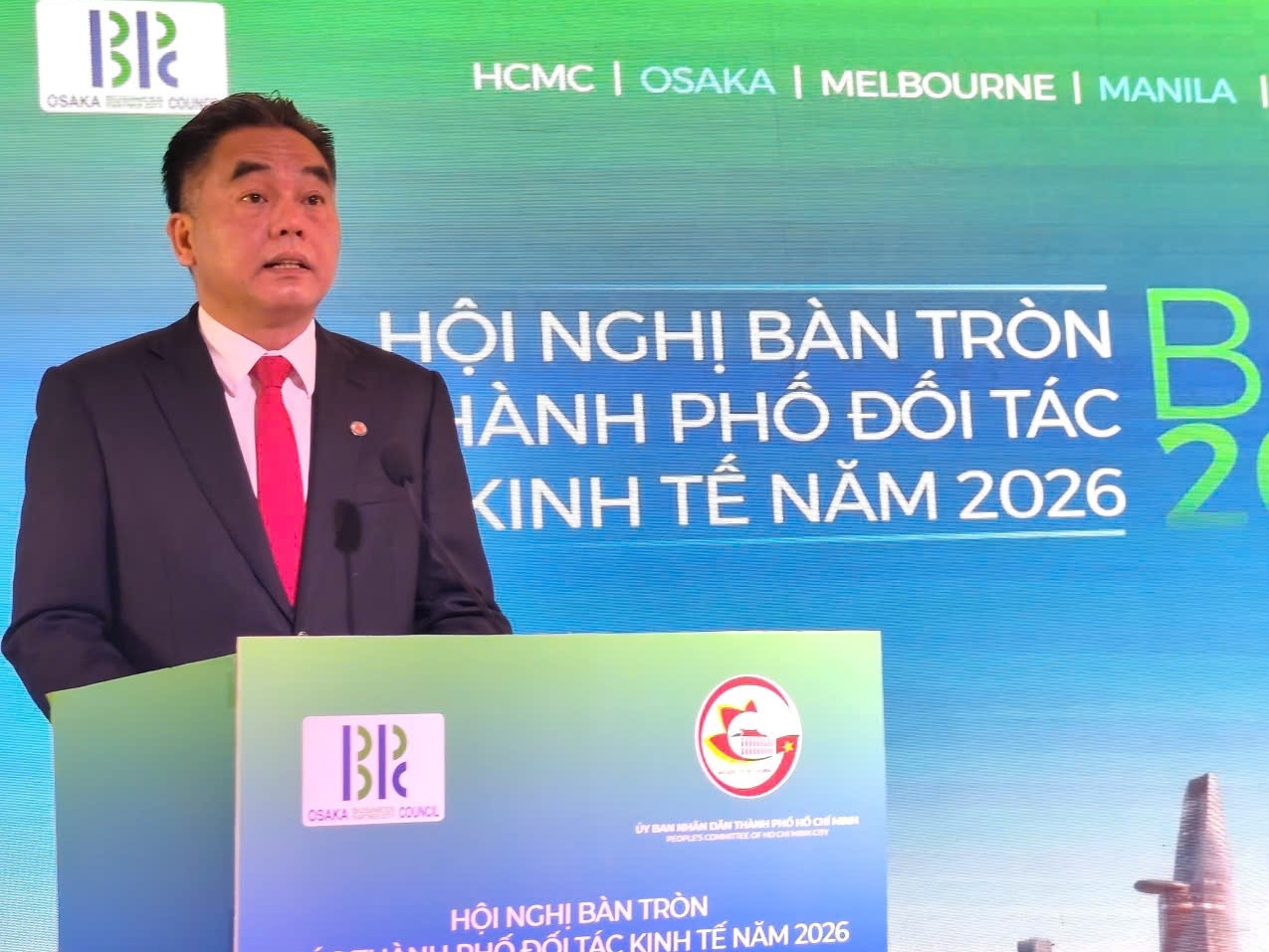
| Nguyen Loc Ha, Standing Vice Chairman of Ho Chi Minh City People’s Committee, at the BPC Roundtable Conference 2026. Photo: Ho Chi Minh City People's Committee |
This was the third time Ho Chi Minh City had hosted the BPC Roundtable Conference, following previous editions in 2002 and 2016.
The event brought together representatives of local governments, trade promotion organisations and businesses from Osaka (Japan), Melbourne (Australia), Manila (the Philippines), Kuala Lumpur (Malaysia) and Hamburg (Germany), as well as the Australian Industry Group (Ai Group), one of Australia’s largest industry associations.
Ha said that rapid technological advances, supply chain restructuring and increasingly stringent green development standards had reshaped the global landscape over the past decade.
“Cities now face the dual challenge of sustaining economic growth and optimising resources while leading digital and green transitions, cutting emissions and reshaping urban spaces to improve residents’ overall quality of life,” Ha said.
Ha stressed that the 2026 BPC Roundtable Conference should go beyond simply sharing experiences. It should move from exchanging experiences to identifying practical approaches, from discussing ideas to mobilising resources, and from connecting resources to developing cooperation programmes that can be implemented after the conference.
“Innovation and sustainable development are two complementary pillars, he said. Innovation drives green growth, while sustainability requirements provide practical challenges that push innovation to deliver deeper, more meaningful results,” he added.
Regarding the city’s strategic direction, Ha said its expanding urban boundaries and increasingly diversified economic structure were creating opportunities to better integrate financial services and science and technology with major growth centres in large-scale industry, clean energy and international seaport logistics.
The city is turning its potential into new growth drivers through smart governance models, green development and efforts to enhance its overall competitiveness.
Providing an update on the local economy, Ha said Ho Chi Minh City’s regional GDP grew by 9.06 per cent in the first nine months, while its industrial production index rose by 10.9 per cent. The city has also been implementing greenhouse gas inventories, transitioning to green buses and participating in the carbon market.
Since the 2025 BPC Conference, Ho Chi Minh City has conducted greenhouse gas inventories at 360 facilities, of which 240 have developed emissions reduction plans for 2026–2030. Around 68 per cent of the city’s buses now run on electricity or other green energy, with the city targeting 100 per cent by early 2027. Rooftop solar power capacity has reached 1,865.7 MWp.
The city also highlighted the challenges facing small and medium-sized enterprises (small- and medium-sized enterprises), including transition costs, limited capacity to measure and report emissions, difficulties accessing green finance, and compliance with the EU’s Carbon Border Adjustment Mechanism requirements for exports.
 | Ho Chi Minh City to unveil new projects worth $13.5 billion at AEF 2026 Ho Chi Minh City is expected to announce at least 12 investment projects with a combined value of more than $13.5 billion at the Autumn Economic Forum 2026. |
 | BPC Roundtable Conference 2026 to open in Ho Chi Minh City The 2026 Business Partner Cities (BPC) Roundtable Conference will be held in Ho Chi Minh City on October 23. |
 | Ho Chi Minh City offers interest rate support to businesses Ho Chi Minh City has introduced practical interest rate support programmes to help businesses address funding challenges as they modernise production and pursue sustainable development. |
What the stars mean:
★ Poor ★ ★ Promising ★★★ Good ★★★★ Very good ★★★★★ Exceptional
 Tag:
Related Contents


Latest News
More News
- Exports face growing pressure to go green (October 23, 2026 | 10:44)
- Project helps 100 shrimp and rice firms improve workplace standards (October 16, 2026 | 17:20)
- Carbon exchange adds new component to green finance ecosystem (October 13, 2026 | 09:43)
- ILO's WIND approach brings safer coffee farming to Vietnam (October 07, 2026 | 10:34)
- From coffee beans to value: Building a more sustainable coffee industry in Vietnam (October 06, 2026 | 17:00)
- Tien Phong Plastics wins two awards at Green Future Awards 2026 (October 06, 2026 | 11:51)
- Energy transition task force meets to advance Vietnam's grid and storage (October 05, 2026 | 18:59)
- GreenYellow and Vina Paper partner on rooftop solar project (October 05, 2026 | 09:00)
- Consultation workshop refines Vietnam's clean hydrogen strategy (October 04, 2026 | 08:00)
- JBIC considers new financing options for Vietnam’s energy projects (October 03, 2026 | 08:00)



Latest News


 Mobile Version