
Australia-Vietnam event highlights women's role in agriculture

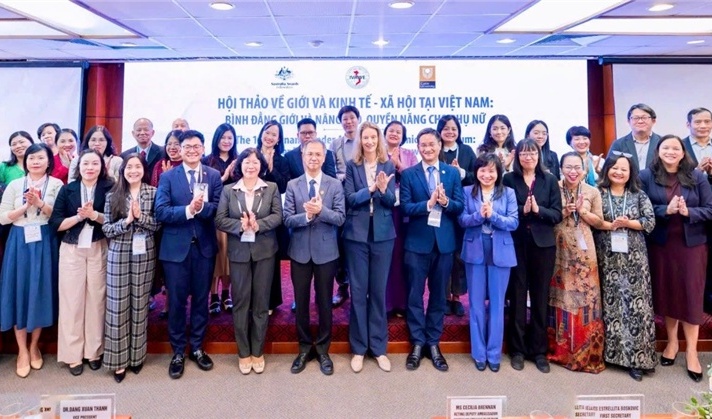
Those themes took centre stage at the Australia-Vietnam Women in Agriculture event in Hanoi on October 27, which focused on strengthening women's leadership, influence, and participation in the agricultural sector.
Monica Finlayson, Australia's agriculture counsellor to Vietnam, Cambodia, and Laos, said agriculture plays a vital role in ensuring food security and protecting livelihoods, with women making important contributions throughout the value chain. However, their roles have yet to be fully recognised.
Speaking to VIR, Finlayson shared that women account for around 48 per cent of the agricultural workforce in Vietnam and approximately 36 per cent in Australia, making significant contributions to farm production, agribusiness, natural resource management, and rural communities.
“Yet in both countries, women remain underrepresented in formal leadership and decision-making roles across the agricultural sector,” said Finlayson. “This leadership gap represents a challenge for gender equality alongside a missed opportunity for the sector. At a time when agriculture must respond to growing food demand, climate change and the need for more resilient and sustainable production systems, women are an under-utilised source of innovation, expertise and leadership. By empowering more women to lead, Australia and Vietnam can strengthen productivity, enhance resilience and deliver broader economic, social and environmental outcomes.”
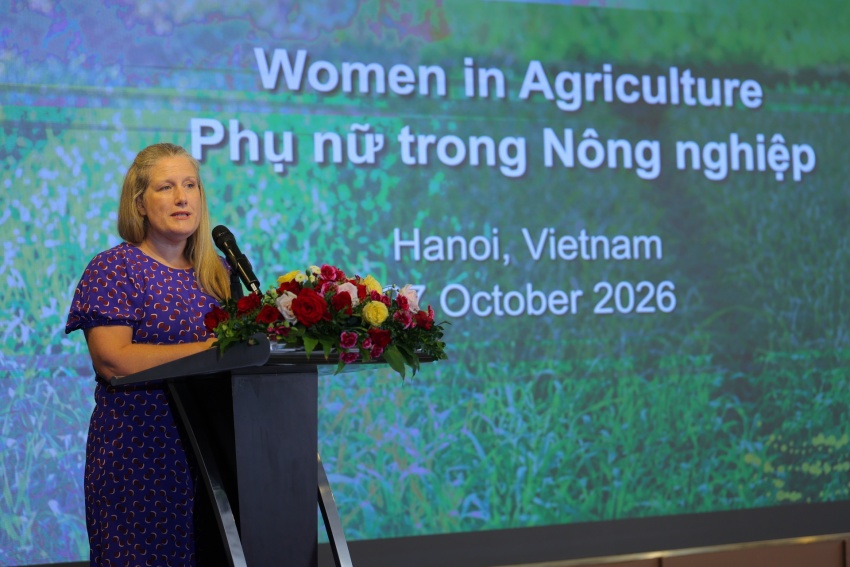 |
| Monica Finlayson, Australia's agriculture counsellor to Vietnam. Photo: Australian Embassy in Vietnam |
To turn policy commitments into tangible impact, Finlayson noted that investment in women's leadership is needed at every level of the agricultural system. This includes supportive policies and institutional arrangements, targeted leadership and governance programmes, access to education and training, opportunities to develop technical and business skills, as well as professional networks and mentoring pathways. Such investments can help expand the pipeline of women leaders across government, research organisations, agribusinesses, and farming communities.
“Multi-stakeholder platforms that bring together government, industry, academia and producers are critical to strengthening the participation, leadership and empowerment of women in agriculture. In addition to supporting the exchange of knowledge and innovation, they foster connections, mentorship and a sense of community,” Finlayson said.
“By bringing diverse perspectives together, these forums help bridge the gap between policy, research and practice, ensuring that solutions are relevant and accessible to those working on the ground. They also provide opportunities for women to share experiences, learn from peers, expand their networks and develop the confidence and skills to lead within their communities and businesses.”
Above all, she emphasised that the leadership of women in agriculture matters, regardless of the scale of their operations.
“By recognising and investing in women's contributions, we can build a more innovative, resilient and prosperous agriculture sector. When women are empowered to participate and lead, the benefits extend far beyond individual farms or businesses, strengthening food systems, rural communities and sustainable development for all,” Finlayson added.
Renee Deschamps, chargée d’affaires at the Australian Embassy in Vietnam, noted that the future of agriculture depends on cooperation and the full realisation of women's potential.
She noted that women's contributions to rural livelihoods are increasingly recognised, while expanding their opportunities to participate in economic activities can help drive growth and strengthen community resilience.
“As global agriculture faces mounting challenges, particularly the impacts of climate change, ensuring that women have opportunities to participate in and contribute to the sector's development is a matter of equality, it also brings tangible economic benefits. Women can drive innovation, contribute to food security, and improve production efficiency in rural areas,” said Deschamps.
“Australia has considerable experience in supporting women to lead farms and drive sustainable transformation and innovation in agriculture. These experiences can offer valuable lessons for Vietnam, from farm production and livestock farming to models that combine agriculture with tourism,” she added. “Models in localities such as Son La demonstrate how empowering women can deliver positive outcomes for livelihoods and local economic development.”
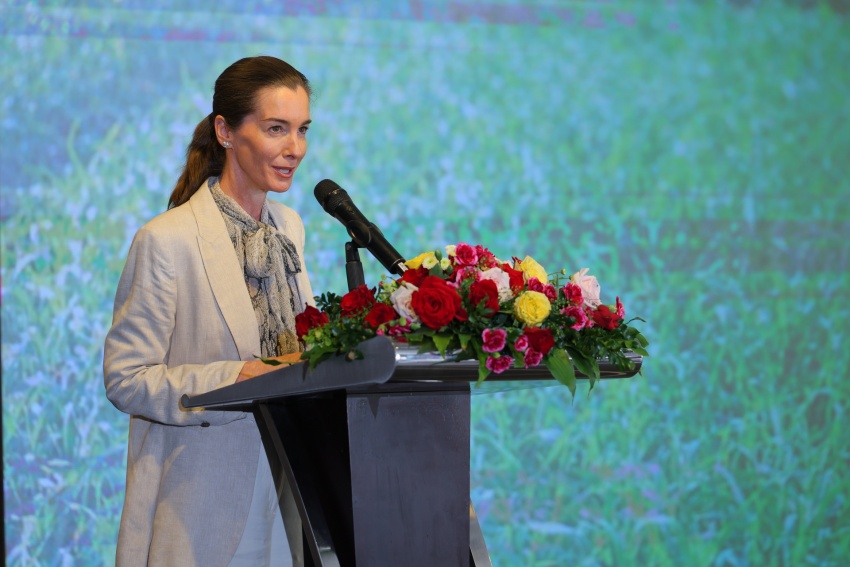 |
| Cressida Cains, president of Australian Women in Agriculture. Photo: Australian Embassy in Vietnam |
From the perspective of those working directly in agriculture, Cressida Cains, president of Australian Women in Agriculture, argued that the distinctive nature of agricultural production and the leadership roles required within the sector need to be fully understood.
One point Cains particularly explained was the distinction between nominal participation and meaningful contribution.
“Women's presence at meetings or membership in a cooperative is not enough to demonstrate that they have been empowered. Without opportunities to express their views, participate in decision-making, or influence collective activities, their presence is unlikely to bring about meaningful change,” Cains said. “Networks can open up new opportunities for cooperation and development, but participation alone should not be regarded as the ultimate measure of success. What matters more is whether women are heard, have a voice in decisions, and can translate their knowledge into tangible improvements in production and business activities.”
Drawing on this experience, Cains proposed three approaches for policymakers.
“First, we need to change the way we listen to identify whose knowledge and experience may have been overlooked. Second, rather than focusing solely on individuals, we need to examine the mechanisms and incentives within the system that enable more people to participate and develop. Third, initiatives should aim to change the choices available to women in practice, thereby expanding their access to resources and opportunities to participate in the sector's development,” she said.
In Vietnam, women's role in agricultural development is evident in the operations of cooperatives, where they are involved in production as well as production planning, governance, and market development.
Ban Thi Ngan, director of Hop Phat Organic Cooperative, said women could take an active role in production planning and cooperative governance, enhancing product value and building brand recognition. Careful selection of raw materials, consistent product quality, and the ability to meet consumer expectations are also essential to establishing agricultural products in the market.
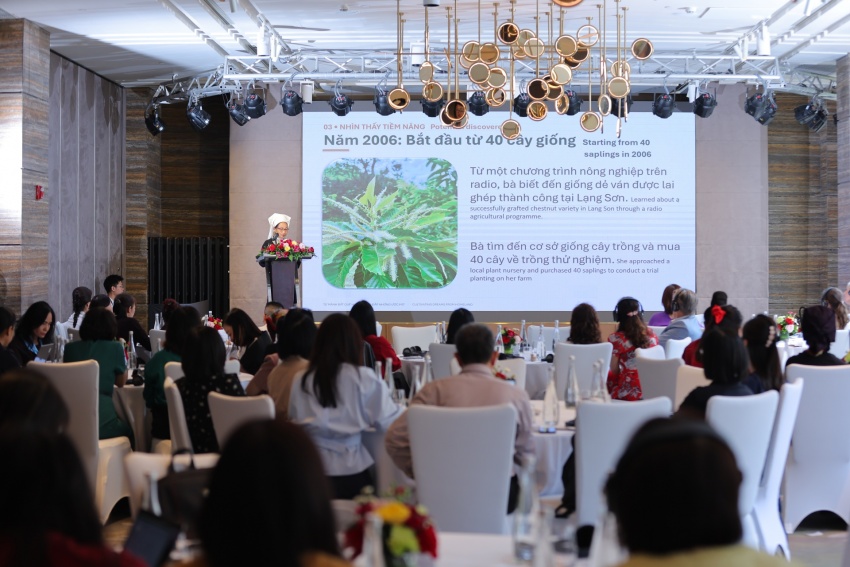 |
| Ban Thi Ngan, director of Hop Phat Organic Cooperative. Photo: Australian Embassy in Vietnam |
According to Ngan, when equipped with appropriate knowledge, technology, and resources, women can better unlock the potential of their communities while contributing to the development of sustainable production models.
“Success is not measured solely by revenue or the number of products sold. It also means that people have better livelihoods, local agricultural products gain recognition, and women feel confident in contributing to the development of their families and communities,” she said.
“To create more opportunities for women in agriculture to connect, exchange experiences, and support one another, I propose establishing an association or organisation for women farmers in Vietnam. Such a network could help women access information, share production and business practices, expand market connections, and contribute to building an ecosystem that supports collective development.”
 | Australia and Vietnam deepen economic cooperation Australia and Vietnam have agreed to strengthen cooperation across education, trade and innovation, to enhance the Comprehensive Strategic Partnership between the two countries. |
What the stars mean:
★ Poor ★ ★ Promising ★★★ Good ★★★★ Very good ★★★★★ Exceptional
 Tag:
Related Contents




More News
- Green transition support key for SMEs facing emissions pressure (October 26, 2026 | 12:50)
- BPC Roundtable Conference 2026 focuses on innovation and green growth (October 23, 2026 | 18:26)
- Exports face growing pressure to go green (October 23, 2026 | 10:44)
- Project helps 100 shrimp and rice firms improve workplace standards (October 16, 2026 | 17:20)
- Carbon exchange adds new component to green finance ecosystem (October 13, 2026 | 09:43)
- ILO's WIND approach brings safer coffee farming to Vietnam (October 07, 2026 | 10:34)
- From coffee beans to value: Building a more sustainable coffee industry in Vietnam (October 06, 2026 | 17:00)
- Tien Phong Plastics wins two awards at Green Future Awards 2026 (October 06, 2026 | 11:51)
- Energy transition task force meets to advance Vietnam's grid and storage (October 05, 2026 | 18:59)
- GreenYellow and Vina Paper partner on rooftop solar project (October 05, 2026 | 09:00)




 Mobile Version