
Caution and stability drive Vietnam’s workforce trends

 |
According to the Salary Guide 2026 by Adecco Vietnam on March 19, Vietnam’s economy demonstrated solid momentum in 2025, with GDP growth of 8.02 per cent, driven by services and industrial sectors. Exports grew by 17 per cent, while business remained active despite ongoing market adjustments.
Hiring activity remained cautious but stable. Organisations prioritised efficiency and critical roles, focusing on experienced professionals who can deliver immediate impact. Leaner team structures became more common, while competition for skilled talent, especially in digital, technical, and leadership roles, remained strong.
Based on research involving 10,000 professionals in Vietnam, primarily mid- to senior-level, the report highlights a shift towards more sustainable, people-centric workplaces.
Mental health and wellbeing have emerged as the top trend influencing work life, followed by economic and business uncertainty. This reflects growing awareness of burnout risks and the need for resilience, prompting organisations to place greater emphasis on employee support and workforce stability.
In 2025, salary growth remained moderate, with 33 per cent reporting no change and only 18 per cent seeing increases above 10 per cent, mainly in IT and digital roles. However, expectations for 2026 are more optimistic, with 38 per cent anticipating increases above 10 per cent, highlighting the mportance of compensation in attracting and retaining talent.
At the same time, professionals are becoming more cautious in their career decisions. While 62 per cent are open to new opportunities, a notable 37 per cent prefer stability. Workplace relationships continue to be a key retention factor, with strong satisfaction levels towards colleagues (72 per cent) and line managers (60 per cent).
Although AI was not ranked among the top trends this year, its adoption in daily work continues to grow. Employees are increasingly using AI to streamline tasks and support decision-making, with 73 per cent confident their employers will support the development of AI-related skills, reflecting a strong commitment to upskilling and continuous learning.
Looking ahead, Vietnam’s GDP is forecasted to grow by around 9 per cent in 2026, supported by continued foreign investment, infrastructure development, and expansion across key industries. As businesses adapt to technological advancements and shifting global supply chains, demand for highly skilled, adaptable talent is expected to remain steady.
Organisations will need to strike a balance between operational efficiency and long-term workforce development, while those who invest in digital capabilities, cross-functional skills, and continuous learning will be best positioned to capture emerging opportunities.
 | Vietnam job market hits new milestone with rising salaries and race for AI talent Robert Walters Vietnam released its Salary Survey 2026 on November 25, revealing that Vietnam's job market reached a new milestone in 2025. |
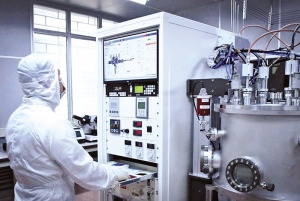 | Vietnam eyes investment and talent development with world-class aerospace leader Deputy Prime Minister Nguyen Chi Dung has urged a global aerospace and high-tech group to expand cooperation, alongside supporting a plan to train 50,000 semiconductor engineers and drive innovation. |
 | Talent boost vital for semiconductor chip industry Vietnam and Japan are deepening their relationship in developing personnel to support the former’s burgeoning semiconductor industry. Prof. Usagawa Tsuyoshi, of the Vietnam-Japan University under the Vietnam National University in Hanoi, spoke with VIR’s Thanh Thanh about the evolving partnership and what Vietnam must do to cultivate a world-class semiconductor workforce. |
What the stars mean:
★ Poor ★ ★ Promising ★★★ Good ★★★★ Very good ★★★★★ Exceptional
 Tag:
Tag:Related Contents






Latest News



More News
- Sojitz in Vietnam: 40 years from individual projects to a business cluster 'KATAMARI' (October 08, 2026 | 09:00)
- Coteccons targets 'Quality Growth' with 25 per cent dividend plan (October 07, 2026 | 13:00)
- Vietnam Education Forum opens UK Education Mission's Hanoi visit (October 07, 2026 | 12:27)
- Tax authorities deactivate TINs of nearly 180,000 businesses (October 07, 2026 | 12:08)
- World Bank raises Vietnam's 2026 GDP growth forecast to 7.4 per cent (October 07, 2026 | 11:41)
- Vietstock 2026 to spotlight livestock innovation and green transition (October 07, 2026 | 09:00)
- Vietnam’s GDP grows over 9 per cent in first nine months (October 05, 2026 | 18:45)
- Vietnam earns $56.3 billion from agro-forestry-fishery exports (October 05, 2026 | 18:32)
- DSV balances resilience and decarbonisation in supply chains (October 05, 2026 | 18:20)
- Electronics exports reach $175.4 billion in the first nine months (October 05, 2026 | 18:12)



Latest News





 Mobile Version