
Textile exporters navigate growth amid tariff uncertainty

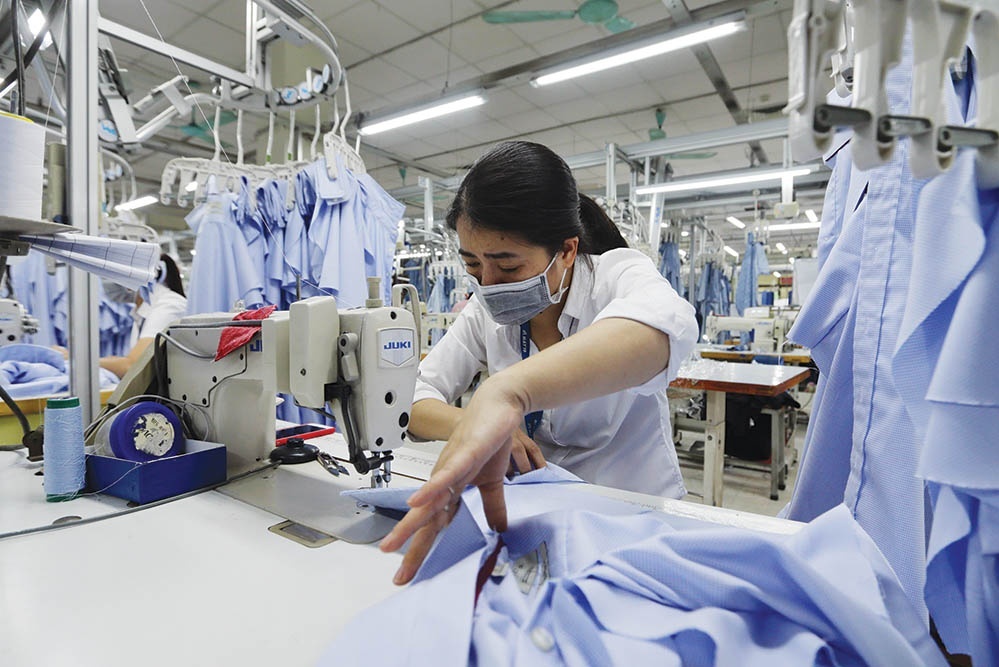
According to the Customs Department, garment and textiles exports reached approximately $3.19 billion in May 2026, up 3.5 per cent on-year.
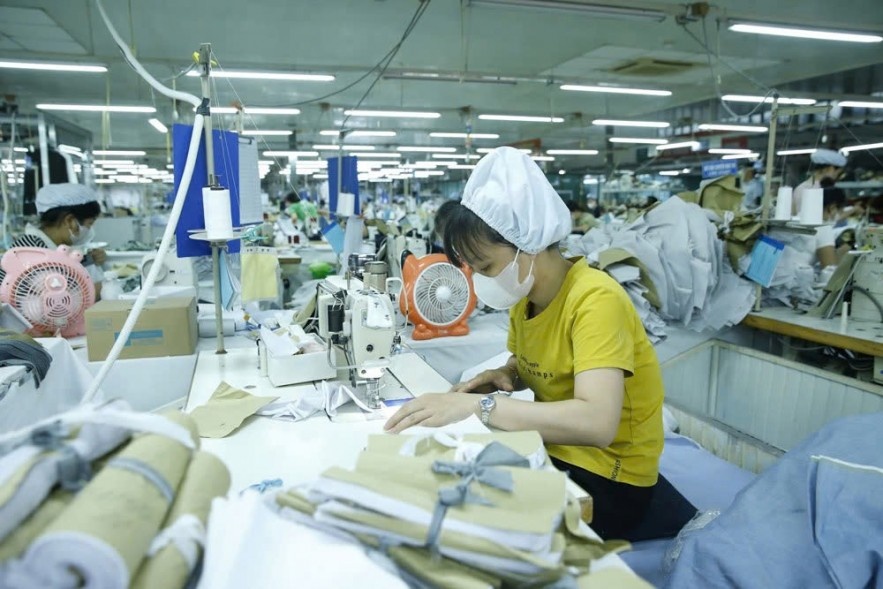 |
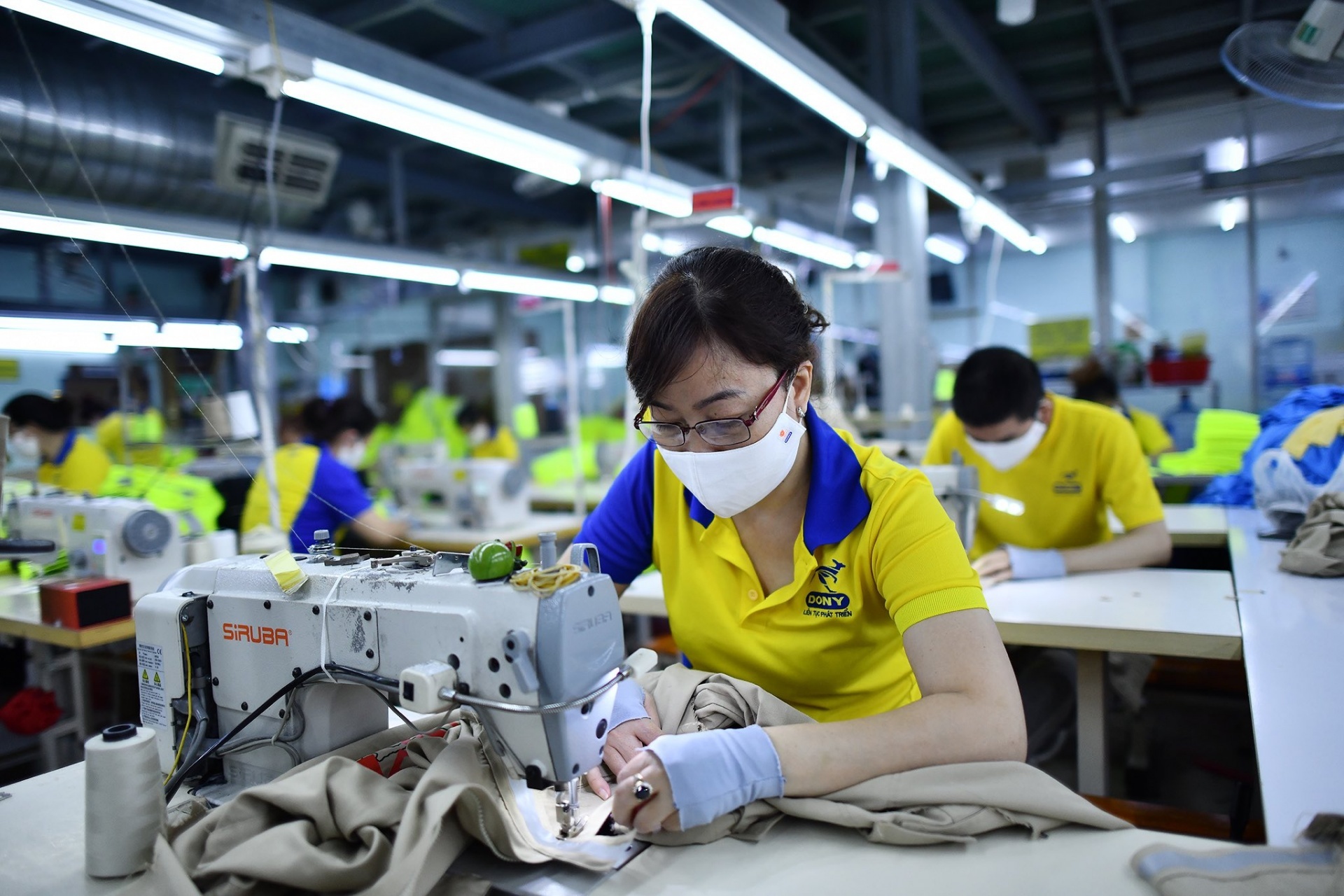
| Vietnam’s textile apparel export value exceeded $15 billion in the first five months |
Cumulative export value for the first five months exceeded $15.13 billion, a modest increase of 0.4 per cent compared to one year ago. Meanwhile, fibre and yarn exports emerged as one of the sector’s bright spots, with export value reaching nearly $1.89 billion during the period, up 8.7 per cent on-year.
According to Bui Ngoc Chau, senior research analyst at Mirae Asset Vietnam Securities, one of the main drivers supporting the industry’s growth has been the continued shift in global sourcing orders.
“US-China trade tensions are encouraging global buyers to diversify supply chains, creating opportunities for alternative exporters. Although total US import volumes are declining, Vietnam’s rising market share should allow its textiles and apparel industry to maintain growth,” he said.
However, growth remains moderate and increasingly uneven across the sector.
State-owned Vietnam National Textile and Garment Group (Vinatex) reported first-quarter 2026 revenue of about $179.6 million, up 5 per cent on-year. Improved gross margins helped the group post profit growth of more than 12 per cent during the period.
Meanwhile, TNG Investment and Trading JSC posted first-quarter revenue of nearly $78.1 million, up 29.2 per cent on-year. However, gross profit margin fell from 15.2 per cent to 12.1 per cent amid rising cost pressures.
The company’s selling expenses increased by 46.4 per cent as freight rates remained elevated, resulting in a slight decline in operating profit. Nevertheless, TNG’s net profit rose 39.3 per cent to $2.41 million, primarily thanks to gains recorded during the quarter.
With its two core product lines – yarn and home textile products – Phong Phu Corporation delivered stronger results. First-quarter revenue rose 5.1 per cent to $25 million. Gross profit margin improved to 20.5 per cent, helping net profit increase 16.8 per cent to $5.29 million.
Meanwhile, Century Synthetic Fiber Corporation posted a significant decline in both revenue and earnings in Q1..
The company’s revenue fell nearly 29 per cent on-year. Combined with deteriorating gross profit margins, the company reported a net loss of more than $1.36 million.
According to company chairman Dang Trieu Hoa, demand for yarn remained weak, while declining revenue and sharply rising machine shutdown costs directly eroded profit margins.
The recovery of the textile apparel industry highlights uneven progression across businesses.
Although order prospects are viewed more positively than in the previous downturn, the Vietnam Textile and Apparel Association (VITAS) believes one of the industry’s biggest challenges is not volume of orders but quality and profitability.
According to VITAS, most companies have secured orders through the end of Q3. Several large enterprises with stable customer bases and strong management capabilities have even received orders extending beyond that.
Vietnam is viewed as well positioned within global supply chains, supported by the ongoing relocation of manufacturing orders, political instability and energy shortages in Bangladesh, and advantages from multiple free trade agreements.
At the same time, many manufacturers are moving beyond the traditional Cut-Make-Trim model towards Free on Board and Original Design Manufacturing. The shift allows companies to take on a larger role in raw material sourcing, product design, and order management, helping improve profit margins.
However, challenges remain significant. Costs for raw materials, logistics, labour, and environmental, social, and governance compliance continue to rise, while export prices have failed to keep pace.
As a result, profit margins across the sector are under growing pressure, with many exporters facing low-priced orders, tight delivery schedules, and stricter technical and social responsibility requirements.
Even so, Nguyen Thi Trang, an analyst at KB Vietnam Securities, believes the negative impact on the industry may not be overly severe.
Under a mechanism for the sector, a certain volume of garments and textiles exports may qualify for preferential tariff rates based on the proportion of cotton and yarn imported from the United States.
“Vietnam was the largest importer of US cotton in the 2024-2025 marketing year, accounting for approximately 45 to 50 per cent of the industry’s total cotton imports. This provides an important basis for Vietnam to receive preferential tariff quotas should such a mechanism be approved,” Trang said.
However, as the US administration continues to pursue trade protectionist measures and the country’s trade deficit remains elevated, tariff-related risks are likely to remain a difficult-to-predict factor for Vietnamese exporters in the period ahead.
 | Vietnam continues to shine in global apparel trade By leveraging last year's robust recovery, Vietnam's garment and textiles sector is poised for significant growth in 2025, driven by shifting global demand, green production practices, and technological advancements. |
 | Favourable tariff outlook offers boost for Vietnamese exporters As Vietnam and the United States advance towards a reciprocal trade agreement, expectations are growing for tariff cuts that could strengthen key export sectors and improve prospects for Vietnamese stocks. |
 | Textile apparel firms deliver robust earnings despite global tariff pressures The textile and garment industry is posting robust profits, with total exports for the sector this year expected to reach $46 billion, exceeding earlier expectations despite mounting tariff pressures, as companies across the industry report strong earnings. |
What the stars mean:
★ Poor ★ ★ Promising ★★★ Good ★★★★ Very good ★★★★★ Exceptional
 Tag:
Tag:
Latest News





More News
- EuroCham confidence index holds at 78.3 despite operational hurdles (October 16, 2026 | 17:27)
- Shrimp and rice firms face rising standards in export markets (October 16, 2026 | 09:00)
- SCG and Prime Group add value to the ecosystem (October 15, 2026 | 15:55)
- Project readiness key to unlocking green finance (October 15, 2026 | 12:35)
- Sovereign AI and human oversight key to secure digital government (October 15, 2026 | 12:32)
- MEXC Ventures partners with Corelia Academy: Bringing digital asset education closer to Vietnamese students (October 15, 2026 | 09:00)
- Global design expertise meets a more sophisticated Vietnam market (October 15, 2026 | 09:00)
- Vietnam growth nears double digits, UOB raises forecast (October 14, 2026 | 17:39)
- Smart factories need skills, finance and trust to scale (October 14, 2026 | 17:33)
- Sanofi-Aventis Vietnam appoints new head of Vaccines and country lead (October 12, 2026 | 17:21)




Latest News






 Mobile Version