
PwC launches global workforce survey

 |
As AI accelerates transformative changes worldwide, this survey aims to offer a critical snapshot of how Vietnam’s workforce is adapting within today’s dynamic labour market – balancing optimism with rising demands for stability and equitable compensation.
Drawing on responses from over 1,000 Vietnamese employees spanning from more than seven industries, the survey reveals a workforce increasingly focus into job security, fair recognition and financial wellbeing.
In Vietnam, the workforce is embracing AI more rapidly than many of the global counterparts. According to the survey, 83 per cent of Vietnamese workers currently use AI in their tasks, significantly higher than the global average of 69 per cent. Notably, 38 per cent of the Vietnamese workforce employs Generative AI daily, a figure that is more than twice the global average of 14 per cent.
This impressive uptake reflects Vietnam’s accelerated digitalisation and readiness to leverage cutting-edge technologies across industries. It also signals a profound shift in workforce mindset, where AI is increasingly recognised not just as a productivity tool but as a catalyst for career development and innovation. This is underscored by 90 per cent of AI respondents who report tangible improvements in both productivity and output quality, coupled with high excitement and curiosity about new technological possibilities.
Overall job satisfaction among Vietnamese workers remains high, with 81 per cent expressing satisfaction with their job at least once a week, surpassing the global average of 70 per cent. This suggests that many employees find meaning and inspiration in their work despite the pressures of an evolving labour market.
However, this positive outlook is tempered by emerging challenges. The data reveals signs of strain, with 40 per cent of respondents experiencing financial stress and 58 per cent reporting fatigue – significantly higher than the Middle East’s 45 per cent. Younger workers, particularly Generation Z, remains more cautious about job st ability. These indicators are not passing concern but represent ongoing priorities for employers to implement effective wellbeing initiatives – for a motivated and healthy workforce.
Security, including job stability and financial wellbeing, is critical to motivation. 79 per cent of the global workforce surveyed rank job security is a top priority when considering new roles, reflecting a cautious approach amid economic uncertainties.
In Vietnam, however, the outlook is more optimistic overall, with 77 per cent of employees confident about their future. Financial security supports this sentiment, with over 60 per cent reporting they can cover their expenses, well above the global average. Yet, Generation Z express greater caution about the predictability and durability of their career paths, highlighting the need for employers to address their concerns.
Significantly, productivity improvements thanks to new technologies are already translating into tangible financial rewards in Vietnam. A notable 69 per cent of Vietnamese workers reported receiving pay rises linked to enhanced productivity – markedly higher than the global average of 43 per cent. This paves the way for rising expectations around recognition and rewards, as 51 per cent of Vietnamese workers anticipate requesting salary increases within 2026. It indicates that compensation strategies must align with employee contributions to maintain motivation and talent.
 |
Globally, more than two-third of employees believe they have a large or moderate amount of control over the way technology will affect their work during the next three years. Younger workers demonstrate greater optimism about their ability to harness rapidly evolving technologies to advance their career goals.
Vietnam’s workforce reflects this proactive attitude towards personal and professional development, since 60 per cent of respondents expect AI to significantly transform their job soon. This foresight is matched by a strong demand for upskilling, with 75 per cent of workers considering opportunities to develop new skills a fundamental part of a good job.
Continuous learning is seen as integral to career progression and job security, motivating employees to take charge of their skill development. Most respondents (74 per cent) said that having access to learning and development resources at work. This emphasis on skill enhancement was vital in adapting to the ongoing technological disruptions and the evolving demands of AI-influenced roles.
The evolving business landscape demands that leaders urgently realign talent strategies to reflect their workforce’s changing priorities. Prioritising transparency, fostering trust, and committing to continuous learning are essential to driving meaningful employee engagement and empowerment.
The PwC’s Global Workforce Hopes and Fears Survey 2025 – Vietnam highlights presents six key actions to fuel workforce motivation in the AI era. Keys among them are ensuring fair recognition, supporting mental wellbeing, and aligning skill development with AI advancements, organisations can secure sustained engagement and long-term growth. Forward-thinking leadership in these areas will be vital to staying competitive in the rapidly evolving digital landscape.
Mohammad Mudasser, director of Deals – Transformation, PwC Vietnam, said, “It’s fascinating to see how quickly the Vietnamese workforce is embracing AI. It’s driven by more than just curiosity; they are seeing tangible benefits to their work and careers. The opportunity for leaders is to build on this momentum. People & Cultural Transformation succeeds when it empowers people to shape the change, not just endure it.”
 | Standing out in the Chinese outbound investment wave As shifting trade regimes and supply chain realignments accelerate Chinese companies’ push to go global, Southeast Asia has emerged as the region’s foremost investment destination. In an interview with VIR’s Hazy Tran, Angela Yang, partner at PwC Vietnam, revealed how Chinese enterprises plan overseas expansion within the next few years. |
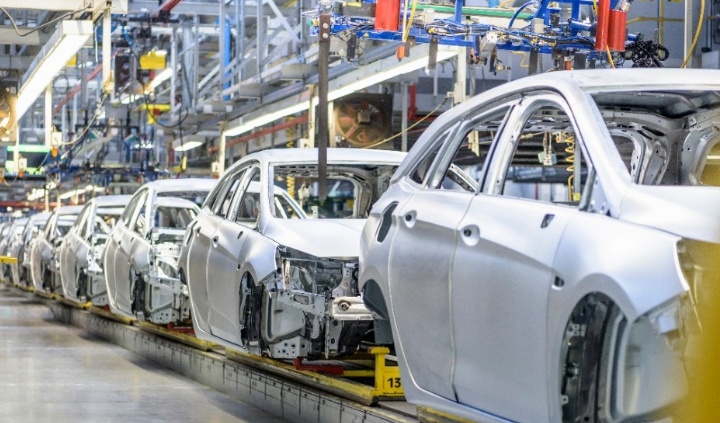
 | Vietnam leads ASEAN in EV market growth Vietnam is emerging as a regional frontrunner in the transition to electric mobility, driven by rapid market growth and rising electrification. |
 | Delivering urban railways and transit-oriented development Vietnam’s efforts to expand urban rail and sustainable city development have increased attention on transit-oriented development and digital delivery tools. Giang My Huong, director of Capital Projects and Infrastructure at PwC Vietnam, shared with VIR’s Khanh Linh how PwC is supporting climate-resilient urban transport delivery. |
What the stars mean:
★ Poor ★ ★ Promising ★★★ Good ★★★★ Very good ★★★★★ Exceptional
 Tag:
Tag:Related Contents




Latest News


More News
- Leading in AI: from pilot initiatives to enterprise value (August 10, 2026 | 07:00)
- Programme launched to develop new Vietnamese business leaders (July 28, 2026 | 13:50)
- Family businesses face succession hurdles (June 30, 2026 | 17:05)
- Global shocks and tightening cash for Vietnamese business (June 22, 2026 | 06:00)
- Data and governance key hurdles to AI scaling for Vietnamese firms (June 17, 2026 | 16:55)
- Vietnam second fastest growing automotive market in ASEAN‑6 (April 20, 2026 | 20:34)
- Vietnam’s green push requires further hurdles to clear (March 30, 2026 | 08:00)
- The use of artificial intelligence to advance ESG goals for businesses (March 06, 2026 | 11:50)
- Vietnam a strategic growth engine for Asia-Pacific: CEO survey (March 05, 2026 | 17:12)
- Delivering urban railways and transit-oriented development (January 26, 2026 | 10:25)








 Mobile Version