
Ca Mau rides post-merger wave to build on tourism fortunes

In the first half of 2025, following the restructuring of its Department of Culture, Sports and Tourism, Ca Mau has implemented a series of synchronised and impactful initiatives, contributing significantly to overall socioeconomic growth.
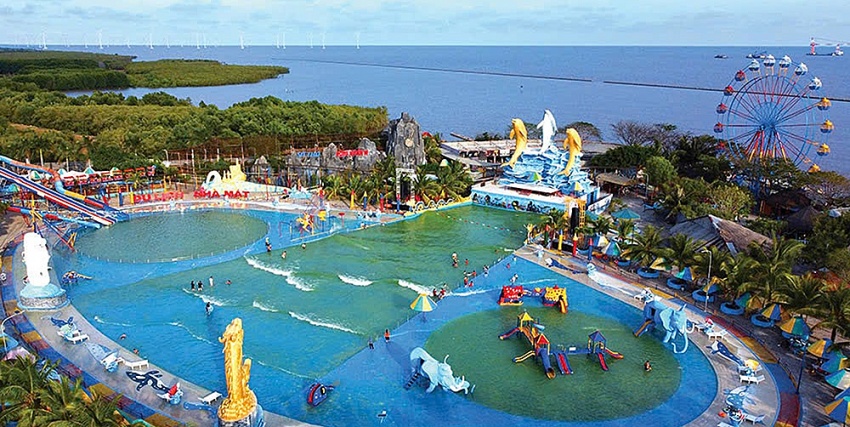
The province welcomed over 1.58 million visitors, marking a 28.5 per cent increase on-year and fulfilling 56.4 per cent of its annual tourism target. Revenue from tourism was estimated at $85.6 million, up 30 per cent on-year and equivalent to 51.2 per cent of the 2025 plan.
 |
| Ca Mau rides post-merger wave to build on tourism fortunes |
Digital transformation is also gaining traction in Ca Mau’s tourism sector. The province has stepped up promotional efforts by integrating digital tools and IT to improve service quality and elevate its tourism brand. Alongside this, localities have invested in unique tourism products, with a strong emphasis on community-based models linked to the province’s signature mangrove ecosystem.
Cultural heritage continues to play a central role in shaping Ca Mau’s tourism offerings. Heritage-themed tours have been developed to highlight notable historical and cultural sites, including the House of the Bac Lieu Prince. Key attractions such as Ca Mau Cape, Quan Am Pagoda, U Minh Ha National Park, the Khai Long tourism area, and other ecological and community-based destinations remain popular with visitors from both within and beyond the province.
Infrastructure improvements have gone hand in hand with a surge in cultural and tourism events. By participating in and organising festivals, Ca Mau is promoting its local identity, One Commune, One Product (OCOP) goods, and diverse culinary heritage, further bolstering post-merger momentum.
To steer these efforts, the province has established the Ca Mau’s Steering Committee for Tourism Development. The committee comprises senior representatives from provincial departments and local authorities, tasked with advising leadership on implementing national tourism strategies tailored to Ca Mau’s development objectives. It also plays a key role in guiding and inspecting tourism plans and proposing sustainable development policies.
According to tourism professionals and stakeholders, Ca Mau and Bac Lieu share several similarities in tourism potential. Both provinces feature ecosystems emblematic of the Mekong Delta’s lower basin, including extensive mangrove forests and long coastlines. They also boast a rich southern cultural identity, with influences from the Kinh, Hoa, and Khmer communities.
From a combination of shared and complementary assets, the merged province is expected to emerge as a strong tourism hub in the southern region. Notably, Tieu Minh Tien, deputy director of the Department of Culture, Sports and Tourism, declared that the upcoming second edition of the Ca Mau Crab Festival, set for November 16-18, will build on the success of the inaugural event.
“The festival will spotlight the economic value of the province’s crab industry, which spans more than 360,000 hectares, making it the largest in the Mekong Delta, with an average yield of 100kg per hectare and an annual output of over 25,200 tonnes,” said Tien.
In addition to celebrating the significance of this key economic sector, the festival also provides an opportunity to elevate the Ca Mau Crab brand, promote local gastronomy, and enhance the visibility of OCOP goods.
“It is seen as a platform to foster cooperation with domestic and international investors and enterprises to build a complete value chain for the crab sector, increase the competitiveness of the brand in global markets, and encourage the application of science, technology, and innovation in farming and processing,” Tien added.
Beyond its role in branding and trade promotion, the festival will serve as a vehicle to showcase Ca Mau’s broader potential in economic development, cultural heritage, environmental sustainability, and investment appeal. According to Tien, the province is calling on stakeholders, both local and international, to seize opportunities in this evolving landscape.
To ensure the achievement of its dual-digit growth target in 2025, the provincial tourism authority is reviewing prior targets and action plans from the two former provinces before the merger. Based on this assessment, a revised development plan for the latter half of the year will be proposed, with the ambition of reaching 8.4 million visitors and $343.4 million in tourism revenue, both up around 16 per cent on-year.
Efforts will also be focused on completing key tourism infrastructure projects and enhancing landmark destinations such as Ca Mau Cape, U Minh Ha, Hon Da Bac, and Tac Say Church, among others.
In tandem, Ca Mau will implement a series of promotional campaigns, including the second Ca Mau crab festival and the ‘Hello Ca Mau’ series of events, aiming to establish a stronger foothold in Vietnam’s tourism map.
 | Concerted efforts improve Ca Mau’s development status Ca Mau province is committed to fostering solidarity among authorities and the people to achieve comprehensive socioeconomic development. |
 | Ca Mau seeks economic wins via transport infrastructure Ca Mau province is eager to complete transport infrastructure to create economic momentum for the country’s southernmost region. |
 | New Ca Mau boosts industry and trade for stronger growth Ca Mau’s industry and trade sector is driving bold reforms and key projects to fuel the Mekong Delta province’s ambitious 8.5 per cent growth target for 2025 and beyond. |
What the stars mean:
★ Poor ★ ★ Promising ★★★ Good ★★★★ Very good ★★★★★ Exceptional
 Tag:
Tag:Related Contents




Latest News




More News
- Beaches drive Vietnam’s domestic tourism boom (August 20, 2026 | 12:07)
- Spalba makes foray into Vietnamese market (August 20, 2026 | 09:41)
- CAAV signs deal with Turkey to strengthen aviation cooperation (August 10, 2026 | 15:15)
- Major Asian airlines survey Long Thanh International Airport (August 10, 2026 | 08:51)
- Vietnam ranks in top four Asian destinations for European tourists (August 07, 2026 | 08:00)
- Vietnam's commercial aircraft fleet expands to 251 planes (August 03, 2026 | 23:13)
- LOT Polish Airlines is set to launch Warsaw–Hanoi route (July 31, 2026 | 11:22)
- Vietnam tops Saudi tourists' summer holiday searches (July 30, 2026 | 12:41)
- Ninh Binh province steps up mission to acquire UNESCO landscape nomination (July 17, 2026 | 14:02)
- Vietnamese tourists gain easier access to Dubai (July 13, 2026 | 14:59)









 Mobile Version