
Bac Ninh forum highlights Vietnam's role in shifting global supply chains

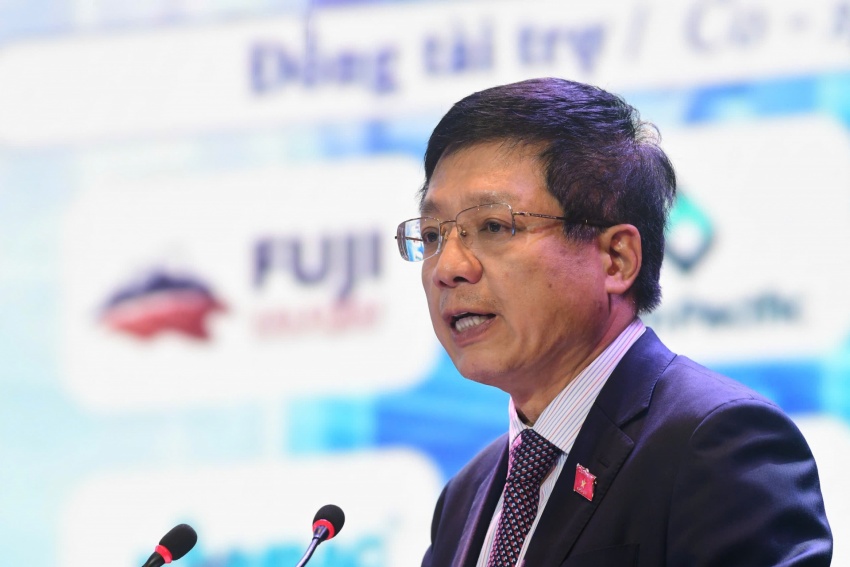 |
| Ho Sy Hung, chairman of theVCCI |
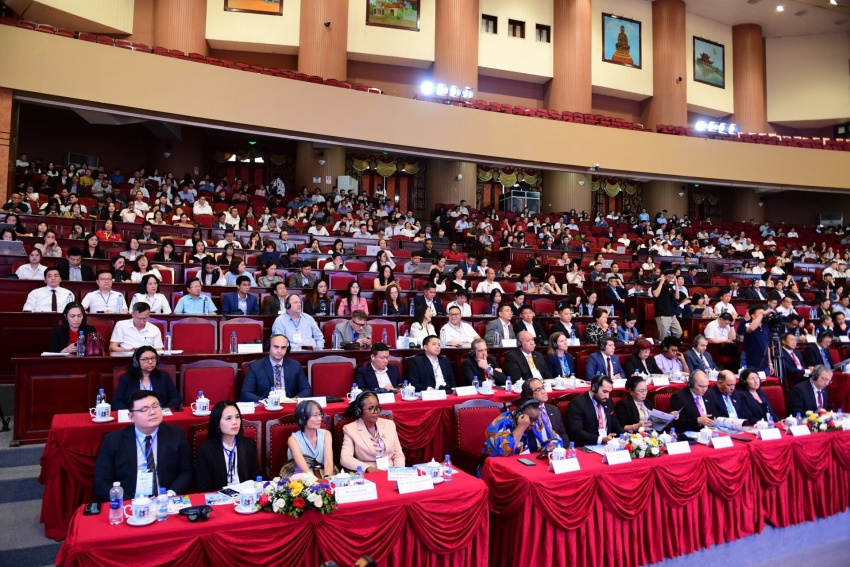
On April 24, the Vietnam Chamber of Commerce and Industry (VCCI) and Bac Ninh People's Committee co-hosted the 2026 FDI Connect Forum. The event gathered representatives from central and local authorities, as well as foreign-invested and Vietnamese enterprises.
The forum is seen as a critical moment for Vietnam – and for key industrial localities such as Bac Ninh – to redefine their position and strategy within global production networks.
Speaking at the opening session, Ho Sy Hung, chairman of the VCCI, said that the global landscape is undergoing significant transformation, reshaping how multinational corporations choose investment destinations.
“Multinational corporations are not just looking for new production locations, they are increasingly prioritising ecosystems that are adaptive, transparent and sustainable,” he said.
In this context, Bac Ninh has emerged as a major industrial growth pole in northern Vietnam. With well-developed industrial park infrastructure, strong connectivity and a selective foreign direct investment (FDI) attraction strategy, the province has become a destination for large-scale projects and a hub for high-tech supply chains, particularly in electronics.
However, opportunities come with challenges. According to the VCCI, one of the key issues is that linkages between foreign-invested enterprises (FIEs) and domestic firms remain below potential. Localisation rates in many sectors are still low, and the number of Vietnamese companies participating deeply in value chains as Tier-1 suppliers remains limited.
“To attract a new generation of FDI, Vietnam cannot rely solely on low-cost advantages but must strengthen its internal capabilities,” Hung said. “We need to shift from ‘participation’ to ‘upgrading our position’ in global value chains.”
This requires a strong focus on developing domestic enterprises, particularly in supporting industries, enabling them to meet standards in quality, technology and governance. Vietnamese firms are expected to gradually master technologies and move into higher value-added segments such as design, research and development, and innovation.
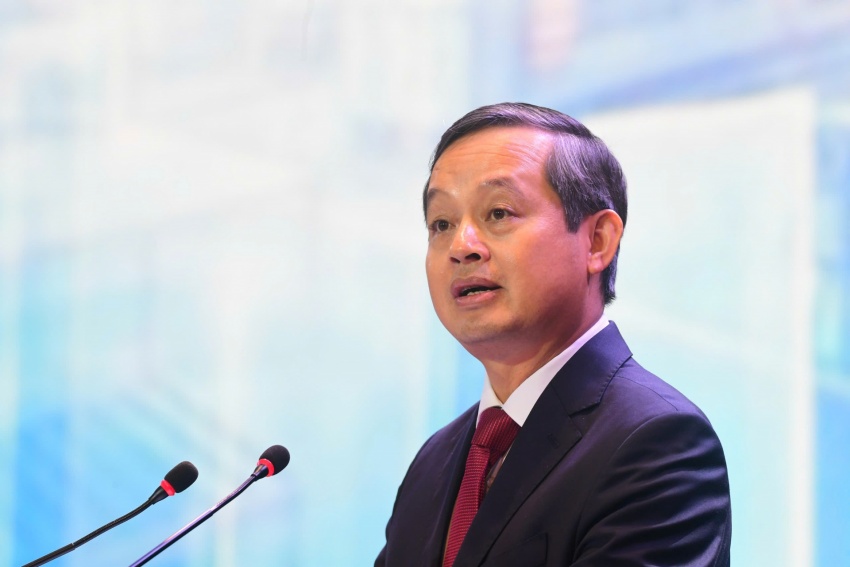 |
| Pham Hoang Son, Chairman of Bac Ninh People’s Committee |
From a local perspective, Chairman of Bac Ninh People’s Committee Pham Hoang Son noted that the province is among Vietnam’s leading localities in attracting and effectively utilising FDI.
To date, Bac Ninh has attracted more than 3,500 foreign-invested projects from 46 countries and territories, with total registered capital exceeding $49 billion. In 2025 alone, the province drew $5.73 billion, ranking second nationwide; in the first quarter of 2026, it recorded $1.17 billion, maintaining its position among the top performers.
Foreign investment plays a pivotal role in the provincial economy, contributing significantly to regional GDP growth, which reached 10.27 per cent in 2025 and 9.82 per cent in the first quarter of 2026. It also accounts for a large share of export turnover and provides employment for hundreds of thousands of workers.
“Bac Ninh has risen to become a regional hub for electronics and high-tech manufacturing, serving as a key link in global supply chains,” he said.
Entering a new development phase, the province is shifting towards selective investment attraction, prioritising quality, efficiency and sustainability. The focus is on upgrading strategic infrastructure, including inter-regional transport, next-generation industrial parks, logistics and digital infrastructure.
Major projects such as Gia Binh International Airport and ring roads 4 and 5 of the Hanoi region are expected to expand development space and enhance competitiveness. Moreover, Bac Ninh has around 500 hectares of ready-to-use industrial land with fully developed infrastructure, available for large-scale, high-tech projects. By the end of 2026, an additional 500ha is expected to be added, creating further momentum for sustained industrial growth.
 |
From the perspective of international businesses, Kim In Woo, vice chairman of the Korean Chamber of Business in Vietnam (KoCham), described Bac Ninh as a clear example of ongoing supply chain restructuring. “Supply chain restructuring should not be seen merely as the relocation of production facilities, but more importantly as the ability to build a stable, reliable and deep industrial ecosystem,” he said.
He added that Vietnam holds clear advantages, including an open economy, a solid manufacturing base and strong growth momentum. For South Korean companies, Vietnam is a production and export base, while also being a strategic market in the medium and long term.
However, to sustain its growth trajectory, challenges related to technological capability and industrial linkages must be addressed. As competition increasingly centres on high-tech industries, reliance on assembly and processing alone will not ensure long-term competitiveness.
“It is essential to improve production precision, quality management systems, compliance with technical standards, and to develop a skilled workforce of engineers and mid-level managers,” Woo suggested.
Policy factors are also becoming increasingly important. Businesses are concerned with investment incentives and place strong emphasis on transparency, consistency and predictability in the regulatory environment. “Improving the speed and transparency of administrative procedures, along with consistent policy implementation, will be key to enhancing competitiveness,” he added.
More broadly, the success of supply chain restructuring depends on the depth of industrial ecosystems at the local level. Stronger linkages between FIEs and Vietnamese businesses, alongside improved capabilities in production, quality management, delivery and technical standards, will make supply chains more resilient and competitive.
Looking ahead, the priority is to attract more investment while also identifying strategic sectors, upgrading technology quality, and developing human capital.
According to KoCham, this is a crucial moment to better align Vietnam’s medium- and long-term development strategies with the strategic needs of international business communities, including South Korean enterprises. With a target of reaching $150 billion in bilateral trade between Vietnam and South Korea by 2030, Bac Ninh is well positioned to become a key locality in achieving this goal through industrial cooperation and enhanced supply chain capabilities.
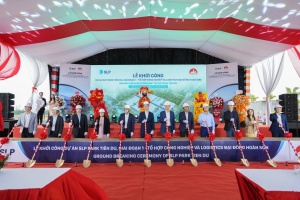 | SLP breaks ground on ready-built factory facility in Bac Ninh On March 20, industrial and logistics real estate developer SLP broke ground on a ready-built factory project, SLP Park Tien Du in Dai Dong Hoan Son Industrial Park in Bac Ninh province. |
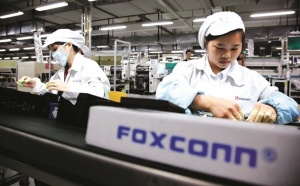 | Foxconn pumps additional $287 million into Bac Ninh facility Taiwan’s Hon Hai Precision (Foxconn), a key electronic supplier to Apple, has poured an additional $287.1 million into Fulian Precision Technology Component Co., Ltd, its wholly-owned unit in Bac Ninh province. |
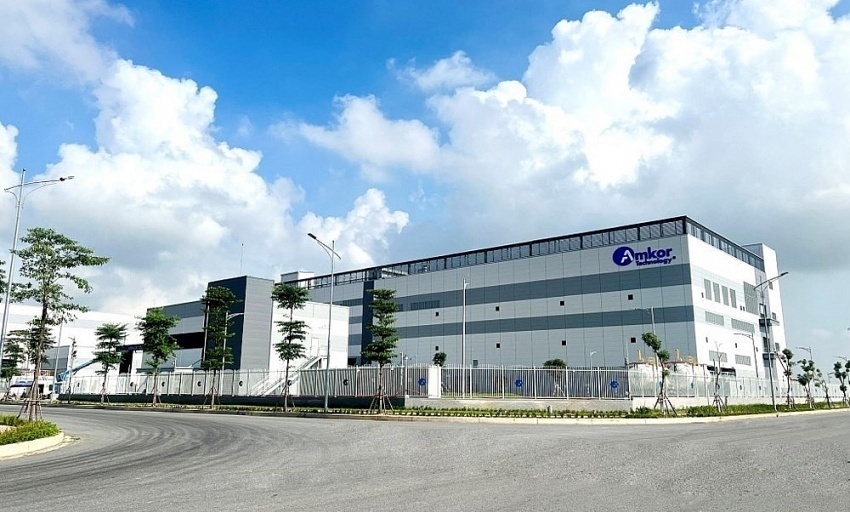
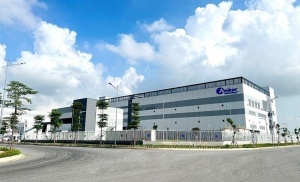 | Amkor Technology seeks LPG priority for semiconductor plant The semiconductor packaging and test services provider Amkor Technology urged Vietnam’s northern province of Bac Ninh to prioritise usage of liquefied petroleum gas for a semiconductor factory. |
What the stars mean:
★ Poor ★ ★ Promising ★★★ Good ★★★★ Very good ★★★★★ Exceptional
 Tag:
Tag:Related Contents





Latest News


More News
- Expanding education partnerships to drive mutual growth (October 06, 2026 | 16:04)
- VTG 2026 to showcase textile and footwear innovation in Ho Chi Minh City (October 06, 2026 | 16:00)
- Infineon boosts Vietnam footprint with Ho Chi Minh City office (October 06, 2026 | 10:02)
- Vietnam Customs expands priority enterprise scheme to 74 firms (October 03, 2026 | 08:00)
- ASL Law opens Danang office (October 02, 2026 | 22:12)
- Project ACTIVE 2.0 launches in Vietnam to boost cervical cancer care (October 02, 2026 | 22:02)
- Vietnam launches first embodied AI conference to advance robotics ecosystem (October 02, 2026 | 17:00)
- DKSH Performance Materials – A trusted partner in Vietnam’s evolving personal care landscape (October 02, 2026 | 14:28)
- Ghanaian delegation reviews PSL Machinery’s cashew factory-management and implementation roadmap (October 02, 2026 | 10:18)
- People living with chronic kidney disease and diabetes should be aware of infectious disease risks (September 30, 2026 | 18:00)


Latest News



 Mobile Version