

Vietnam highlights reforms to unlock new wave of high-quality FDI

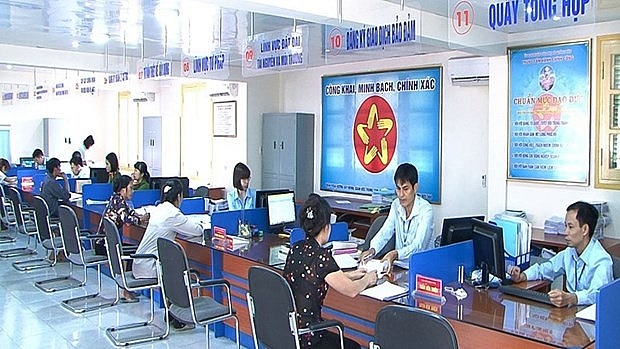 |
In May, the government issued three new resolutions aimed at reducing and amending conditional business sectors, decentralising authority, and simplifying administrative procedures and business conditions under a special mechanism designed to address legal delays pursuant to National Assembly Resolution No.206/2025/QH15.
In less than one month, the government has issued 11 resolutions abolishing 56 conditional business sectors and amending regulations for another 14 sectors. Together with ministerial circulars, these measures have decentralised 321 administrative procedures from central to local authorities, cut 697 procedures and 1,754 business conditions, simplified another 704 procedures and reduced compliance costs by approximately 54.6 per cent.
The core targets set out in Conclusion No.18-KL/TW of the Central Committee of the Communist Party of Vietnam have been largely achieved.
The time required to carry out administrative procedures has been reduced by 53 per cent, and administrative compliance costs by 54.6 per cent compared to 2024. Eleven resolutions recently issued by the government alone may save approximately $900 million annually.
In addition, the government and the prime minister are resolutely directing ministries and ministerial-level agencies to continue decentralising, reducing, and simplifying administrative procedures and business registration through amendments to decrees and circulars.
Vietnam is now entering a new phase of competition in foreign direct investment (FDI) attraction, centred on reform. Many foreign investors have already begun to notice these changes, bringing the country closer to attracting higher-quality and higher-tech investment flows in the coming years.
“Investment licensing procedures are being shortened from 30 days to 7–15 days. In some high-tech sectors, investment licensing requirements are even waived, while investors can benefit from preferential tax policies, including the ‘four-year exemption and nine-year reduction’ incentive scheme. This provides a strong foundation for attracting semiconductor, electronics and high-tech industries to Vietnam,” said Nguyen Phuong Nga, deputy CEO of CNCTech Group in Thang Long Industrial Zone, Phu Tho province.
Several “green lane” mechanisms have been activated to shorten processing times and facilitate new projects. In particular, Phu Tho Province has reorganised its administrative procedures under a more interconnected model, enabling closer coordination among departments while reducing unnecessary steps. Priority applications are classified and monitored separately to minimise delays and improve coordination among authorities.
Among these initiatives, the “24-hour green lane” has been introduced for selected investment and labour-related procedures. Applications that meet all required conditions can now be received, processed and returned within 24 hours, instead of several days as before.
Procedures eligible for expedited handling include adjustments to investment projects in certain cases; re-issuance, replacement or correction of Investment Registration Certificates; as well as the re-issuance and extension of work permits for foreign employees in Vietnam.
Efforts to streamline procedures and support business investment and production have delivered tangible results, helping companies save both time and costs.
“When we bring foreign investors to Bac Ninh, the province can immediately provide information on available industrial land, pricing and even arrange on-site visits right away. In some cases, responses are delivered within just one day,” said Ben Ding Khoon Yew, CEO of Soilbuild International Group, the developer of two ready-built factories and warehouses in Bac Ninh province.
Vietnam’s traditional advantage of low-cost labour is steadily eroding. Investors are now looking beyond tax incentives, placing greater weight on infrastructure quality, skilled labour availability, logistics capacity, power reliability and the stability of the legal framework.
“The competition for FDI is no longer about low costs, but the quality of the investment environment,” said British Chamber of Commerce Vietnam chairman Denzel Eades. He said Vietnam must strengthen its competitiveness by improving transparency, consistency and predictability in policymaking, while ensuring more effective law enforcement.
Concerns also persist over the effectiveness and implementation of administrative procedures related to investment and business activities. At a mid-May meeting in Hanoi between the Central Commission for Policy and Strategy, ministries, agencies and foreign business associations, overseas investors raised a number of recommendations.
While investors acknowledged improvements in the issuance of Investment Registration Certificates and Enterprise Registration Certificates, they said so-called “sub-licences” remain a major delay. Inconsistent implementation across localities also continues to raise costs and risks, with provinces often applying regulations differently.
Seck Yee Chung, vice chairman of the Singapore Business Association in Vietnam, said that business licensing procedures still take considerable time, particularly for foreign-invested enterprises. “This is an issue that the business community has repeatedly raised and hopes the authorities will soon address and resolve in the coming period.”
Bruno Jaspaert, chairman of the European Chamber of Commerce in Vietnam, suggested that during the revision of the Land Law, Vietnam could consider extending land lease terms to 90 years or longer, instead of the current common duration of 50 years.
According to him, longer land lease periods would give investors greater confidence in developing long-term strategies, particularly for projects with lengthy investment cycles and extended capital recovery periods, thereby enhancing the attractiveness of Vietnam’s investment environment.
“Many companies signed 50-year land lease agreements years ago, but as those terms approach expiration, the lack of clarity surrounding renewal conditions is creating difficulties for long-term investment planning,” he said. “Without certainty about future conditions, businesses will hesitate to upgrade or expand their projects. This is an issue Vietnam should address soon with clearer policy direction.”
Over the past decade, FDI has become one of the key pillars of Vietnam’s economy. From an economy once heavily reliant on public investment and state-owned enterprises, Vietnam is increasingly depending on the private sector and international capital.
Total social investment during 2021-2025 reached approximately $666 billion. Of this, the state sector accounted for only 27 per cent, while as much as 73 per cent came from domestic private businesses, foreign-invested enterprises and other non-state sources.
FDI has remained one of the strongest contributors to economic growth. During the same period, realised FDI capital increased by around 1.5 times, from $114 billion to approximately $165 billion, now accounting for roughly 16 per cent of total social investment.
According to the Ministry of Finance, Vietnam’s cumulative registered FDI has now reached around $184 billion, of which approximately $158 billion has been disbursed, equivalent to about 85 per cent of total committed capital. This relatively high disbursement ratio, compared with many regional peers, reflects Vietnam’s improving capacity to absorb investment capital.
 | Ho Chi Minh City introduces special procedures for industrial zone investment projects Ho Chi Minh City Export Processing Zones and Industrial Parks Management Authority will apply special investment procedures to special investment projects. |
 | Vietnam moves to repeal inter-agency scrap import regulation Vietnam’s Ministry of Finance is proposing to repeal a key inter-agency scrap import regulation as environmental rules mature, and the government pushes to simplify overlapping administrative procedures. |
 | Tax circular amendments aim to ease import-export procedures The Ministry of Finance is accelerating reforms to modernise import-export tax administration, expand digitalisation, and create a more transparent regulatory framework. |
What the stars mean:
★ Poor ★ ★ Promising ★★★ Good ★★★★ Very good ★★★★★ Exceptional
 Tag:
Tag:Related Contents





Latest News




More News
- Sojitz in Vietnam: 40 years from individual projects to a business cluster 'KATAMARI' (October 08, 2026 | 09:00)
- Coteccons targets 'Quality Growth' with 25 per cent dividend plan (October 07, 2026 | 13:00)
- Vietnam Education Forum opens UK Education Mission's Hanoi visit (October 07, 2026 | 12:27)
- Tax authorities deactivate TINs of nearly 180,000 businesses (October 07, 2026 | 12:08)
- World Bank raises Vietnam's 2026 GDP growth forecast to 7.4 per cent (October 07, 2026 | 11:41)
- Vietstock 2026 to spotlight livestock innovation and green transition (October 07, 2026 | 09:00)
- Vietnam’s GDP grows over 9 per cent in first nine months (October 05, 2026 | 18:45)
- Vietnam earns $56.3 billion from agro-forestry-fishery exports (October 05, 2026 | 18:32)
- DSV balances resilience and decarbonisation in supply chains (October 05, 2026 | 18:20)
- Electronics exports reach $175.4 billion in the first nine months (October 05, 2026 | 18:12)



Latest News




 Mobile Version