

Banks face growing constraints on loan rate reductions

The lending rate environment has edged down slightly since April, following commitments made by commercial lenders to the State Bank of Vietnam (SBV), but rates are expected to remain resistant to any significant decline in the upcoming period.
During the first five months of the year, the SBV maintained all key policy rates unchanged, enabling credit institutions to access central bank funding at the lowest possible cost to support economic growth.
On May 21, the SBV issued a directive requiring its regional branches to convene meetings with commercial bank branches in their respective localities, reiterating and enforcing SBV Governor Pham Duc An’s instructions outlined in the April 10 notice regarding reductions in lending rates.
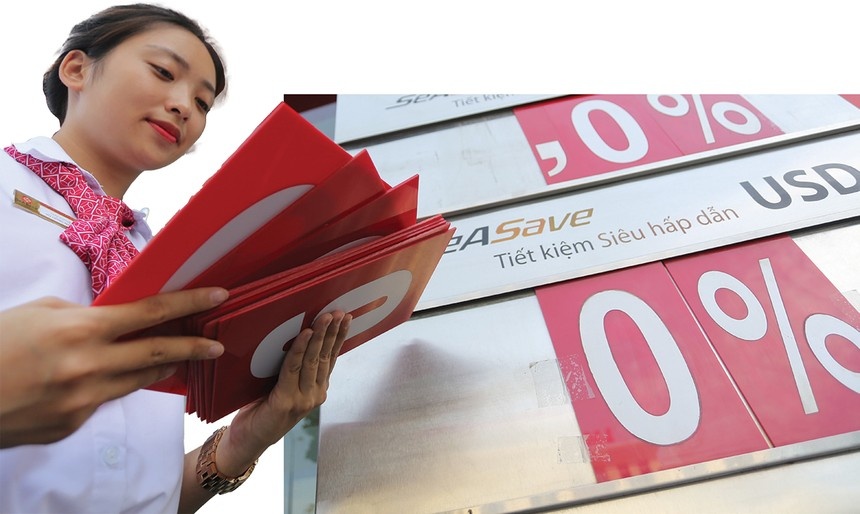 |
| Rising funding costs have increased pressure on lending rates across the banking sector |
The central bank is closely monitoring developments in both deposit and lending rates across the market and at individual credit institutions to introduce timely measures and policies to ensure strict compliance with its directive to lower lending rates.
However, according to SBV data, as of April 20, the average lending rate for newly originated loans stood at 8.38 per cent per year, down only 0.44 percentage points from the end of 2025. By contrast, banks had reduced long-term deposit rates by between 0.5 and 1 percentage point per year.
Banks have also noted that lending rates have been adjusted downward over the past two months, although the scope for deeper cuts remains limited because deposit rates had previously risen sharply, reaching 8-9 per cent per year for long-term tenors.
To date, 25 commercial banks have disclosed their average lending rates and the spread between average lending and deposit rates for April.
Among them, at least 15 banks recorded increases in average lending rates compared with March. TPBank raised its average lending rate by 0.7 percentage points to 10.94 per cent per year, while GPBank and PVcomBank both increased theirs by 0.42 percentage points, to 10.47 per cent and 9.35 per cent per year, respectively.
Techcombank, Agribank, VietinBank, KienlongBank, Saigonbank, BIDV, MB, Bac A Bank and ACB reported increases ranging from 0.03 to 0.32 percentage points per year.
In contrast, six banks posted slight declines in their average lending rates in April compared with March.
For instance, Viet A Bank reduced its average lending rate by 0.31 percentage points to 9.27 per cent per year, BaoViet Bank cut its rate by 0.18 percentage points to 7.76 per cent, LPBank lowered its rate by 0.05 percentage points to 8.71 per cent, while MSB reduced its rate by 0.01 percentage points to 7.57 per cent per year.
Among state-controlled banks, Vietcombank has yet to disclose its average lending rate for April. In March, the bank’s average lending rate stood at 6.6 per cent per year, with an average lending-deposit rate spread of 3.2 percentage points.
At VietinBank, the average lending rate in April was 5.98 per cent per year, up 0.11 percentage points from March, but down 0.09 percentage points from the beginning of the year. The lending-deposit rate spread in April was 2.2 percentage points.
According to financial and banking expert Huynh Trung Minh, the slight increase in average lending rates at many banks in April is not surprising, given that lending rates typically lag deposit rates, as outstanding loans were funded by deposits mobilised earlier at higher interest rates.
“The era of cheap money supposedly came to an end in 2026. Deposit rates have been on an upward trajectory since late 2025. In particular, deposit rates have continued to rise since the beginning of the year, especially in the early part of the second quarter, reaching as high as 9-10 per cent per year for deposit terms exceeding one year and 6-7 per cent per year for terms of one year or less. This reflects competition among commercial banks for funds against alternative investment channels such as gold and real estate,” Minh said.
He also noted that although banks have been striving to optimise operating costs and leverage technology to maintain relatively thin margins supporting businesses, lending rates are unlikely to decline substantially because funding costs have increased significantly.
At the same time, under a policy of tighter and more substantive credit control in 2026, the SBV has set a system-wide credit growth target of approximately 15-16 per cent, significantly lower than the level achieved in 2025.
Nguyen Thanh Hai, head of Retail Banking Division at Shinhan Bank Vietnam, said that lending rates are likely to remain stable or decline slightly during the second quarter of 2026, supported primarily by the SBV’s policy direction and stable liquidity conditions across the banking system.
However, Hai believes that interest rate trends will become more differentiated in the second half of 2026.
“Deposit rates are expected to remain at reasonable levels but could edge higher for certain maturities or at selected banks to ensure liquidity amid ongoing competition for deposits and stronger credit expansion in line with the SBV’s target of around 15 per cent.
Meanwhile, lending rates are expected to continue a selective downward trend, with reductions concentrated in priority sectors such as production and business activities, exports, and household businesses. This reflects the SBV’s flexible policy approach aimed at supporting economic growth while safeguarding the stability of the banking system,” he said.
In addition, interest rate movements in the upcoming period will be influenced by funding cost pressures, competition for deposits, and external factors, including global interest rate trends.
Against this backdrop, the interest rate environment is expected to become more flexible and increasingly segmented, reflecting differences in liquidity positions and funding structures among banks, rather than maintaining the relatively uniform market conditions seen in previous years.
 | No more “cheap money” for real estate, experts say The real estate market is facing an exceptionally challenging period under dual pressure: a clear upward trend in lending rates and mounting growth pressure, while monetary policy space is gradually narrowing, a forum has heard. |
 | Banks strengthen provisions as bad debt risks re-emerge Vietnamese banks are strengthening risk management and provisioning buffers as rising bad debt signals prompt the sector to focus more closely on asset quality and long-term financial resilience. |
 | Ministry of Finance seeks World Bank budget lending support The Ministry of Finance has called on the World Bank to expand a state budget lending mechanism to accelerate public investment, as both sides prepare a new framework to guide cooperation over the next five years. |
What the stars mean:
★ Poor ★ ★ Promising ★★★ Good ★★★★ Very good ★★★★★ Exceptional
 Tag:
Tag:
Related Contents









Latest News





More News
- From loans to women’s economic empowerment (October 06, 2026 | 17:58)
- VIB named Outstanding Retail Bank 2026, targets transaction banking (October 06, 2026 | 10:52)
- FTSE upgrade paves way for stronger stock market development (October 05, 2026 | 18:44)
- coLoan to empower women through inclusive green finance (October 05, 2026 | 18:42)
- Techcombank CEO: AI no longer a tool but a new operating foundation (October 05, 2026 | 18:11)
- Banks sustain profit growth as funding costs squeeze margins (October 02, 2026 | 22:22)
- Nam A Bank delivers strong breakthrough in 2026 (October 02, 2026 | 19:00)
- Policy credit builds sustainable livelihoods from the grassroots (September 29, 2026 | 07:48)
- VIB deploys Front Arena treasury and foreign exchange trading system on AWS (September 28, 2026 | 16:46)
- Nam A Bank receives $60 million loan from FMO (September 28, 2026 | 12:37)


Latest News







 Mobile Version