
FTA Index 2025 tracks regional delivery of trade commitments

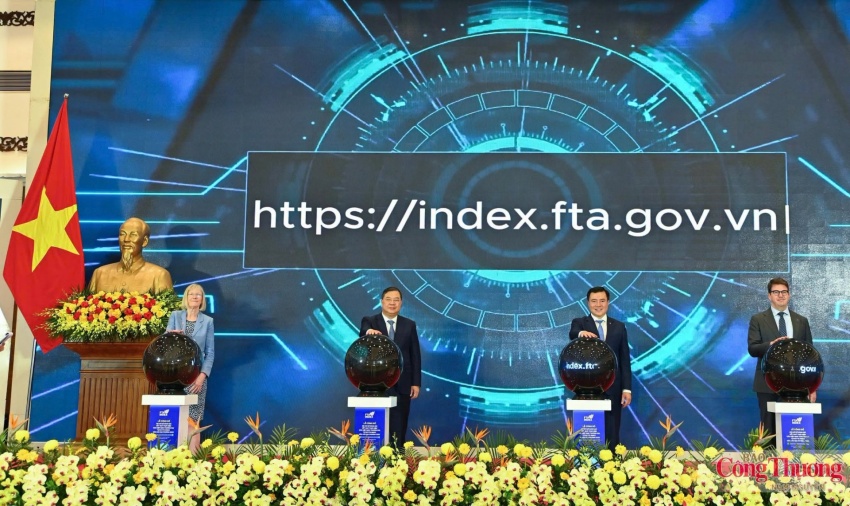 |
The launch ceremony for the 2025 FTA Implementation Index for Localities (FTA Index 2025). Photo: MoIT |
The 2025 edition covered all 34 provinces and cities, building on methodological experience from its inaugural year. By the end of 2025, 4,066 companies nationwide had participated in the survey. Respondents had engaged in goods exports and/or imports during 2023-2024 and operated in sectors ranging from agriculture and fisheries to mining, manufacturing, wholesale and retail.
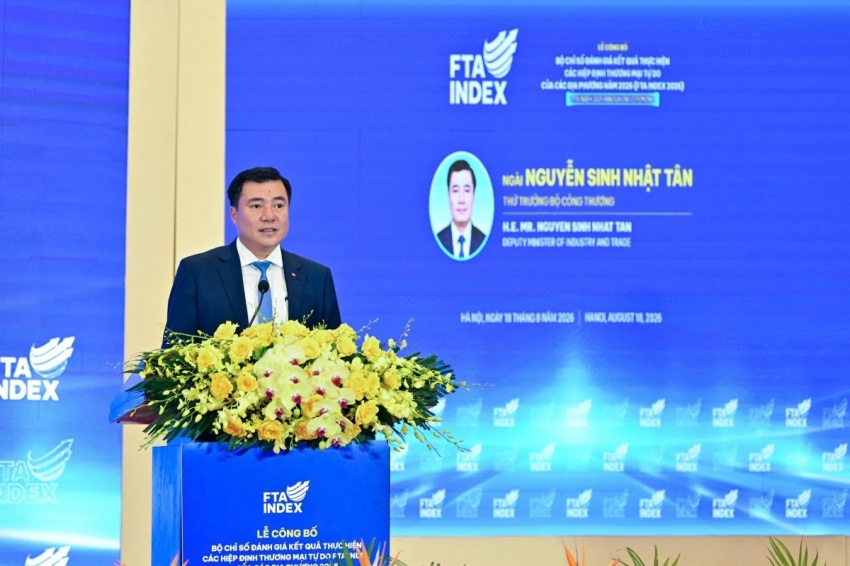 |
| Deputy Minister of Industry and Trade Nguyen Sinh Nhat Tan delivers the opening remarks. Photo: MoIT |
Deputy Minister of Industry and Trade Nguyen Sinh Nhat Tan said the index had been improved in its assessment methodology, survey coverage, and data quality.
“The development of this year’s index continues to put businesses at the centre, while expanding the collection of opinions and strengthening data verification and standardisation,” Tan said. “This provides a fuller picture of businesses’ perceptions of FTA implementation quality in each locality.”
The results indicate continued improvements in local implementation, while encouraging provincial authorities to pay greater attention to international economic integration and helping businesses capture more benefits from trade agreements.
Haiphong led the 2025 ranking with 35.62 points, followed by Tuyen Quang with 33.61, Thanh Hoa with 30.93, Vinh Long with 29.33, and Ca Mau with 29.1.
Speaking at the announcement ceremony, Standing Deputy Prime Minister Pham Gia Tuc said international economic integration must now move beyond simply opening markets. It should become a catalyst for institutional reform, innovation, productivity improvements, and a new growth model.
FTA commitments, he noted, must be translated into measurable and substantive outcomes for individual industries, regions, and localities, thereby strengthening both corporate competitiveness and Vietnam’s national position.
DPM Tuc called on local authorities to treat FTA implementation as an integral component of socioeconomic development strategies and an important indicator of their governance and integration capacity.
Localities should develop action programmes following publication of the index, identify major impediments, and link FTA implementation with selective investment attraction, digitalisation, green transition, high-quality workers, and stronger small- and medium-sized enterprises.
He also urged ministries and local authorities to streamline administrative procedures and strengthen data sharing. A more integrated and accessible FTA information system should gradually incorporate AI to help companies search commitments and rules of origin, understand market standards, and identify potential risks.
Government agencies, he added, should move away from broad information dissemination towards services tailored to individual companies, sectors, and localities.
The DPM asked MoIT to continue negotiating new-generation FTAs with prospective partners, including South American economies and Mercosur, while developing the FTA Index into a stable, transparent, and comparable assessment framework.
“We should not regard this simply as an annual event,” he said, calling instead for a national digital FTA ecosystem with regularly updated data, mechanisms to replicate effective practices, and tools to identify and resolve persistent obstacles.
Businesses themselves must remain at the centre of FTA implementation, he said. While the state should create an enabling environment and remove institutional barriers, companies need to upgrade technology and management, strengthen branding, and meet increasingly demanding requirements on green standards, labour, and traceability.
The FTA Index is Vietnam’s first government-mandated indicator specifically designed to assess FTA implementation at the local level from the perspective of businesses. It measures both the quality of implementation of international economic integration commitments and the support companies receive from local authorities in tapping FTA opportunities.
After nearly four decades of doi moi and more than two decades of proactive international economic integration, Vietnam has built an extensive network of 17 FTAs. Together, their member economies account for more than 80 per cent of global GDP, opening wider markets while supporting investment attraction and institutional reform.
What the stars mean:
★ Poor ★ ★ Promising ★★★ Good ★★★★ Very good ★★★★★ Exceptional
 Tag:
Tag:Related Contents





Latest News




More News
- EuroCham confidence index holds at 78.3 despite operational hurdles (October 16, 2026 | 17:27)
- Shrimp and rice firms face rising standards in export markets (October 16, 2026 | 09:00)
- SCG and Prime Group add value to the ecosystem (October 15, 2026 | 15:55)
- Project readiness key to unlocking green finance (October 15, 2026 | 12:35)
- Sovereign AI and human oversight key to secure digital government (October 15, 2026 | 12:32)
- MEXC Ventures partners with Corelia Academy: Bringing digital asset education closer to Vietnamese students (October 15, 2026 | 09:00)
- Global design expertise meets a more sophisticated Vietnam market (October 15, 2026 | 09:00)
- Vietnam growth nears double digits, UOB raises forecast (October 14, 2026 | 17:39)
- Smart factories need skills, finance and trust to scale (October 14, 2026 | 17:33)
- Sanofi-Aventis Vietnam appoints new head of Vaccines and country lead (October 12, 2026 | 17:21)




Latest News





 Mobile Version