
VIR workshop explores credit policy and carbon market development

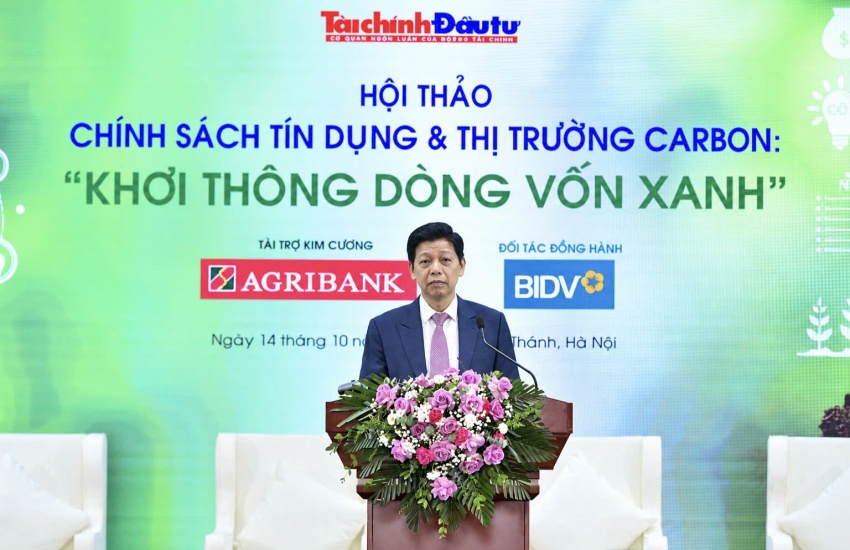 |
| Pham Van Hoanh, editor-in-chief, VIR. Photo: Dung Minh |
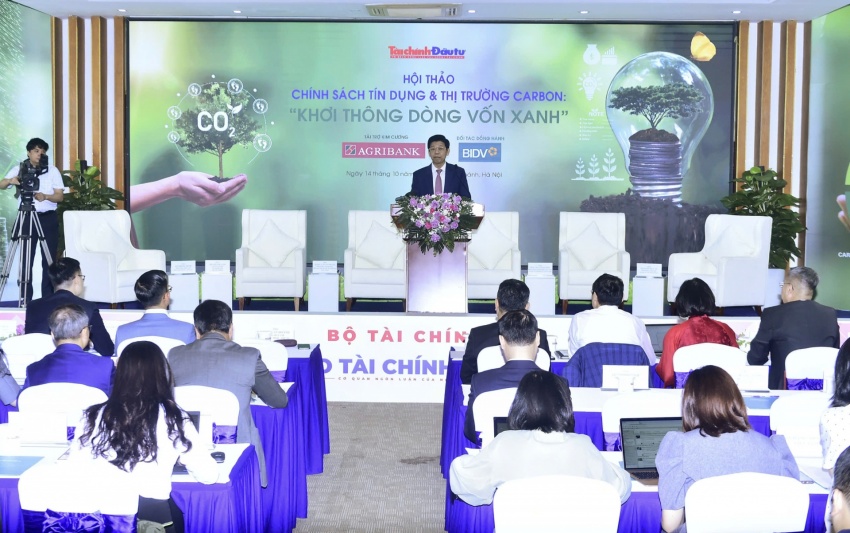
The domestic carbon market, which began operating on June 29, marks an important step in Vietnam's green transition while highlighting the need for stronger financial mechanisms to support its development, he said at a workshop on credit policy and carbon markets in Hanoi on October 14. The event was organised by VIR in coordination with the State Bank of Vietnam (SBV) at VIR's headquarters.
“If the carbon exchange is the market’s infrastructure, credit policy, the banking system and capital markets are the driving forces behind the green transition,” Hoanh said.
Credit policy plays a leading role in directing financial resources towards emissions reduction, helping businesses and individuals invest in greener activities and linking sustainable development objectives with the flow of capital throughout the economy.
The green transition ultimately requires tangible investments in cleaner technologies, energy efficiency, changes to production processes, low-emission agriculture, forest protection and development, waste treatment, renewable energy and more sustainable supply chains.
"To bring these projects to fruition, Vietnam needs a financial system capable of identifying, pricing, allocating and managing green capital," said Hoanh.
Vietnam’s carbon market framework was established under the 2020 Law on Environmental Protection and subsequently developed through a series of legal documents. The latest regulations include Decree No.29/2026/ND-CP on the domestic carbon exchange and Decree No.112/2026/ND-CP on international exchanges of greenhouse gas emission reduction outcomes and carbon credits.
Vietnam has also gained experience in monetising verified emissions reductions on international markets. In 2024, the country received its first $51.5 million payment from the World Bank for 10.3 million tonnes of verified emission reductions under the North Central Region Emission Reductions Programme.
The launch of allowance trading on 29 June 2026 introduced a new way of recognising the economic value of emissions reductions. However, the establishment of a trading platform alone will not ensure the market's long-term success.
"A sustainable carbon market also requires liquidity, reliable data, verification mechanisms, confidence among buyers and sellers, and a strong financial ecosystem to support market participants," Hoanh said.
 |
| Photo: Dung Minh |
He highlighted several questions that policymakers, financial institutions and businesses need to address, including how to remove regulatory and financial bottlenecks, channel green capital towards the right projects, and enable banks to assess both the opportunities and risks associated with green investments.
Businesses must also be able to demonstrate the effectiveness of their transition efforts and access bank lending along with medium- and long-term financing from capital markets. Meanwhile, carbon value needs to become an increasingly reliable factor in financial decision-making.
These challenges were among the reasons VIR organised the workshop, bringing together policymakers, banks, businesses, experts and other stakeholders to exchange views and identify practical solutions.
"The carbon market would create a new economic driver when businesses could see the financial benefits of emissions reductions, banks and capital market institutions could manage green capital effectively, investors could identify value, and producers received commensurate benefits," said Hoanh.
He expressed his hope that discussions at the workshop would lead to concrete policy proposals, practical cooperation initiatives, and models that could be implemented in practice.
The event forms part of broader efforts to connect Vietnam’s carbon market development with credit policy and capital mobilisation, helping ensure that the country’s green transition is supported by the financial resources needed to deliver measurable results.
The workshop featured presentations by the SBV, the Asian Development Bank, and Agribank, followed by a discussion with representatives from regulatory authorities, capital markets, banks, businesses, and consulting organisations. Key topics included expanding green capital flows, improving businesses' access to finance, developing the carbon market, and strengthening the links between emissions reduction value and financial decision-making.
 | From carbon value to greener capital Vietnam’s emerging carbon market is opening another potential source of value for green projects. Nguyen Thi Thu Ha, deputy head for the Steering Committee for Environmental, Social, and Governance at Agribank, analyses the broader shift of the role of carbon pricing. |
 | Carbon exchange adds new component to green finance ecosystem The newly launched domestic carbon exchange offers a market-based mechanism for emissions reduction, with its success hinging on integrating carbon pricing with green credit and capital markets to mobilise investment at scale. |
What the stars mean:
★ Poor ★ ★ Promising ★★★ Good ★★★★ Very good ★★★★★ Exceptional
 Tag:
Tag:
Related Contents







Latest News
More News
- VPBank and Western Union enhance digital remittance experience (October 13, 2026 | 15:44)
- Eximbank’s next chapter: Richa Goswami on purpose, relevance and trust (October 13, 2026 | 10:52)
- Vietnam and Luxembourg sign MoU to strengthen financial cooperation (October 13, 2026 | 10:20)
- Vietnam seeks stronger cooperation with Fitch Ratings to improve sovereign credit rating (October 13, 2026 | 10:07)
- Nam A Bank named in top 10 largest listed banks in Southeast Asia (October 13, 2026 | 09:46)
- Citi appoints Michael Zezas as global head of research (October 12, 2026 | 17:23)
- From carbon value to greener capital (October 12, 2026 | 09:15)
- From cost advantage to ecosystem strength (October 12, 2026 | 09:00)
- Corporate treasury on the cusp of AI transformation (October 12, 2026 | 08:00)
- Vietnam strengthens global credit standing with R&I upgrade to BBB (October 09, 2026 | 16:56)




 Mobile Version