
Dong Thap shapes green and high-tech agriculture future

Models focused on emission reduction, standard compliance, and the application of technology are opening up opportunities to improve farmers’ incomes and raise the competitiveness of local agricultural products.
 |
| Dong Thap shapes green and high-tech agriculture future |
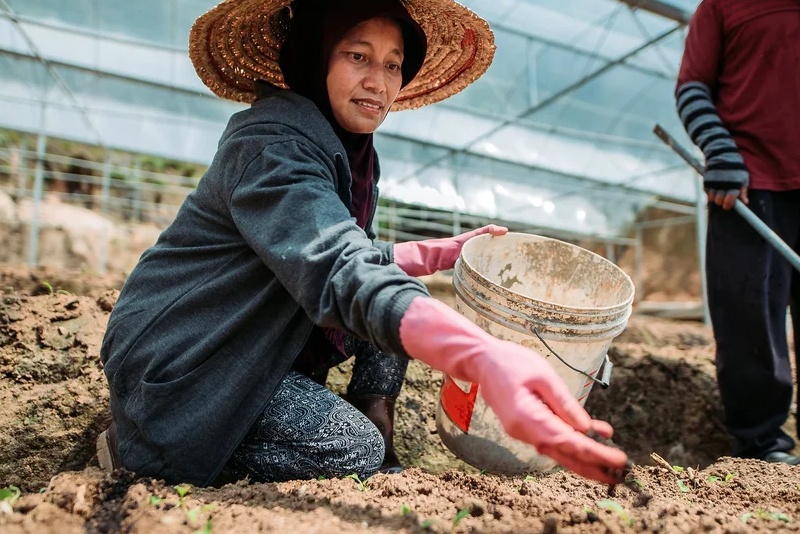
In September, Dong Thap People’s Committee launched an initiative to developing the locality into a pioneer for ecological agriculture, modern rural development, and cultured farmers by 2030. The plan outlines the transition towards a green, circular, low-emission, and climate-resilient agricultural sector in association with the adoption of science, technology, and the development of sustainable value chains.
To facilitate the goal, Dong Thap has organised its production spaces into three socio-ecological zones. The Dong Thap Muoi region and the upstream area of the Tien River focus on high-quality rice, lotus, and basa fish farming. The alluvial areas along the Tien River develop specialty fruits like mangoes, durians, longans, and jackfruits, alongside the Sa Dec flower village. Coastal areas prioritise shrimp, oyster, and clam farming in association with efforts to combat illegal, unreported and unregulated fishing and promote the marine economy.
As part of the one-million-hectare, low-emission rice project, Dong Thap implemented the model in Tan Dien and Tan Hong communes during the 2026 summer-autumn crop season, covering 100 hectares across 100 households. The seeding rate has fallen from 150kg to as low as 100kg/ha while nitrogen use and pure phosphorus fertiliser have decreased by 33 kg/ha and 16.5 kg/ha, respectively.
Farmers have also adopted alternate wetting and drying irrigation with three drainage periods and no rice straw burning after harvest.
The results indicate that emissions are cut by one tonne of carbon equivalent per ha per season. Emissions per kilogramme of rice are reduced from 0.6 to 0.3kg of carbon equivalent. Production costs decreased by $165/ha, while the yield reached 6.4 tonnes/ha, an increase of 1.1 tonnes/ha compared to control fields. Profit increased by over $460/ha, while production costs fell from around 20 US cents to 13.6 US cents/kg.
The model demonstrates that low-emission farming can reduce costs, increase yields, and protect the environment.
With over 32,000ha of durian orchards, the province develops growing areas in line with VietGAP and GlobalGAP standards. This is coupled with the adoption of smart irrigation, organic fertilisers, and Trichoderma-based biological products. In 2026, the province not only piloted traceability at packaging facilities but also deployed digital maps of growing areas, ripeness measuring devices, and cadmium control solutions.
Regarding the basa fish industry, Dong Thap aims to achieve a value of $1.12 million for 2026, up 6.7 per cent. Focus is given to high-tech aquaculture zones, biosafety, the quality of seed production, and deep processing. By 2030, the province aims to have all basa fish farming establishments that meet food safety requirements participate in a traceability system.
The Sa Dec flower village covers an area of 950ha with an estimated economic value of $117.14 million per year and around 4,000 households involved. Tissue culture technology produces 300,000–400,000 chrysanthemum plants and 150,000–200,000 ornamental plants annually. Around 2,000 farmers receive guidance on livestreaming and online sales, which results in a tenfold increase in sales.
By 2035, Dong Thap aims for all of the province’s rice cultivation area to adopt low-emission farming processes, reducing greenhouse gas emissions by at least 20 per cent. At least 60 per cent of the cultivation area for key fruit trees will implement processes that conserve water, reduce input use, and limit emissions.
By 2030, 80 per cent of agricultural and aquaculture areas will adopt low-emission production techniques. Eighty per cent of rice straw and aquatic by-products will be reused through circular economy practices. The income of farmers participating in low-emission cropping is expected to increase by at least 30 per cent compared to traditional methods.
In the long term, the carbon credit market could unlock a new revenue stream once the emission measurement, reporting, and verification systems are fully established.
The digital transformation plan for the agricultural sector for the 2022–2025 period, with a vision towards 2030, identified four key pillars: digitising management data; digitising safe production processes; establishing monitoring and traceability networks; and developing a large-scale database covering soil, crops, livestock, and markets.
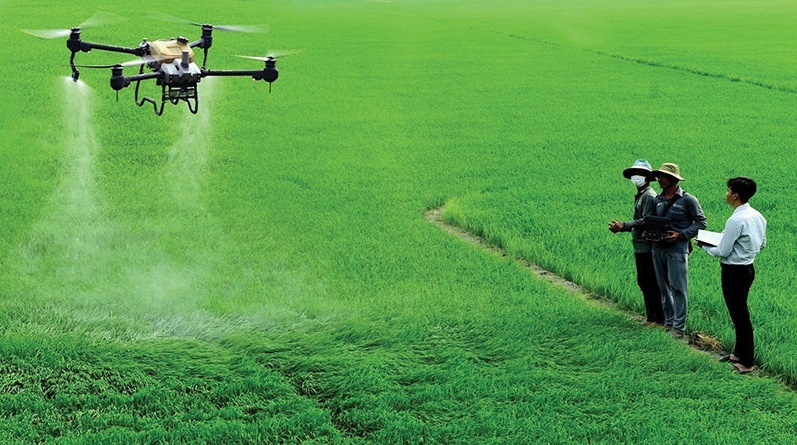
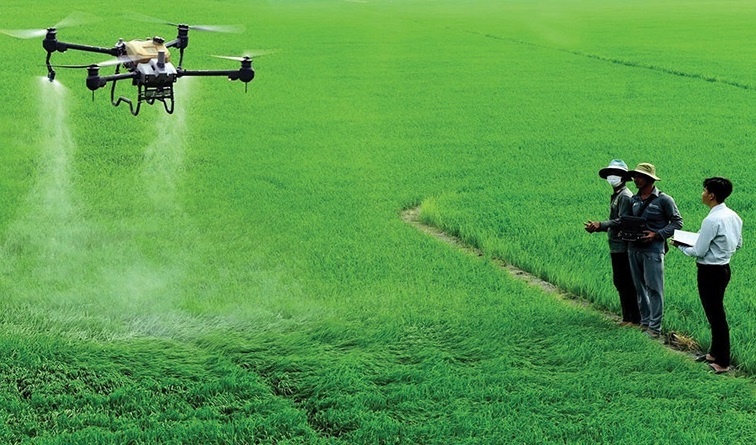
Notably, farmers have adopted drones, software for pest and disease monitoring, electronic farming handbooks, and digital production logs. As of June, approximately 83 per cent of members of cooperatives and farmers’ clubs have a basic understanding of digital technology and the ability to use smart devices in production and business activities.
Dong Thap currently has 1,352 One Commune, One Product items rated three stars or higher. The province aims to improve the quality of agricultural products in line with VietGAP, GlobalGAP, and organic standards. It also develops agricultural logistics, trading centres, and wholesale markets to enhance capacity for storage, distribution, and market connectivity.
With its strategic focus on integrating green agriculture, high technology, and digital transformation, Dong Thap is gradually shifting towards a growth model driven by quality, technology, and added value.
To achieve its double-digit growth target for the 2026–2030 period, the province is making the effort to effectively organise value chains while ensuring stable market outlets and a fair distribution of benefits among farmers, cooperatives, and businesses.
What the stars mean:
★ Poor ★ ★ Promising ★★★ Good ★★★★ Very good ★★★★★ Exceptional
 Tag:
Related Contents


Latest News
More News
- Hanoi requires preparation of routes and construction locations for five urban rail lines (November 15, 2026 | 20:42)
- Zhongce Rubber secures approval for $500 million plant (November 15, 2026 | 20:36)
- LITE-ON opens first phase of Quang Ninh factory (November 13, 2026 | 11:13)
- BOT contract for Nam Dinh I Thermal Power Plant Project signed (November 13, 2026 | 10:00)
- Vinacomin seeks approval for $208 million bauxite project (November 11, 2026 | 14:38)
- MoF and JICA discuss expanded development cooperation (November 11, 2026 | 14:32)
- Japan leads foreign investment in Hung Yen with $6.82 billion (November 10, 2026 | 18:38)
- Single consortium bids for North-South high-speed railway feasibility study (November 10, 2026 | 18:35)
- Hanoi to study railway project to connect Gia Binh International Airport with city centre (November 10, 2026 | 18:31)
- Vietnam and Japan exchange key cooperation documents worth over $272 million (November 10, 2026 | 16:06)




 Mobile Version