
Vietnamese businesses urged to act swiftly on US 150-day tariff policy

The current 150-day temporary tariff period should not be seen as a policy pause, but rather as a critical window during which countries and businesses must shift to scenario-based management, according to experts at the seminar “Solutions to Respond to the United States’ 150-Day Temporary Tariff Policy” held on March 25 in Ho Chi Minh City.
The seminar focused on three key areas: analysing and recent changes in the trade policy of the United States to accurately identify short-term impacts after July 2026; discussing concrete response measures for businesses; and proposing long-term strategic directions to diversify markets and supply chains.
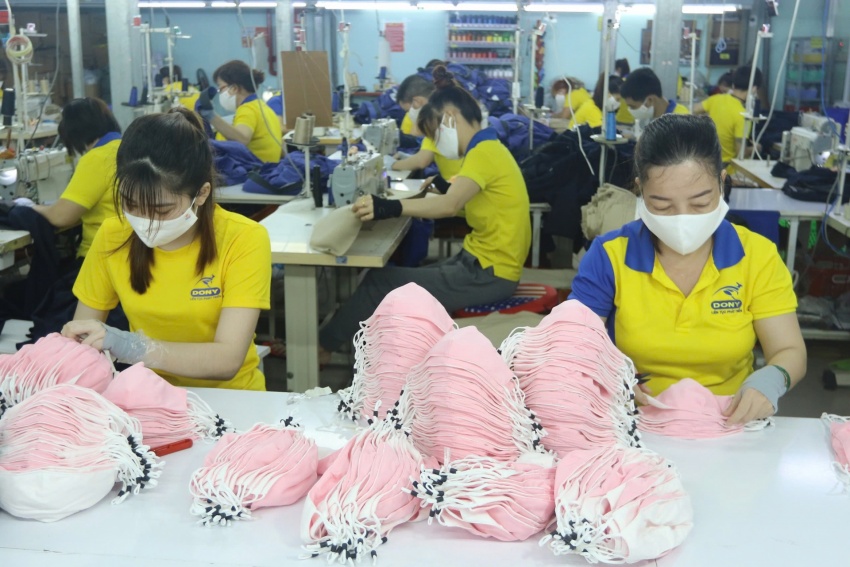 |
| Vietnamese businesses urged to act swiftly on US 150-day tariff policy. Photo: Le Toan |
According to Cao Thi Phi Van, deputy director of the Investment and Trade Promotion Centre of Ho Chi Minh City, the 150-day policy should be viewed as a transitional phase in US trade administration.
“The temporary nature of the timeframe does not imply policy stability. As the policy is being implemented on a broad scale, closely monitoring developments and preparing scenarios for the post-150-day period has become particularly important, especially for sectors highly dependent on the US market and supply chains with complex structures,” said Van.
“Proactive analysis, forecasting, and early response during this period will be essential to minimising order disruptions and limiting adverse impacts on production and export activities in the coming months.”
Speaking at the event, Dr. Huynh The Du from University of Wisconsin–Oshkosh said that the US market remained one of the largest destinations for Vietnamese exports, spanning a wide range of sectors including textiles and garments, furniture, electronics, footwear, and seafood.
“The application of a uniform 10 per cent tariff creates a short-term opportunity, but also carries clear risks of uneven impact across industries. In particular, for low-margin sectors such as garments, footwear, and seafood, the additional 10 per cent tariff would impose a significant burden, weakening price competitiveness, especially if businesses are unable to negotiate passing these added costs on to buyers,” Du said.
According to Du, one of the core medium-term risks in the US market is the likelihood that the United States will tighten oversight of origin fraud and illegal transshipment practices.
If goods from third countries increasingly transit through Vietnam to circumvent tariffs during this period, it could seriously damage the credibility of the “Made in Vietnam” label and trigger broader trade investigations in the future.
For Vietnam in particular, Prof. Tran Ngoc Anh from Indiana University noted that Vietnam’s export structure showed a significant imbalance between the foreign-invested sector and domestic enterprises.
“The foreign direct investment (FDI) sector accounted for 77.3 per cent of total exports, rising 26.1 per cent and generating a trade surplus of $49.5 billion, while the domestic sector represented only 22.7 per cent, declined 6.1 per cent, and posted a trade deficit of $29.4 billion. As a result, economic gains largely accrue to multinational corporations, while Vietnam bears increasing legal and trade-related risks from the US,” said Anh.
Based on this assessment, Prof. Ngoc Anh urged businesses to take immediate action within March by reviewing 10-digit Harmonised Tariff Schedule codes to determine applicable tariff exposure.
“1,655 tariff lines are currently exempt from the additional 10 per cent duty under Annex II and recommended that companies seek duty refunds for in-transit shipments if bills of lading were issued before February 24 and goods entered the US before February 28,” Anh added.
From April onward, he said, Vietnamese industry associations must work closely with trade lawyers in Washington to participate in Section 301 hearings, with the aim of demonstrating that production capacity reflects actual market supply and demand.
Finally, beginning in July, businesses should prepare to restructure pricing strategies if Section 301 tariffs are formally imposed.
Following the rejection by the Supreme Court of the US of several previously proposed reciprocal tariff measures, the White House has activated a temporary 10 per cent import tariff applied broadly to imported goods.
The measure is being implemented under Section 122 of the Trade Act of 1974, which authorises the US President to impose emergency measures aimed at addressing trade deficits or correcting balance-of-payments imbalances in the United States.
Under this provision, the fast-response mechanism allows tariffs of up to 15 per cent for a maximum period of 150 days.
The current implementation period is expected to run from February 24 to July 24. During this period, the current 10 per cent tariff could be raised to the maximum 15 per cent should the US administration determine that stronger measures are necessary to protect domestic manufacturing.
 | Vietnam and US to launch sixth trade negotiation round Vietnam and the United States are expected to launch the sixth negotiation for the Reciprocal Trade Agreement next week. |
 | Vietnam ready to increase purchases of US goods Vietnam is willing to step up imports from the US, with a focus on machinery, equipment, and high technologies. |
 | US launches trade mission to Vietnam for agricultural exports The US Department of Agriculture has launched a trade mission to Vietnam aimed at expanding market access and strengthening export opportunities for American agricultural producers. |
What the stars mean:
★ Poor ★ ★ Promising ★★★ Good ★★★★ Very good ★★★★★ Exceptional
 Tag:
Tag:
Related Contents




Latest News



More News
- Expanding education partnerships to drive mutual growth (October 06, 2026 | 16:04)
- VTG 2026 to showcase textile and footwear innovation in Ho Chi Minh City (October 06, 2026 | 16:00)
- Infineon boosts Vietnam footprint with Ho Chi Minh City office (October 06, 2026 | 10:02)
- Vietnam Customs expands priority enterprise scheme to 74 firms (October 03, 2026 | 08:00)
- ASL Law opens Danang office (October 02, 2026 | 22:12)
- Project ACTIVE 2.0 launches in Vietnam to boost cervical cancer care (October 02, 2026 | 22:02)
- Vietnam launches first embodied AI conference to advance robotics ecosystem (October 02, 2026 | 17:00)
- DKSH Performance Materials – A trusted partner in Vietnam’s evolving personal care landscape (October 02, 2026 | 14:28)
- Ghanaian delegation reviews PSL Machinery’s cashew factory-management and implementation roadmap (October 02, 2026 | 10:18)
- People living with chronic kidney disease and diabetes should be aware of infectious disease risks (September 30, 2026 | 18:00)


Latest News



 Mobile Version