
Project ACTIVE 2.0 launches in Vietnam to boost cervical cancer care

The launch took place on October 1, bringing together representatives from the Administration of Maternal and Children's Affairs under the Ministry of Health, partner hospitals, international clinical experts, and development and technical partners.
The initiative marks the next phase of a collaboration that began under Project ACTIVE 1.0, with a continued focus on strengthening local expertise, connecting healthcare professionals, and supporting high-quality cervical cancer treatment in Vietnam.
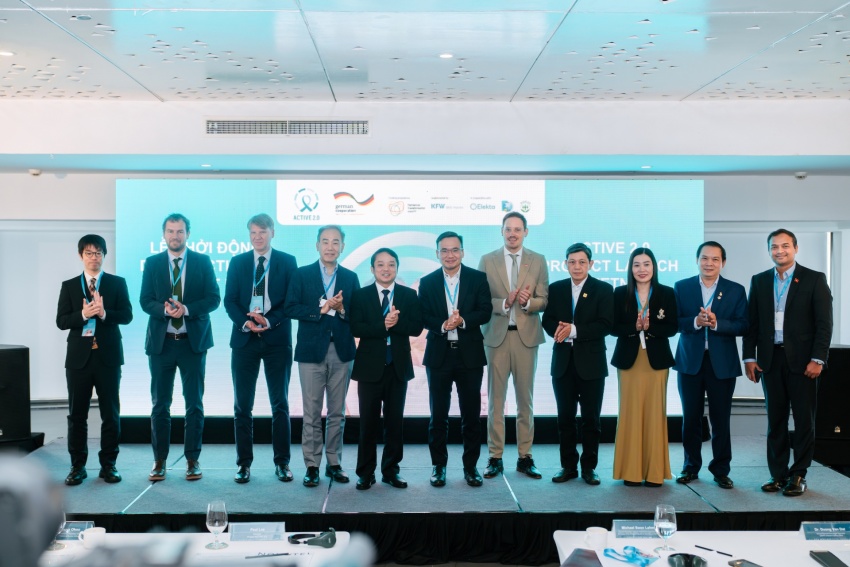 |
| Project ACTIVE 2.0 launches in Vietnam. Photo: VIR |
ACTIVE 2.0 contributes to this broader effort by focusing on professional development and knowledge exchange in radiotherapy-related aspects of cervical cancer treatment, while also exploring approaches to support patients during recovery. The project recognises that strengthening treatment capability requires technology as well as sustained investment in the knowledge, skills, and professional networks of healthcare teams.
The three-year regional initiative is backed by the German Federal Ministry for Economic Cooperation and Development, DEG Impulse, Elekta, and the Federation of Asian Organizations for Radiation Oncology, with the Asia Society for Social Improvement and Sustainable Transformation supporting its delivery. The project brings together healthcare institutions, clinical experts, technical partners, and development partners across Vietnam, Thailand, Indonesia, Malaysia, Laos, and Cambodia to facilitate learning and collaboration.
Cervical cancer remains an important public health concern in Southeast Asia. According to the World Health Organization (WHO), an estimated 160,000 new cases, and 100,000 deaths from cervical cancer occurred in the WHO South East Asia Region in 2022, accounting for approximately one-quarter of the global burden of the disease.
In Vietnam, the International Agency for Research on Cancer, the specialised cancer agency of WHO, estimated 8,274 new cases of cervical cancer and 4,110 deaths in 2024. These figures underscore the importance of strengthening every part of the cervical cancer care pathway, from prevention and screening to diagnosis, treatment and follow-up care. Against this background, continued efforts in prevention, early detection, treatment, and follow-up care remain important.
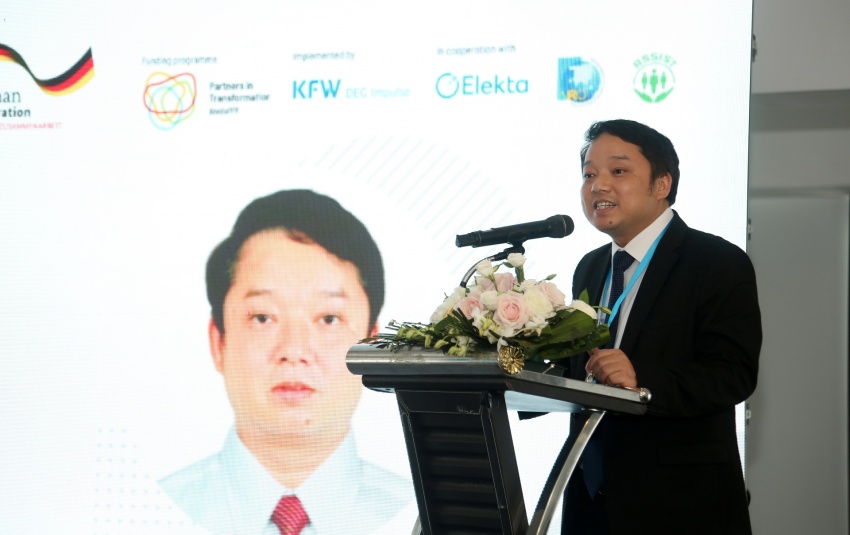 |
| Tong Tran Ha, deputy director general of the Administration of Maternal and Children's Affairs. Photo: VIR |
In Vietnam, ACTIVE 2.0 builds on the experience of Project ACTIVE 1.0, which worked in collaboration with three oncology hospitals: K Hospital in Hanoi, Danang Oncology Hospital, and Ho Chi Minh City Oncology Hospital. In this new phase, the project will continue working with these hospitals to deliver professional training and facilitate clinical knowledge exchange, with the aim of supporting the continued development of healthcare professionals’ capacity in cervical cancer treatment. Experience and knowledge generated through these activities may also provide a basis for broader professional exchange with other hospitals and healthcare professionals.
The training and knowledge exchange activities will focus particularly on image-guided adaptive brachytherapy, and external beam radiotherapy, together with relevant aspects of cervical cancer management. International clinical experts and professional partners will contribute to the exchange of clinical knowledge and experience, while the project will also explore digital approaches to support follow-up and patient recovery after treatment.
“Vietnam continues to pay attention to cancer prevention, early detection, treatment and care,” said Tong Tran Ha, deputy director general of the Administration of Maternal and Children's Affairs, Ministry of Health. “We welcome the continued implementation of activities under Project ACTIVE 2.0, particularly those that provide opportunities for healthcare professionals to further develop their knowledge and exchange clinical experience in cervical cancer care.”
“Achieving 90 per cent HPV vaccination among adolescent girls, 70 per cent cervical cancer screening and 90 per cent adequate treatment by 2030 will enable Vietnam to effectively eliminate cervical cancer by 2055 and avert over 300,000 deaths by the end of the century. The ACTIVE 2.0 project contributes to efforts towards these goals,” said Matt Jackson, UNFPA country representative.
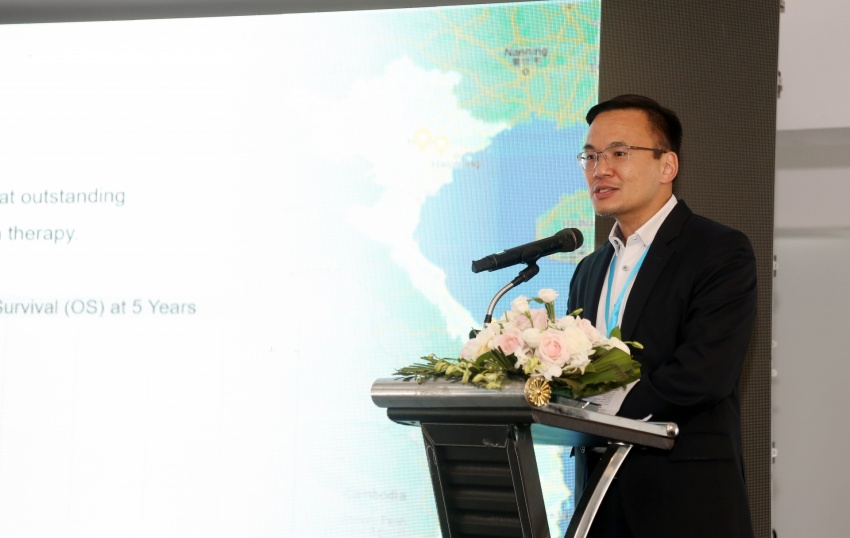 |
| Paul Lee, project director of ACTIVE 2.0. Photo: VIR |
The launch also highlighted the importance of continued collaboration and professional exchange in supporting cervical cancer care in Vietnam. International partners and clinical experts will contribute to knowledge exchange and capacity development alongside local healthcare professionals and institutions.
“It is encouraging to see Vietnamese and international partners coming together to exchange knowledge and strengthen professional capacity in cervical cancer care. ACTIVE 2.0 provides another opportunity for clinical experts and healthcare professionals to share experience and build on ongoing cooperation in this area,” said Michael Swen Lehmann, second secretary, deputy head of Development Cooperation of the Embassy of the Federal Republic of Germany in Hanoi, Vietnam.
“The launch of ACTIVE 2.0 in Vietnam builds on the collaboration and experience developed through the earlier phase of the project,” said Paul Lee, project director of ACTIVE 2.0. “By continuing to work with hospitals and healthcare professionals in Vietnam, we hope to support further clinical training and knowledge exchange, while contributing to ongoing efforts in cervical cancer treatment and patient recovery.”
ACTIVE 2.0 aims to build on the capacity, knowledge, and professional connections developed through the project, supporting their continued use and development beyond individual training activities. In Vietnam, the project hopes to contribute to longer-term efforts to strengthen cervical cancer care in line with broader national and public health priorities.
 | Personalised lung cancer treatment: From genetic technology to robotic surgery The era of personalised medicine is transforming the way lung cancer is treated. By analysing the molecular characteristics of each tumour, doctors at FV Hospital can tailor treatment strategies to individual patients instead of relying on the one-size-fits-all approaches used in the past. |
 | Chubb Life Hong Kong launches broad critical illness plans Chubb Life Hong Kong introduced the Chubb Care Critical Illness Series to deliver broad protection for healthy individuals, cancer survivors, and customers with histories of cardiovascular disease or diabetes. |
What the stars mean:
★ Poor ★ ★ Promising ★★★ Good ★★★★ Very good ★★★★★ Exceptional
 Tag:
Tag:Related Contents






Latest News



More News
- IEAE Hanoi 2026 to spotlight smart electronics trends (October 19, 2026 | 17:44)
- Vietnam and EFTA member states sign free trade agreement (October 19, 2026 | 13:10)
- TC-HICT handles over 8.2 million TEUs since 2018 launch (October 17, 2026 | 16:56)
- Vietnam transforming AI ambitions into business impact (October 16, 2026 | 18:01)
- A broader platform for France-Vietnam cooperation (October 16, 2026 | 17:51)
- AEON to open 13th general merchandise store in Vietnam (October 14, 2026 | 17:56)
- Three international exhibitions open to boost industrial supply chain links (October 14, 2026 | 17:37)
- Garment and textile industry transitions towards high-value production (October 14, 2026 | 17:30)
- French business delegation meets MoF to discuss investment cooperation (October 14, 2026 | 11:37)
- Friso promotes global scientific collaboration on children’s gut health in Vietnam (October 13, 2026 | 16:18)










 Mobile Version