
Strengthening Vietnam-China railway connectivity

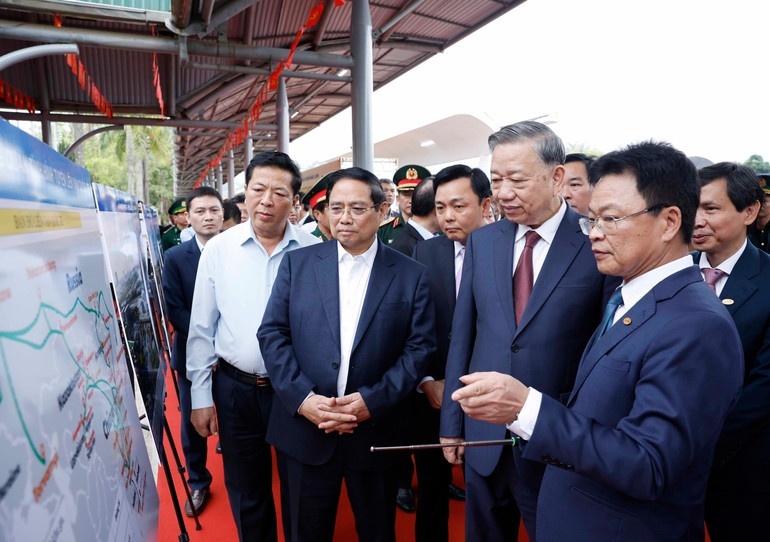
Vietnamese Party General Secretary To Lam on March 19 chaired a meeting with several ministries, central and local agencies on Vietnam-China railway cooperation.
Developing cooperation in the railway sector has been chosen as a symbolic highlight of the practical and strategically significant cooperative relationship between Vietnam and China.
This is an important aspect that contributes to guiding trade relations into a new, more substantive, effective, and sustainable phase of development, while also creating impetus and opening up more space for economic development in accordance with Party resolutions.
 |
| Photo: Ministry of Construction |
During the meeting, the Ministry of Construction reported on cooperation in railway connectivity between Vietnam and China, especially investment on three railway lines (Hanoi - Dong Dang; Lao Cai - Hanoi - Haiphong; Haiphong - Halong - Mong Cai); progress in connecting agreements; and passenger transport connectivity with China.
Delegates focused on discussing and clarifying issues related to planning, institutions, standards, and regulations for various types of railway transport.
Party General Secretary To Lam said that cooperation between Vietnam and China in the railway sector was both a necessity and an opportunity. If implemented well and managed properly, this will be one of the practical and effective areas of cooperation between the two countries for many years to come.
Cooperation on Vietnam and China's railway infrastructure will reduce logistics costs and transport time, encourage trade and border economic development, improve customs clearance capacity, reduce congestion at land border crossings, and connect Vietnam with the Eurasian railway network, thereby diversifying international transport routes.
Railway lines will facilitate the formation of industrial zones (IZs), logistics centres, and industrial cities along the routes, strengthening regional economic linkages, especially in northern Vietnam, enhancing regional economic connectivity and improving Vietnam's position in the Asian supply chain.
The general secretary stated that it was necessary to solve the problem of capital mobilisation, build diverse and sustainable capital mobilisation, and combine resources.
Unified coordination at the national level is needed for strategic infrastructure connection projects, ensuring centralised leadership and clear assignment of responsibilities among ministries, sectors, and localities.
Strengthening inter-sectoral coordination must ensure synchronised integration between transport infrastructure development and regional economic development planning, logistics systems, and IZs along economic corridors.
He requested that the development of railway lines should go hand in hand with the planning of IZs, urban areas, logistics centres, and production clusters along the economic corridor, to create new value chains and increase domestic value.
In addition, new railway lines and economic corridors will pass through many localities, with synchronised regional development planning necessary, especially regarding land use, urban development, IZs, and logistics infrastructure,
It is also critical to avoiding fragmented development, lack of linkages, or inefficient competition among localities.
The general secretary emphasised that infrastructure connectivity, especially the railway connecting Vietnam and China, must be identified as a strategic breakthrough in bilateral economic cooperation, and an important component in Vietnam's infrastructure, logistics, and regional development strategy.
He added that it was necessary to ensure the principles of strategic cooperation, such as independence, self-reliance, and diversification of capital sources.
The Party Committee of the government, and directly the Ministry of Construction, needs to develop a strategy for the development of the Vietnam-China railway within the overall strategy for the development of Vietnam's railway system for 2026-2030 and beyond.
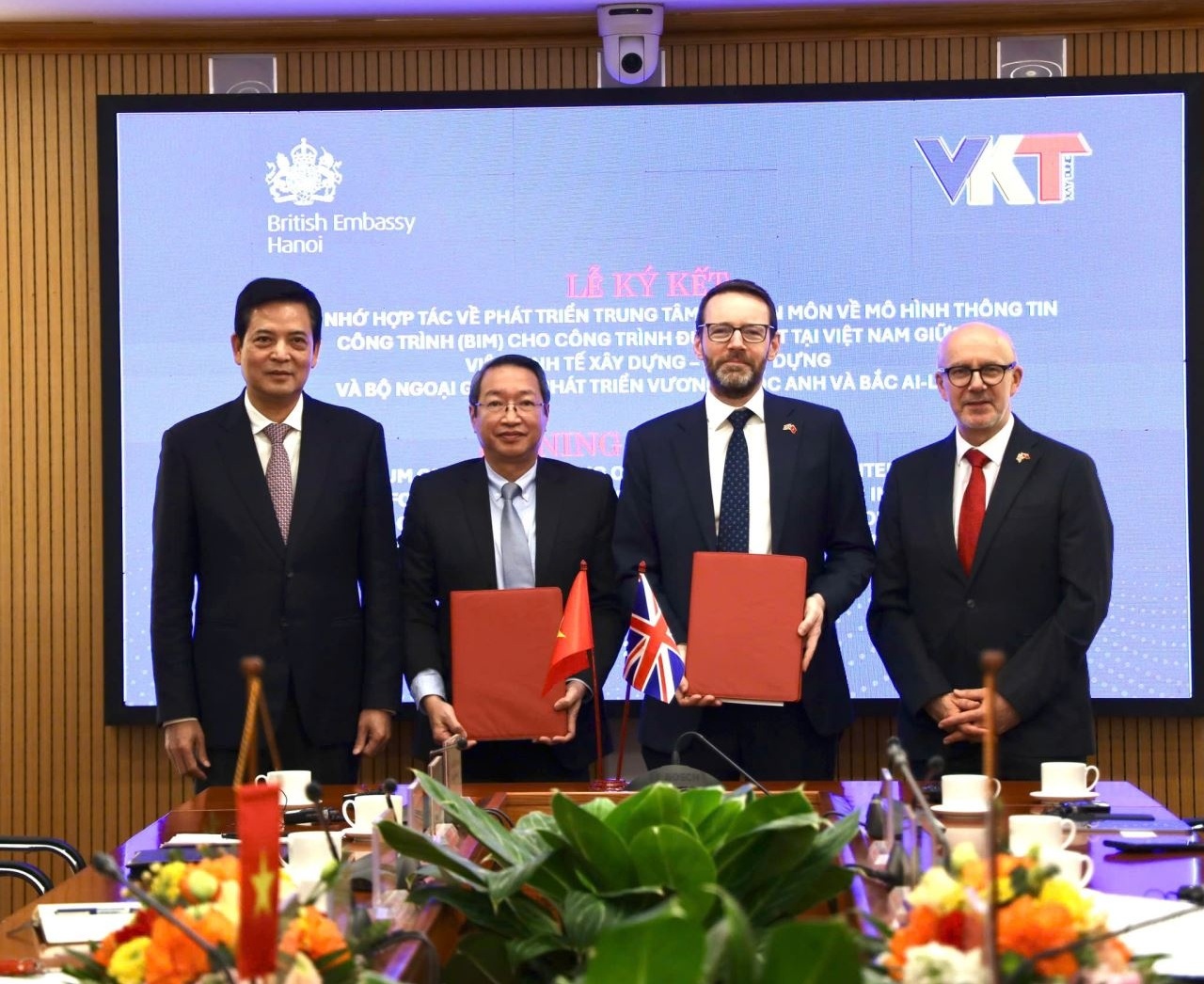
 | UK–Vietnam partnership advances BIM centre for railway development Cooperation with the UK is set to advance the use of digital construction technologies in Vietnam’s rail sector, with a new initiative focused on Building Information Modelling (BIM). |
 | Delivering urban railways and transit-oriented development Vietnam’s efforts to expand urban rail and sustainable city development have increased attention on transit-oriented development and digital delivery tools. Giang My Huong, director of Capital Projects and Infrastructure at PwC Vietnam, shared with VIR’s Khanh Linh how PwC is supporting climate-resilient urban transport delivery. |
 | Transport infrastructure in process of synchronisation The synchronisation and completion of the connecting infrastructure system are expected to enhance the attractiveness of the investment environment in Vietnam. |
What the stars mean:
★ Poor ★ ★ Promising ★★★ Good ★★★★ Very good ★★★★★ Exceptional
 Tag:
Tag:Related Contents





Latest News


More News
- AMATA congratulates Kao Vietnam on 30 years (October 21, 2026 | 14:17)
- Deputy Minister of Finance meets Gujarat delegation in Hanoi (October 21, 2026 | 12:11)
- Vietnam and US discuss financial cooperation and preparations for APEC 2027 (October 21, 2026 | 12:07)
- Vietnam and Denmark sign MoUs to strengthen bilateral ties (October 21, 2026 | 08:00)
- Vietnam and Liechtenstein sign double taxation avoidance agreement (October 19, 2026 | 18:08)
- Creative Young Entrepreneur 2026 showcases five young businesses (October 19, 2026 | 17:59)
- IEAE Hanoi 2026 to spotlight smart electronics trends (October 19, 2026 | 17:44)
- Vietnam and EFTA member states sign free trade agreement (October 19, 2026 | 13:10)
- TC-HICT handles over 8.2 million TEUs since 2018 launch (October 17, 2026 | 16:56)
- Vietnam transforming AI ambitions into business impact (October 16, 2026 | 18:01)






 Mobile Version