
Delivering urban railways and transit-oriented development

PwC Vietnam is working closely with the Green Cities, Infrastructure and Energy Programme (GCIEP) to advance transit-oriented development (TOD) and the application of building information modelling (BIM) in Vietnam. Could you share how PwC is supporting these initiatives in practice?
 |
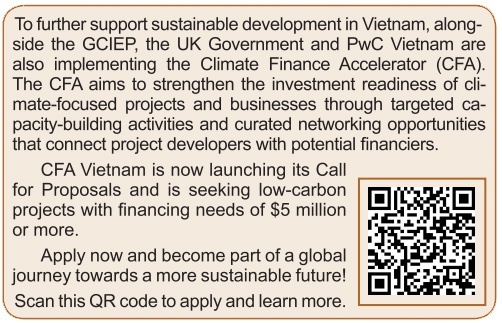
| Giang My Huong, director of Capital Projects and Infrastructure at PwC Vietnam |
GCIEP is funded by the United Kingdom’s Foreign, Commonwealth and Development Office and delivered by a PwC-led alliance. The programme has been implemented in more than 25 countries to support inclusive, low-carbon growth and strengthen climate resilience.
In Vietnam, PwC Vietnam leads GCIEP delivery with alliance members and local sectoral experts, under the sponsorship of the British Embassy in Hanoi and the British Consulate General in Ho Chi Minh City. The programme focuses on creating an enabling environment for TOD and strengthening adoption of BIM for modern urban transport and infrastructure.
On TOD, GCIEP is supporting Hanoi and Ho Chi Minh City in establishing legal and policy foundations, including the strategic use of Land Value Capture to strengthen long-term funding for urban rail. PwC is working with local authorities to identify key TOD challenges and develop practical, locally relevant recommendations, alongside conferences and targeted capacity-building for government counterparts. Current work includes preparation of technical TOD implementation guidelines and hands-on training to strengthen implementation readiness.
In parallel, PwC is supporting BIM adoption, with technical input from Crossrail International, through improvements in governance frameworks, information standards and project delivery capability.
What are the main challenges Vietnam faces in implementing TOD and urban rail projects?
From PwC’s experience in Vietnam and other emerging markets, the challenges facing TOD and urban rail projects are largely structural rather than technical. They span financing, risk management, land, institutional arrangements, delivery capability and shortages of skilled personnel.
Limited diversification of funding remains a core constraint. Urban rail development in Vietnam has relied heavily on public funding through state budgets and official development assistance. International experience shows that greater private-sector participation, supported by well-structured public-private partnership (PPP) models, can help mobilise capital, improve efficiency and strengthen delivery discipline. Markets such as India, Thailand, Australia and Canada have expanded PPP-based rail models, while Hong Kong and parts of mainland China have integrated rail and real-estate development through public-private consortia.
Effective use of land value capture (LVC) is critical to creating a sustainable funding cycle for TOD and rail, reflecting the link between transport investment and land value uplift. Through GCIEP, PwC Vietnam, working with international and domestic land, legal and valuation experts, is supporting Hanoi and Ho Chi Minh City in developing the regulatory and institutional frameworks needed to operationalise LVC, enabling land-based revenues to be reinvested into urban rail and TOD.
Cost escalation and demand uncertainty remain major delivery risks, driven by long timelines and technical complexity. Global experience shows that cost overruns and demand shortfalls are common. Addressing these risks requires stronger lifecycle cost data, improved market intelligence, more advanced digital and scenario-based modelling, and greater organisational capability to manage volatility throughout delivery.
PwC’s role is to help bridge policy ambition and practical delivery by strengthening governance frameworks, structuring bankable projects, supporting institutional coordination and building technical and commercial capacity across urban rail and TOD programmes.
What key lessons from global TOD and urban rail projects could Vietnam apply to ensure economic efficiency, financial viability and long-term sustainability?
International experience highlights several lessons that Vietnam may consider when shaping its TOD and urban rail programmes. Long-term integrated planning is fundamental, with transport networks, station locations and alignments planned in parallel with land use to ensure coherent development along rail corridors.
Diversifying funding sources is critical to sustainability. Beyond public budgets and concessional finance, this includes private investment, green finance, municipal or green bonds and, in particular, Land Value Capture mechanisms. These tools need to be embedded early in the planning process and reflected in feasibility studies and financial structuring for urban rail projects.
Private-sector participation should be engaged from an early stage through transparent public-private partnership frameworks with balanced risk-sharing. The “rail plus property” model, which integrates rail development with real-estate and commercial activities, has been successfully applied in markets such as Hong Kong and mainland China, supporting stronger financial performance and reinvestment.
However, private capital does not flow automatically. Investor confidence depends on regulatory stability, clear government commitment, credible project pipelines and well-structured risk allocation, with pilot PPP projects often playing a critical role in demonstrating bankability.
How do you see PwC’s role evolving in supporting Vietnam, GCIEP, and international partners in developing modern, climate-resilient urban transport infrastructure?
 |
PwC’s role under GCIEP has evolved alongside Vietnam’s growing maturity in urban transport planning. In the earlier phase, the focus was on establishing an enabling policy and regulatory environment through technical inputs, international experience sharing, identification of framework gaps and structured engagement with national and city-level stakeholders, helping to build momentum for TOD and LVC reforms.
The current phase places greater emphasis on operationalisation, technical execution and institutional capacity. Alongside ongoing support to refine legal frameworks, PwC is working with cities to translate policy intent into delivery tools, including detailed TOD technical guidelines and hands-on support to the Hanoi Metropolitan Railway Management Board in establishing a dedicated BIM unit.
PwC will focus on execution at scale by strengthening governance, embedding digital approaches, structuring bankable projects and building long-term delivery capability.
What the stars mean:
★ Poor ★ ★ Promising ★★★ Good ★★★★ Very good ★★★★★ Exceptional
 Tag:
Tag:Related Contents



Latest News
More News
- Leading in AI: from pilot initiatives to enterprise value (August 10, 2026 | 07:00)
- Programme launched to develop new Vietnamese business leaders (July 28, 2026 | 13:50)
- Family businesses face succession hurdles (June 30, 2026 | 17:05)
- Global shocks and tightening cash for Vietnamese business (June 22, 2026 | 06:00)
- Data and governance key hurdles to AI scaling for Vietnamese firms (June 17, 2026 | 16:55)
- Vietnam second fastest growing automotive market in ASEAN‑6 (April 20, 2026 | 20:34)
- Vietnam’s green push requires further hurdles to clear (March 30, 2026 | 08:00)
- The use of artificial intelligence to advance ESG goals for businesses (March 06, 2026 | 11:50)
- Vietnam a strategic growth engine for Asia-Pacific: CEO survey (March 05, 2026 | 17:12)
- PwC launches global workforce survey (February 09, 2026 | 17:42)






 Mobile Version