
PM urges Ho Chi Minh City to innovate and remain Vietnam’s economic locomotive

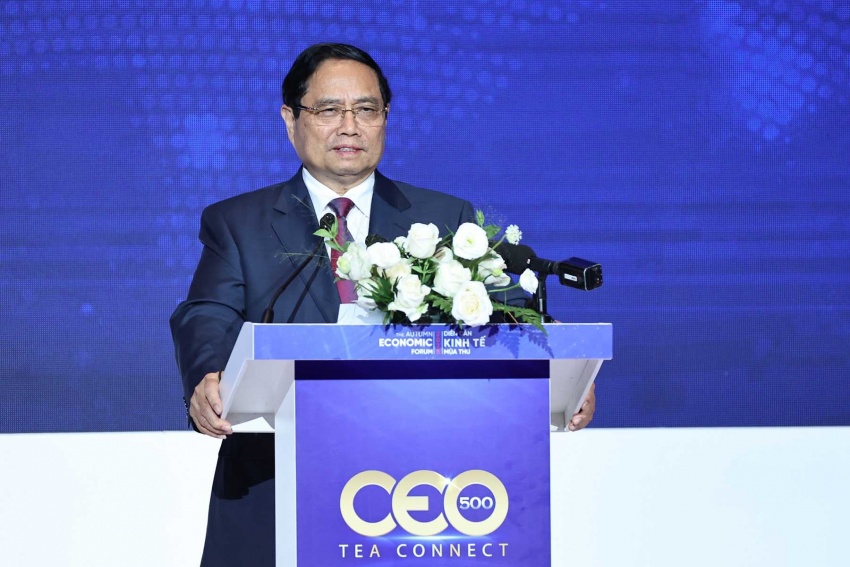 |
| Prime Minister Pham Minh Chinh at the “CEO 500 - Tea Connect” programme on the afternoon of November 25 |
According to the PM, these are highly challenging and demanding objectives, but they are goals that must be pursued, guided by the spirit of “turning nothing into something, turning difficulties into advantages, and turning the impossible into the possible.”
Assessing the current global context, he noted that global growth is slowing while public debt is rising.
“Declining global trade has led to disruptions in the flow of goods and supply chains, affecting production, business operations, employment, livelihoods, and incomes. Meanwhile, conflicts and tensions in many regions continue to undermine global development,” Chinh said.
In such a context, the Prime Minister emphasised Vietnam's consistent focus on building three foundational pillars: developing a socialist-oriented market economy and deepening international integration; building socialist democracy; and building a socialist rule-of-law state.
Vietnam remains steadfast in safeguarding political and social stability, public order, and national security, placing people at the centre, as subjects, goals, drivers, and the most important resource for development. Vietnam will not sacrifice social progress, equity, social welfare, or environmental protection for pure economic growth.
Highlighting national achievements, the PM recalled that nearly 40 years after economic reforms in the 1980s, Vietnam has transformed from an isolated, embargoed nation into one with diplomatic relations with 194 countries.
Vietnam now has comprehensive strategic partnerships with the five permanent members of the United Nations Security Council and several G20 countries, and has signed 17 free trade agreements covering more than 60 countries.
From a war-ravaged, impoverished country, Vietnam has grown into a developing nation with GDP rising from about $4 billion to approximately $510 billion, ranking 32nd in the world.
Per capita income has risen from around $100 after the war to roughly $5,000 today, placing Vietnam among the upper-middle-income group and among the world's top 20 countries in trade and investment attraction, with international trade expected to reach $900 billion in 2025.
Material and spiritual living standards have improved significantly, with Vietnam's happiness index rising 37 places over the past five years, according to the UN.
In the current climate, the Prime Minister reaffirmed that Vietnam's top priority is to maintain macroeconomic stability, control inflation, ensure major economic balances, and promote growth. International partners, including investors and businesses, have contributed significantly to these efforts.
On behalf of the Party and state, he expressed deep appreciation for the cooperation, support, and valuable contributions of businesses and investors, emphasising the principle of harmonised interests and shared risks: “Solidarity creates strength; cooperation brings mutual benefits; dialogue strengthens trust.”
The PM highlighted five key areas where international partnership and support are essential: mobilising financial resources (including establishing an international financial centre in Ho Chi Minh City this year); developing digital infrastructure; building an open, competitive institutional framework; developing high-quality human resources; and promoting smart governance.
To achieve these goals, Vietnam and Ho Chi Minh City must maintain a spirit of self-reliance and resilience, “rising with our own hands, minds, land, sky, and seas”. Internal strength is fundamental, strategic, long-term, and decisive, but international support and cooperation remain essential, as history has demonstrated, he said.
Affirming that Ho Chi Minh City is Vietnam's largest economic hub with a long tradition of dynamism and innovation, the PM expressed confidence that the city will continue to innovate, strengthen its resilience, and draw lessons from both successes and failures to remain the nation's economic leader and advance towards becoming a global megacity, as envisioned by General Secretary To Lam, capable of competing with major cities around the world.
He praised participants at the forum for their encouragement and support for Ho Chi Minh City and Vietnam, calling on partners, enterprises, and investors to continue accompanying the country and the city under the principle: a facilitative state, restarting enterprises, public–private partnerships, and shared benefits from Ho Chi Minh City's development.
“Your success is Vietnam's success; if you do not succeed, then we have not succeeded,” PM Chinh said.
 |
 | First UK-Vietnam Business Summit held in Ho Chi Minh City Renewable energy, environmental, social, and governance (ESG), and a roadmap for developing an International Financial Center were key pillars of discussion from more than 200 high-level leaders, entrepreneurs, and senior managers from leading British and Vietnamese companies at the first UK-Vietnam Business Summit held on November 5 in Ho Chi Minh City. |
 | Ho Chi Minh City invites 500 top CEOs for dialogue on green transition More than 500 international and domestic business leaders will join government leaders and Ho Chi Minh City officials for a series of events at the 2025 Autumn Economic Forum from November 24 to 30. |
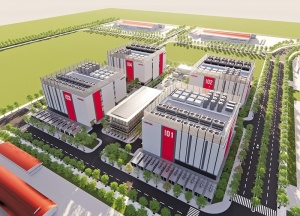 | Ho Chi Minh City establishes working group on data centers Ho Chi Minh City People's Committee has established a working group to support and address hindrances for hyperscale data centers. |
What the stars mean:
★ Poor ★ ★ Promising ★★★ Good ★★★★ Very good ★★★★★ Exceptional
 Tag:
Tag:Related Contents

Latest News




More News
- A broader platform for France-Vietnam cooperation (October 16, 2026 | 17:51)
- AEON to open 13th general merchandise store in Vietnam (October 14, 2026 | 17:56)
- Three international exhibitions open to boost industrial supply chain links (October 14, 2026 | 17:37)
- Garment and textile industry transitions towards high-value production (October 14, 2026 | 17:30)
- French business delegation meets MoF to discuss investment cooperation (October 14, 2026 | 11:37)
- Friso promotes global scientific collaboration on children’s gut health in Vietnam (October 13, 2026 | 16:18)
- Germany and Vietnam look to expand strategic cooperation and investment (October 13, 2026 | 16:14)
- Vietnam-Australia forum boosts AI and digital technology cooperation (October 13, 2026 | 11:30)
- Digital transformation shifts focus to added value (October 09, 2026 | 18:00)
- Melatec Dental Clinic - accompanying international clients on their smile care journey (October 09, 2026 | 17:25)


Latest News






 Mobile Version