
Voluntary Sustainability Standards pave way for Vietnam’s agricultural exports

 |
In recent years, Voluntary Sustainability Standards (VSS) have increasingly become a critical gateway for Vietnamese agricultural enterprises seeking to access global markets and strengthen their competitiveness. Bui Khanh Tung, deputy director of the Centre for Organic Agriculture Development Support under the Vietnam Organic Agriculture Association, said, "VSS adoption should not be viewed simply as obtaining a certificate, but as a fundamental transformation in management mindset, operational processes, and corporate culture."
Before implementing VSS, many Vietnamese agricultural businesses rely heavily on experience-based decision-making and the personal judgment of business owners. Production processes were often scientifically documented, while records related to social responsibility and environmental protection were insufficient or fragmented. However, the introduction of VSS requires enterprises to standardise production procedures, establish internal monitoring systems, and continuously record and store operational data.
“This shift enables enterprises to control quality more effectively and gradually build a transparent, evidence-based governance culture, instead of operating on intuition,” Tung said.
Over time, businesses realise that compliance is not a burden, but rather a means to enhance internal capacity, improve efficiency, and reduce waste.
Reducing risks and strengthening export credibility
Beyond internal governance improvements, VSS delivers tangible benefits for export activities, particularly in agriculture, a sector frequently subject to stringent food safety and quality requirements.
One of the greatest export risks, experts note, is the failure of shipments to meet technical regulations in importing countries, which can lead to rejections, cancellations, financial losses, and long-term reputational damage. “A single rejected shipment may cost an enterprise several years to regain its partner's confidence, and in some cases can affect the image of an entire Vietnamese commodity sector,” Tung warned.
By adopting VSS, exporters establish robust quality management systems, transparent traceability mechanisms, and clear production records. These elements significantly reduce the likelihood of technical violations or insufficient documentation. When shipments consistently meet standards, exporters may be classified under customs “green lanes”, enabling faster clearance procedures and lower logistics costs.
Conversely, even one compliance failure can shift enterprises into “yellow” or “red lanes,” resulting in stricter inspections, higher costs, prolonged customs clearance, and long-lasting reputational risks.
At a national level, widespread VSS adoption can help create harmonised quality benchmarks across entire industries. As Vietnamese products consistently satisfy international requirements, the country's agricultural image is strengthened, technical trade barriers are reduced, and overall international credibility and competitiveness improve.
Field insights from green export incubation programmes
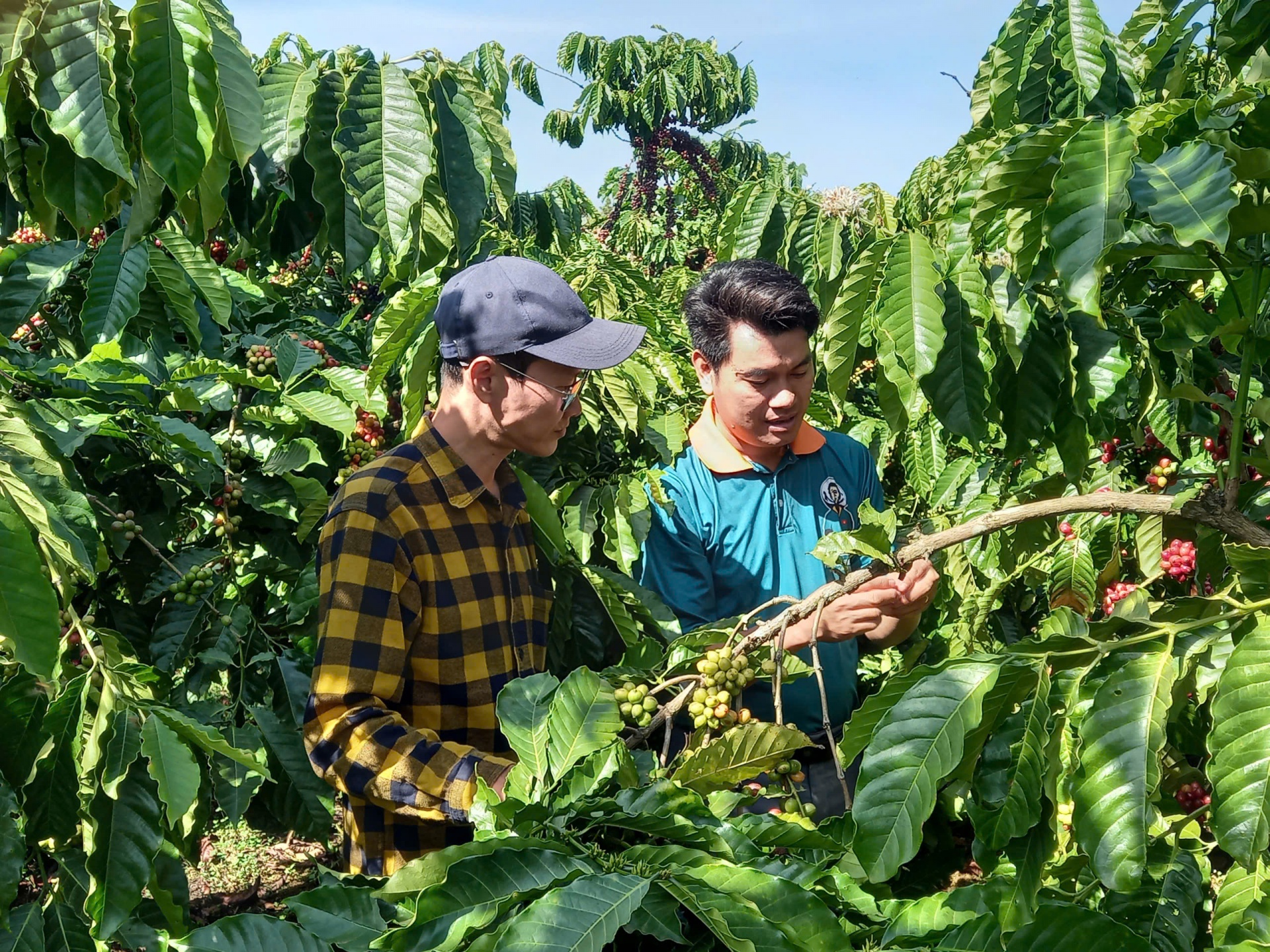
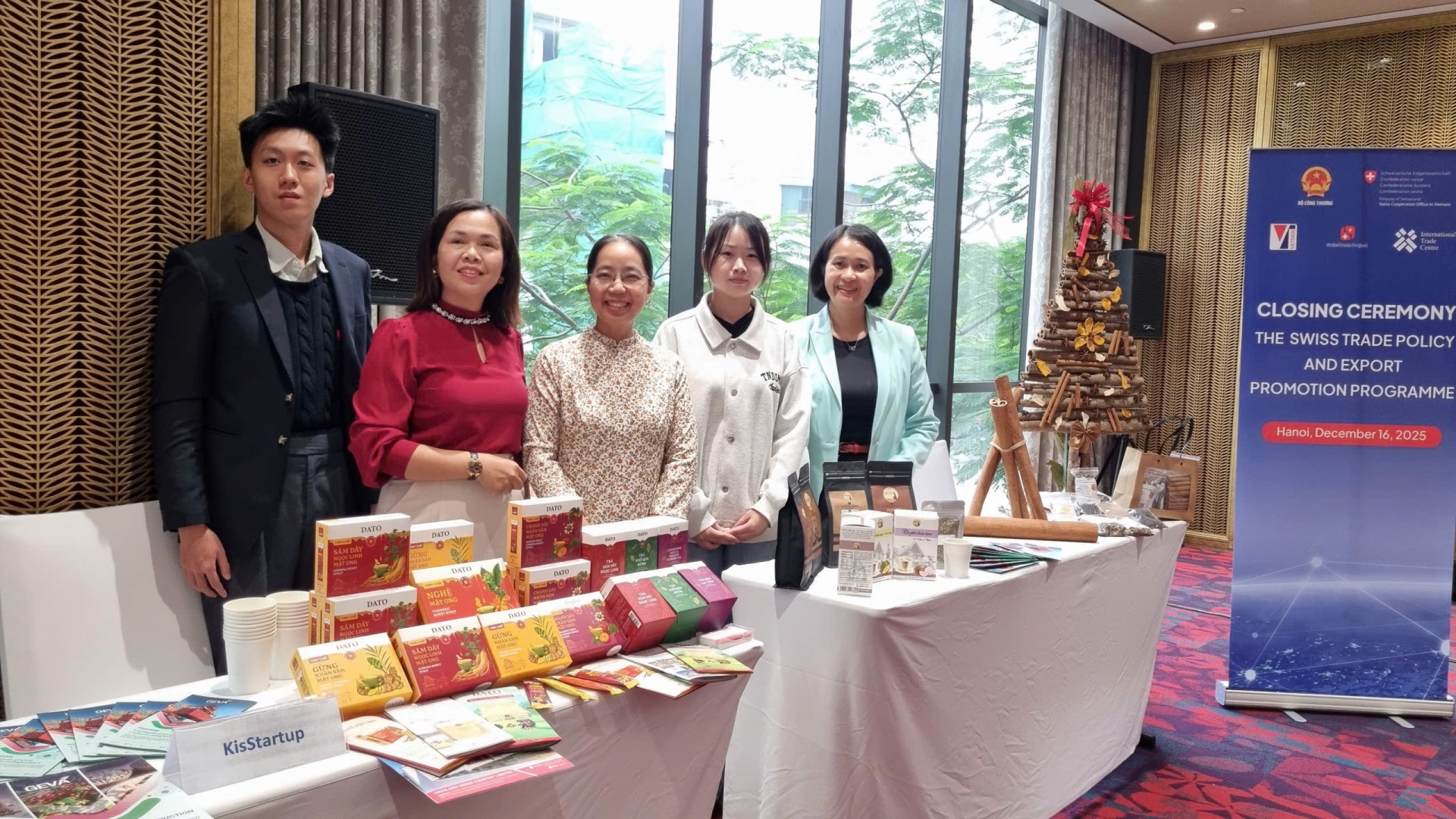
Recently, Tung and experts from the Green Export Incubation and Acceleration (GEVA) project conducted field surveys in cinnamon-growing areas operated by Red River Company and at cultivation zones and processing facilities of Detech Coffee in Son La province. These enterprises are participating in GEVA's green export incubation and acceleration programme, funded by the Swiss government.
The survey revealed a growing awareness among Vietnamese agricultural enterprises regarding sustainable development. Many are applying near-natural farming methods, avoiding chemical fertilisers and pesticides, fostering diverse ecosystems, and promoting circular agriculture models in which human activity and nature coexist harmoniously.
The focus assessments on evaluating green farming practices, the considerations of applying sustainability standards, and future strategies for building responsible agricultural brands. At the same time, enterprises received support to standardise management systems, enhance supply chain transparency, and move towards sustainable, green exports.
“International buyers are not simply purchasing certificates; they are buying credibility and long-term sustainability commitments,” Tung emphasised.
 |
Technology as a catalyst for sustainable compliance
Technology, experts agree, is a key enabler for Vietnamese enterprises to accelerate and sustain VSS implementation. In the context of the government's push for agricultural digital transformation, technology adoption is no longer optional, but a prerequisite for maintaining sustainability standards.
Digital tools significantly reduce labour, time, and effort in data collection, processing, storage, and reporting, core requirements for traceability and sustainability compliance. Many agricultural enterprises have already deployed production management software, traceability data systems, and digital evidence platforms to demonstrate transparency and mitigate fraud risks, while meeting increasingly strict international market demands.
However, Tung cautioned, "Technology investment must be goal-oriented to avoid inefficiency. Enterprises need clear strategies on which processes to digitalise, what data to store, and how stakeholders can access and update information accurately and promptly."
Equally important is human capacity. Farmers require simple mobile applications for recording production activities; technical staff need skills in data analysis, aggregation, and advanced traceability technologies, including blockchain; while business leaders must be able to leverage data analytics and AI tools for strategic planning and informed decision-making.
“Technology must be tailored to each user group and embedded in real production practices to be effective,” Tung noted.
VSS as a long-term development foundation
Importantly, the economic value of VSS is not always immediately reflected in higher prices or short-term revenue gains. Instead, it accumulates benefits over time through stronger brand reputation, partner trust, operational resilience, and risk mitigation.
“Sustainability standards are about business efficiency, not just product prices,” Tung explained. “Prices may not rise significantly, but long-term business performance and resilience are strengthened.”
While some enterprises may initially view VSS adoption as a cost due to investments in systems, training, and process adjustments, it is ultimately a strategic lever that enables businesses, and entire sectors, to move beyond basic exporting sustainable towards value creation and global competitiveness.
International studies support this perspective. Research by the United Nations Conference on Trade and Development (UNCTAD) identifies VSS as a crucial tool for developing countries to expand export markets, improve product quality, and overcome technical trade barriers. UNCTAD further notes that collective efforts to raise standards can help build sustainable ecosystems, enhance the overall reputation of Vietnamese agricultural products, and deepen integration into global value chains.
 | Empowering the Mekong Delta's sustainable export future By aligning local agricultural strengths with global sustainability standards, the Green Export Incubation and Acceleration (GEVA) project is helping Mekong Delta enterprises chart a greener and more resilient path towards international markets. |
 | Vietnam's coffee heartland embraces green standards for global reach As the global marketplace tightens its environmental and social standards, Vietnam's agricultural sector – particularly the Central Highlands, home to the nation's iconic coffee – stands at a critical crossroads. |
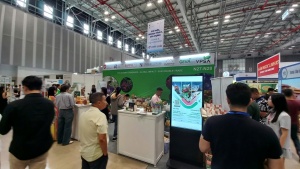 | GEVA showcases sustainable agricultural products at Vietnam International Sourcing Expo The GEVA project showcased sustainable agricultural products and took proactive steps to expand international business connections at the Vietnam International Sourcing Expo 2025. |
What the stars mean:
★ Poor ★ ★ Promising ★★★ Good ★★★★ Very good ★★★★★ Exceptional
 Tag:
Tag:Related Contents

Latest News



More News
- AMATA congratulates Kao Vietnam on 30 years (October 21, 2026 | 14:17)
- Deputy Minister of Finance meets Gujarat delegation in Hanoi (October 21, 2026 | 12:11)
- Vietnam and US discuss financial cooperation and preparations for APEC 2027 (October 21, 2026 | 12:07)
- Vietnam and Denmark sign MoUs to strengthen bilateral ties (October 21, 2026 | 08:00)
- Vietnam and Liechtenstein sign double taxation avoidance agreement (October 19, 2026 | 18:08)
- Creative Young Entrepreneur 2026 showcases five young businesses (October 19, 2026 | 17:59)
- IEAE Hanoi 2026 to spotlight smart electronics trends (October 19, 2026 | 17:44)
- Vietnam and EFTA member states sign free trade agreement (October 19, 2026 | 13:10)
- TC-HICT handles over 8.2 million TEUs since 2018 launch (October 17, 2026 | 16:56)
- Vietnam transforming AI ambitions into business impact (October 16, 2026 | 18:01)







 Mobile Version