
More reforms sought for businesses to develop industry, construction and infrastructure

On August 14, Standing Deputy Prime Minister Pham Gia Tuc chaired a conference addressing obstacles in industry, construction, infrastructure, and planning.
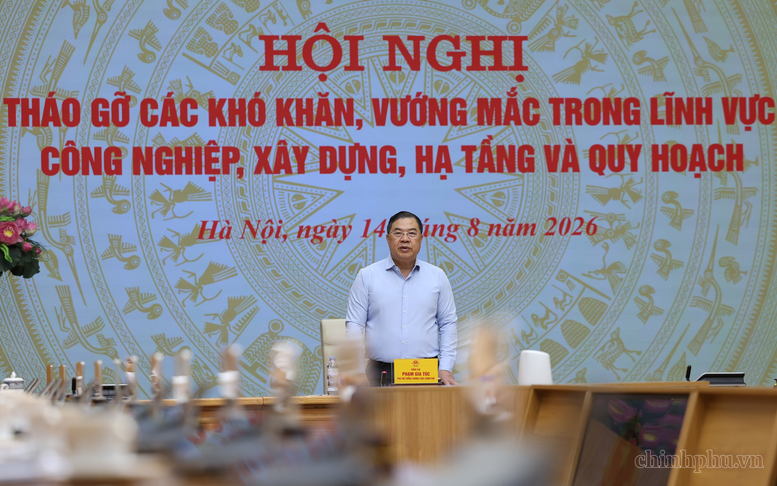 |
| Standing Deputy Prime Minister Pham Gia Tuc chaired the conference. Photo: chinhphu.vn |
The DPM said that the government wanted the most favourable, fair, open, and transparent business environment, in line with international practices.
The conference focused on discussing and resolving issues facing the business community in the industrial, construction, infrastructure, and planning sectors.
He stated that the government was focusing on reducing administrative procedures, compliance costs, and business conditions.
According to the Ministry of Construction (MoC), business recommendations focus on four groups: planning and transportation sector planning; management of construction investment and housing; infrastructure including maritime, waterway, road, and air transport, vehicle inspection, transportation, and traffic safety; and several other areas such as science, technology, environment, construction materials, business management, and IT.
Tran Thi Lan Anh, general secretary of the Vietnam Chamber of Commerce and Industry (VCCI), stated that the main issues came from four causes: policy stability when legal regulations change; overlapping and inconsistent regulations; the lag between price frameworks and standards and market fluctuations; and some policies not fully considering the needs for implementation.
She recommended prioritising issues arising from changes in legal regulations, completing transitional regulations, unifying implementation guidelines, and ensuring the stability of decisions issued by authorities.
Along with this, he suggested reviewing and updating the price framework, norms, and criteria related to investment, energy, and infrastructure, focusing on impediments with significant ripple effects.
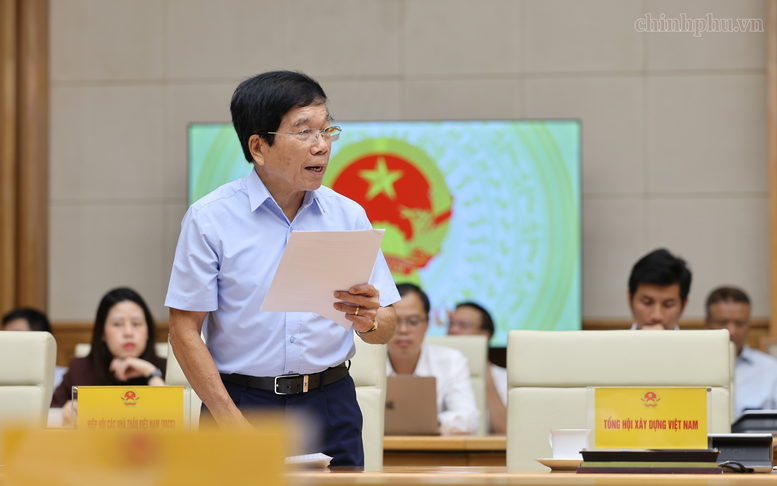 |
| Nguyen Quoc Hiep, chairman of the Association of Construction Contractors. Photo: chinhphu.vn |
Nguyen Quoc Hiep, chairman of the Association of Construction Contractors, said that businesses were facing difficulties regarding unit prices, norms, material costs, labour costs, and payments.
In projects using state budget funding, unit prices and norms have not kept pace with reality, while materials and labour prices fluctuate, and supply in some areas is limited, leading to higher costs for contractors, affecting project efficiency and the attractiveness of bidding packages. For public-private-partnership (PPP) projects, businesses also encounter delays in contract payments.
The association recommended improving unit prices, norms, and mechanisms for managing construction investment costs, adjusting labour cost, and developing human resources; while also completing regulations on management contractors, general contractors, and subcontractors. Decentralisation in the planning sector also needs to be linked to actual resources and capabilities of localities.
Chairman of the Vietnam Real Estate Association (VNREA) Nguyen Van Khoi believed that construction, real estate, industry, and infrastructure are being affected by a series of obstacles related to planning, land, land clearance, construction, and the market.
VNREA proposed updating material prices to reflect market conditions, refining cost norms based on actual data, and introducing a mechanism to adjust contract prices during significant fluctuations. It also called for faster site clearance to create clean land funds, alongside clearer responsibilities and processing deadlines for local authorities.
On planning, the association recommended stronger inter-agency coordination, synchronised data and clearer rules for resolving conflicts between plans. It also called for overlaps between regulations on investment, land, planning, construction, bidding and the environment to be addressed, while resolving backlogged projects and linking decentralisation with adequate resources, staff capacity and leadership accountability.
Energy businesses also highlighted obstacles involving planning, land, forests, minerals, site clearance, materials, labour, investment mechanisms and electricity trading. Vietnam Electricity said some projects have yet to be fully incorporated into planning or overlap with other plans, while related procedures remain lengthy.
PetroVietnam similarly called for improvements to investment, electricity trading and power mobilisation mechanisms to facilitate project implementation and maintain investment flows.
The Ministry of Justice believes it is necessary to distinguish whether the obstacles come from regulations or from the implementation process. Regarding land, the ministry proposed continuing to review and amend laws in a coordinated manner, including those related to housing, real estate busines, and taxation
The Ministry of Justice is also reviewing the draft law on marine resources and environment, focusing on addressing overlapping issues among construction projects and shipping routes, while perfecting the integrated management mechanism for marine resources and environment.
Simultaneously, it is continuing a comprehensive review of the legal framework to promptly amend, supplement, or replace inadequate regulations; improving the specialised database on construction materials; and reviewing economic and technical regulations.
On land, forests, minerals and site clearance, the Ministry of Agriculture and Environment said it would continue refining regulations and decentralising authority in line with practical needs, while cutting bureaucracy and shortening project implementation times. Specific obstacles, particularly those affecting large projects, will continue to be addressed under government direction.
The Ministry of Finance said it had ordered the immediate removal of obstacles affecting customs clearance for specialised goods, while reviewing pre-inspection requirements and strengthening post-clearance inspections. Recommendations concerning bidding, planning, PPPs, and industrial park development will also be considered as policies are revised.
The Ministry of Construction (MoC) said it would continue reviewing construction norms and unit prices, including possible adjustments to construction consultancy fees, to better reflect practical requirements and service quality. It also pledged to streamline administrative procedures and business conditions, reduce compliance costs and promptly address recommendations from businesses.
In the energy sector, the Ministry of Industry and Trade is working on amendments to the Electricity Law, Oil and Gas Law and related legislation, particularly provisions affecting the energy sector, to attract investment and remove obstacles facing projects.
On funding, State Bank of Vietnam Deputy Governor Nguyen Ngoc Canh said the central bank had reviewed and responded to credit-related proposals and would continue managing monetary and credit policies to support the capital needs of the industrial, construction and infrastructure sectors. It will also work to remove institutional and procedural barriers, develop medium- and long-term capital channels, and better integrate bank credit with capital markets and other legitimate funding sources.
DPM Tuc said the government had been directing ministries, agencies and localities to improve institutions, accelerate support policies, streamline administrative procedures, encourage digital transformation, reduce compliance costs and strengthen support for businesses.
Looking ahead, he called on ministries, agencies and localities to promptly resolve issues within their jurisdiction and focus on institutional and administrative reform. He also urged them to unlock capital, land and investment resources, ensure funding flows into production and business, reduce costs, expand markets and strengthen the economy's competitiveness.
What the stars mean:
★ Poor ★ ★ Promising ★★★ Good ★★★★ Very good ★★★★★ Exceptional
 Tag:
Tag:
Related Contents




Latest News





More News
- EuroCham confidence index holds at 78.3 despite operational hurdles (October 16, 2026 | 17:27)
- Shrimp and rice firms face rising standards in export markets (October 16, 2026 | 09:00)
- SCG and Prime Group add value to the ecosystem (October 15, 2026 | 15:55)
- Project readiness key to unlocking green finance (October 15, 2026 | 12:35)
- Sovereign AI and human oversight key to secure digital government (October 15, 2026 | 12:32)
- MEXC Ventures partners with Corelia Academy: Bringing digital asset education closer to Vietnamese students (October 15, 2026 | 09:00)
- Global design expertise meets a more sophisticated Vietnam market (October 15, 2026 | 09:00)
- Vietnam growth nears double digits, UOB raises forecast (October 14, 2026 | 17:39)
- Smart factories need skills, finance and trust to scale (October 14, 2026 | 17:33)
- Sanofi-Aventis Vietnam appoints new head of Vaccines and country lead (October 12, 2026 | 17:21)




Latest News






 Mobile Version