
Investment outlook shines amid global trade shifts

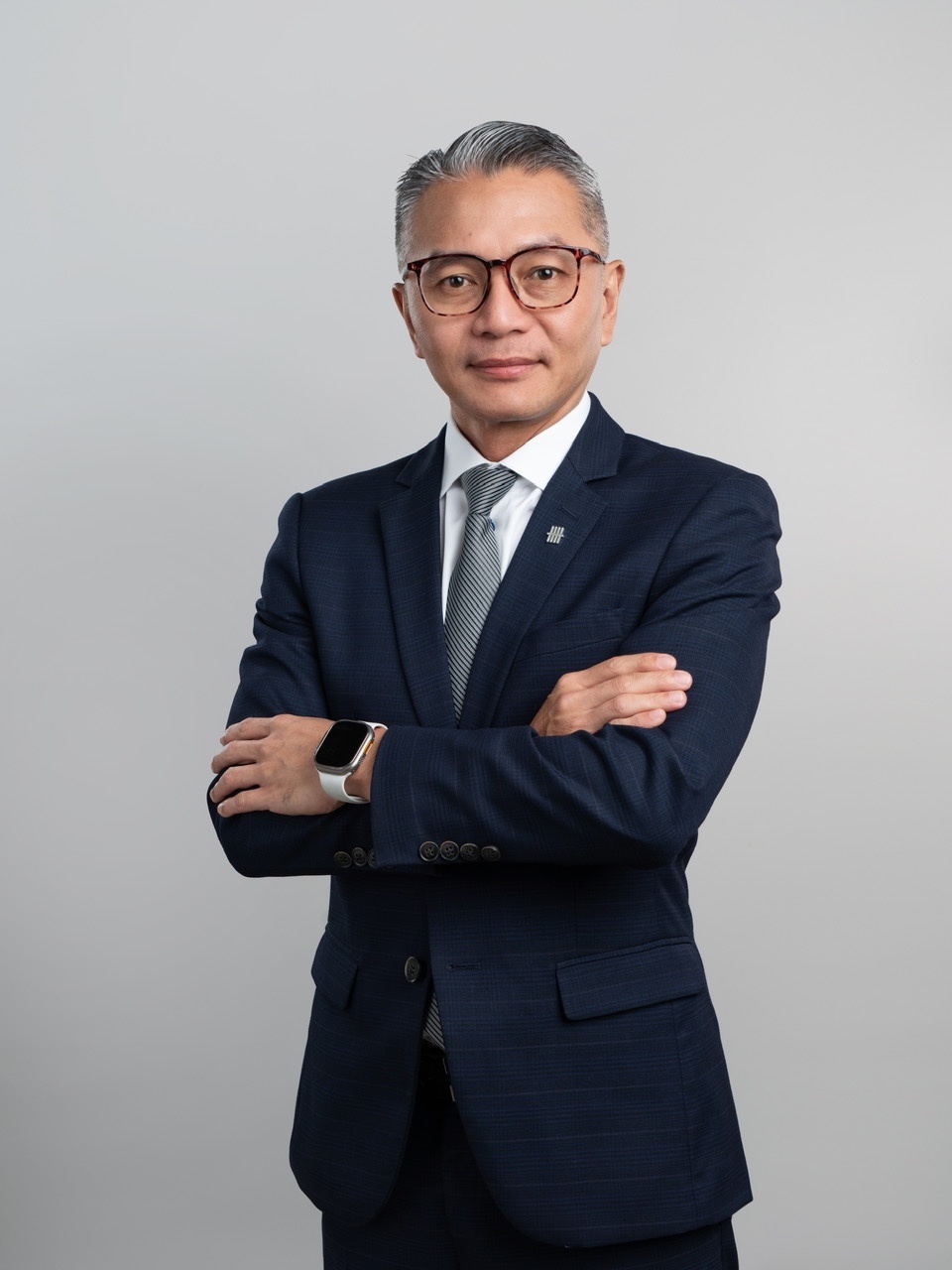 |
What is your assessment of foreign direct investment (FDI) inflows into Vietnam in 2025 and beyond?
In the first eight months of 2025, Vietnam recorded more than $26 billion in registered FDI, up by over 27 per cent on-year, with disbursed capital reaching its highest level in five years. A notable trend is the shift from greenfield projects towards expansion and mergers, reflecting that existing investors are placing long-term confidence in Vietnam and are ready to scale up their operations.
Looking ahead to the second half of 2025 and into 2026, I see three key factors supporting FDI inflows: a stable domestic economy; strong export momentum, particularly to the US and Asia; and Vietnam’s selective FDI strategy, prioritising high technology, renewable energy, and sustainable manufacturing.
The main challenge lies in the pace of public investment disbursement and infrastructure connectivity. If these bottlenecks are addressed, Vietnam can sustain its position as one of the most attractive FDI destinations in the region.
From a banking perspective, UOB’s long-term confidence in Vietnam is clear, both as an investor and as a cross-border FDI connector. We have injected additional capital of VND2 trillion ($75.8 million) this year, which raises our charter capital to VND10 trillion ($379.3 million), and we are investing in our new UOB Plaza headquarters in Ho Chi Minh City.
We have also signed an MoU with the Investment and Trade Promotion Centre to accelerate quality FDI into the city. In parallel, UOB’s Foreign Direct Investment Advisory unit has supported more than 340 companies in expanding into Vietnam, with total pledged investments exceeding S$8 billion ($6.3 billion), expected to create around 53,000 jobs. These milestones reaffirm UOB’s long-term commitment to Vietnam and to ASEAN.
What additional measures should Vietnam adopt in the near future to further attract FDI?
Vietnam is shifting its FDI strategy from broad-based attraction “at all costs” towards a more selective, quality-focused approach. In line with its impending upgrade by FTSE from frontier to emerging market status, to further strengthen inflows in the coming period, I see three priority areas.
The first is accelerating public investment disbursement. Infrastructure in transport, energy, and logistics forms the foundation for sustained FDI. As of August, the disbursement rate stood at just over 46 per cent. Faster progress in this area would reinforce investor confidence, as it indicates that Vietnam is not only welcoming capital but also upgrading its production base.
Second is improving the regulatory framework, particularly in land laws and environmental, social, and governance (ESG) regulations. The issuance of the National Green Taxonomy in July was an important milestone, but more detailed guidance is needed for businesses and banks to implement effectively. This will help Vietnam capture international capital increasingly directed towards green projects, clean technology, and circular industries.
The third aspect is enhancing workforce quality and local supply chains. Multinational corporations look at both onshore supply capacity and technical expertise. Policies that invest in talent development and encourage local firms to integrate more deeply into supply chains will be critical to retaining and expanding FDI.
If these three areas are executed effectively, Vietnam can not only maintain its attractiveness but also move up to become a hub for high-quality supply chains within ASEAN.
The Vietnamese government is currently promoting public investment. Do you see this as an opportunity to attract more FDI and a positive condition for banks to boost credit growth?
The government’s emphasis on public investment will have a positive spillover effect on the economy. As infrastructure in transport, energy, and logistics improves, operating costs will decline, and supply chain connectivity will strengthen, making Vietnam more attractive to FDI.
For the banking sector, public investment also creates opportunities to expand credit, particularly in construction, building materials, energy, and supporting services. The key lies in consistent execution, ensuring progress and efficiency, so that social capital – including bank lending – can be mobilised more effectively.
If implemented well, public investment will provide a short-term boost to growth and also lay the foundation for Vietnam to become a regional infrastructure hub supporting both trade and global supply chains.
How do you think external factors will impact the Vietnamese market in the second half of 2025 and beyond?
External factors such as the global slowdown, monetary policy in the US and Europe, and geopolitical developments will continue to influence Vietnam’s economy. However, with inflation under control and a flexible monetary stance, Vietnam stands out internationally as an oasis of stability and pro-growth.
Corporate credit demand is expected to rise during the year-end peak season, especially in export–import, retail, and consumer goods manufacturing. Lending rates are on a downward trend and may remain supportive of growth, which is aligned with State Bank of Vietnam’s policy stance. For corporate clients, particularly those in trade and export–import, UOB Vietnam offers competitive lending rates combined with trade finance solutions to support working capital needs.
In the medium term, as the international environment stabilises, Vietnam has the opportunity to reinforce its position as a bright spot of growth and to gradually emerge as a new production and trade hub within ASEAN.
UOB has a strategic focus on promoting green credit. Could you share the overall growth strategy for green financing, and specifically for UOB Vietnam?
At the group level, UOB regards sustainability as a strategic pillar. By end-2024, the bank had disbursed about $44 billion in sustainable financing across ASEAN, with a focus on two key sectors: renewable energy and green buildings. This provides the foundation for our broader green finance strategy.
In Vietnam, UOB has supported more than 20 green financing projects, spanning agriculture, aquaculture, renewable energy, sustainable manufacturing, and green buildings. These projects demonstrate that green capital not only helps businesses upgrade technology and supply chains to meet ESG standards, but also enables them to access international markets with high sustainability requirements.
UOB Vietnam has set a target for at least 30 per cent of new loans to mid-sized corporates in 2025 to be allocated to sustainable projects, particularly in priority sectors such as renewable energy, green manufacturing, circular economy, sustainable agriculture, and green buildings.
At the same time, we are leveraging our extensive ASEAN network to connect Vietnamese businesses with global supply chains, while maintaining a clear principle of not financing new coal-fired power projects or activities that harm the environment.
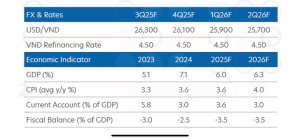 | Tariff risks continue to weigh on economic outlook United Overseas Bank (UOB) has maintained its forecast for Vietnam's economic growth in 2025 at 6 per cent, and believes that the State Bank of Vietnam will hold rates steady due to tariff risks from the United States. |
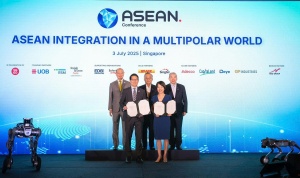 | UOB spurs ASEAN cross-border connections with signing of MoUs In a significant move to bolster regional economic integration and facilitate foreign direct investment (FDI), UOB has signed five MoUs with government agencies and leading industry players in ASEAN and Greater China. |
 | Experts outline roadmap for businesses in new era of growth At the “Vietnam Business Outlook 2025” event on July 9, co-hosted by UOB Vietnam and EuroCham Vietnam, experts shared insights from the UOB Business Outlook Study 2025, mapping out pragmatic strategies for businesses to stay competitive in a fragmented global environment. |
What the stars mean:
★ Poor ★ ★ Promising ★★★ Good ★★★★ Very good ★★★★★ Exceptional
 Tag:
Tag:
Related Contents


Latest News

More News
- Strategic vision key to high-speed rail success in Vietnam (August 07, 2026 | 10:03)
- DSV backs Vietnam's push for more sustainable logistics (August 04, 2026 | 17:10)
- Roche Pharma Vietnam appoints new general manager, reinforcing commitment to Vietnam healthcare (July 23, 2026 | 15:41)
- Constant Energy on Vietnam solar power and policy hurdles (July 22, 2026 | 08:00)
- Key points when drafting a company charter to reduce disputes in Vietnam (July 20, 2026 | 08:00)
- AkzoNobel executive on sustainability as a manufacturing growth driver (July 10, 2026 | 14:53)
- LivWell expands holistic health ecosystem for businesses and communities in Vietnam (July 09, 2026 | 16:43)
- Thai beverage group sees Vietnam as long-term growth partner (July 02, 2026 | 08:30)
- AstraZeneca chief on Vietnam's healthcare financing shift (June 30, 2026 | 16:47)
- Vietnam emerges as one of VistaJet’s fastest-growing markets (June 18, 2026 | 16:21)







 Mobile Version