

Institutional reform to drive central Vietnam's coastal economy

The Ministry of Justice announced on July 10 that it is seeking public comments on the draft Law on Urban Development (formerly known as the Law on Special Urban Areas). For the first time, the draft introduces the concept of a special economic zone (SEZ) and proposes that it be established as a provincial-level administrative unit under a province or centrally governed city.
Under the draft, an SEZ would be established in strategically important locations, organised under a distinctive governance model, and operated with exceptional mechanisms to boost the socioeconomic development of the locality, the region, and the country.
The government would decide on the establishment of an SEZ after obtaining opinions from the National Assembly Standing Committee.
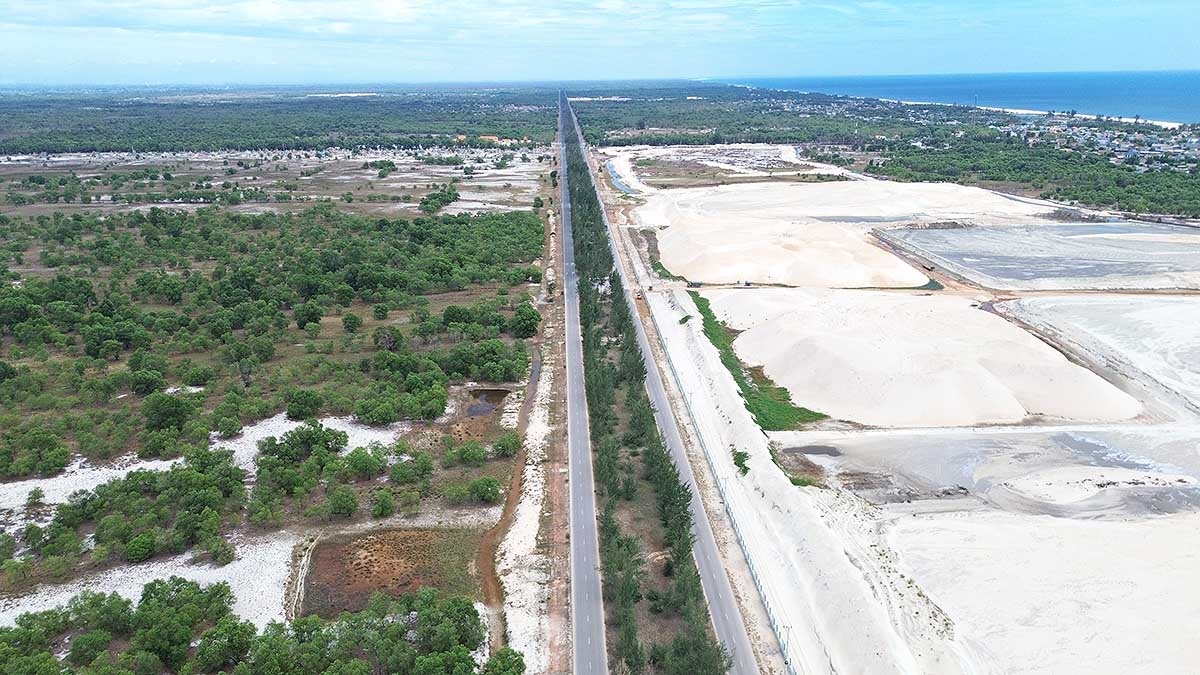 |
| Photo: baodautu.vn |
The draft outlines two options for determining the establishment criteria. Under the first option, an SEZ must be a coastal EZ already established by the prime minister, with a population of at least 50,000, a minimum area of 500 square km, an international airport or a Class I seaport, a relatively independent geographical space, and designation as a strategic area to be developed into a new growth pole.
The second option authorises the government to issue detailed criteria, providing greater flexibility during implementation.
Beyond expanding the scale of development or offering investment incentives, one of the draft's most notable features is its proposal for a new governance model.
Under this framework, each SEZ would have its own administrative authority established by the provincial government. The chairperson of the SEZ People's Committee would be granted broader powers over personnel management and organisational structure. Customs operations would also be organised under a unified mechanism within the zone to shorten customs clearance times and improve administrative efficiency.
According to experts, the proposal reflects a significant shift in the development mindset for economic zones, moving toward the creation of an integrated development space rather than the overlapping administrative procedures that currently exist.
In central Vietnam, after nearly three decades of development, coastal EZs such as Chu Lai, Dung Quat, Van Phong, Nghi Son, and Chan May-Lang Co have become key growth engines.
These zones have played an important role in attracting investment, promoting industrial development, logistics, and exports, while driving economic growth across many localities.
However, the reality is that after nearly 30 years, there remain significant disparities in the level of development and operational efficiency among the country's economic zones, with many still unable to attract globally significant strategic investors.
Pham Ho Hoang Long, general director of Vinh Hung Energy Investment JSC, revealed that alongside the ongoing review and amendment of several laws, including the Land Law, the study of a SEZ model demonstrates the government's determination to remove institutional delays and create innovative reforms to encourage economic growth and development.
“For central Vietnam, this represents a significant opportunity and marks the beginning of a new approach to the development of coastal economic zones,” he said.
According to Long, after many years of development, the greatest obstacle is no longer land availability or investment incentives, as most economic zones nationwide already offer broadly similar policies on tax exemptions and reductions, land rental incentives, and investment support.
Meanwhile, large-scale projects still have to navigate multiple administrative procedures relating to investment approval, construction, land, environmental compliance, and sector-specific regulations. This would lengthen project preparation time and increases opportunity costs for businesses.
"In the race to entice global investment, the speed of decision-making and the ability to facilitate rapid and effective project implementation are often just as important as tax and financial incentives," Long said.
"Studying the SEZ model should be viewed as a step towards creating a new institutional space where administrative procedures are streamlined, authority is more strongly decentralised, and governance mechanisms become more flexible. Under such a model, competitive advantages will stem from governance capacity and the overall quality of the investment environment, as much as from tax incentives or land rental costs," he added.
Experts noted that central Vietnam's coastal economic zones possess numerous advantages, including deep-water seaports, extensive land reserves for industrial development, strategic connectivity along the East-West Economic Corridor, and their role as emerging hubs for energy, logistics, and processing industries.
However, to transform these natural advantages into genuine competitive strengths, the region requires a sufficiently differentiated institutional framework capable of narrowing the gap with leading investment destinations across the region.
The competitive edge of coastal economic zones will increasingly depend on tax incentives, land availability, institutional quality, governance capacity, and the speed of project implementation.
 | Carlsberg Vietnam brings joy to 7,500 Central Vietnam households As the Lunar New Year approaches, Carlsberg Vietnam and Huda are continuing their annual tradition of giving back to the community. |
 | Danang positioned as crucial economic hub for Central Vietnam A new development space combined with an international financial hub and free trade zone, supported by special mechanisms, is expected to become a powerful launchpad shaping the central city of Danang into a future megacity. |
 | EU and AFD help North-central Vietnam strengthen resilience to climate threats On May 15, the "Climate Resilient Urban Infrastructure in North-central Vietnam" project concluded its Technical Assistance phase, marking a shift from planning to lasting community empowerment. |
 | Vietnam approves PPP study for $1 billion expressway for Central Vietnam The Ministry of Construction has approved Khanh Hoa province to study a nearly $1 billion expressway linking Nha Trang and Dalat, a project expected to strengthen connectivity and drive regional economic growth. |
What the stars mean:
★ Poor ★ ★ Promising ★★★ Good ★★★★ Very good ★★★★★ Exceptional
 Tag:
Tag:
Related Contents







Latest News



More News
- Vietnam emerging as an industrial location of choice (October 05, 2026 | 16:21)
- Investors interest amid ongoing reshuffling of global manufacturing (October 02, 2026 | 22:10)
- LŌ-GOI Group sets up industrial estate venture with three Asia-based institutional investors (October 02, 2026 | 16:00)
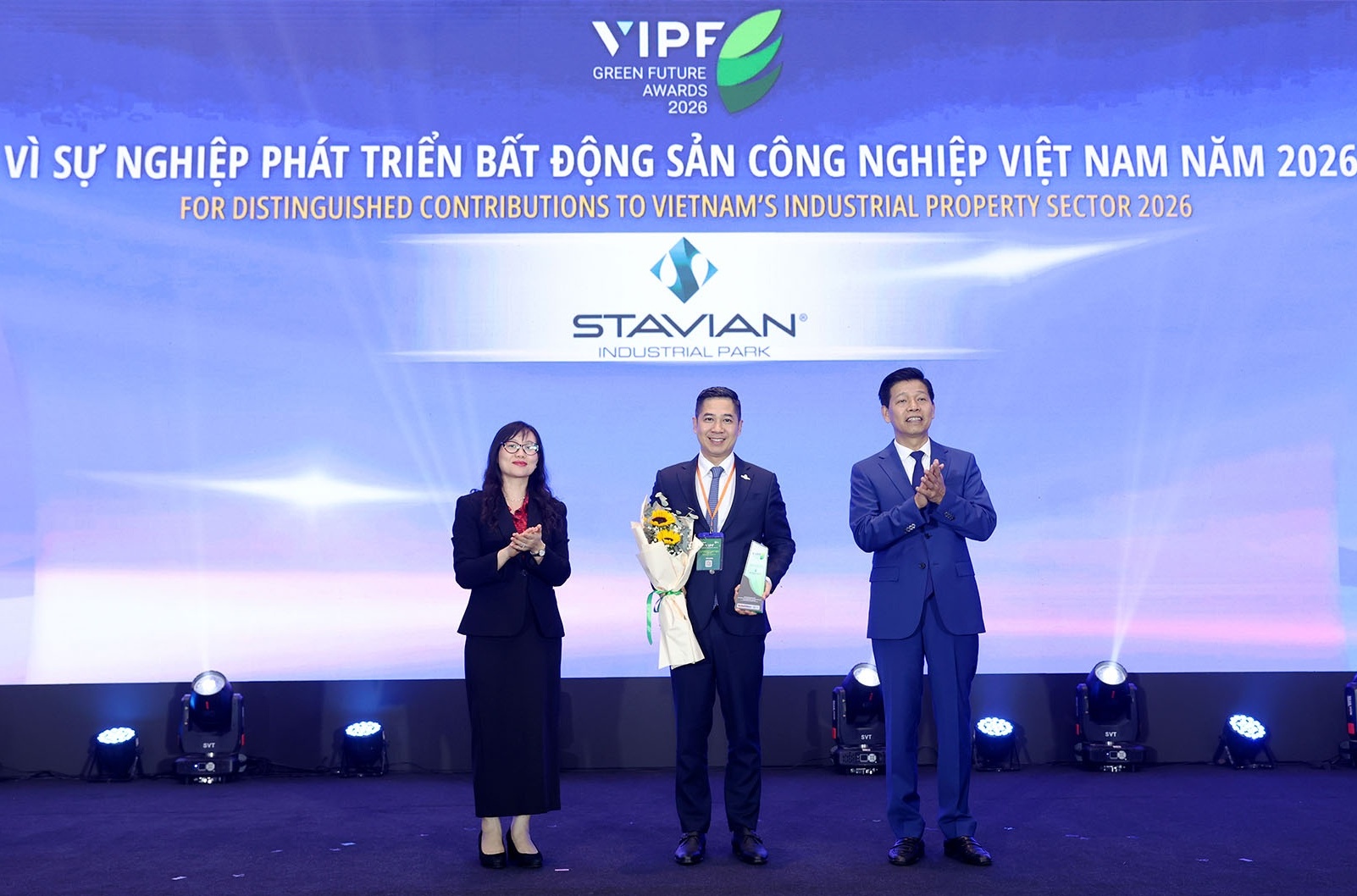
- Stavian IP accelerates its modern expansion (October 02, 2026 | 14:00)
- ESG for future-ready industrial success (October 02, 2026 | 09:00)
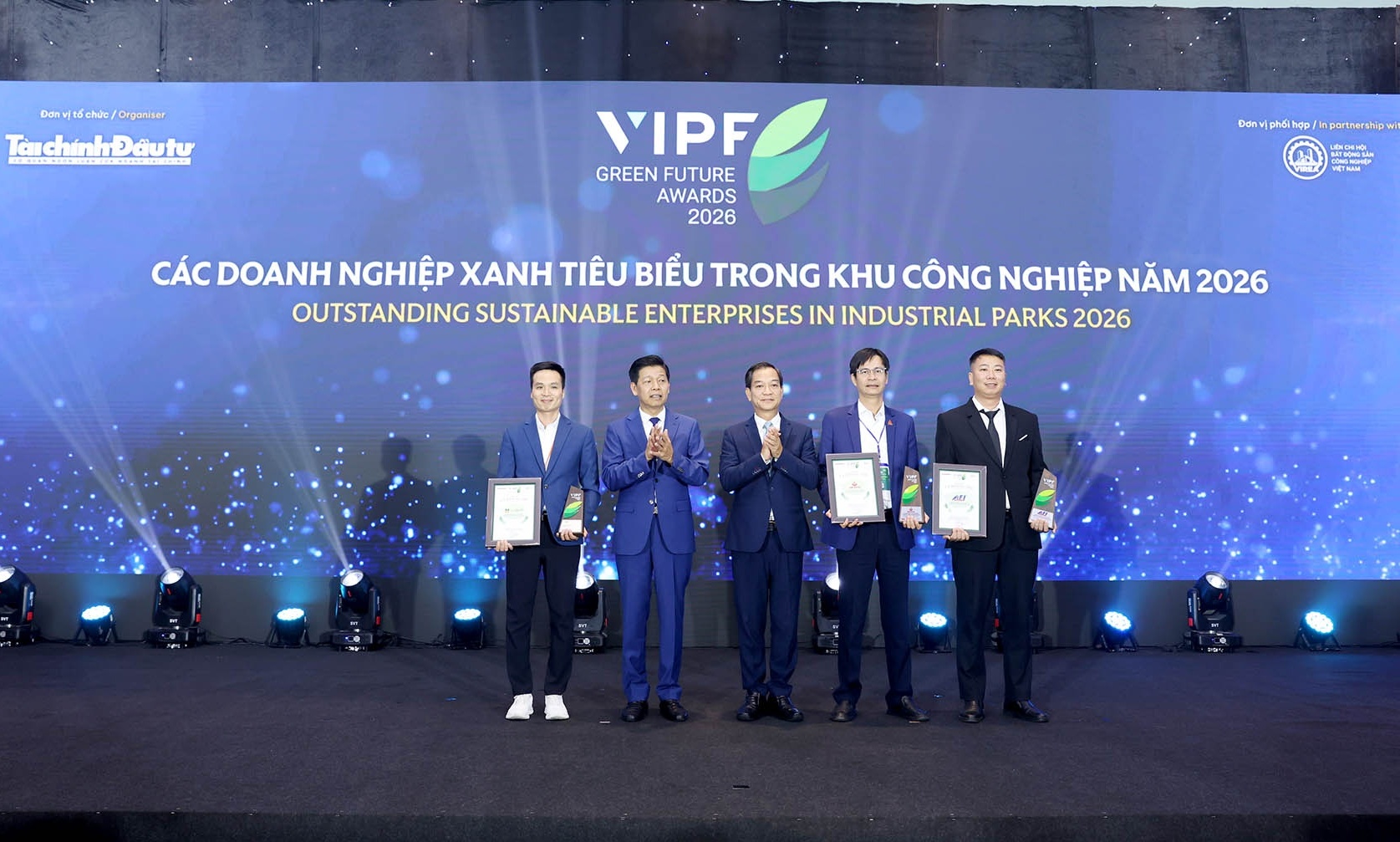
- Green Future Awards honour five leading industrial park developers (October 01, 2026 | 22:20)
- Green transition leaders honoured at Green Future Awards 2026 (October 01, 2026 | 22:10)
- Six developers honoured as Emerging Green Industrial Property Developers (October 01, 2026 | 22:00)
- Why logistics will define the next phase of growth (October 01, 2026 | 09:00)
- KNIC honoured for third consecutive year at Green Future Awards (September 30, 2026 | 21:45)


Latest News




 Mobile Version