
Hanoi targets rabies elimination as pet meat trade revenues plummet

Hanoi is accelerating its transition away from the dog and cat meat trade, linking the move to a broader public health strategy to eliminate rabies by the end of the decade.
On March 24, the Hanoi Sub-Department of Animal Husbandry, Aquaculture and Veterinary Medicine (under the Hanoi Department of Agriculture and Environment), in collaboration with Soi Dog Foundation and Vietnam Social and Behaviour Change Communication for Sustainable Development Company (SBCC Vietnam) organised the second training conference themed: “Solutions For Strengthening Rabies Prevention and Control and Promoting Sustainable Economic Development through the Phased-Transition Away from Dog and Cat Meat Trade - Towards a Safe and Civilised Urban Communities” for government officials and veterinary staff.
 |
| The conference, themed: “Solutions For Strengthening Rabies Prevention and Control and Promoting Sustainable Economic Development through the Phased-Transition Away from Dog and Cat Meat Trade - Towards a Safe and Civilised Urban Communities” targeted government officials and veterinary staff |
The city is enforcing stricter controls on the origin, slaughtering conditions, and circulation of animal products, following recent municipal directives. This shift comes as the industry faces a sharp downturn. A 2025 survey of 113 establishments across 14 wards revealed that 83 per cent of businesses reported declining revenues, with some seeing drops of up to 70 per cent.
Pressure to exit the sector is mounting from within. The data shows 67 per cent of traders do not want their children to inherit the business, and 44 per cent have considered closing down. However, the transition remains fraught with economic hurdles.
“Most businesses are willing to comply but struggle because this has been their primary income for years,” said Tran Thi Nguyet, an official from Ha Dong district. She noted that traders are concerned about access to capital for new equipment and the increased competition in alternative sectors.
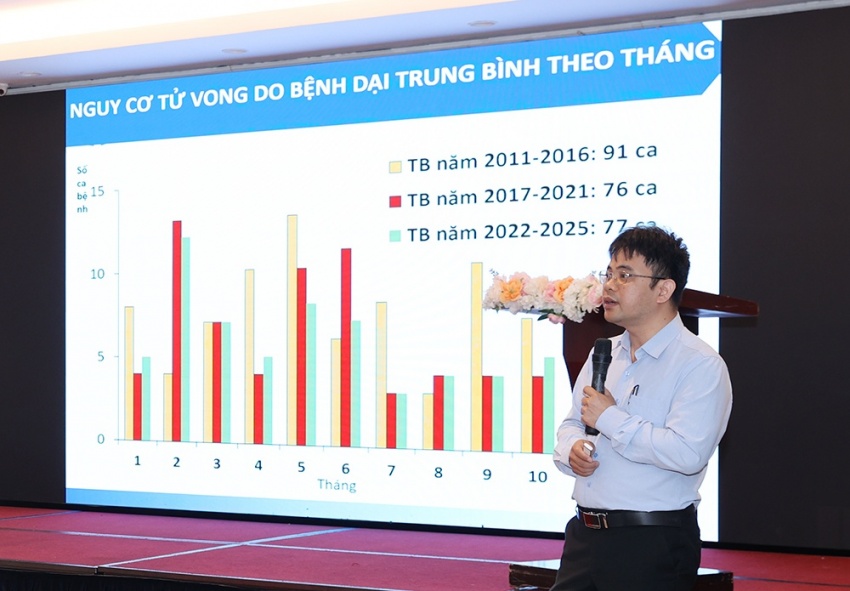 |
| Dao Huu Than, deputy director of the Hanoi Centre for Disease Control, warns about rabies risks |
Public health remains the primary driver for the policy. Dao Huu Than, deputy director of the Hanoi Centre for Disease Control, warned that rabies is a persistent threat recorded in 60 of 63 provinces over the last decade. The disease claims approximately 70 lives annually in the country, costing the healthcare system more than $41.7 million each year for vaccines and immunoglobulin treatments.
“Capacity building for grassroots officials is the core task for effectively implementing rabies prevention and control measures. Veterinary and local management officials must tighten control over animal slaughter, trade, and transportation; strengthen food traceability; firmly address violations; and eliminate business establishments that fail to meet biosafety and environmental standards. This is a direct and urgent responsibility of the sector given the complex rabies situation currently unfolding in the capital,” he said.
International partners are backing the initiative, emphasising the need for a clear, sustainable roadmap for livelihoods.
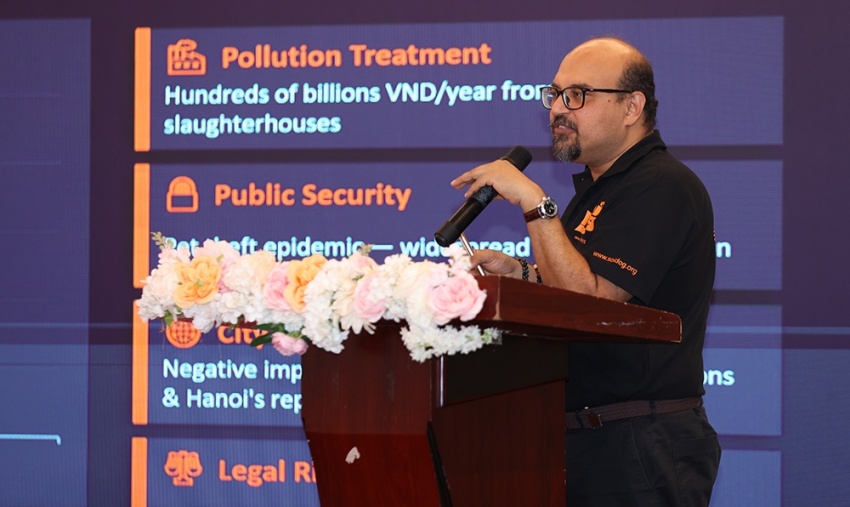 |
| Faizan Jalil, senior manager at Soi Dog Foundation, responsible for behavior change communication |
“Experiences from implementation in Thailand and South Korea demonstrate the direct link between dog and cat slaughter and meat trade activities and the risk of rabies transmission within communities. Animals transported and slaughtered outside veterinary supervision represent the weakest link in the disease prevention chain. That is why the role of grassroots officials in ensuring that business and slaughter operators comply with regulations and animal welfare practices is a critical factor," Faizan Jalil, senior manager at Soi Dog Foundation said. "It can be firmly stated that strict control of slaughter and trade is the first line of defence in effectively preventing zoonotic diseases, most notably rabies. In the long term, a roadmap must be implemented to transition all dog and cat slaughter and trade households to more appropriate economic models, working towards a safe, civilised, and humane urban environment.”
The programme will continue to expand inter-agency coordination, providing support for households to exit the trade while ensuring Hanoi reaches its goal of zero human rabies deaths by 2030.
Bui Thi Duyen, director of SBCC Vietnam, the unit directly implementing the behaviour change communication strategy for the project, emphasised: “This is the second training conference, and we have clearly observed a shift in awareness among the participating officials. Community behaviour change cannot succeed without a team of grassroots officials who both guide awareness and enforce and monitor the behaviour of residents and slaughter and business operators. Officials themselves are the drivers of the transition - from communication and persuasion to inspection and enforcement of violations. SBCC Vietnam accompanies the project in developing communication tools relevant to local realities to support officials in fulfilling that dual role.”
This training programme was designed with the goal of equipping participants with the knowledge and tools to implement solutions that can bring improvements in public health, animal welfare, and the quality of life for the people of Hanoi. Going forward, activities will focus on expanding the programme, promoting inter-agency cooperation across all pilot areas, with the hope of building a network of safe communities that could serve as a reference model for other cities in Vietnam.
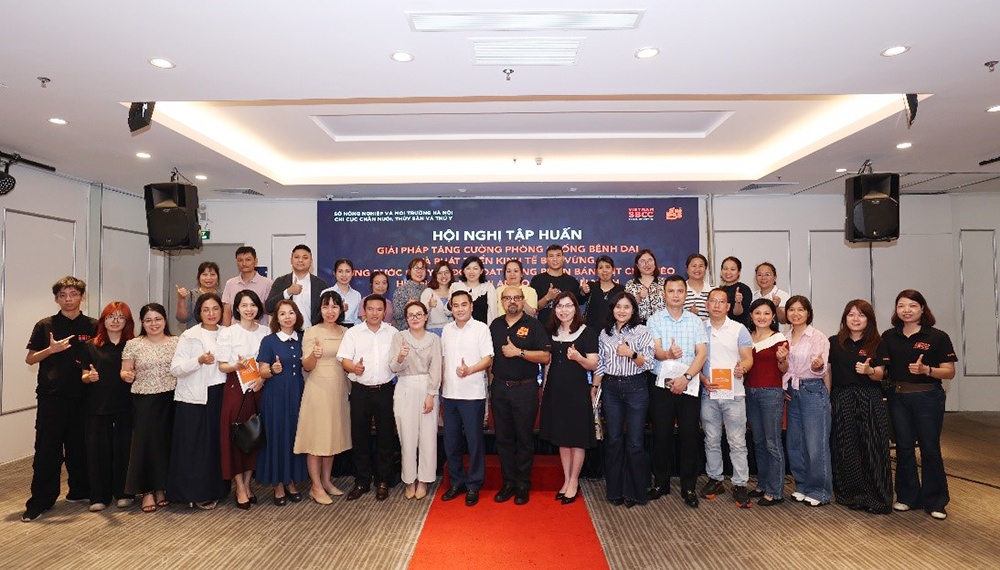 |
| The Organising Committee with conference participants |
What the stars mean:
★ Poor ★ ★ Promising ★★★ Good ★★★★ Very good ★★★★★ Exceptional
 Tag:
Tag:Related Contents






Latest News




More News
- HER2+ breast cancer carries $3.71 billion productivity burden in Vietnam (July 30, 2026 | 14:32)
- Party Resolution charts Vietnam’s development model through 2045 and beyond (July 30, 2026 | 12:29)
- STEM education evolves for AI era (July 21, 2026 | 09:38)
- Vietnam’s workforce ready for AI era (June 26, 2026 | 16:04)
- Why child online safety is now a business imperative (June 24, 2026 | 11:00)
- Hybrid work is reshaping Vietnam’s labour market (June 17, 2026 | 16:24)
- World's children exposed to at least three overlapping climate threats (June 17, 2026 | 15:54)
- Thai Nguyen event promotes safer food systems for World Food Safety Day (June 11, 2026 | 14:08)
- Vietnam emerges as rising hub for wealth creation (June 02, 2026 | 18:31)
- Danang launches DIFF 2026 with world-class performances (May 31, 2026 | 08:00)









 Mobile Version