
Hanoi and Ho Chi Minh City ranked in Global Growth Hub Index

Cities continue to be the core engines of the international economy, despite geopolitical volatility and supply chain restructuring.
According to Savills analysis of 245 cities, growth in the coming decade will be heavily concentrated in Asia, driven by fundamental factors such as youthful populations, rapid urbanisation, and the global shift in manufacturing.
Vietnam has a significant presence, with Ho Chi Minh City ranking second and Hanoi ranking fifth in the Growth Hubs Index. The inclusion of both reflects strong growth potential and highlights the country's evolving role within regional value chains.
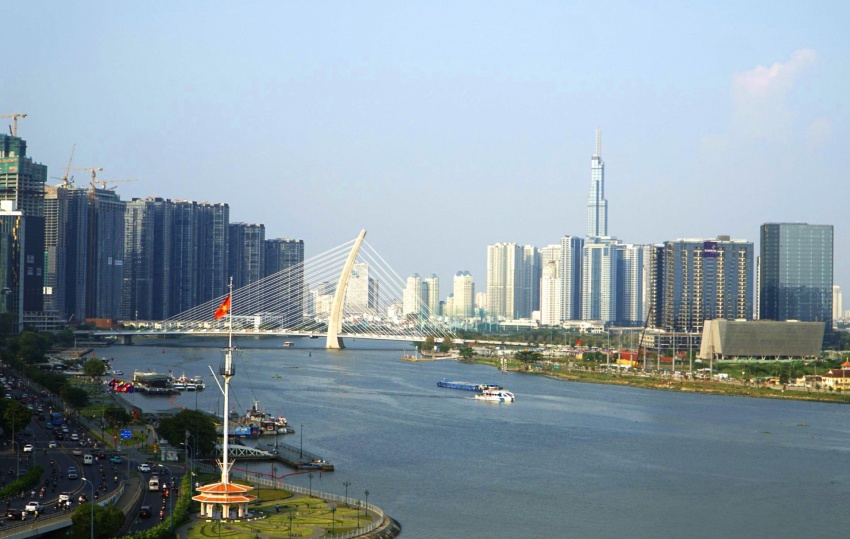 |
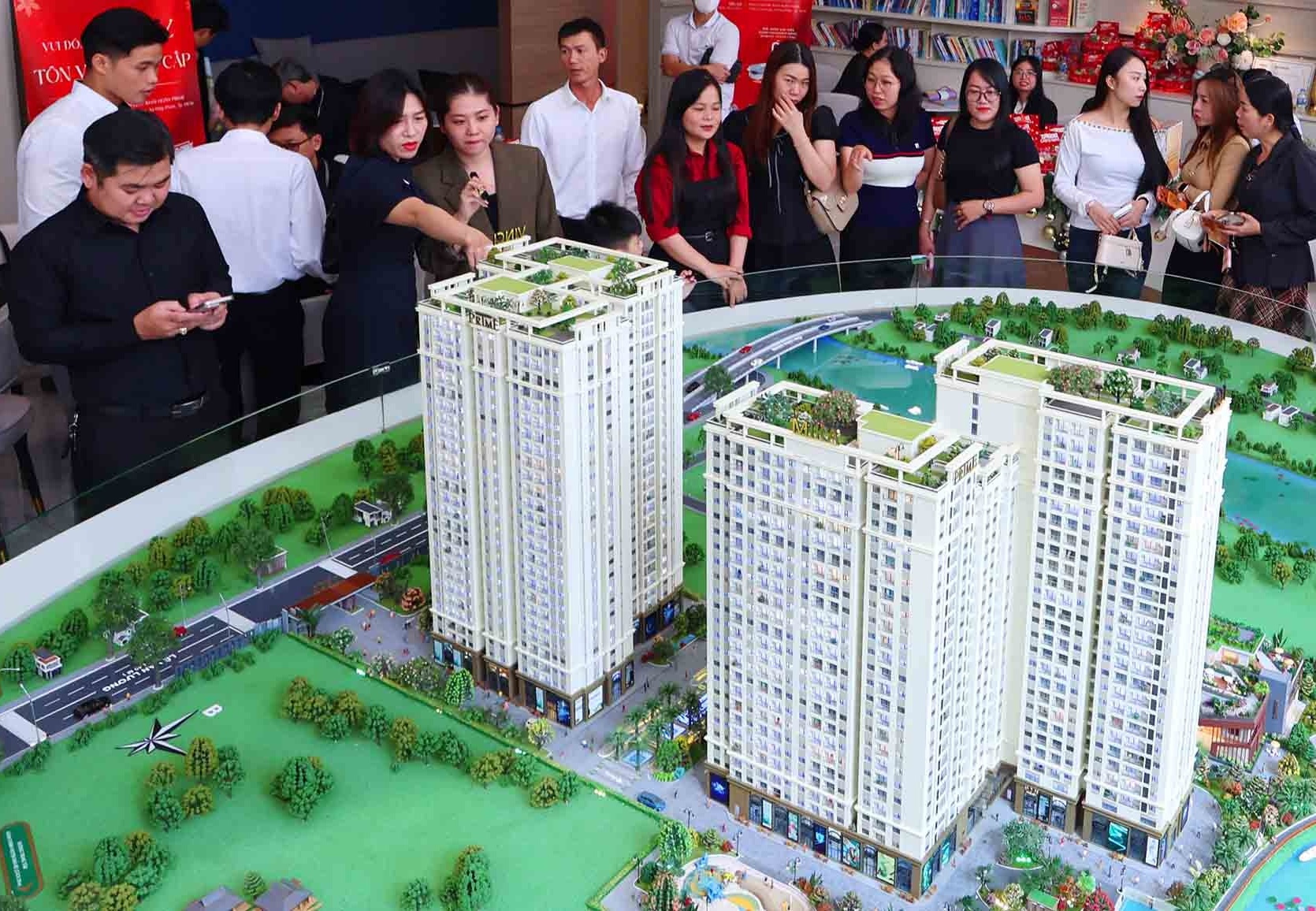
| Ho Chi Minh City ranking second in the Growth Hubs Index ranked by Savills. Photo: Le Toan |
However, experts note that rapid growth is only a “necessary condition.” The decisive factor in the long term will be the capacity for sustainable development, adaptability and resilience.
According to Chris Marriott, CEO of Savills Southeast Asia, the advantage of a young population is creating a powerful impetus for regional economies. An abundant labour force, increasing consumption, and rapid urbanisation are driving demand across multiple real estate sectors, from industrial and logistics to residential and mixed-use developments.
Simultaneously, the “China+1” strategy continues to drive the relocation of manufacturing to emerging markets, with Vietnam standing out as a premier destination.
Increasing foreign direct investment (FDI) bolsters the manufacturing base and creates a spillover effect on the real estate market, particularly in major hubs like Ho Chi Minh City and Hanoi, where infrastructure, labour, and consumer demand are concentrated.
According to Savills, not all fast-growing cities can maintain long-term attractiveness. The Resilient Cities Index published by Savills in March shows that leading cities like New York, Tokyo, London, and Seoul all share a common ability to balance economic growth with quality of life, while continuously investing to enhance competitiveness.
Increasingly, resilience is no longer a theoretical concept but a practical benchmark for evaluating a city. This encompasses economic foundations, technology ecosystems, Environmental, Social, and Governance standards, and the quality of the living environment. Crucially, the actual execution of development strategies is emerging as a key factor.
Neil MacGregor, CEO of Savills Vietnam, remarked that Vietnam possesses all the drivers to maintain high growth, from infrastructure and foreign investment to domestic demand.
“However, the deciding factor will be the speed of implementation. Markets that can transform plans into reality will be the ones to capture the opportunities,” said MacGregor.
As resilience increasingly becomes a core metric for global cities, infrastructure is viewed as the foundational element that allows Vietnam to convert growth potential into sustainable development capacity.
Currently, a massive wave of public investment is gradually reshaping the market structure. With 234 infrastructure projects underway and an estimated total investment of $131 billion, key projects such as Long Thanh International Airport, Hanoi and Ho Chi Minh City metro systems, and 380km of newly operational North-South expressways are opening fresh economic corridors.
Beyond merely improving connectivity, infrastructure plays a vital role in restructuring urban space and investment flows. Satellite areas around Hanoi and Ho Chi Minh City are gradually forming new growth poles, while industrial real estate benefits directly from the development of integrated manufacturing-logistics ecosystems.
Significantly, the impact of infrastructure extends beyond “hard infrastructure.” Factors such as quality of life, environment, education, and healthcare, often referred to as “soft infrastructure,” are increasingly influencing the decisions of businesses and high-quality labour. These are also the core components of a city’s long-term competitiveness.
As the centre of global growth continues to shift towards Asia, Vietnam is aiming for double-digits based on two main pillars: infrastructure investment and FDI inflows.
Experts have noted that the decisive factor is not just the scale of investment, but the efficiency of execution, ranging from project timelines and legal frameworks to the financial environment. This will directly affect the speed at which new growth poles are formed, as well as the expansion of urban space and future real estate supply.
 | Hanoi considers easing pickup truck restrictions to support businesses Hanoi is weighing plans to allow pickup trucks to operate under passenger car rules rather than freight vehicle restrictions to ease pressure on businesses and improving transport efficiency. |
 | Ho Chi Minh City introduces special procedures for industrial zone investment projects Ho Chi Minh City Export Processing Zones and Industrial Parks Management Authority will apply special investment procedures to special investment projects. |
 | Ho Chi Minh City announces 2026-2030 investment projects Investment opportunities are now opening wider for investors as Ho Chi Minh City has announced the list of projects in 2026-2030. |
What the stars mean:
★ Poor ★ ★ Promising ★★★ Good ★★★★ Very good ★★★★★ Exceptional
 Tag:
Tag:Related Contents
Latest News
More News
- MIK Group launches House of MIK in Ho Chi Minh City (October 03, 2026 | 17:00)
- Vietnam hospitality shifts towards integrated mixed-use developments (October 03, 2026 | 10:00)
- Stavian IP accelerates its modern expansion (October 02, 2026 | 14:00)
- ESG for future-ready industrial success (October 02, 2026 | 09:00)
- Green Future Awards honour five leading industrial park developers (October 01, 2026 | 22:20)
- Green transition leaders honoured at Green Future Awards 2026 (October 01, 2026 | 22:10)
- Six developers honoured as Emerging Green Industrial Property Developers (October 01, 2026 | 22:00)
- Why logistics will define the next phase of growth (October 01, 2026 | 09:00)
- Urban Development Law takes effect on October 1 (September 30, 2026 | 17:49)
- Phu My Hung to demolish Lawrence S. Ting Building for new development (September 30, 2026 | 17:43)



Latest News



 Mobile Version